
1. Rolling shutter fails to start; no response to switches or sensors
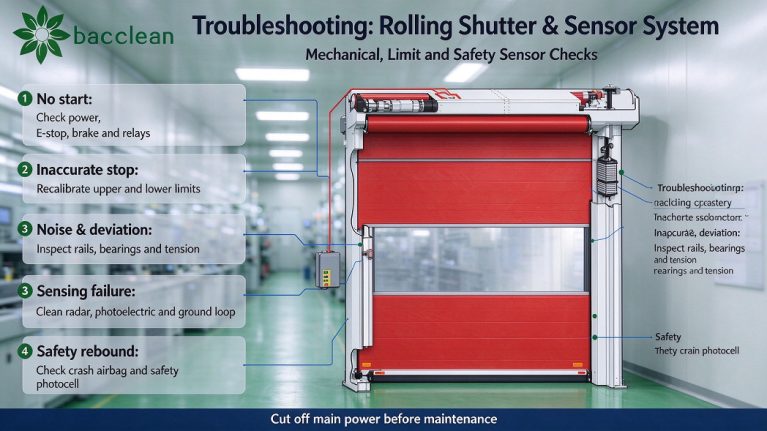
First check the power supply circuit. Verify whether the main power switch of the air shower or the dedicated circuit breaker for the rolling shutter motor has tripped, and check for loose terminals, phase loss or detached neutral wires. If all indicators are off, focus on the external power supply and residual current circuit breaker. If the control box is powered on but the door does not move, check the fault code on the control panel.
If the motor hums but the door will not lift or lower, mechanical jamming is the likely cause. Check whether foreign objects, material debris or deformed shutter fabric are stuck inside the guide rails on both sides. Deformed guide rails or offset guide rail screws will directly block the movement of the shutter cloth. Also inspect reel bearings and chain drives: seized bearings due to lack of lubrication or loose, disengageable chains can prevent the motor from driving the load. Another frequent issue is a failing brake release. Manually release the brake with power cut off and test whether the door can be pulled smoothly. A burned brake coil or faulty rectifier module will lock the brake.
If the motor makes no sound at all, first confirm whether the emergency stop buttons on both entry and exit sides have been tripped and reset. Then check whether the limit switches are stuck or send abnormal travel signals. On many models, invalid limit switches trigger system protection and disable motor startup. Faulty control relays or contactors with burned contacts can also block power from reaching the motor. Use the continuity setting of a multimeter to test the contacts and replace damaged components with equivalents.
2. The rolling shutter moves but cannot reach full travel; inaccurate stopping
Such problems usually stem from abnormal limit devices. Automatic rolling shutters adopt either mechanical or electronic limits. Loose and displaced travel stops on mechanical limits may stop the door before it fully closes, or let it overtravel and squeeze the bottom crash strip. For electronic limits, displaced proximity switches or magnetic rings cause lost sensing signals, so the controller cannot detect the fully open or fully closed position. Recalibrate the upper and lower limit positions, secure the stops or magnetic rings, and run 3 to 5 full lifting/lowering cycles to confirm stable stopping.
Uneven tension of the shutter fabric or slippage on one side of the reel can also shift stopping positions. If the pressure plate screws securing the shutter cloth to the reel loosen, the fabric will be looser on one side and skew during travel, losing position control in the later stage of movement. Retighten the pressure plates evenly and adjust the tension on both sides to keep them synchronous.
Unbalanced loads or jamming of the bottom crash edge can also trigger the safety stop when the descending door hits debris on the floor, making the system think it has reached the closed position. Clear obstructions at the bottom passage and check for false triggering of the crash airbag and photoelectric safety sensor.
3. Abnormal noise, shaking and fabric deviation during operation
Friction noise during travel is most often caused by the guide rails rubbing against the edges of the shutter cloth, usually resulting from non-parallel, deformed or offsetly mounted guide rail brackets. Realign the guide rails for verticality and parallelism to ensure uniform gaps. Dry or damaged bearings produce periodic humming or clicking sounds. Lubricate bearings with high-temperature grease; replace bearing assemblies if they are worn out.
Shutter fabric deviation is a typical fault of rolling shutters. Uneven tension on the two sides, misaligned reel horizontality, or unilateral stretching and deformation of aged cloth will pull the fabric sideways during lifting, which may scrape against the rails and eventually tear the cloth. Minor deviation can be corrected by adjusting the pressure plates at both ends of the reel and balancing tension. If the shutter fabric has permanently stretched and has inconsistent thickness, replace it completely. For chain-driven units, improper chain tension or worn sprockets lead to shaking. Adjust chain tension; replace sprockets and chains as a matched set if heavily worn.
4. Door rebounds on closing, fails to lock, or rises automatically halfway down
Rolling shutters equipped with crash airbags and bottom photoelectric safety sensors tend to rebound mainly due to false activation of safety protection. Leaking airbag tubing or short-circuited microswitches inside the airbag trigger an immediate rebound even under slight contact force when the door lands. Dust-covered, displaced or misaligned through-beam photoelectric sensors identify the floor as an obstacle and reverse the door upward. Clean the photoelectric lenses, realign the optical path, test the airbag for airtightness, and replace damaged airbags and switches.
Premature triggering of the closed-limit signal or an excessively low closing force setting in the controller can also cause rebound when the motor lacks sufficient torque to overcome ground resistance. Appropriately increase the closing torque on adjustable controllers. For non-adjustable models, inspect the motor capacitor: capacitance decay reduces output torque and load capacity.
5. Sensing failure: radar, ground loop or photoelectric sensors do not trigger door opening
Common opening triggers for air shower pass chambers include radar sensors, ground loops, infrared photoelectric sensors and manual push buttons. If only one sensing mode fails while others work normally, the fault lies with that specific detector. Dust accumulation or incorrect mounting angles on radar probes shift the sensing zone; clean the lens and readjust the detection angle. Ground loops may be covered by metal materials, suffer broken wiring or faulty loop processors. Check the indicator light of the ground detector; if there is no output signal, test loop continuity and re-lay the cable if broken. Dirty or misaligned infrared through-beam sensors need cleaning and optical alignment.
If all automatic sensors fail but the manual button works, check whether the sensor signal terminals have fallen off or whether the input channel on the control board is damaged. Also bear the air shower interlock logic in mind: if the opposite door is open, the interlock suppresses the opening signal. This is normal protection rather than equipment failure.
6. Malfunctioning interlock between rolling shutter and air shower: air shower fails to start when the door is closed, or blows prematurely
The core logic of an integrated rolling-shutter air shower: once the entry rolling shutter fully closes, the door-closed feedback signal is sent to the air shower controller to start the timing cycle. When timing completes, the exit rolling shutter unlocks.
Missing door-closed feedback is the leading cause of failure to activate the air shower. Even if the door appears fully lowered visually, the limit switch may not be engaged, so the controller receives no confirmation and refuses to start blowing. Test the limit signal separately to ensure reliable contact closure once the door lands fully, and reposition the limit switch as needed.
Premature air shower startup usually comes from a short-circuited limit switch and garbled signals, sending a false closed-door signal before the shutter is fully seated. Inspect limit wiring insulation to eliminate short circuits caused by damaged cable sheathing.
If the rolling shutter opens unexpectedly while the air shower is running, the interlock relay may be faulty, program logic corrupted, or the opening sensor continuously triggered while the function to block opening signals during the shower cycle fails. Repair the interlock control module and restore or re-download factory interlock parameters. Confirm interlock wiring; swapped entry and exit door signal cables will also disrupt the sequence.
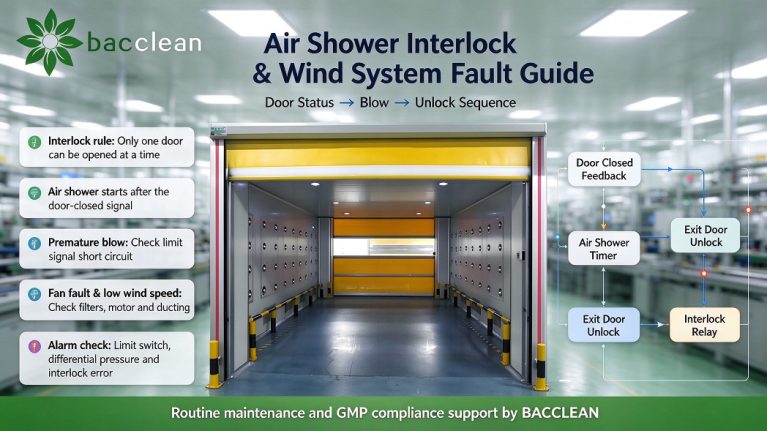
7. Air shower fan fails to start, low wind speed, or no airflow at nozzles (independent air shower faults)
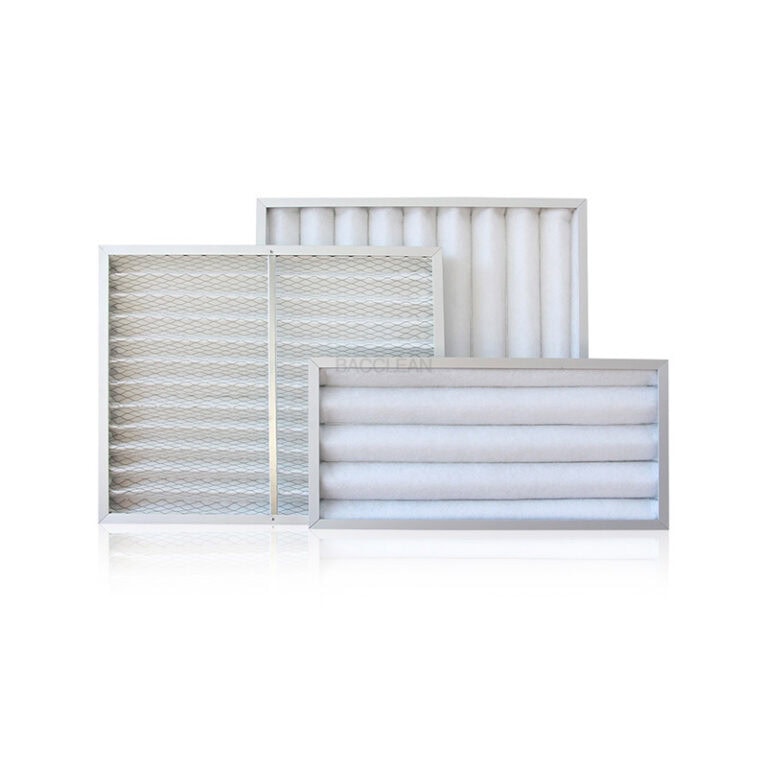
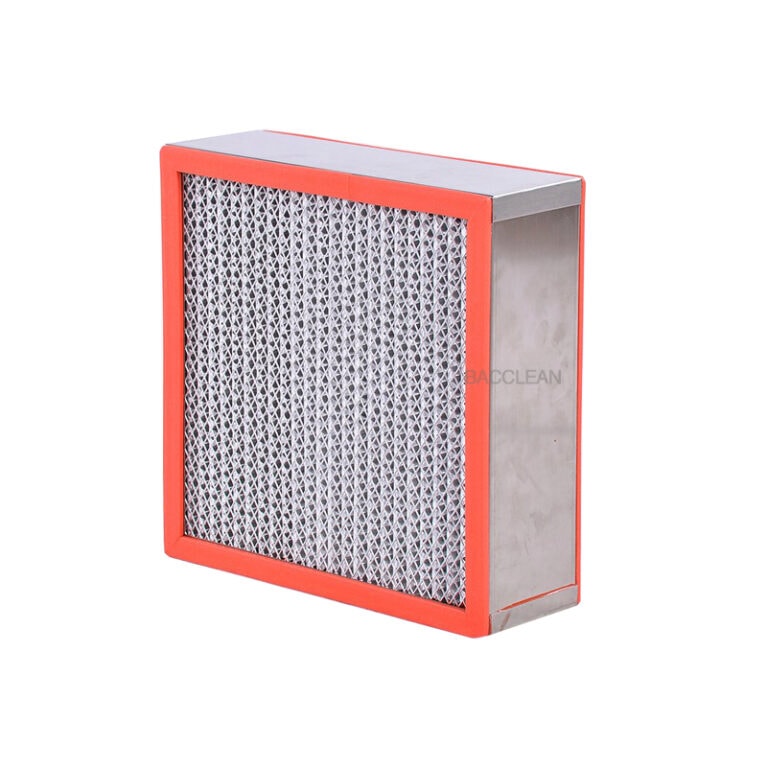
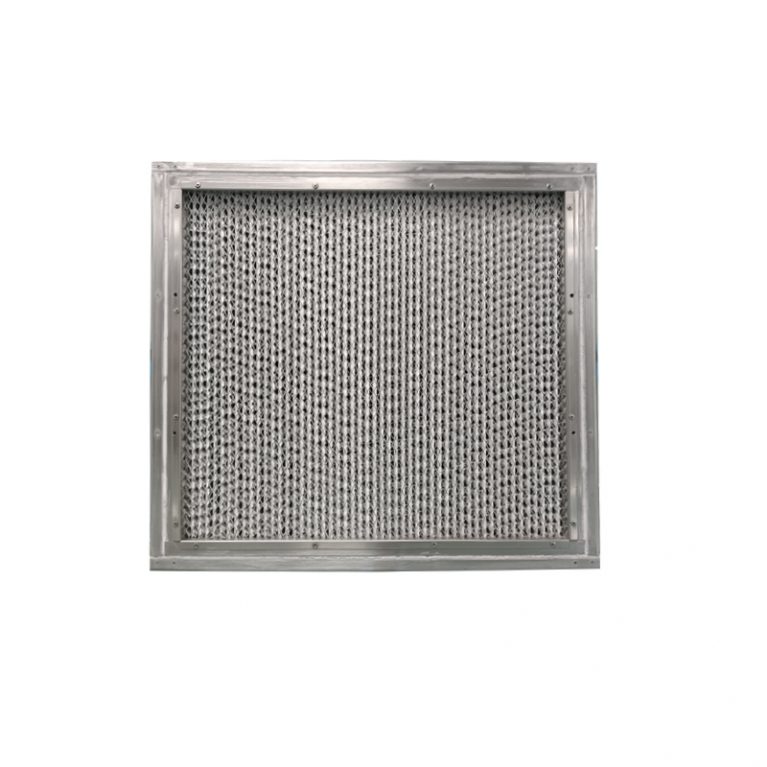
These belong to faults of the purification unit and are unrelated to rolling shutter mechanics. If the fan will not run, check fan power supply and whether the thermal overload protection or AC contactor has tripped. For low wind speed, first check for clogged primary and high-efficiency filters indicated by high pressure difference and replace filter media if required. Slipping fan belts or dust-laden impellers also reduce airflow. If no air comes out of the nozzles, inspect for detached flexible duct connections or stuck internal dampers. Erratic air shower timing usually requires replacement of the air shower control mainboard or parameter reset.
8. Alarms and abnormal indicator lights; persistent system error codes
Distinguish alarm sources: rolling shutter faults, interlock alarms and filter pressure difference alarms. A persistent “door open” alert despite a visually closed door almost always points to a failed limit switch or broken wiring. An interlock alarm indicating both doors open means the limit signal from the opposite door is stuck active. A high pressure difference alarm signals clogged filters that need scheduled replacement.
If control panel indicators flash irregularly, power down the unit for several minutes for a reset. Frequent crashes may result from unstable supply voltage; install a voltage stabilizer. Also avoid routing control cables together with high-power cables in the same trunking, as strong electrical interference can scramble control board signals.
9. Routine Maintenance and Safety Precautions
During regular inspections, clean dust from guide rails, bottom photoelectric sensors and radar probes. Dust buildup in clean workshops is the primary cause of sensing failure and door jamming. Lubricate reel bearings and drive chains periodically; use non-shedding, low-particulate cleanroom grease instead of lubricants that generate contaminants. Recalibrate upper and lower limits and safety crash protection regularly, and test interlock functions.
Safety rules for servicing: cut the main power and post warning tags before adjusting the door or accessing the area above the reel. Never stand beneath the rolling shutter while testing its movement. Safety crash and photoelectric devices must never be shorted out for bypass operation, as this creates a crushing hazard. For GMP-compliant cleanroom air showers, complete post-repair cleaning and retest air shower velocity and particle concentration where required.
Summary
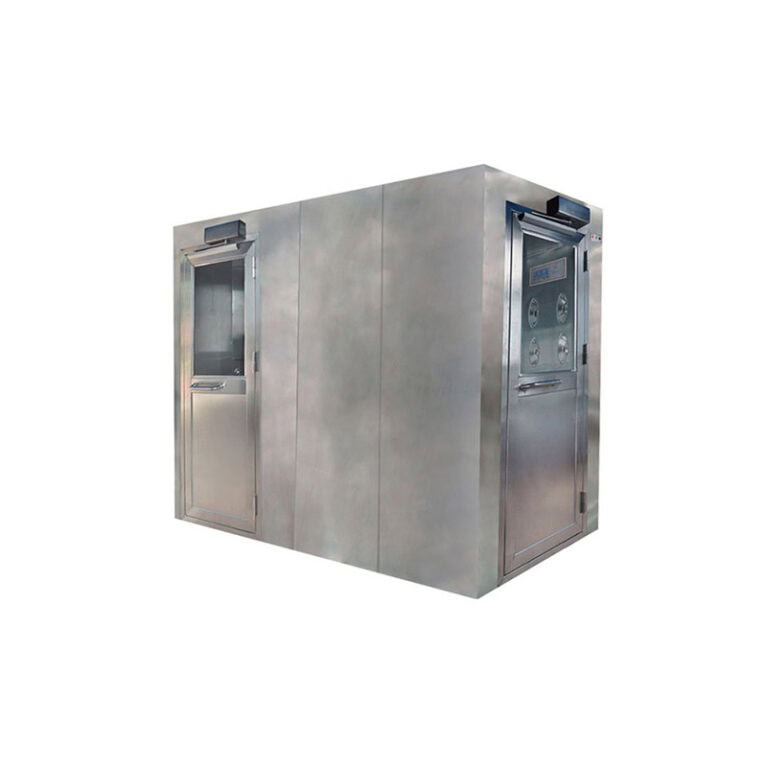
When troubleshooting automatic rolling shutter air shower pass chambers, first classify the fault: mechanical transmission of the rolling shutter, sensing and signal faults of the door controller, or logic faults related to air shower interlock. Jamming, deviation and abnormal noise generally relate to guide rails, shutter fabric, bearings and chains. Opening and stopping errors mostly arise from limit switches and sensors. Failure to start the air shower or chaotic interlock sequences focus on door-closed feedback signals and interlock circuits. Many on-site misdiagnoses ignore the two-door interlock rule: one door cannot open while the other remains open, which is normal protective logic. Always tell normal protection apart from real hardware faults to avoid unnecessary disassembly. The automatic rolling shutter air showers from Bailun Purification are equipped with dedicated door controllers and air shower interlock systems, supporting on-site fault guidance, component replacement and calibration services.
