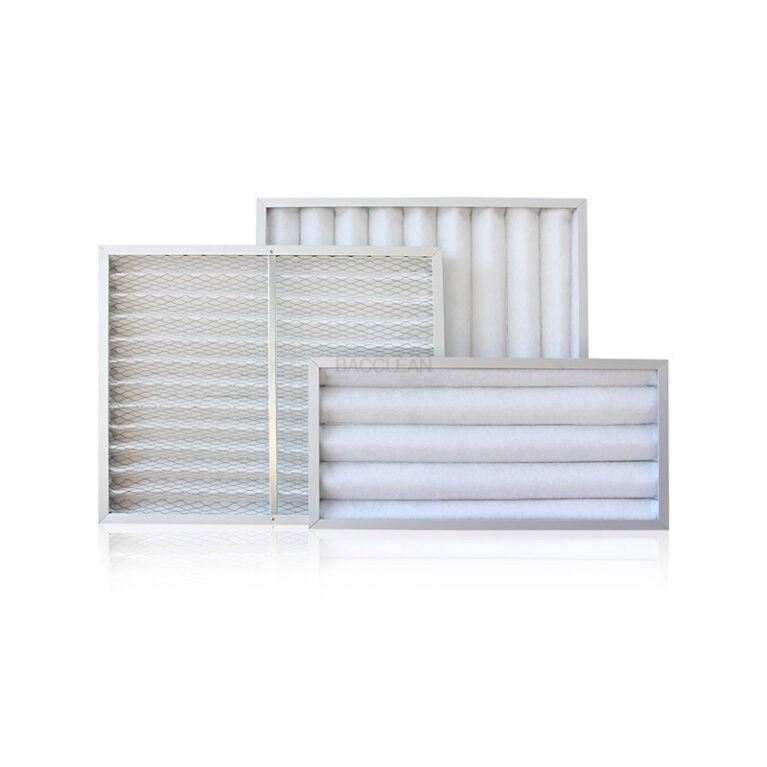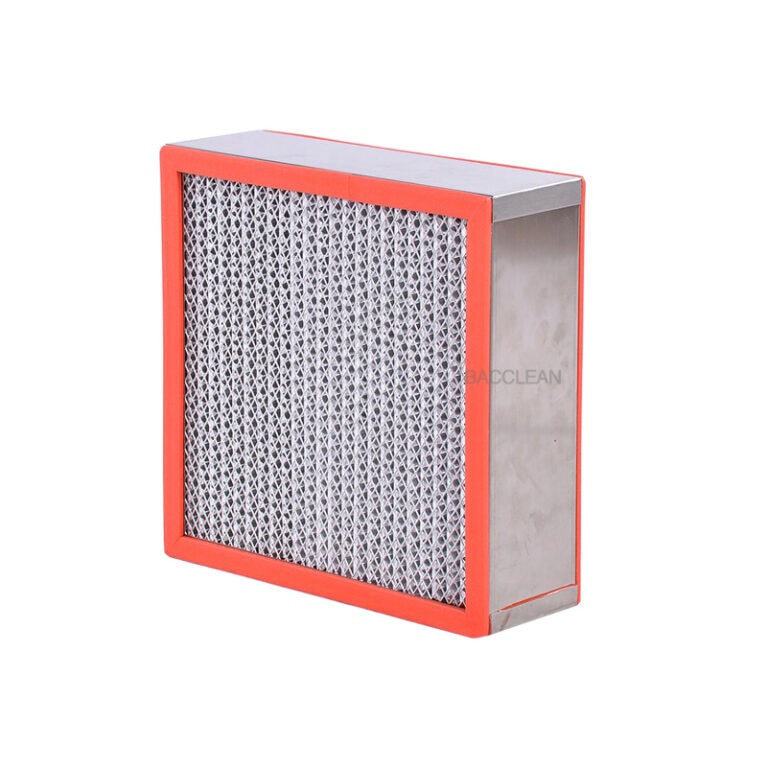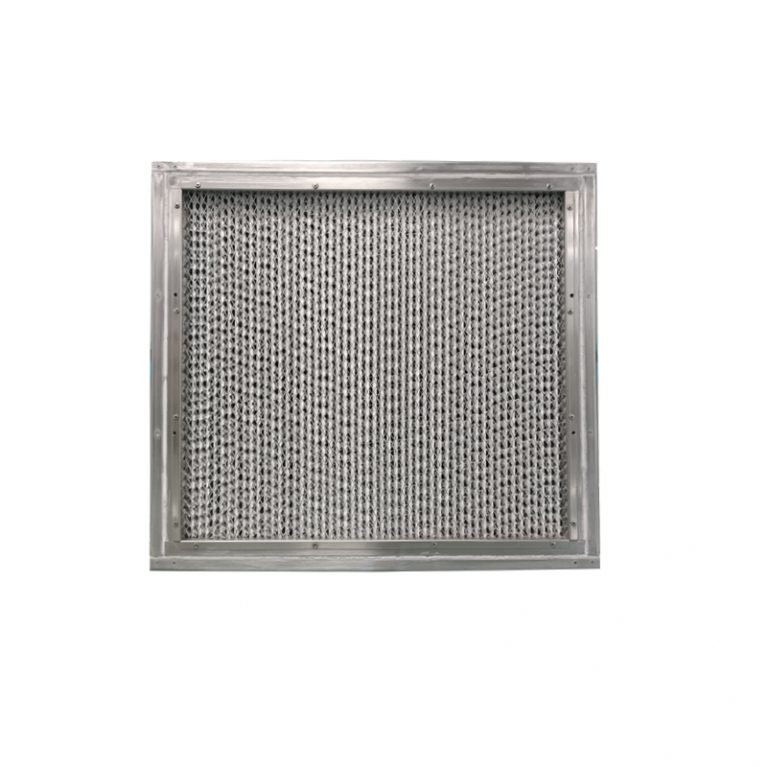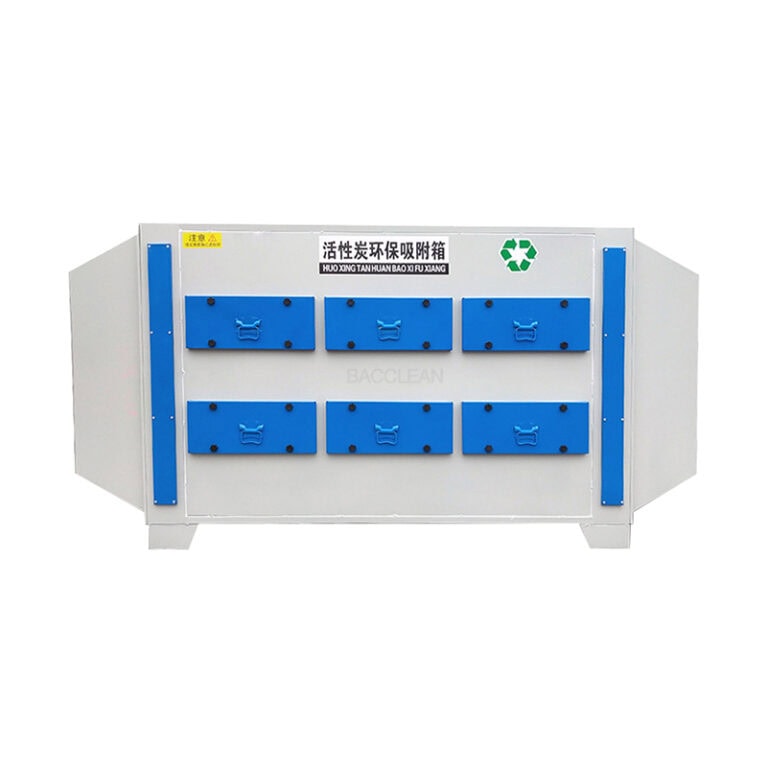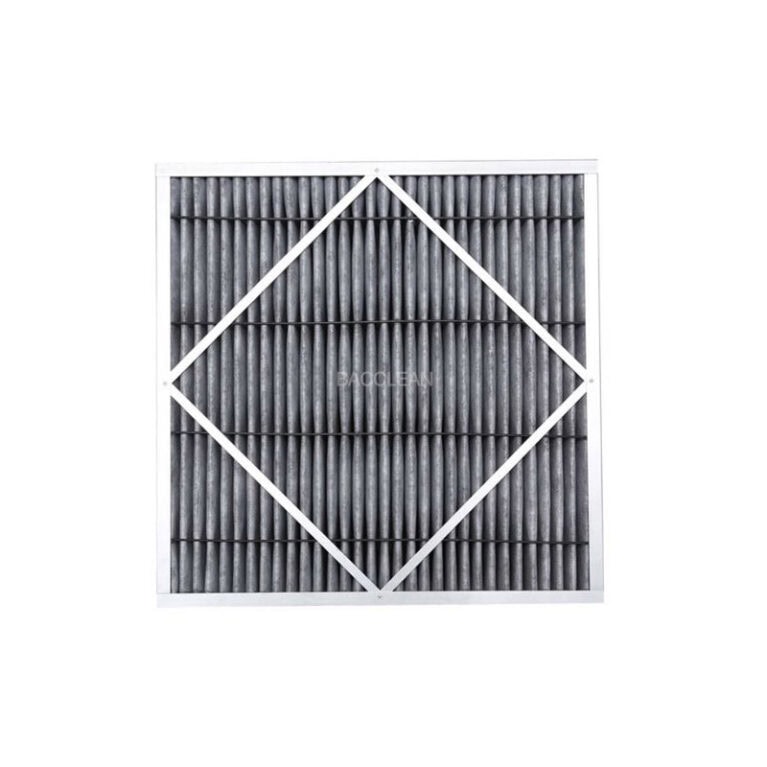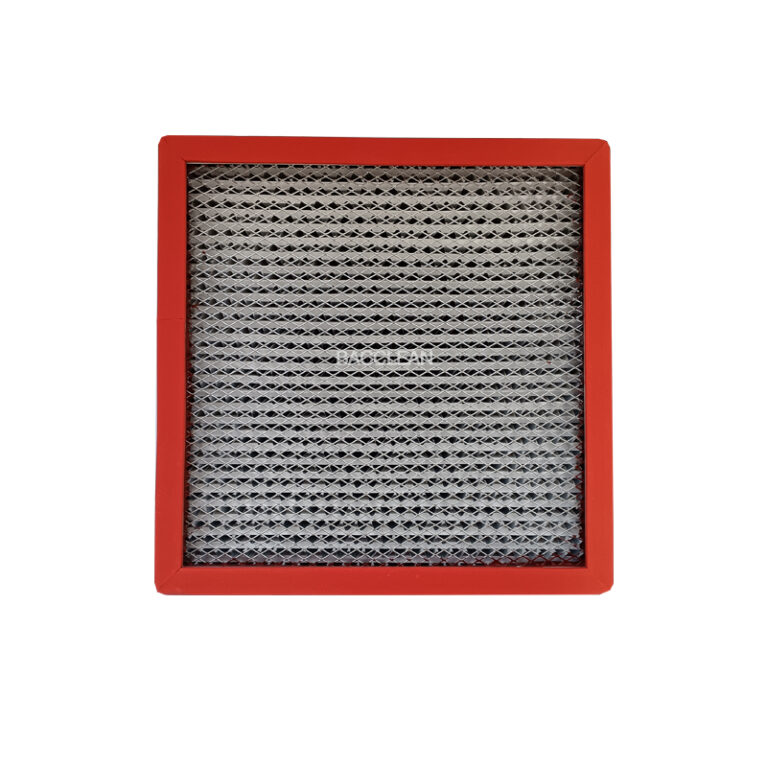

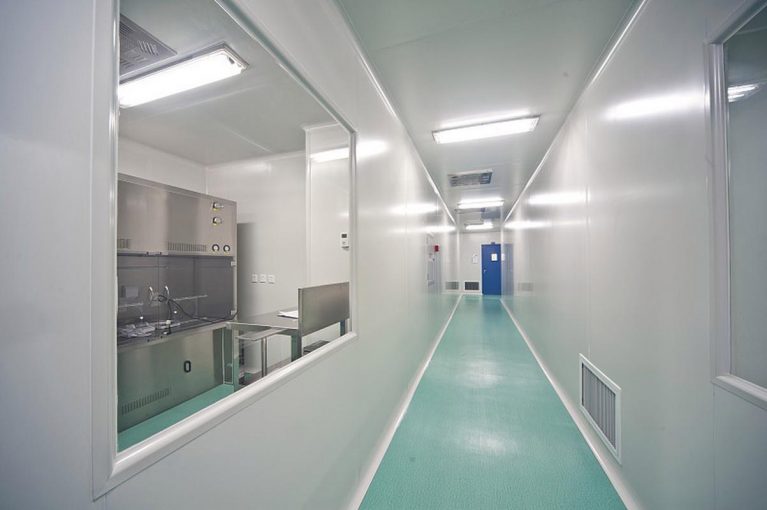
In the laboratory air quality assurance system, medium-efficiency bag filters are the core pretreatment link of the air purification system. They are mainly used to intercept intermittent particulate pollutants in the air, protect the high-efficiency filters at the back end, and maintain the cleanliness of the experimental environment. Its application needs to be combined with the type of laboratory, pollution characteristics and the design logic of the purification system, as follows: I. The Core Role of Medium-Efficiency Bag Filters in Laboratories Laboratory air pollutants are complex (such as dust, chemical aerosols, biological particles, etc.). The core value of medium-efficiency bag filters lies in “bridging the gap”, filling the filtration gap between primary filters (intercepting large particles ≥5μm) and high-efficiency filters (intercepting tiny particles ≥0.3μm). Dimension of function Specific explanation The significance of the laboratory scene Protect the back-end devices Intercept 80% to 95% of 1-5μm particles (such as dust, pollen, and fiber debris) to prevent them from clogging the high-efficiency filter or damaging the heat exchanger of the air conditioning unit Extend the service life of high-efficiency filters (reduce replacement frequency and maintenance costs) to ensure the stable operation of the air conditioning system Control particulate pollution Reduce the suspended
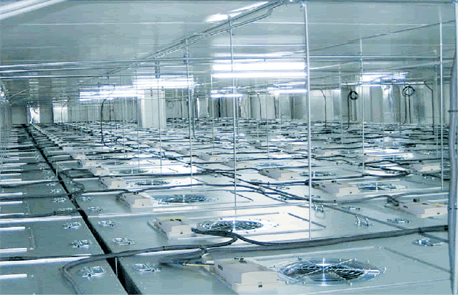
The performance indicators of FFUs applied in the semiconductor field directly determine whether they can meet the strict requirements of chip manufacturing for ultra-cleanliness, high stability and low interference. These indicators can be classified into three major categories: core functional indicators (directly related to cleanliness control), operational stability indicators (ensuring long-term reliable operation), and environmental compatibility indicators (adapted to special scenarios in semiconductor factories), as detailed below: I. Core Functional Indicators: Directly determine the level of cleanliness Such indicators are the “core competitiveness” of FFU and directly affect the process yield of semiconductor wafers (such as chip defects caused by particle contamination). 1. Filtration Efficiency Definition: It measures the ability of a filter to remove particles from the air and is the core indicator for FFU to control cleanliness. Requirements in the semiconductor field: ULPA (Ultra-High Efficiency Air Filter) must be adopted instead of HEPA (High Efficiency Air Filter) commonly used in industrial scenarios. The filtration efficiency for particles with a diameter of 0.1μm is ≥99.999% (ULPA Class 14 standard); High-end processes (such as 3nm/2nm wafer manufacturing) need to reach **≥99.9995%** (ULPA Class 150 standard), or even higher, in order to remove “sub-micron” and “nanometer” particles (these particles are the
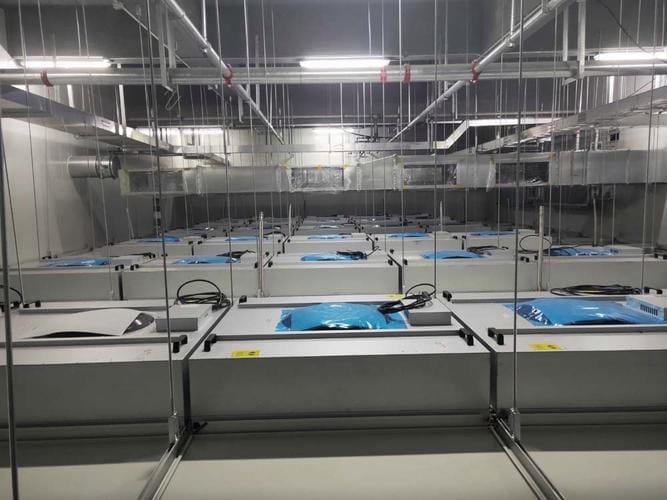
In the semiconductor field, FFU (Fan Filter Unit) is essential for maintaining the cleanliness of the core production environment. By driving airflow with a built-in fan through HEPA or ULPA filters, FFUs remove particles, dust, and microorganisms, creating a stable “local clean space” for manufacturing. Due to stringent cleanliness requirements (e.g., 12-inch wafer lines often require Class 1–10 cleanrooms), FFUs are used throughout chip production from front-end wafer manufacturing to back-end packaging and testing. The specific scenarios and values are as follows: To understand the application value of FFU, it is important to examine how it supports different stages across the entire semiconductor manufacturing process. Different stages in semiconductor manufacturing have varying requirements for cleanliness, airflow stability, and temperature and humidity. FFU, through flexible deployment and parameter adaptation, meets the strict requirements of each stage. Its main application scenarios include: 1. Front-end Wafer Fabrication: Core contamination control area Front-end manufacturing is the stage with the highest cleanliness requirements in the semiconductor process (requiring Class 1 to Class 10). During the processes of photolithography, etching, thin film deposition (PVD/CVD), ion implantation, and cleaning of wafers, Even extremely small particles (such as those below 0.1μm) or metal impurities can cause chip defects
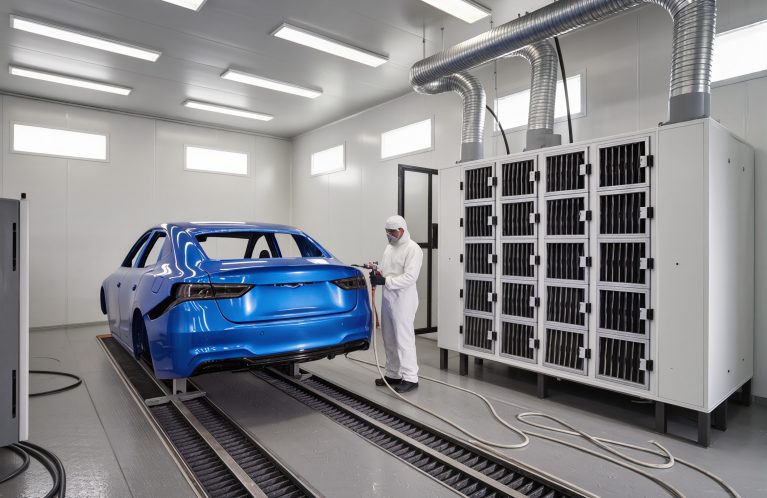
In the automotive painting process, air purification is carried out in a “gradient” manner (from the fresh air in the workshop to the interior of the painting room and then to the exhaust air). Different links need to be matched with filters of different functions to achieve the hierarchical purification goal of “coarse filtration → medium filtration → fine filtration”, while dealing with special pollutants such as paint mist and VOCs. In addition to the previously mentioned partitioned high-efficiency filters, common filters also include the following six types, which are respectively applied in core links such as air supply, exhaust, and paint mist treatment. Their specific functions and application scenarios are as follows: I. Pre-Filter: The “First Line of Defense” at the Fresh Air Inlet The primary filter is the first filtration unit for air entering the spraying system. Its main function is to intercept large particles of impurities in the air and protect the subsequent medium and high-efficiency filters (preventing large particles from clogging high-precision filter materials and extending their service life). It is the “key to cost control” in the purification of spraying air. Core features and effects Filtration accuracy: Mainly retains particles ≥5μm (such as dust, sand,
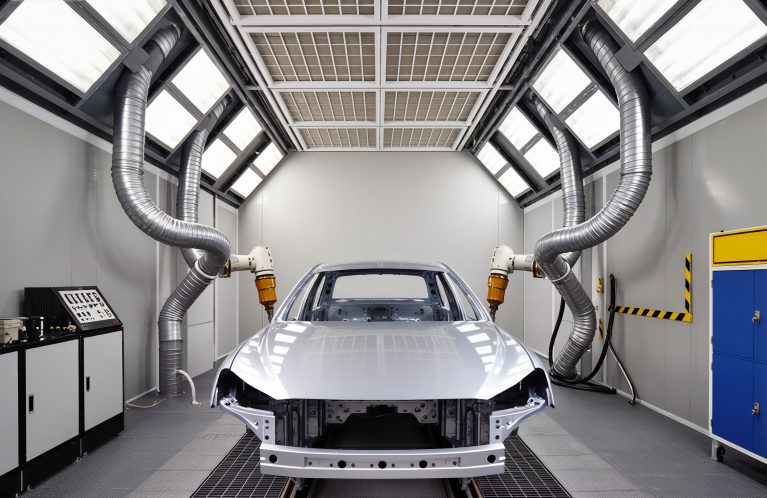
In the automotive painting process, the HEPA Filter with Separator is a key air purification component. It is mainly used in the supply and exhaust air systems of the spray booth (paint booth). Its core function is to control particulate matter in the air, which directly affects painting quality, coating performance, and compliance of the production environment. Its specific effects can be seen in three areas: process guarantee, quality improvement, and environmental control. Automobile painting has extremely high requirements for air cleanliness (especially for the intermediate coating and topcoat processes, which need to reach ISO 8-7 cleanliness levels). If tiny dust particles (≥0.3μm) in the air adhere to the surface of the workpiece or the paint, it will cause defects such as “particles”, “pinholes”, and “shrinkage cavities” in the coating. The core value of the partitioned high-efficiency filter lies in its efficient retention of particulate matter, which is specifically manifested as: Filtration efficiency meets the standard The filter meets HEPA (High Efficiency Particulate Air) standards. It achieves a filtration efficiency of at least 99.97% for particles ≥0.3μm. It effectively removes dust, fibers, and metal debris from the supply air. This ensures the air entering the spray booth is clean and

As a special public space, hospitals have distinct standards for air cleanliness and microbial control in different areas due to varying medical treatment needs. Liquid tank air filters, with their zero-leakage sealing structure, ability to intercept particles ranging from 0.1 to 0.3μm, and wide environmental adaptability, have become the core components of air purification systems in high-cleanliness areas of hospitals. The following analyzes the application logic and practical value of key purification scenarios in hospitals. I. Purification Area of the Operating Department: Building a Sterile “Air barrier” during the operation The operating department is the top priority in hospital infection control, especially for clean operating rooms, which need to simultaneously meet the three major requirements of “particle control”, “microbial interception” and “airflow stability”. The application of liquid bath air filters directly affects the incidence of surgical site infection (SSI). Class I-II clean operating rooms (Class 100 / Class 1,000) : The “sterile defense line” for core surgeries Suitable scenarios: Cardiac surgery (cardiopulmonary bypass surgery), neurosurgery (intracranial tumor resection), organ transplantation (liver/kidney transplantation), orthopedics (joint replacement surgery), and other surgeries that require an extremely sterile environment. For this type of surgery, the concentration of 0.5μm particles in the surgical
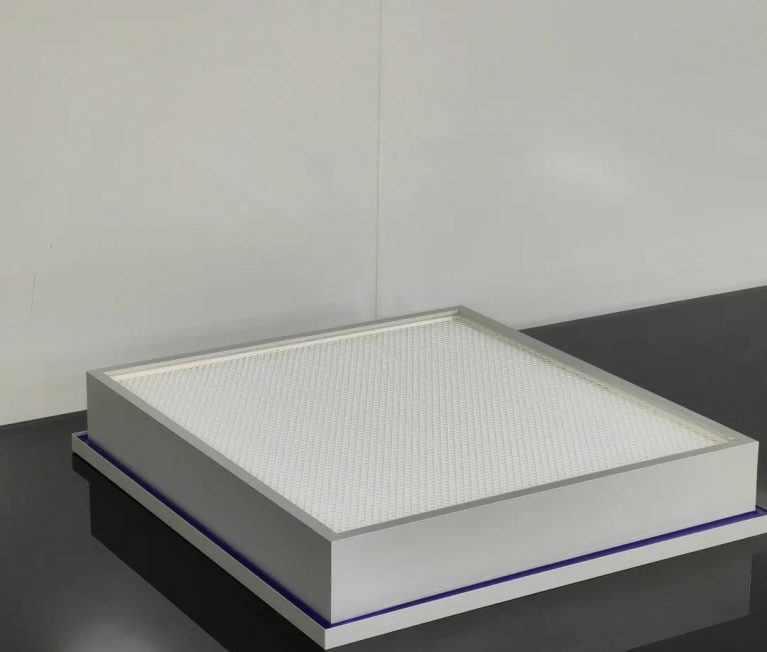
Among numerous air purification devices, liquid tank high-efficiency filters, with their unique structure and working principle, have become key equipment for ensuring a highly clean environment. The following is a detailed introduction to its core functions and advantages for you. I. Core Role Precision particle interception: The liquid tank high-efficiency filter uses advanced filter materials such as ultra-fine glass fiber filter paper or polytetrafluoroethylene (PTFE)-coated materials. PTFE is a synthetic fluoropolymer known for its chemical resistance. These materials can precisely capture particles with diameters between 0.1 and 0.3 micrometers (μm) through three mechanisms: inertial collision (particles moving along the airflow path hit the filter fibers), interception (particles following airflow lines come into contact with fibers), and diffusion adsorption (very small particles move randomly and stick to fibers). At the rated air volume, the filtration efficiency for the most easily penetrating particle size (MPPS)—the size of particle that is most difficult to capture—exceeds 99.9995%, which is significantly higher than the standard for high-efficiency particulate air (HEPA) filters. This high efficiency removes small dust, smoke, and other particles, providing clean air for highly controlled environments like semiconductor manufacturing workshops and photoelectric clean rooms. As a result, product defects and malfunctions caused by
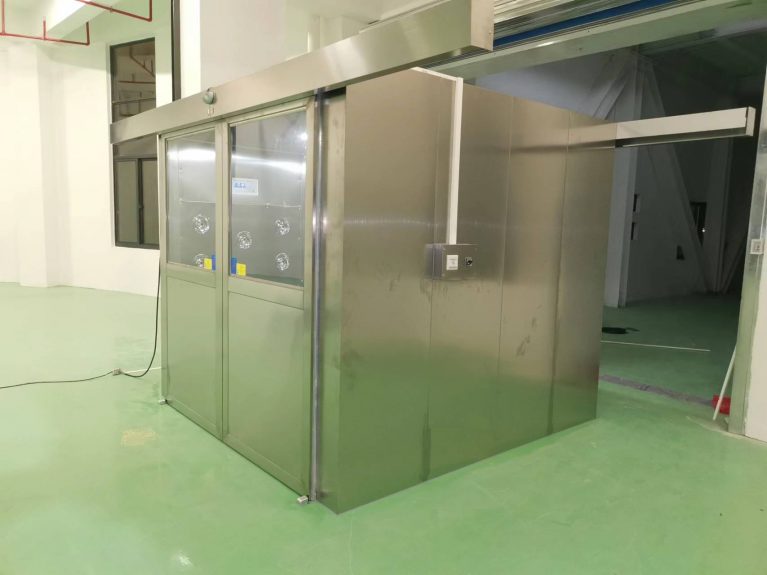
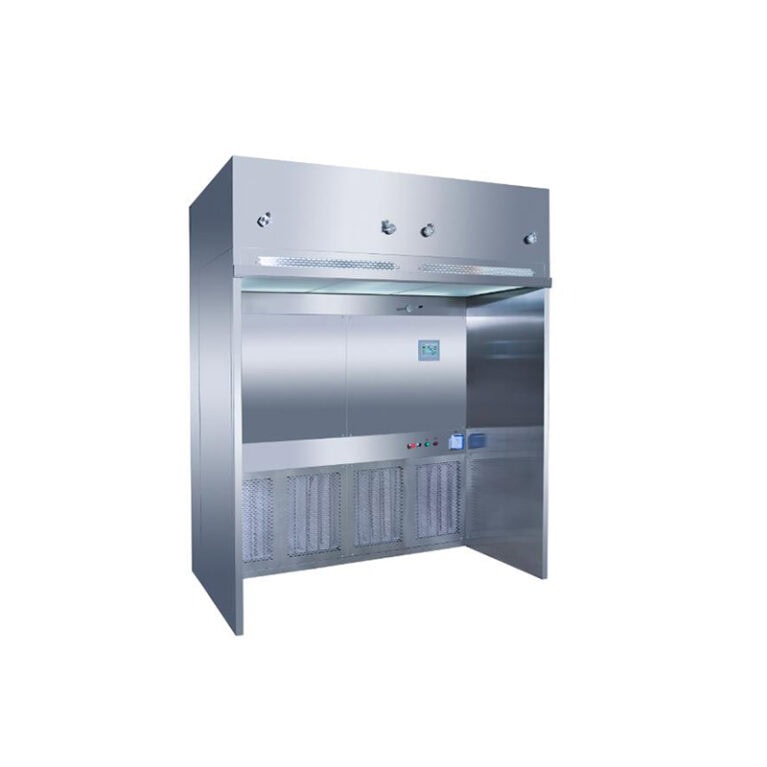
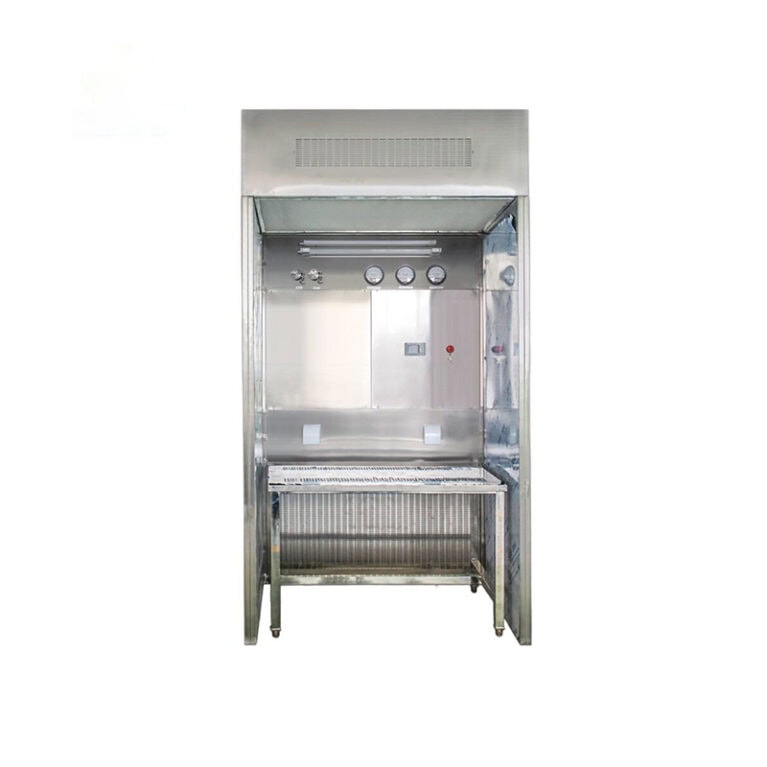
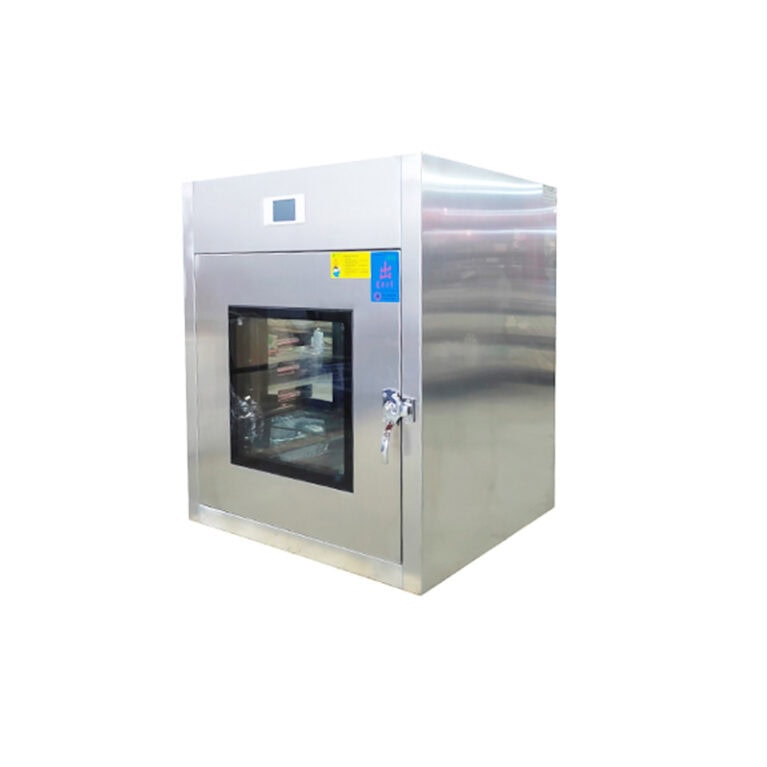
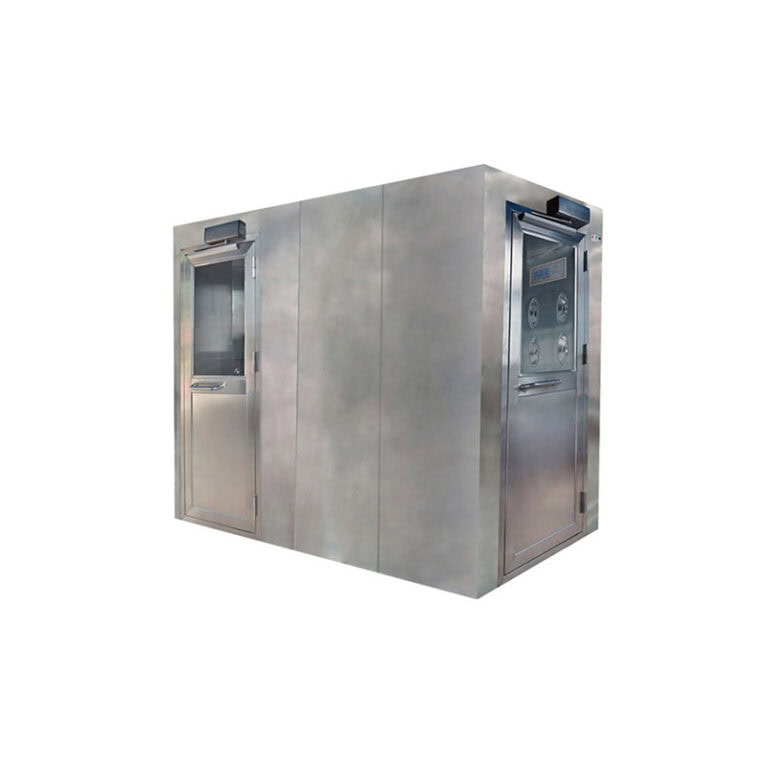
As the core “dust-proof checkpoint” of the clean area, the goods shower room is mainly used to remove dust particles adhering to the surface of goods when they enter and exit the clean room, preventing non-clean air from entering along with the goods. Therefore, it is widely used in industries with strict standards for the cleanliness of the production/operation environment. The following are its core application industries and specific scenarios, which are elaborated in combination with the characteristics of clean requirements in each industry: 1. Pharmaceutical industry (the most stringent application) The cleanliness requirements in the pharmaceutical industry are directly related to the safety and efficacy of drugs. Whether it is the production of active pharmaceutical ingredients, the processing of preparations, or the assembly of medical devices, it is necessary to strictly control contaminants such as microorganisms and dust. The air shower is an essential purification device. Specific scene Pharmaceutical production workshops (such as tablet, injection, and vaccine workshops): When raw materials (such as pharmaceutical powder and excipients), semi-finished products/finished products (such as medicine bottles and aluminum-plastic packaging) enter and exit the clean area (usually a 10,000-level or 100,000-level clean area), they need to pass through the material shower room
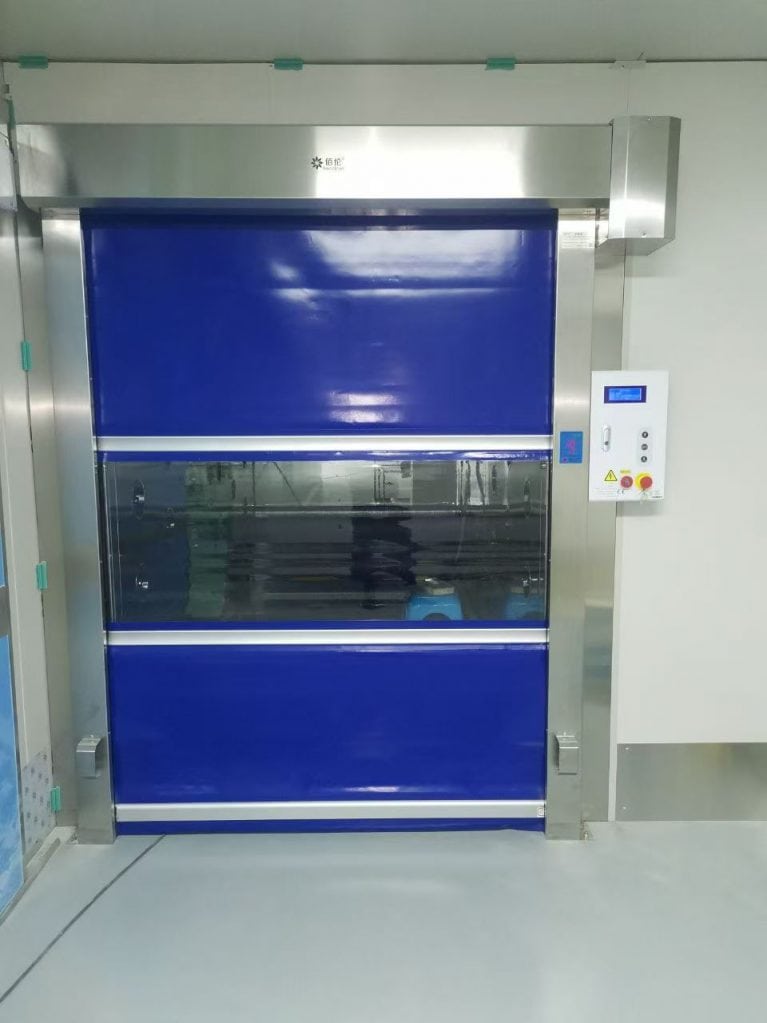
The rapid rolling shutter door air shower is a key device in clean workshops, logistics channels, and other scenarios, which has both rapid isolation and dust removal functions for goods. Its daily maintenance directly affects the cleaning effect, equipment lifespan, and operational safety. Maintenance should be carried out around the four core modules of “rolling shutter door System”, “air shower dust removal system”, “Electrical control system”, and “structural and safety components”. The specific precautions are as follows: I. Maintenance of Roller Shutter Door System: Ensure smooth opening and closing, as well as sealing performance Rolling shutter doors are the “core channel components” of the equipment. Special attention should be paid to the mechanical transmission and the condition of the curtain fabric to avoid problems such as jamming and air leakage. Clean the curtain fabric regularly to prevent the accumulation of stains Every week, wipe the surface of the curtain fabric with a neutral cleaner (such as a diluted dishwashing liquid) and a soft cloth to remove dust, oil stains, or sticky substances remaining from the goods (such as adhesive marks from packaging tape). Do not use strong acids, strong alkalis, or sharp tools (such as steel wool balls) for cleaning
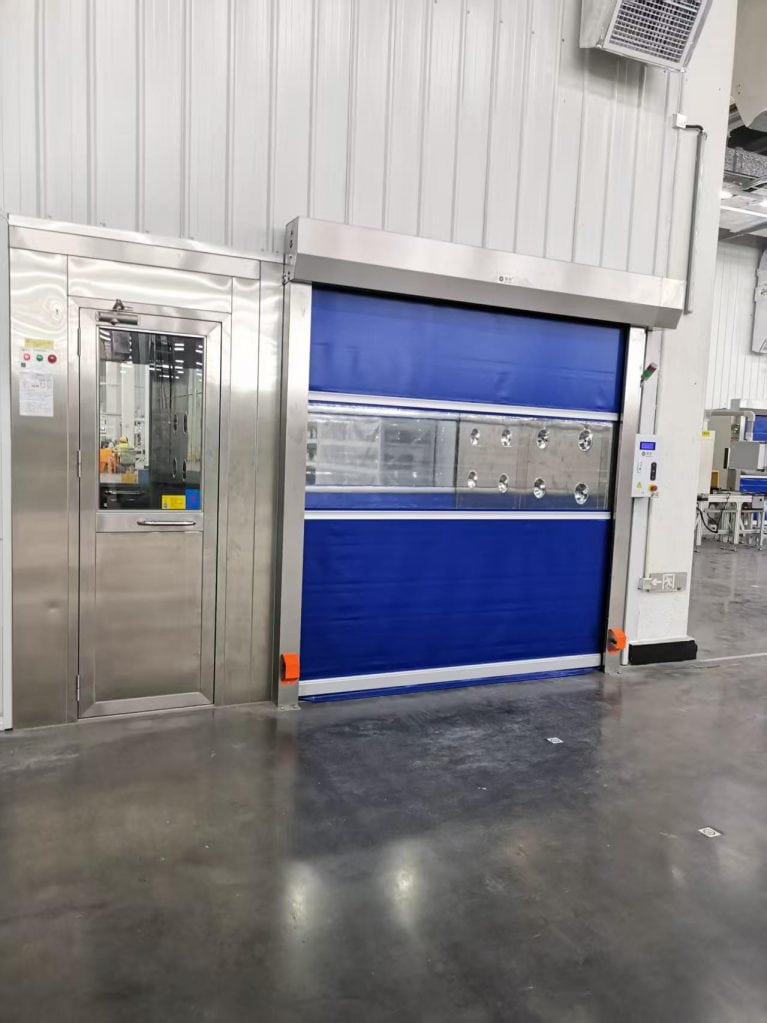
The rapid rolling shutter door air shower is a key device in clean workshops, logistics channels, and other scenarios, which has both rapid isolation and dust removal functions for goods. Its daily maintenance directly affects the cleaning effect, equipment lifespan, and operational safety. Maintenance should be carried out around the four core modules of “rolling shutter door System”, “air shower dust removal system”, “Electrical control system”, and “structural and safety components”. The specific precautions are as follows: I. Maintenance of Roller Shutter Door System: Ensure smooth opening and closing, as well as sealing performance Rolling shutter doors are the “core channel components” of the equipment. Special attention should be paid to the mechanical transmission and the condition of the curtain fabric to avoid problems such as jamming and air leakage. Clean the curtain fabric regularly to prevent the accumulation of stains Every week, wipe the surface of the curtain fabric with a neutral cleaner (such as a diluted dishwashing liquid) and a soft cloth to remove dust, oil stains, or sticky substances remaining from the goods (such as adhesive marks from packaging tape). Do not use strong acids, strong alkalis, or sharp tools (such as steel wool balls) for cleaning
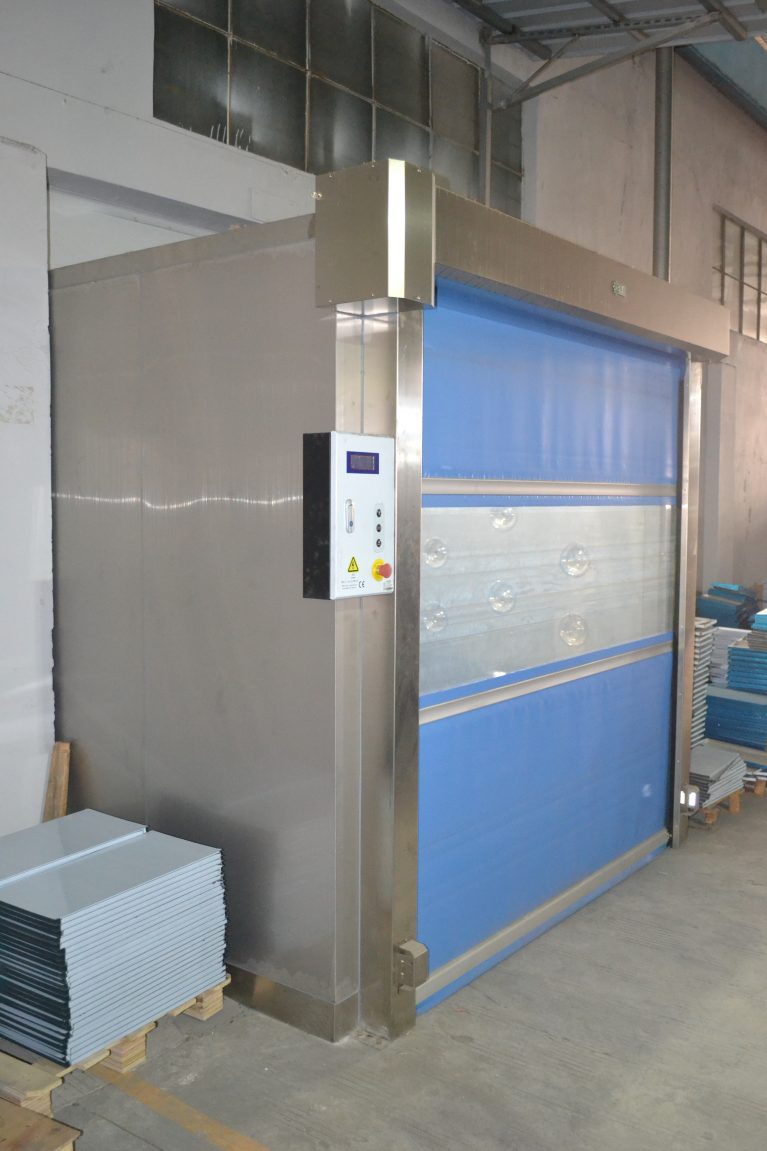
The rapid rolling shutter door cargo air shower is a dedicated device that combines the efficient passage characteristics of the rapid rolling shutter door with the dust removal and purification function of the cargo air shower. Its core function is to quickly isolate the air circulation between the clean area and the non-clean area when goods enter and exit the clean area, and remove the dust, hair, and other contaminants adhering to the surface of the goods through high-pressure air flow, while reducing the waiting time of personnel and improving the efficiency of goods transfer. Its application fields are highly concentrated in scenarios with strict cleanliness requirements and frequent goods turnover. Specifically, it can be classified into the following categories: I. Food and Pharmaceutical Industry (Core Application Fields) The food and pharmaceutical industries have mandatory standards for the cleanliness of the production environment (such as microorganisms, dust, and foreign objects), such as food GMP and drug GMP. The rapid rolling shutter door material shower room can prevent goods from carrying contaminants into the core area, ensuring the safety and compliance of products. Food processing/packaging field Application scenarios: baking workshops, dairy product production lines, meat processing areas, beverage filling workshops, aseptic
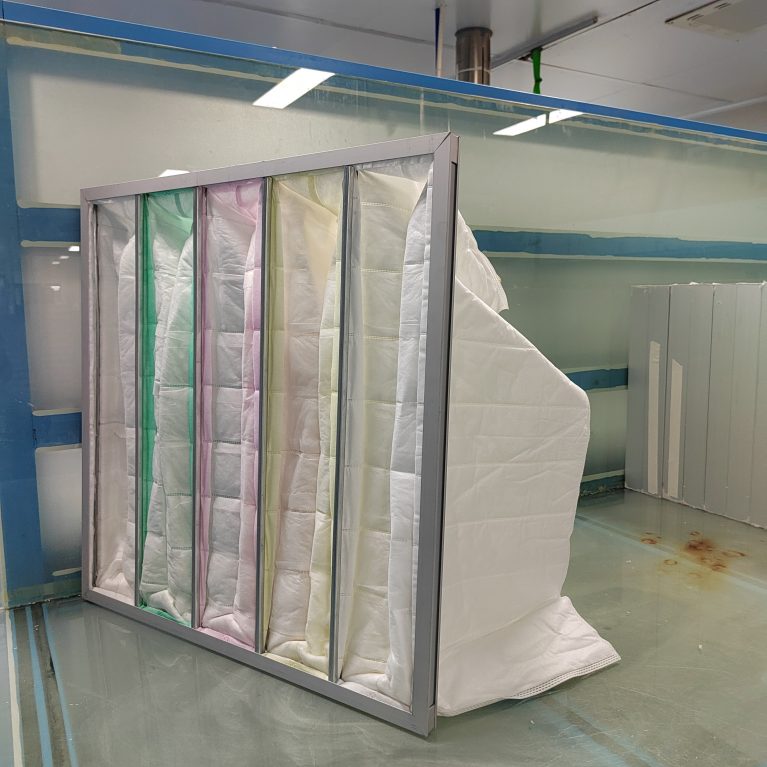
In the field of special manufacturing, the core value of fiberglass bag air filters lies in their ability to meet high cleanliness requirements, withstand specific environments (such as local high temperatures and low corrosion), and ensure product accuracy and production compliance through “medium-efficiency filtration” or “pre-protection of high-efficiency filters”. They are particularly suitable for manufacturing scenarios that are sensitive to dust and impurities and require stable filtration performance. The specific application scenarios can be further classified into the following four categories, covering key fields such as electronic semiconductors, pharmaceuticals and food, aerospace, and optical instruments: I. Electronics and Semiconductor Manufacturing: Ensuring precise manufacturing processes and avoiding dust-induced waste The manufacturing of electronic semiconductors has extremely high requirements for air cleanliness (control of dust at the micrometer or even nanometer level). Fiberglass bag filters, with their low dust generation and medium to high efficiency filtration accuracy, have become the core filtration unit, directly affecting the yield of chips and components. Core chip manufacturing processes (photolithography/etching/deposition Scene requirement: During the photolithography process, if dust particles larger than 0.5μm adhere to the surface of the chip wafer, it will directly cause the photolithography pattern to shift and short circuit. During etching/deposition (such as