
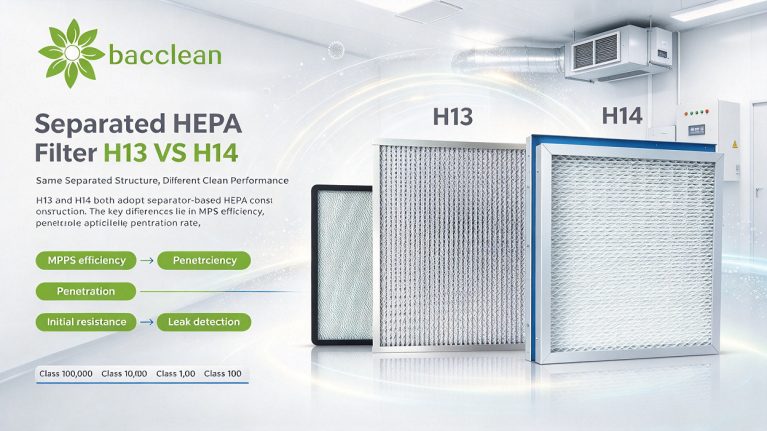
Efficiency Difference Between H13 and H14
According to EN 1822 / ISO 29463 and GB/T 13554-2020 standards, both H13 and H14 take the Most Penetrating Particle Size (MPPS, usually within 0.1~0.3μm) as the basis for efficiency evaluation.
- H13: Overall MPPS efficiency ≥99.95%, local efficiency ≥99.75%.
- H14: Overall MPPS efficiency ≥99.995%, local efficiency ≥99.975%.
- Penetration rate: H13 ≤0.05%, H14 ≤0.005%.
In terms of penetration rate, H14 is one order of magnitude lower than H13, which means under identical conditions, fewer particles can penetrate H14 filters.
Resistance & Energy Consumption Difference
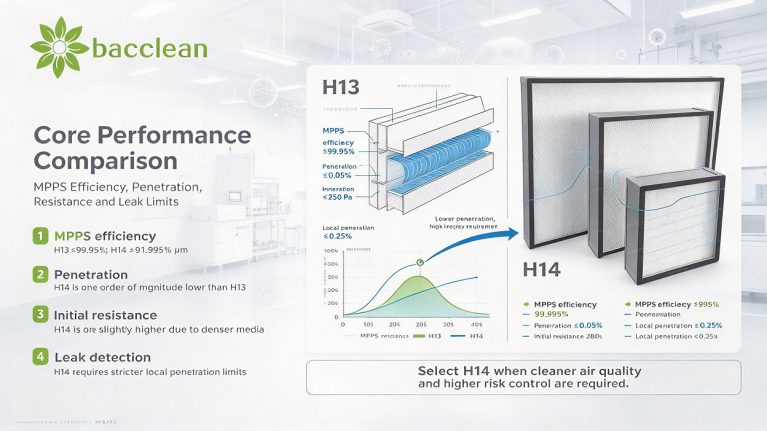
H14 adopts denser filter media to achieve higher efficiency, so its initial resistance is generally slightly higher than H13. Under rated air flow specified in GB/T 13554-2020:
- H13: Initial resistance ≤250Pa
- H14: Initial resistance ≤280Pa
Higher resistance will directly affect fan energy consumption and system pressure difference. When selecting H14, it is necessary to confirm whether the air handling unit or fan has sufficient residual pressure.
Difference in Leak Detection & Validation Requirements
H14 has stricter integrity requirements. During factory leak inspection or on-site PAO/DOP scanning, H14 allows a lower limit of local leakage.
- H13: Local penetration requirement ≤0.25%
- H14: Local penetration requirement ≤0.025%
It means H14 not only delivers higher overall efficiency, but is also more sensitive to manufacturing defects such as pinholes on filter paper, sealant joints and frame sealing.
Difference in Application Scenarios
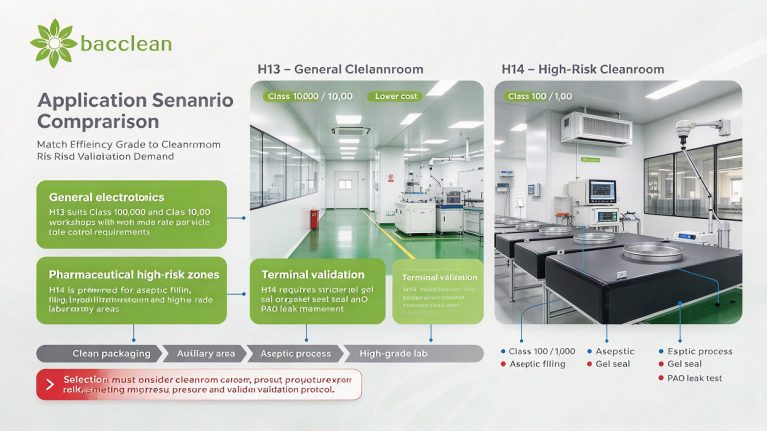
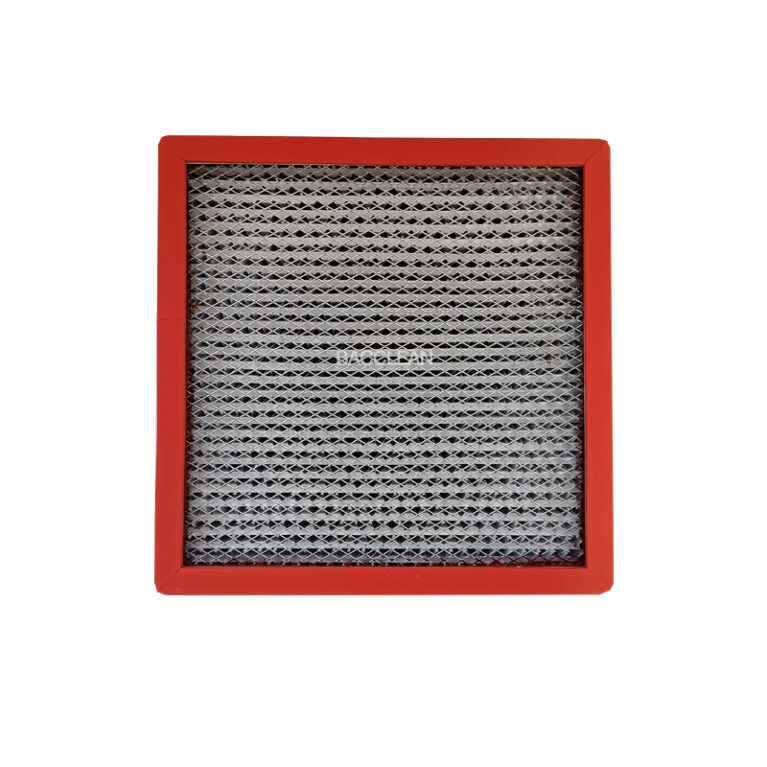
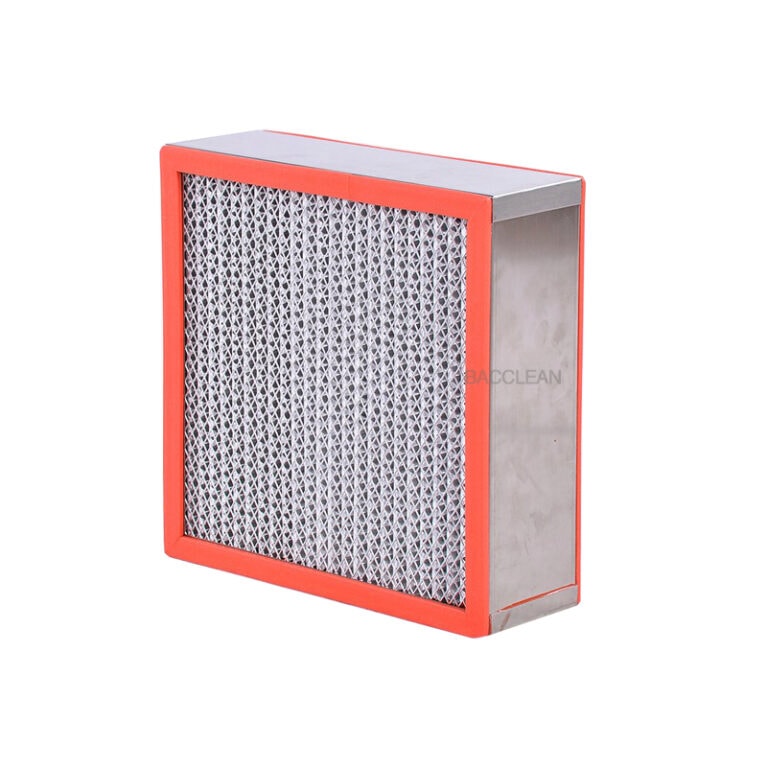
- Separated H13 HEPA filter: Suitable for Class 10,000 and Class 100,000 cleanrooms, general electronic workshops, ordinary clean packaging rooms, auxiliary areas for solid preparation, and terminal of conventional air purification air conditioning systems. H13 can meet the requirements for most non-high-risk clean scenarios.
- Separated H14 HEPA filter: More suitable for Class 100 / Class 1000 background air supply, aseptic filling areas, lyophilization areas, high-risk pharmaceutical clean zones, high-grade laboratories, and terminal air supply with stricter particle control requirements.
When used at the terminal of cleanrooms, judgment shall be made combining air outlet sealing method, FFU structure, on-site PAO leak test and cleanroom validation results.
Selection Recommendations
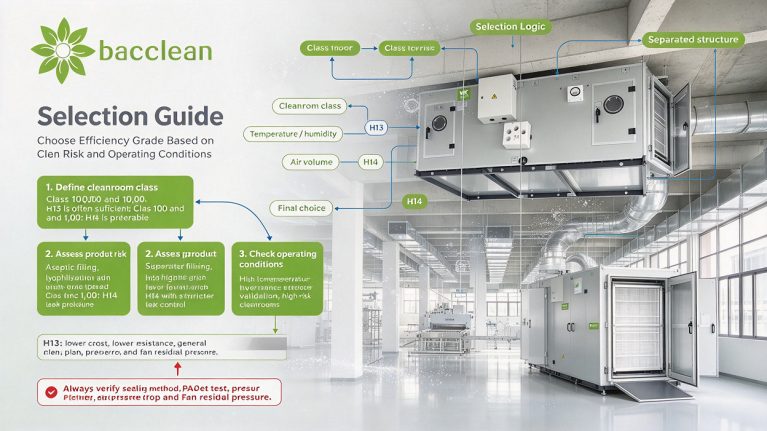
- For Class 10,000 and Class 100,000 cleanrooms with low product exposure risk, separated H13 is preferred for lower cost and smaller resistance.
- For Class 100 and Class 1000 cleanrooms, or aseptic and high-risk pharmaceutical areas, separated H14 is recommended, matched with gel seal or stricter leak detection management.
- For working conditions of high temperature, high humidity, large air volume or combined air handling cabinets, separated structure itself has advantages. Choose H13 or H14 according to clean risk.
In short: H13 is standard HEPA grade, H14 is higher-grade HEPA. H14 has lower penetration rate, stricter leak detection and slightly higher resistance, suitable for high-risk clean scenarios.
