
Structure & Working Principle
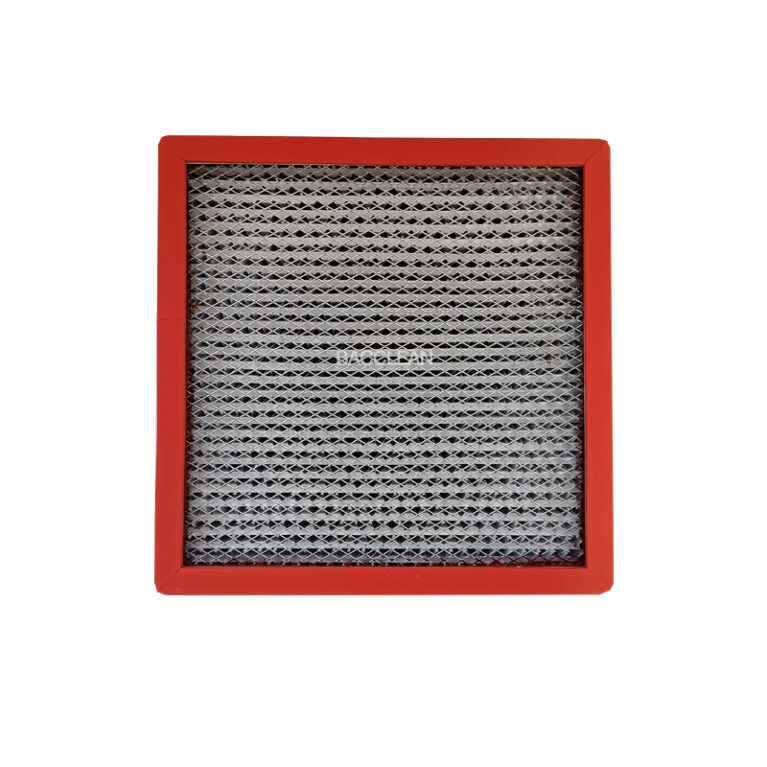
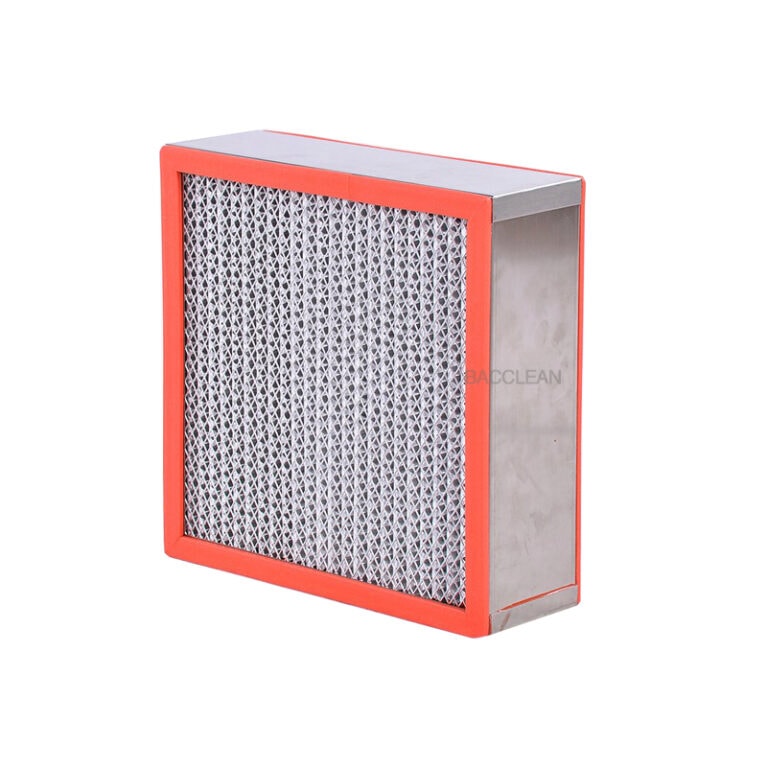
Separated HEPA filter mainly consists of four parts: filter media, separators, frame and sealing material.
Filter media is generally ultra-fine glass fiber filter paper; some products adopt PP HEPA filter paper. Ultra-fine glass fiber paper has extremely thin fibers, forming dense and tortuous pore networks between fibers. When dust-laden air flows through the media, particles are captured by fibers through interception, inertial impaction, diffusion, gravitational settling and electrostatic adsorption. Particles larger than 0.3μm are mainly trapped by inertia and interception, while particles smaller than 0.1μm are captured mainly by Brownian diffusion. Particles around 0.3μm are the hardest to filter, so this particle size is taken as the representative particle size for HEPA efficiency testing.
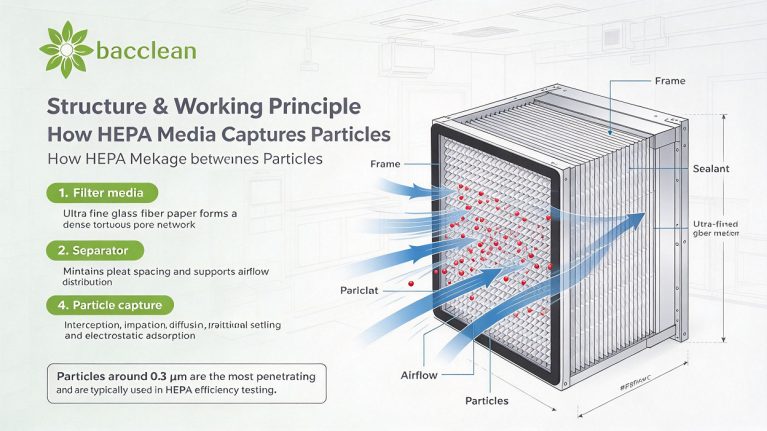
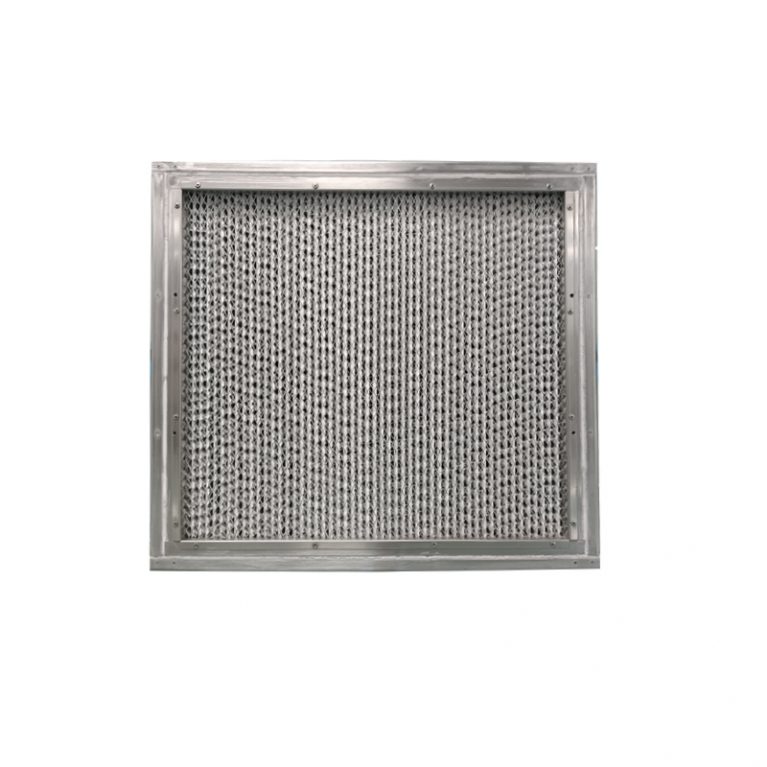
The separator is the iconic component of separated HEPA filters. Made of aluminum foil or offset paper, it is corrugated and sandwiched between filter paper sheets, forming uniform wedge or rectangular pleat channels. The separator keeps consistent pleat spacing, prevents filter media from collapsing under air pressure, and guides air flow evenly across the whole filter area. The filter paper is folded at 180° on both sides with creases at bending positions, forming wedge-shaped pleats at the tail to reduce the risk of filter media damage.
The outer frame fixes the filter assembly and provides mounting interface. Common frame materials include galvanized steel sheet, aluminum alloy, stainless steel and wooden frame. Stainless steel or aluminum alloy frames are preferred for pharmaceutical, food, humid environments and scenarios requiring high corrosion resistance. Sealing materials adopt polyurethane sealant, silicone rubber or neoprene gaskets, to ensure zero air leakage between filter media and frame, and between frame and mounting surface.
Material Characteristics
For filter media: Ultra-fine glass fiber filter paper features high filtration efficiency, good temperature resistance and strong chemical stability, and is the mainstream HEPA filter material. PP HEPA filter paper has good moisture resistance and is suitable for high-humidity environments.
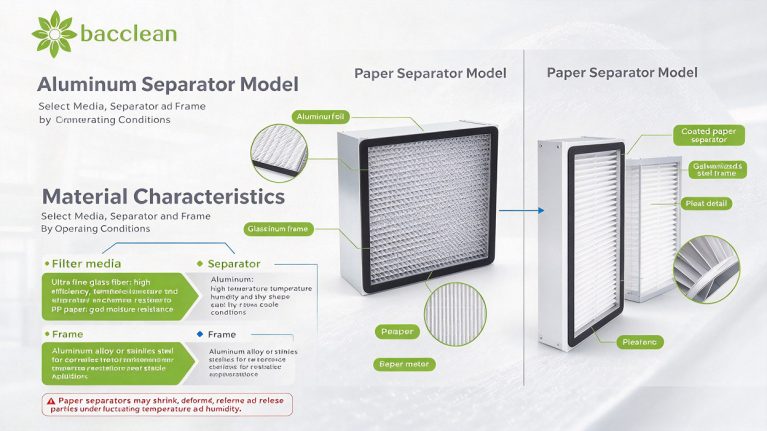
Separator material directly affects applicable working conditions. Aluminum foil separators are high temperature resistant, moisture-proof and not easy to deform, suitable for high temperature, high humidity or environments with dramatic temperature & humidity fluctuation. Ordinary aluminum separator models can withstand around 80℃. Special high-temperature models with stainless steel frames and high-temperature sealant can be used in higher-temperature industrial environments. Paper separators are mostly double-sided coated offset paper, with low cost. They are used in ordinary clean rooms with stable temperature and humidity. However, under fluctuating temperature and humidity, paper separators may shrink and deform, releasing particles and affecting cleanroom testing for high-grade clean areas.
For outer frame materials: Galvanized steel has low cost but average corrosion resistance; aluminum alloy is lightweight with good corrosion resistance and widely adopted; stainless steel frame has high corrosion resistance and mechanical strength, ideal for pharmaceutical, food and chemical industries; wooden frame is for ordinary clean environments with low cost but poor moisture resistance.
Main Performance Features
The prominent advantages of separated HEPA filters are stable structure, large dust holding capacity, high air flow rate and good high-temperature resistance. Separators provide rigid support for filter media. The filter is not easy to deform under high air pressure, vibration or high humidity, maintaining stable air passages and consistent filtration efficiency throughout service life. Its rectangular pleat channels make full use of filter media with large dust holding capacity and relatively long replacement cycle. Under the same specification, separated HEPA filters usually have lower upfront cost than mini-pleat HEPA filters, suitable for budget-sensitive projects requiring mass replacement.
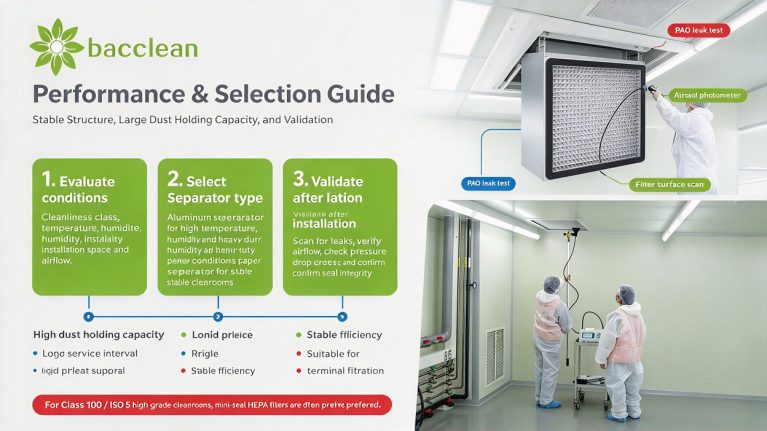
Its limitation lies in larger size and weight. Due to separator support, the filter thickness is normally 120mm, 150mm, 220mm, 292mm, thicker and heavier than mini-pleat filters, requiring larger installation space. Paper-separated models may release particles under fluctuating temperature and humidity. Therefore, mini-pleat HEPA or liquid seal HEPA filters are more commonly adopted for Class 100 / ISO 5 and Class 1000 high-grade clean rooms.
Application Scenarios
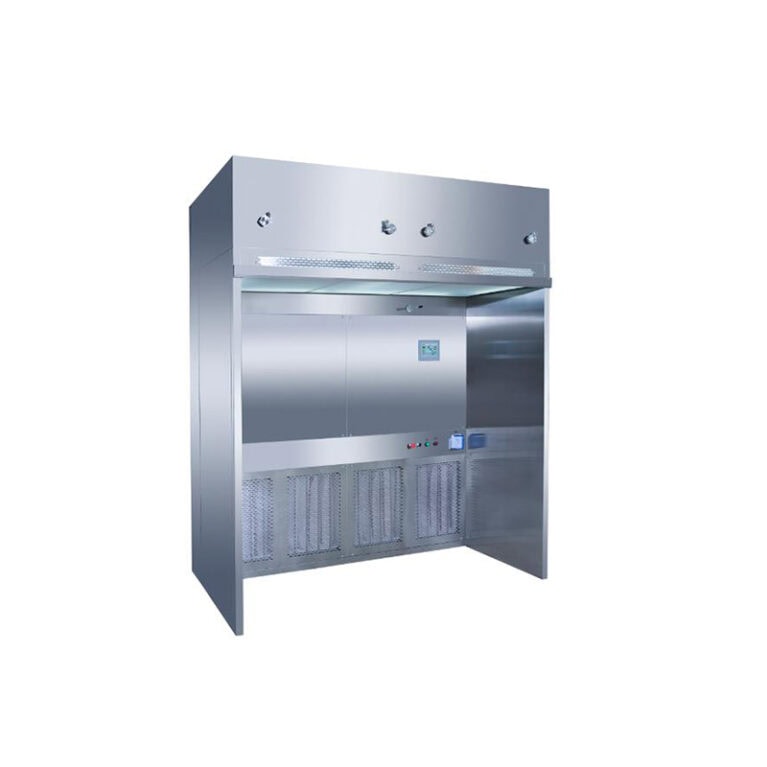
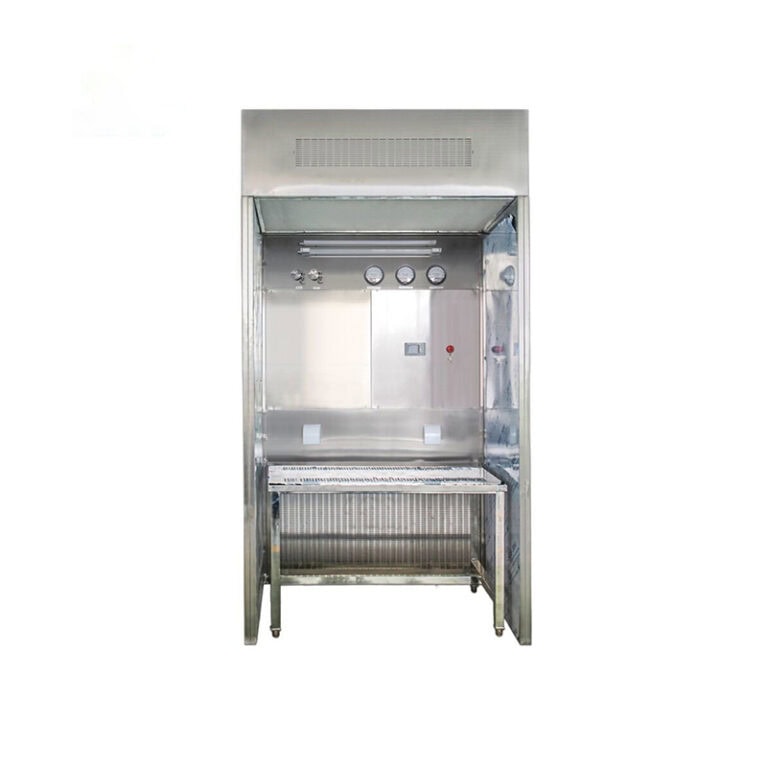
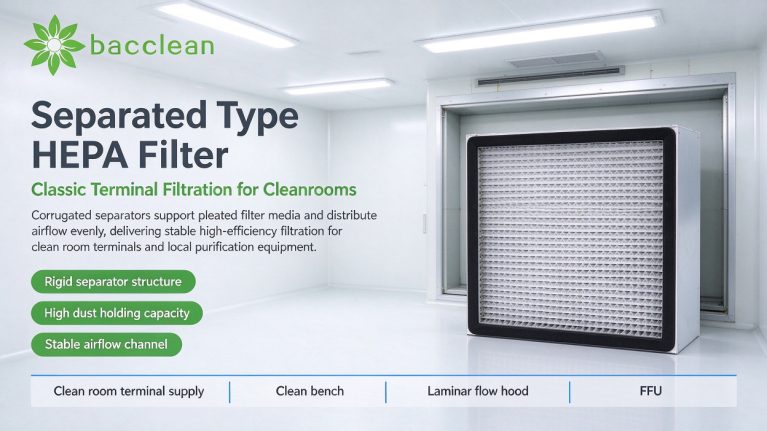
Separated HEPA filters are suitable for terminal air supply of various clean rooms, supporting purification equipment, large-air-volume air conditioning systems and high-temperature & high-humidity environments. Aluminum separator models are applied in high-temperature drying lines, chemical workshops, humid environments and scenarios requiring high structural strength. Paper separator models are used in ordinary clean workshops, non-unidirectional low-grade clean rooms, clean benches and laminar flow hoods.
For selection, comprehensively consider cleanliness class, temperature & humidity, installation space, air flow demand and replacement cycle. If space is limited, high cleanliness level and low energy consumption are required, mini-pleat HEPA filters are preferred. If high air volume, large dust holding capacity, high temperature resistance and high structural strength are needed, separated HEPA filters are the better choice.
