
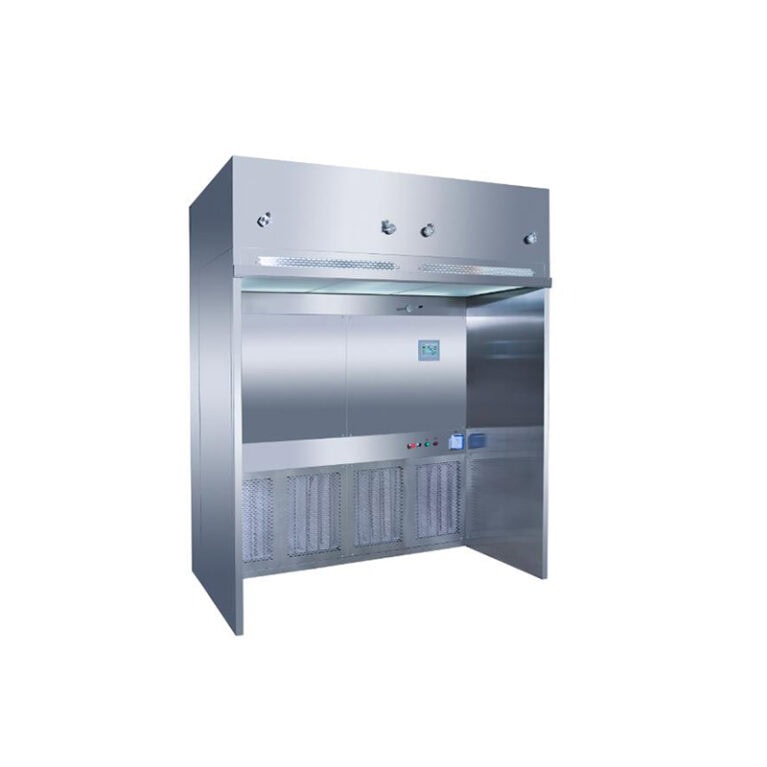
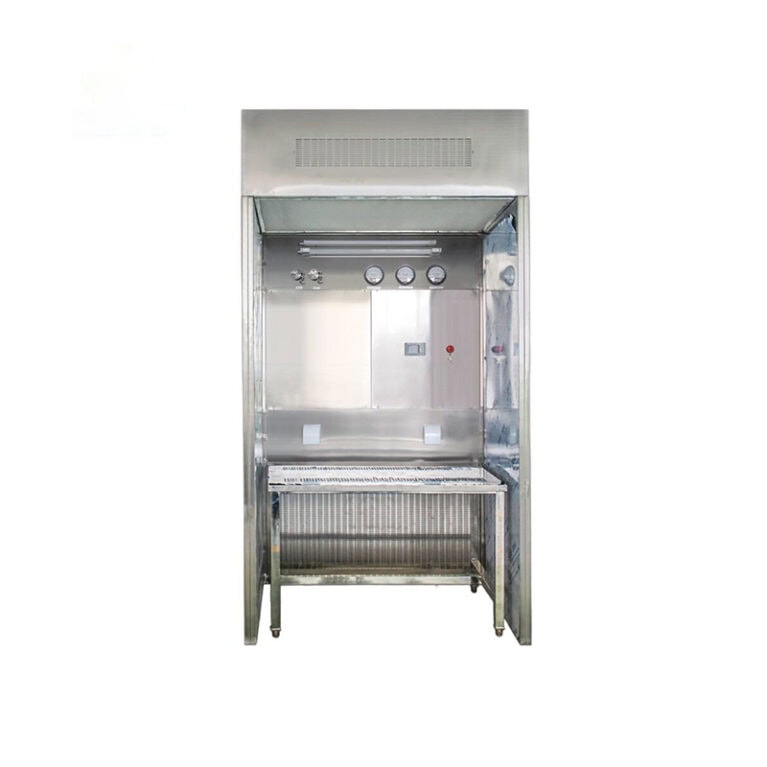
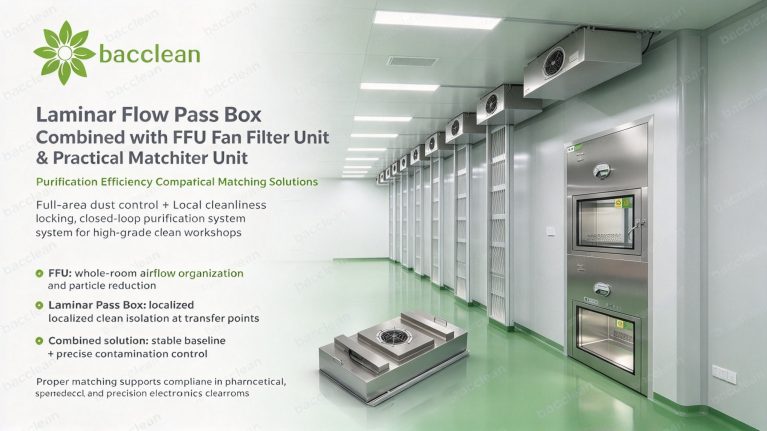
As a local purification equipment for cross-zone material transfer, the laminar flow pass box, and FFU fan filter unit, the core air supply purification equipment for full or partial workshop areas, each has its own capability boundary when operating independently. Proper combination can form a closed-loop purification system of full-area dust control + local cleanliness locking. This article compares the differences between single-equipment operation and combined operation from the perspectives of working principle, purification efficiency, applicable working conditions and matching schemes, and provides practical cleanroom selection solutions for GMP pharmaceutical, semiconductor, precision electronics, biomedical and other industries.
1. Basic Purification Principle and Capability Boundary of Core Equipment
To properly match the equipment, it is necessary to clarify the purification positioning of the two devices first. They are not substitutes but complementary purification equipment, with completely different core application scenarios and airflow logic.
1.1 Laminar Flow Pass Box: Local Fixed-point Clean Isolation Equipment
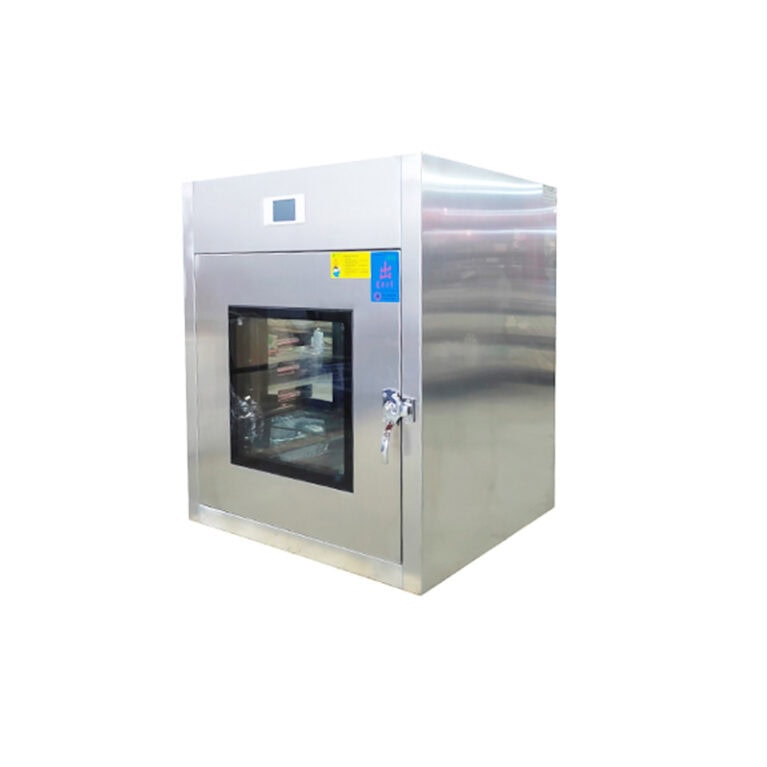
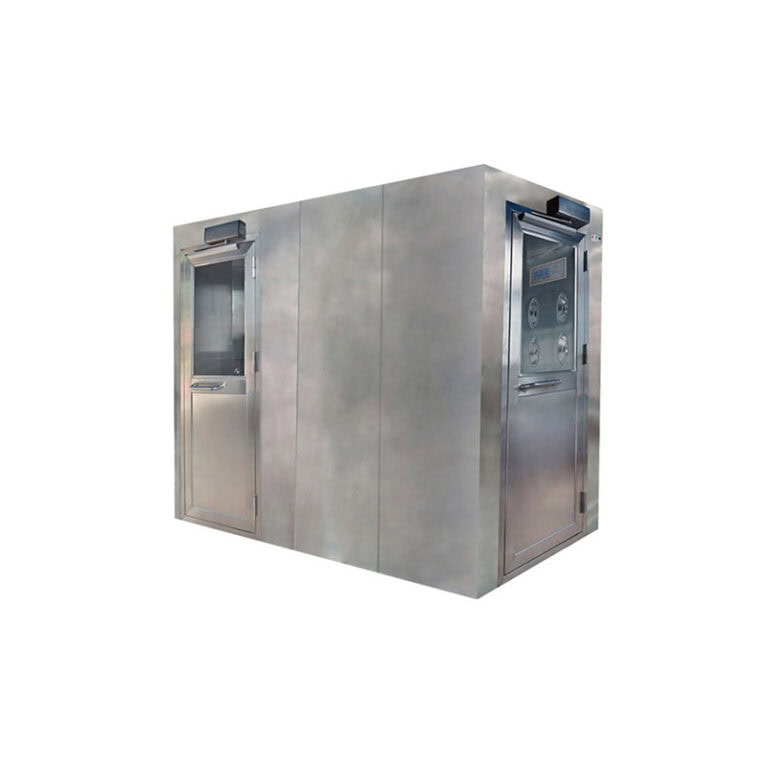
The laminar flow pass box is built with HEPA filters and a dedicated fan. It forms a stable clean micro-environment inside the cabinet through vertical unidirectional laminar airflow. Its core function is to block cross-contamination during cross-zone material transfer. During operation, clean air inside the cabinet is continuously replaced to inhibit particle sedimentation and accumulation, ensuring materials are free from backflow of airflow between high and low cleanliness zones during transfer.
Its capability boundary is limited to the narrow space inside the cabinet. It cannot improve the overall air cleanliness of the workshop, regulate workshop pressure differentials, or solve the problem of excessive suspended particles in the whole workshop. It only provides precise clean protection for the single process of material transfer. Conventional industry configurations can stably achieve local Class A cleanliness inside the cabinet, suitable for high-frequency transfer of precision and sterile materials.
1.2 FFU Fan Filter Unit: Full/Partial Space Air Supply Purification Equipment
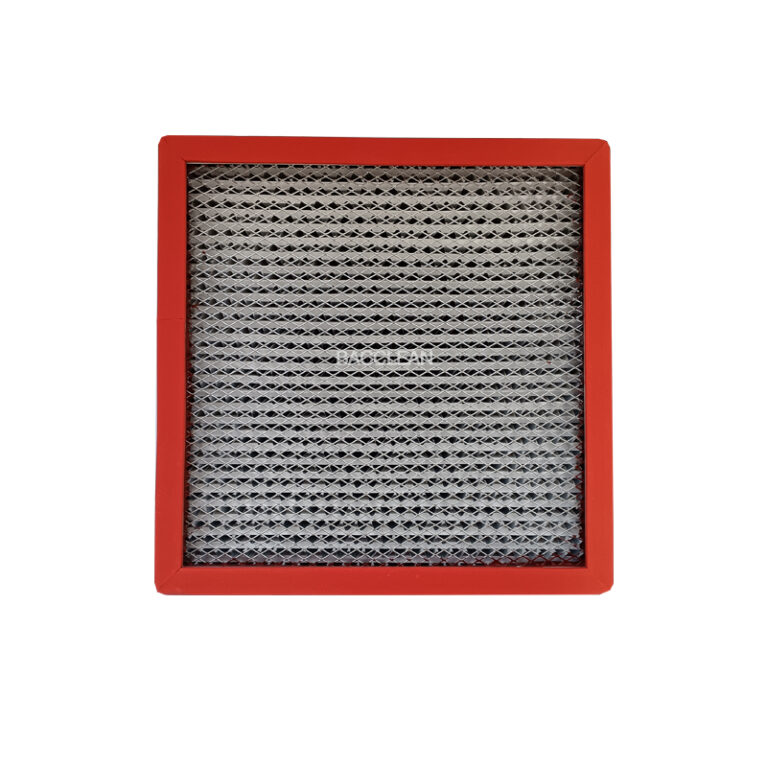
The FFU fan filter unit is a modular air supply device integrating fans, HEPA filters and flow equalization systems. It can be ceiling-mounted or installed on supports in groups. Large-area vertical laminar air supply forms unidirectional airflow organization for the whole or partial workshop area. Combined with the return air system, it realizes circulating air filtration and continuously reduces the concentration of suspended particles in the whole workshop.
FFUs can be networked in batches for new construction and renovation of Class 1000, Class 10,000 and Class 100,000 cleanrooms. It supports wind speed adjustment and cluster control. It can optimize the overall airflow direction of the workshop, stabilize regional pressure differentials and reduce dust accumulation in the whole area. However, its capability boundary lies in overall space purification. It cannot provide precise isolation protection for closed narrow workstations such as pass boxes. When used alone, it cannot eliminate instantaneous pollution risks during material transfer.
2. Single Equipment Operation VS Combined Matching: Core Comparison of Purification Efficiency
This section compares the purification performance of three operation modes from four core dimensions: airflow stability, particle control capacity, pollution blocking effect and working condition adaptability, and objectively presents the advantages, disadvantages and applicable limitations of different schemes.
2.1 Laminar Flow Pass Box Only: Local Compliance with Obvious Full-area Shortcomings
Advantages: Stable cleanliness of the material transfer cabinet, uniform airflow without turbulence. It can effectively prevent dust accumulation and microbial contamination on material surfaces, meeting the basic compliance requirements of cross-zone material transfer. Flexible start-stop and low energy consumption with strong targeting.
Disadvantages: Completely dependent on the original environmental cleanliness of the workshop. If suspended particles in the whole workshop exceed the standard, airflow is chaotic, and pressure differential is unstable, external polluted air will quickly pour into the cabinet when opening the door to take materials, instantly destroying the local laminar clean environment, resulting in instantaneous excessive particles and greatly reducing the clean safety of material transfer.
Applicable scenarios: Mature clean workshops with full-space high-standard purification, stable airflow and qualified pressure differential, only needing to guarantee the cleanliness of material transfer points.
2.2 FFU Fan Filter Unit Only: Full-area Optimization with Local Blind Spots
Advantages: It can quickly optimize the overall airflow organization of the workshop, continuously filter suspended particles in the whole space, stabilize the cleanliness level and pressure differential of the area, and improve the overall clean environment of the workshop. Suitable for purification upgrading and renovation of large-area workshops.
Disadvantages: No fixed-point isolation protection capability. The full-area air supply of FFU is open airflow. Eddy current and dust generated by personnel operation and door opening ventilation during material transfer cannot be precisely controlled. The pass box becomes a clean blind spot, which is easy to cause compliance loopholes of “overall compliance but point exceeding standard”. It cannot meet the transfer requirements of sterile and high-precision materials.
Applicable scenarios: Overall cleanliness upgrading of workshops, basic dust control, and ordinary clean areas without high-demand sterile material transfer processes.
2.3 Combined Operation of Laminar Flow Pass Box + FFU: Full-area Backstop and Local Clean Locking for Optimal Efficiency
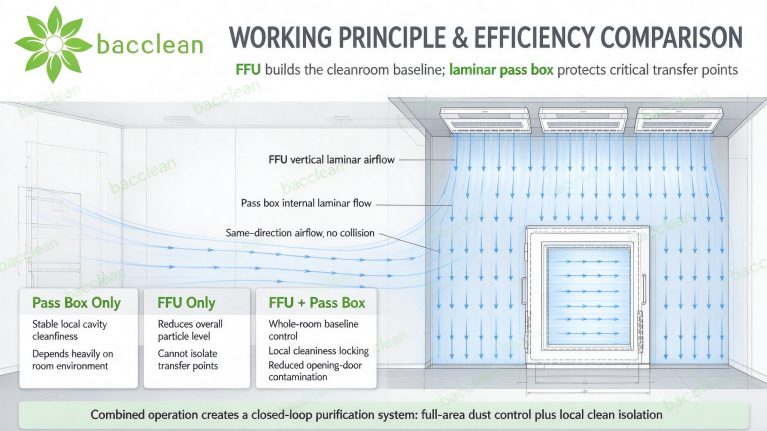
Core purification logic: FFU is responsible for full-area backstop purification of workshop air, stabilizing the overall airflow, pressure differential and particle baseline, and reducing the basic pollution load of the environment; the laminar flow pass box is responsible for precise clean locking at key processes. On the basis of full-area compliance, it builds a local ultra-clean isolation area to make up for the point blind spot of open purification.
Highlights of purification efficiency improvement:
-
Greatly reduce the risk of pollution when opening the door. Under the full-area low-particle environment, the instantaneous pollution amount of ventilation when opening the pass box door is greatly reduced, and the cabinet laminar flow system can quickly restore the clean state.
-
Collaborative and stable airflow organization. The vertical laminar flow of FFU and the laminar airflow of the pass box are superimposed in the same direction, without airflow collision and turbulence dead corners, making the full-area + local airflow smoother.
-
Adapt to strict compliance scenarios. It can stably meet the continuous cleanliness requirements of Class A/B/C high-cleanliness areas and sterile workshops, and greatly reduce the probability of cross-contamination.
Overall Disadvantages: Equipment investment and operation & maintenance costs are higher than single equipment operation, and the overall energy consumption is relatively higher. A reasonable control strategy needs to be matched to optimize operating costs.
3. Practical Matching Schemes for Different Scenarios (Adapted to Different Cleanliness Levels)
Combined with ISO14644 cleanroom standards and workshop working conditions, three practical schemes are sorted out, balancing purification efficiency and cost performance to avoid over-specification or insufficient configuration.
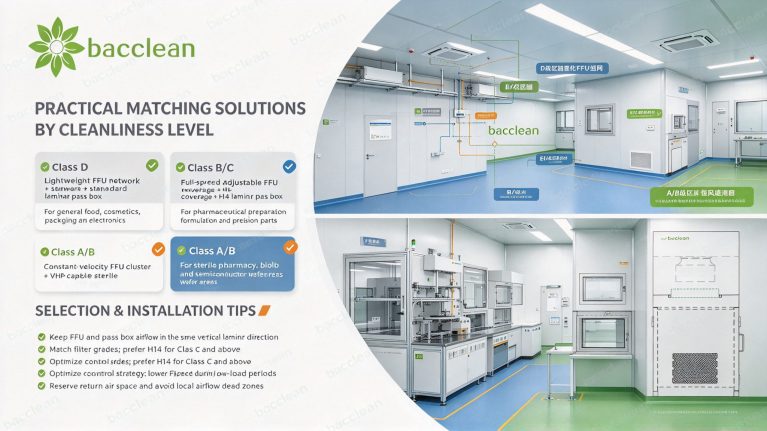
3.1 Class D General Clean Area (Ordinary Food, Cosmetics, Packaging, General Electronic Workshops)
Working condition features: Moderate requirements for particle and microbial control. Dust pollution mainly comes from floating dust on outer packaging. No high-intensity sterile disinfection requirements, and cost performance is the priority of budget. Matching scheme: Lightweight FFU networking in full area + standard laminar flow pass box. No need for full ceiling coverage of FFUs. Modular FFUs are arranged in core operation areas to stabilize the basic cleanliness and airflow of the workshop. Paired with standard H13 filtration laminar flow pass box to meet daily dust removal requirements for cross-zone material transfer. This scheme can complete workshop purification upgrading at low cost, solve the problems of full-area dust and material transfer dust accumulation in ordinary workshops, and fully meet the compliance requirements of Class D clean areas.
3.2 Class B/C Medium & High Clean Area (Pharmaceutical liquid preparation, formulation, precision parts processing)
Working condition features: Strict control of suspended particles and microorganisms. High frequency of material transfer. Some materials are semi-open, and airflow disturbance and secondary dust are prohibited. Matching scheme: Full coverage of speed-adjustable FFUs + standard laminar flow pass box. EC speed-adjustable FFUs are adopted to adjust wind speed according to production periods, stabilize the unidirectional laminar airflow and pressure differential of the workshop, and strictly control the full-area particle baseline. Paired with H14 HEPA laminar flow pass box, the combined airflow coordination advantage is utilized to avoid backflow when opening the door and local turbulence, ensuring the cleanliness stability of material transfer during continuous production, suitable for normal continuous production conditions.
3.3 Class A/B High Sterile Clean Area (Sterile Pharmacy, Biological Laboratory, Semiconductor Wafer)
Working condition features: Extremely strict cleanliness control. Any particle and microbial pollution is prohibited. High requirements for airflow stability and sterility. Matching scheme: High-precision constant wind speed FFU cluster + sterile laminar flow pass box (VHP sterilization compatible). Full-area constant wind speed FFUs realize uniform air supply without dead corners in the workshop and completely eliminate hidden dangers of full-area dust. Paired with sterilizable laminar flow pass box, it forms double protection of “Class A baseline in the workshop + ultra-clean isolation at points”, completely avoiding pollution risks brought by personnel operation and material transportation, complying with EU GMP and domestic sterile workshop specifications.
4. Core Advantages of Combined Matching & Pit Avoidance Points for Selection
4.1 Core Value of Combined Matching
-
Make up for the shortcomings of single equipment, solve the industry pain points of point blind spots in FFU open purification and the heavy dependence of laminar flow pass box on external environment.
-
Greatly improve purification stability. The high and low matching forms a closed airflow loop with stronger anti-interference ability, and is more stable under dynamic working conditions such as door opening, personnel walking and material transportation.
-
Flexible and expandable. Modular FFUs can be increased or decreased as needed, and pass boxes can be selected according to material specifications, suitable for renovation and capacity expansion of new and old workshops.
4.2 Pit Avoidance Points for Selection & Installation
-
Unified airflow direction: The full-area air supply of FFU and the airflow of laminar flow pass box must maintain the same vertical laminar direction. Airflow collision is strictly prohibited to avoid turbulence and dust accumulation.
-
Matching filtration grade: For high-cleanliness areas, ensure the filter grades of FFU and pass box are synchronized (H14 filter is preferred for workshops above Class C). Avoid purification bottlenecks caused by mismatched high and low filter grades.
-
Optimized control strategy: Reduce FFU wind speed during non-continuous production periods and keep the pass box in standby operation, so as to reduce energy consumption while ensuring the clean baseline and avoid waste of invalid energy consumption.
-
Compliant installation spacing: Sufficient return air space shall be reserved around the pass box. FFU networking needs to cover the area where the pass box is located to avoid local airflow dead corners.
5. Summary
The FFU fan filter unit undertakes the functions of full-area airflow organization and basic purification of the clean workshop, determining the overall clean baseline of the workshop. The laminar flow pass box undertakes the function of precise isolation and purification at key material transfer points, guarding the terminal clean defense line of the process.
Single equipment operation has obvious limitations. Using only the pass box, the clean effect is greatly restricted by the workshop environment; using only FFU, the local pollution blind spot of material transfer cannot be solved. Scientific combination of the two can realize the collaborative purification effect of full-area dust control and local clean locking, greatly improving the overall purification efficiency and compliance stability of the workshop.
For cleanroom selection, there is no need to blindly equip high-end devices. Corresponding FFU networking density and laminar flow pass box configuration can be matched according to the own cleanliness grade, production working conditions and budget, achieving the optimal balance between compliance, purification efficiency and operating cost.
