
1. Civil Engineering Foundation & Site Reservation Requirements
On-site civil engineering review must be completed before installation to ensure load-bearing capacity, dimensions and levelness meet equipment requirements.
- Floor load-bearing: The floor must support the dead weight of the goods air shower chamber plus loads from goods and forklifts. Epoxy or anti-static flooring is recommended with a smooth surface. Elevation deviation shall be controlled within allowable specifications to prevent cabinet tilting and rolling door jamming.
- Space reservation: Apart from the overall dimensions of the equipment, reserve overhead space for rolling door retraction and maintenance space on both sides. Reserve operating space ahead of the passage for forklift turning and entry, to avoid incomplete blowing caused by goods failing to fully enter the chamber.
- Drainage and anti-seepage: Water retaining edges are recommended on cleanroom floors to prevent overflow of cleaning water. For humid working conditions, design drainage schemes in advance to avoid water accumulation and cabinet corrosion.
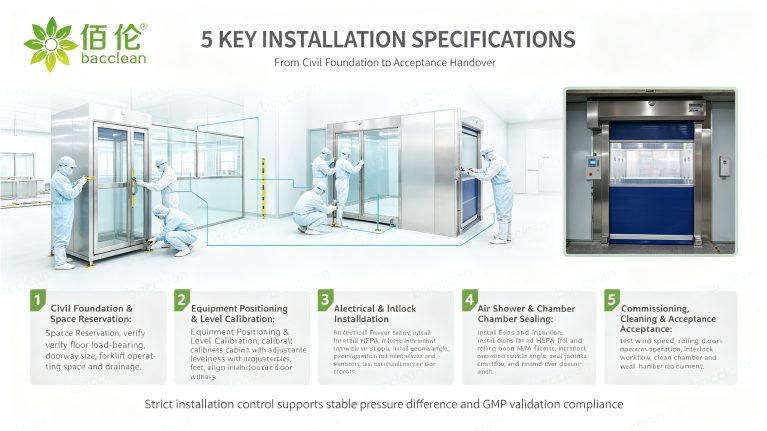
Note: The size of the civil doorway must match the outer frame of the equipment. Excessive gaps will lead to air leakage and impair clean isolation performance.
2. Equipment Positioning & Level Calibration Requirements
Equipment hoisting and positioning lays the foundation for stable long-term operation.
- Hoisting and positioning: Use suitable lifting tools. Avoid squeezing the cabinet and scratching rolling door fabric, nozzles and filters. Lift only at manufacturer-specified hoisting points; never pull fans or rolling door motors directly.
- Leveling and fixing: After positioning, use a spirit level to calibrate cabinet levelness via adjustable feet. Seal gaps between the cabinet bottom and floor with sealant to prevent dust accumulation and air leakage.
- Alignment calibration: Align the equipment inlet and outlet with wall doorways of clean and non-clean zones. Ensure uniform contact between rolling door fabric and door frame after closing to minimize gap leakage.
3. Electrical, Control & Sensor System Installation Requirements
The electrical system determines the reliability of dual-door interlock, induction start-stop and safety protection functions.
- Power supply and wiring: Adopt an independent power supply circuit with earth leakage protection. Run cables inside conduits. Conceal pipelines inside clean zones as much as possible to reduce dust accumulation dead zones. Mark all circuits for convenient later maintenance.
- Sensor installation: When embedding geomagnetic coils into the floor, avoid dense steel reinforcement areas to prevent signal interference. Adjust the mounting height and angle of infrared radar sensors to prevent false triggering or induction failure.
- Interlock logic test: After wiring, verify dual rolling door interlock. Confirm that opening either door locks the other, eliminating the risk of simultaneous opening. Simultaneously adjust air shower timing, audio-visual alarms and fault prompts.
- Safety circuit verification: Test the rolling door safety bottom edge and anti-pinch infrared circuit item by item. Ensure the door automatically rebounds when encountering obstacles to protect forklifts and equipment.
4. Air Shower Purification System Installation & Sealing Requirements
The tightness of the air shower system and nozzle installation directly determine dust removal performance.
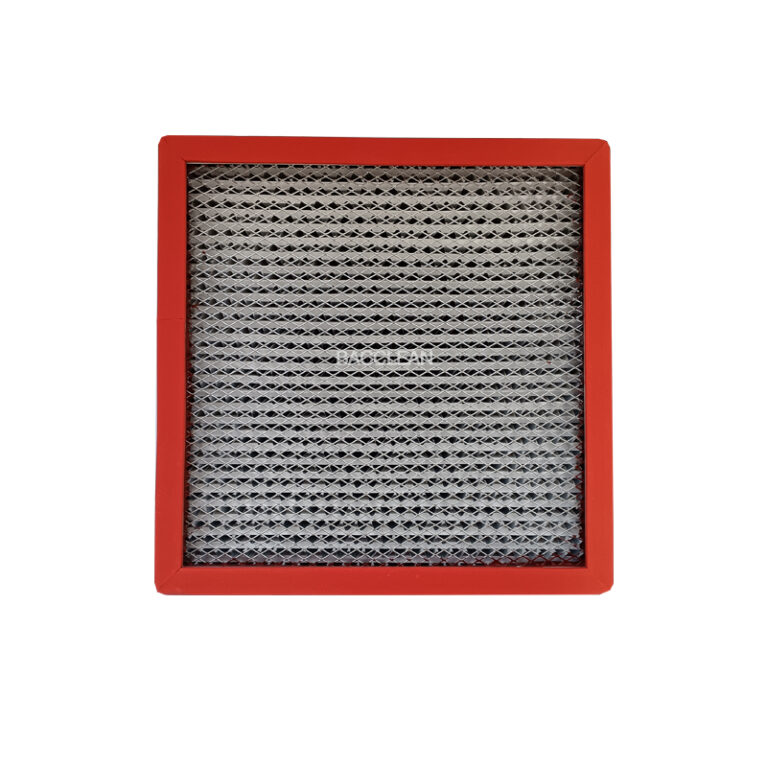
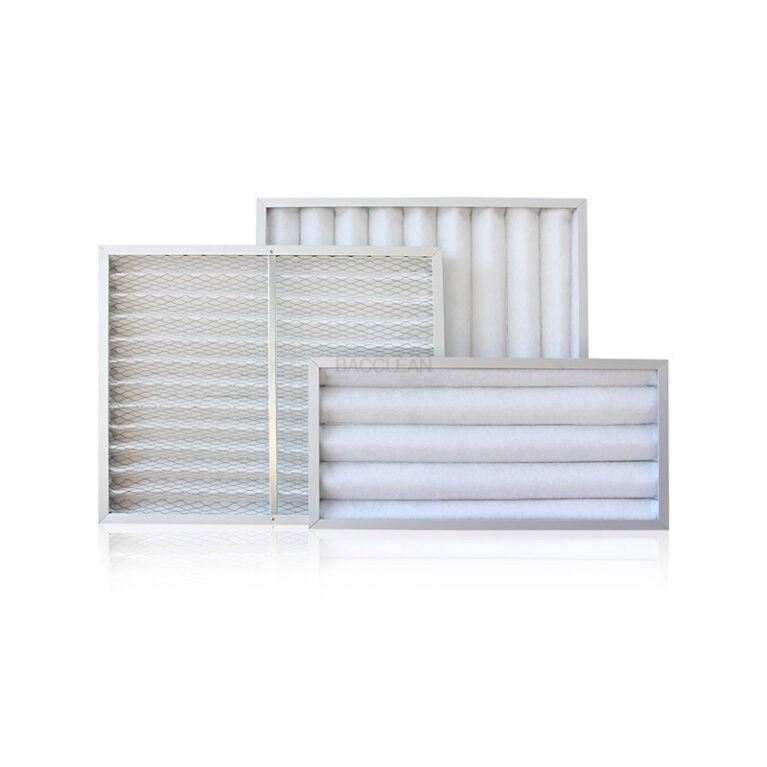
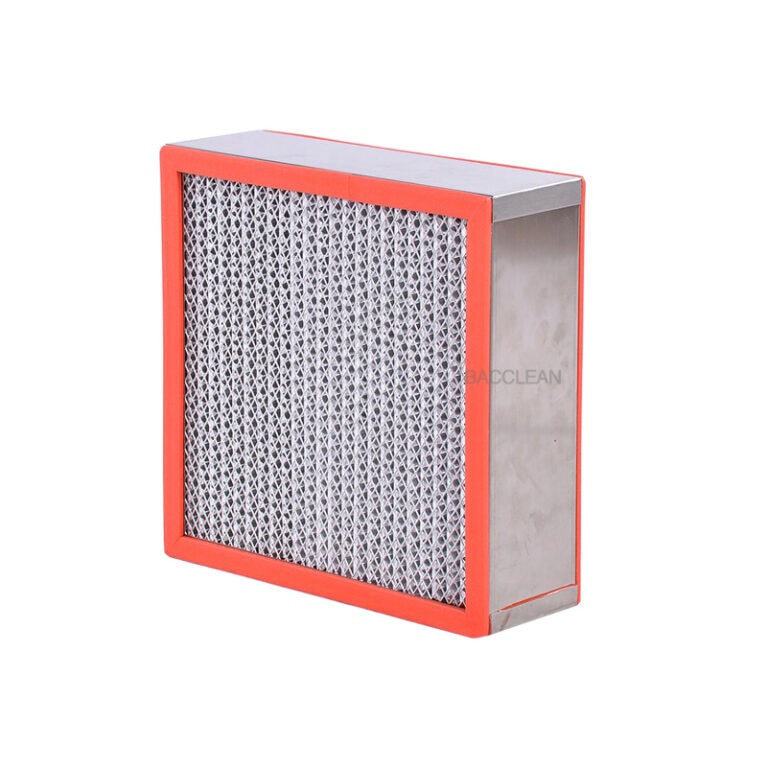
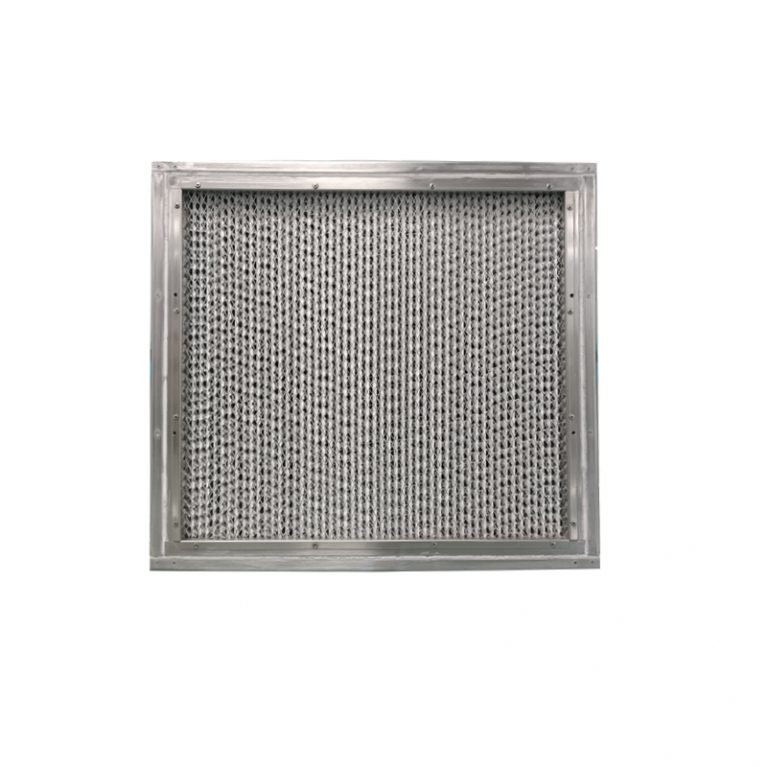
- Fan and filter installation: Fix fans firmly to reduce vibration and noise. Install primary and HEPA filters flatly with intact, evenly compressed gaskets to prevent air leakage. For GMP projects, reserve PAO leak test ports and conduct filter leak testing after installation.
- Nozzle calibration: Adjust the angle of stainless steel nozzles inside the chamber uniformly, ensuring airflow covers the main blowing surfaces of goods and pallets and eliminating blind blowing zones.
- Chamber sealing: Seal all cabinet joints, pipeline wall penetrations and equipment-wall junctions with ageing-resistant neutral silicone sealant. Leave no holes or dust-prone grooves to stop infiltration of external air and escape of internal dust.
- Return air channel inspection: Thoroughly clean the interior of return air ducts to remove debris and welding slag, ensuring smooth air circulation and preventing air volume attenuation.
5. Commissioning, Cleaning & Acceptance Handover Requirements
Installation completion does not mean delivery. Full machine commissioning, chamber cleaning and acceptance must be performed.
- Full machine commissioning: Carry out no-load trial operation to test fan wind speed and pressure. Verify rolling door lifting speed and opening/closing response time. Simulate forklift entry and exit multiple times to test the full workflow of induction, interlock and air shower start-stop.
- Chamber cleaning: After commissioning, thoroughly remove dust, welding slag and installation debris inside the chamber before commissioning. Cleanroom projects cannot be delivered with residual dust, which would blow contaminants into clean workshops during initial operation.
- Document handover & validation preparation: Organize equipment drawings, electrical schematics, certificates and filter test reports. For GMP projects, prepare wind speed records and leak test plans to support subsequent validation.
- Operator training: Train on-site maintenance personnel on daily door inspection points, filter replacement cycles and common fault handling.

Installation Pitfall Avoidance Tips
- Do not recheck doorway dimensions only after cleanroom walls and flooring are fully finished, which may result in doorway misalignment and difficult sealing afterwards.
- Do not pull or scratch rolling door fabric during installation. Damaged fabric will cause air leakage and compromise isolation performance.
- Do not simplify electrical wiring and earthing. Poor earthing creates static hazards in anti-static workshops such as lithium battery plants.
- Wait for sealant to fully cure before full machine testing to avoid seal failure.
Conclusion
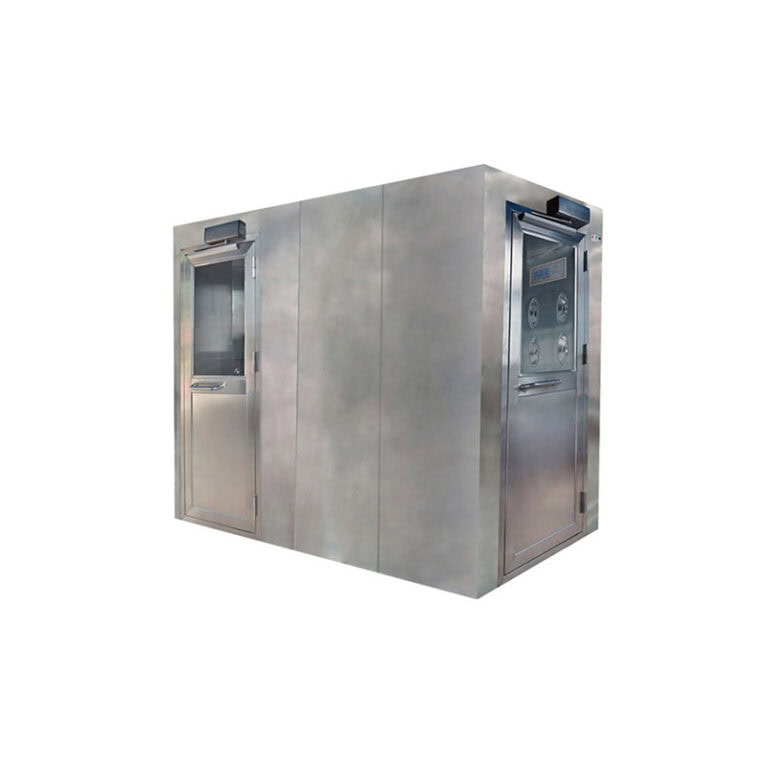
The core of automatic rolling door goods air shower installation lies in qualified foundations, tight cabinet sealing, reliable interlock, adequate air shower airflow and complete system commissioning. These five requirements are closely linked. Neglect of any item will cause air leakage, insufficient wind speed or interlock failure, disrupting cleanroom pressure differentials and bringing cross-contamination risks. Keep process records throughout installation to meet cleanroom acceptance and GMP validation documentation requirements.
