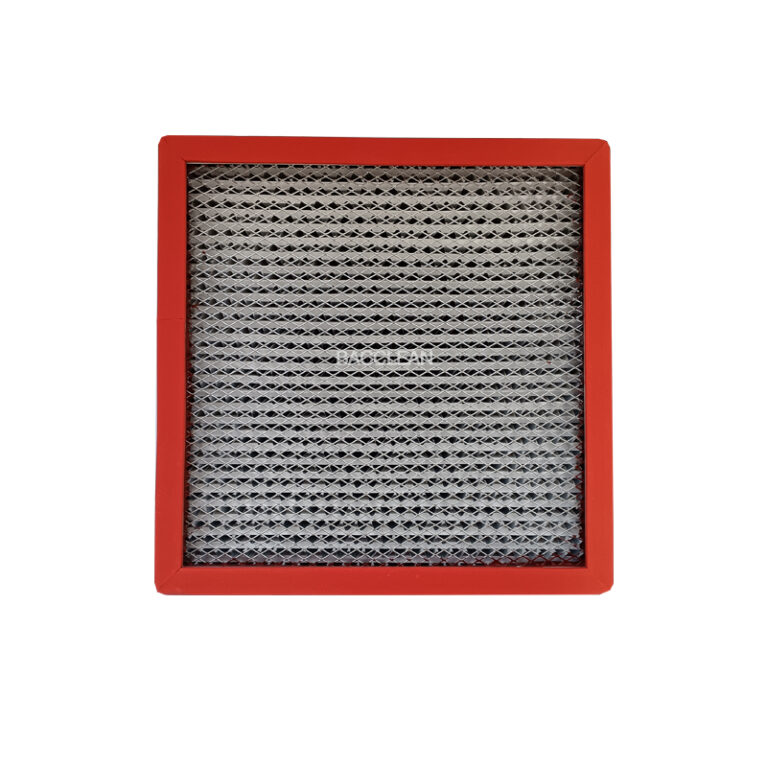

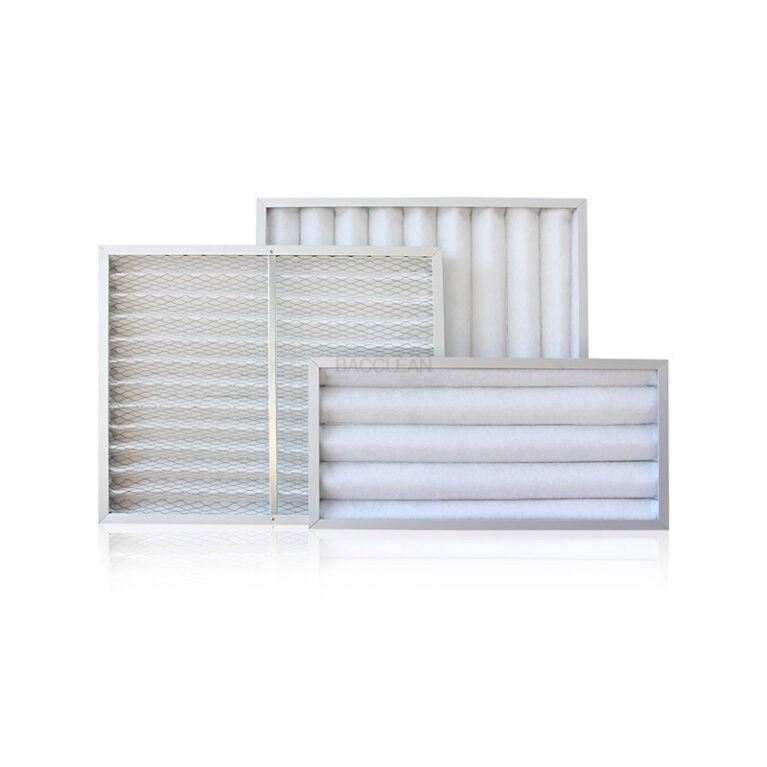
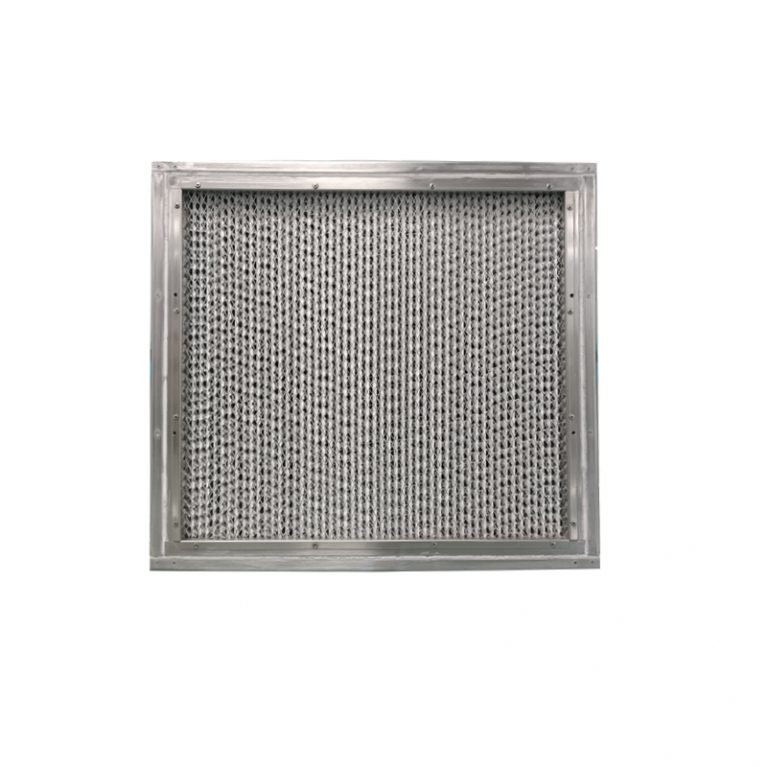
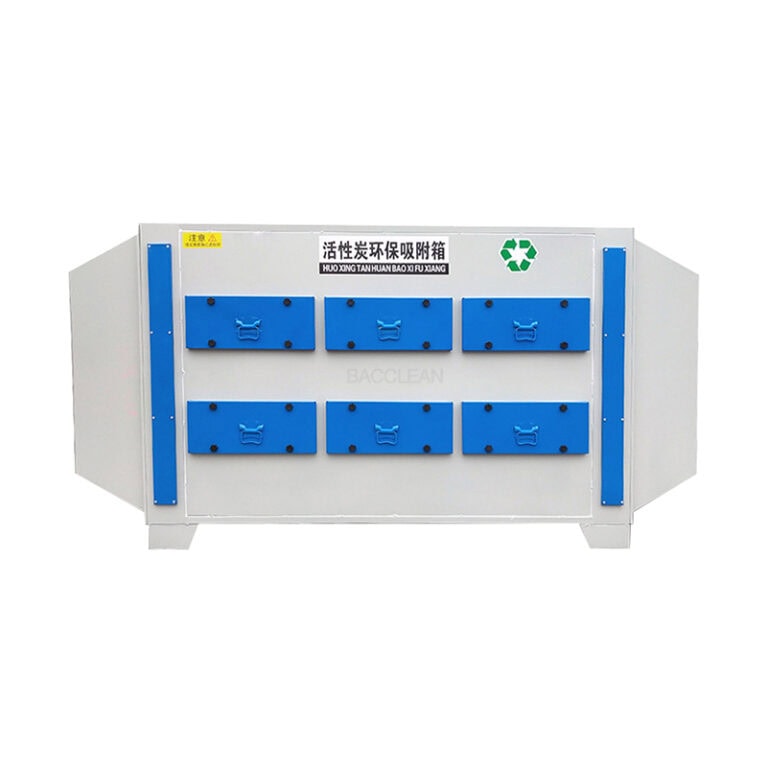
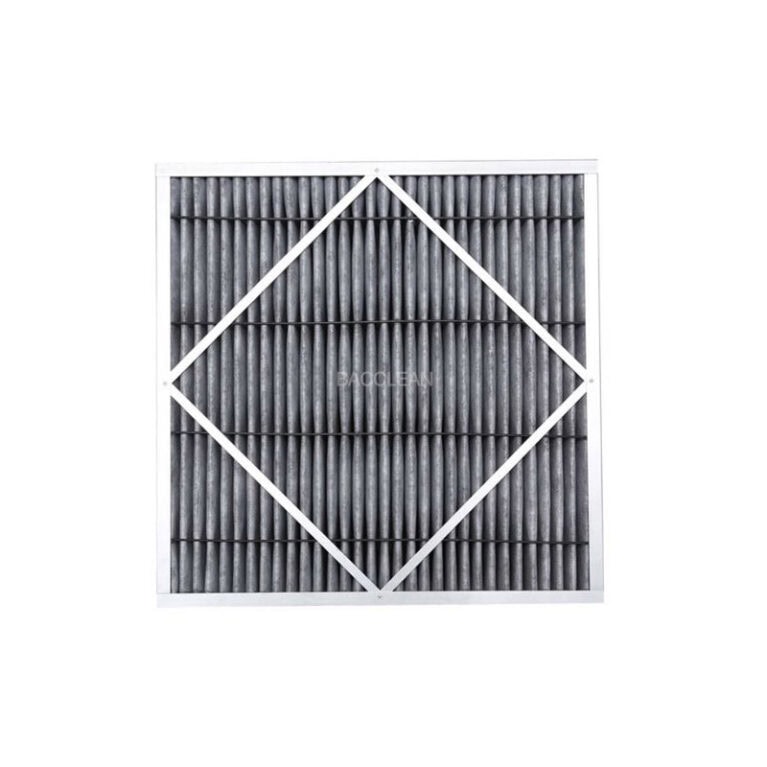
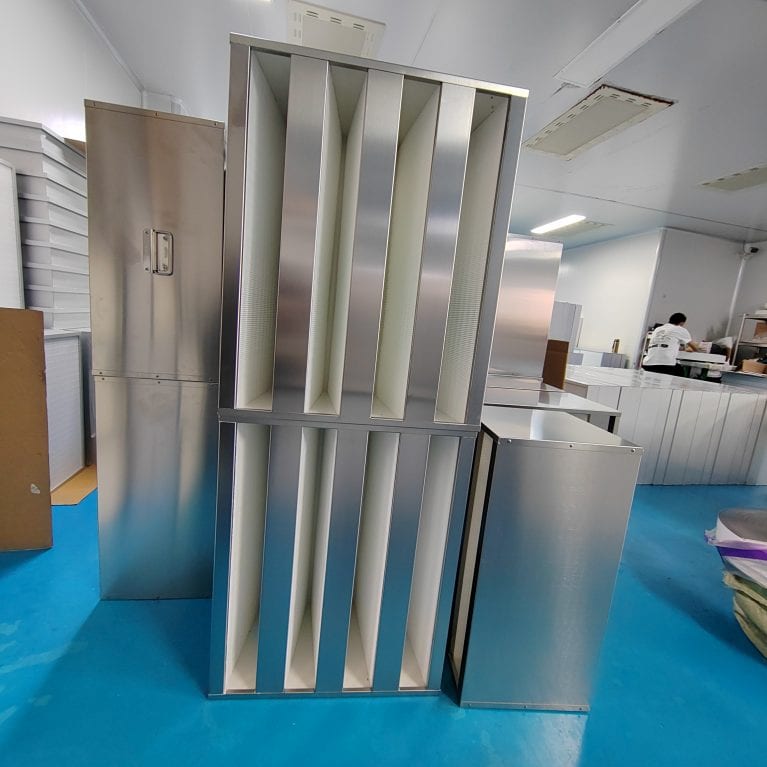
Pour déterminer si le matériau filtrant d'un filtre combiné à cadre en aluminium doit être remplacé, il convient de procéder à une évaluation globale sur la base de plusieurs indicateurs tels que l'effet de filtration, le changement de résistance et l'état de l'apparence. Les méthodes spécifiques sont les suivantes : I. Jugement par le contrôle de la résistance (la méthode la plus scientifique) Contrôler les changements de la différence de pression Installer des jauges de pression différentielle avant et après le filtre pour enregistrer la résistance initiale (la résistance après l'installation du nouveau matériau filtrant). Lorsque la résistance de fonctionnement atteint 2 à 3 fois la résistance initiale, cela indique que le matériau filtrant est fortement encrassé et que l'efficacité de la filtration a chuté de manière significative. Il doit être remplacé immédiatement. Par exemple, la résistance initiale d'un nouveau matériau filtrant est de 50 Pa. Lorsque la résistance passe à 100-150 Pa, le seuil de remplacement est atteint. Fluctuation anormale de la résistance Si la résistance chute soudainement de manière significative (bien en dessous de la résistance initiale), il se peut que le matériau filtrant soit endommagé (trous ou déchirures), ce qui permet à l'air non filtré de pénétrer directement. Une inspection d'urgence et le remplacement du matériau filtrant sont nécessaires. Ii. Évaluation de l'apparence (méthode d'observation intuitive) Degré d'empoussièrement sur la surface du filtre
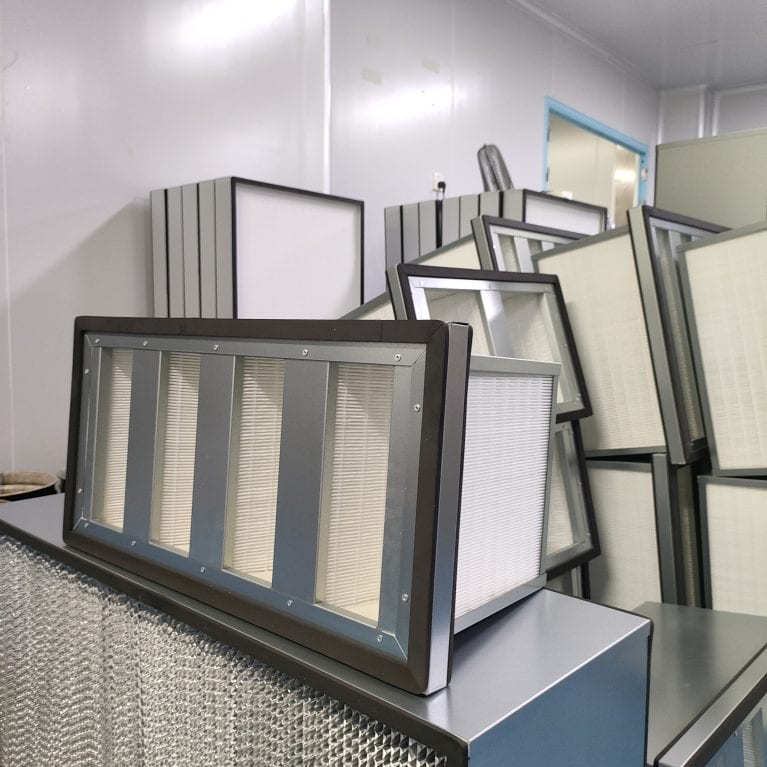
Le cycle d'entretien complet du filtre combiné à cadre en aluminium n'est pas une valeur fixe. Il doit être évalué en fonction de l'environnement d'utilisation, de la charge de filtration et du type de matériau filtrant. Les normes de référence suivantes sont spécifiques : I. Cycle d'entretien complet de base (environnement normal) Dans les environnements à faible concentration de poussière, tels que les bureaux ordinaires et les bâtiments commerciaux, il est recommandé d'effectuer un entretien complet tous les trois mois. Le contenu comprend : l'inspection de l'intégrité de la structure du cadre en aluminium (déformation, rouille, conditions d'étanchéité), l'évaluation de la propreté du matériau filtrant, l'analyse comparative des données de différence de pression, et la revérification des performances d'étanchéité de l'installation, etc. Ii. Ajustement périodique dans des circonstances particulières Environnement très pollué Pour les lieux à forte concentration de poussières/fibres tels que les ateliers industriels, les chantiers de construction et les usines textiles, il est recommandé de raccourcir la durée de l'entretien complet à une fois tous les 1 à 2 mois. En effet, le matériau filtrant est susceptible de se colmater rapidement et le cadre en aluminium peut également s'user plus rapidement en raison de l'érosion des contaminants. Des inspections plus fréquentes sont nécessaires pour éviter une défaillance du filtre. Environnement humide/corrosif Par exemple, dans les ateliers de transformation des aliments, les ateliers chimiques, etc.
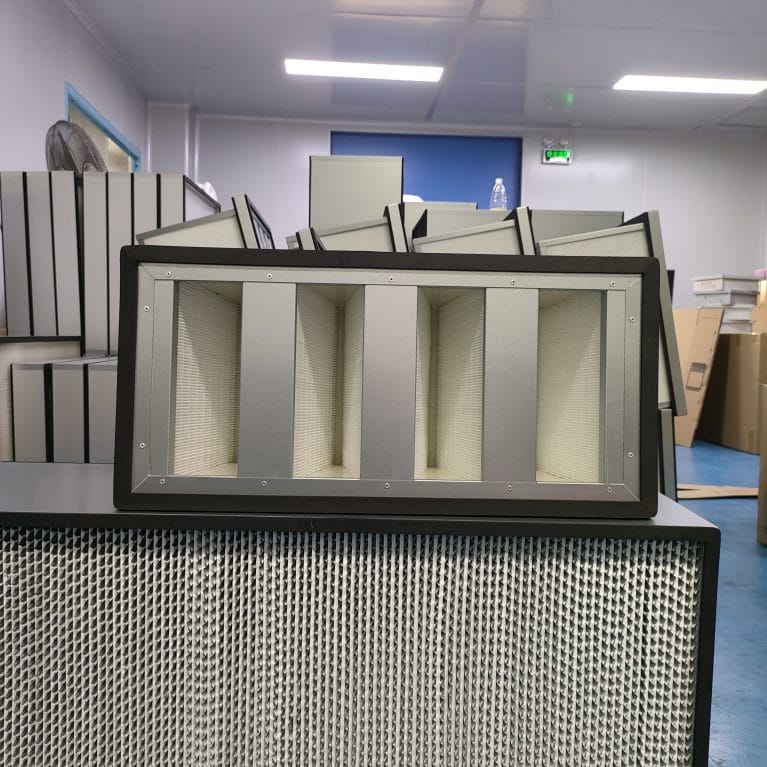
Ces filtres sont des équipements clés dans les systèmes de purification de l'air. Leur entretien quotidien a une incidence directe sur l'efficacité de la filtration et sur sa durée de vie. Voici les points d'entretien détaillés : Un nettoyage régulier est essentiel. Dépoussiérer la surface du filtre chaque semaine. Utilisez de l'air comprimé sec pour souffler de l'aval vers l'amont. Maintenez la pression à 0,2-0,3MPa pour éviter les dommages causés par une pression excessive. Pour les taches d'huile ou la saleté sur le cadre en aluminium, essuyez avec un nettoyant neutre. Séchez ensuite avec un chiffon propre pour éviter que des résidus corrosifs ne réduisent la durée de vie du cadre en aluminium. Pour des raisons de sécurité, arrêtez toujours le système de ventilation avant de procéder au nettoyage. Ne négligez pas l'inspection détaillée. Tous les mois, vérifiez l'étanchéité du filtre. Vérifiez qu'il n'y a pas de fissures ou de délamination aux points de liaison entre le cadre en aluminium et le matériau filtrant. Vérifiez également que la bande d'étanchéité du cadre est intacte. Si vous constatez des dommages, des trous ou une accumulation évidente de poussière sur le matériau filtrant, intervenez rapidement. Vérifiez que le cadre en aluminium n'est pas déformé ou rouillé, en particulier dans les environnements humides. Poncez la rouille avec du papier de verre fin et appliquez une peinture antirouille pour empêcher la corrosion de se propager. Le remplacement en temps voulu du média filtrant est essentiel pour garantir l'efficacité de la filtration. Lorsque la résistance du filtre atteint 2 à 3
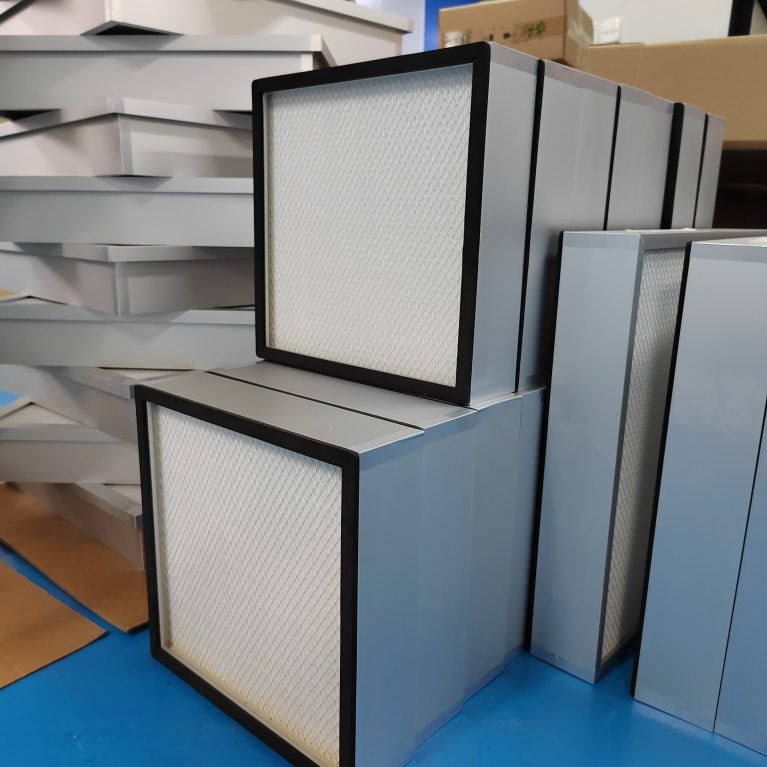
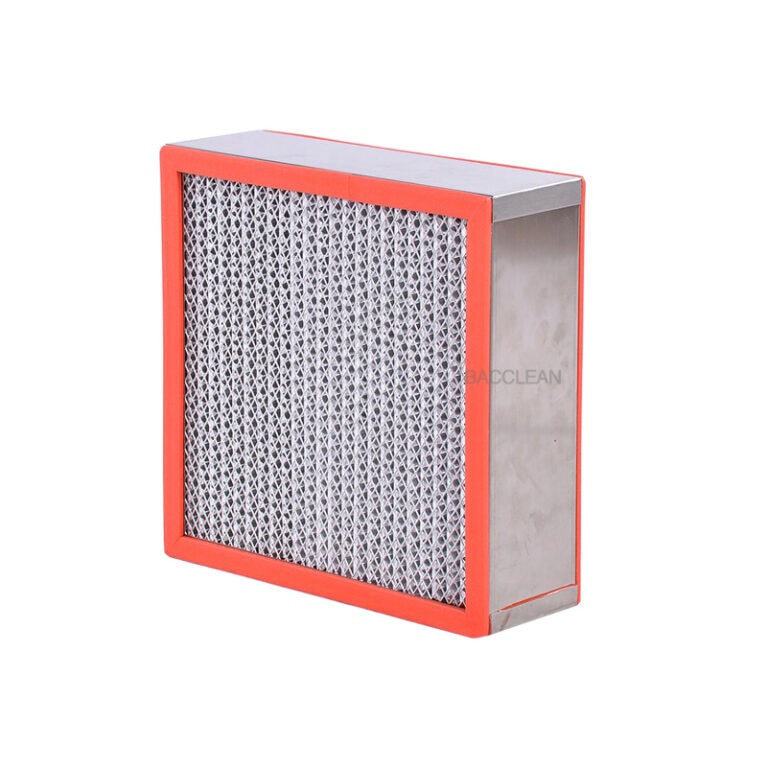
Les filtres en PTFE (avec le polytétrafluoroéthylène comme matériau filtrant central) sont principalement utilisés dans des scénarios spéciaux où les filtres conventionnels sont difficiles à adapter en raison de leur résistance aux environnements extrêmes, de leur inertie chimique, de leur hydrophobie et de leur résistance à l'humidité, etc. Il s'agit en particulier des industries chimiques et pharmaceutiques : Il est utilisé pour la filtration des gaz hautement corrosifs (tels que les substances volatiles acides et alcalines, les vapeurs de solvants organiques), ou pour le traitement des gaz résiduels des cuves de réaction et des équipements de distillation, et peut résister à des environnements chimiques difficiles sans être corrodé. Environnement de travail à haute température : Il convient aux systèmes d'échappement des ateliers de séchage à haute température et des équipements de stérilisation (tels que les fours tunnels, les armoires de stérilisation à chaleur humide), et peut filtrer de manière stable dans une large plage de température de -200 ℃ à 260℃, évitant ainsi la défaillance des matériaux filtrants due aux températures élevées. Scénarios de forte humidité et de brouillard : tels que la filtration des brouillards d'huile dans la transformation des aliments (ateliers de produits aquatiques et de boissons), les laboratoires humides et les ateliers de peinture au pistolet, etc. Sa propriété hydrophobe peut empêcher le matériau filtrant de s'humidifier et de s'agglutiner, ce qui garantit une efficacité de filtration stable. Dans le domaine de la biosécurité : Dans les systèmes d'échappement des laboratoires de biosécurité et des instituts de recherche sur les virus, la structure microporeuse uniforme des membranes en PTFE permet d'intercepter efficacement les agents microbiens.
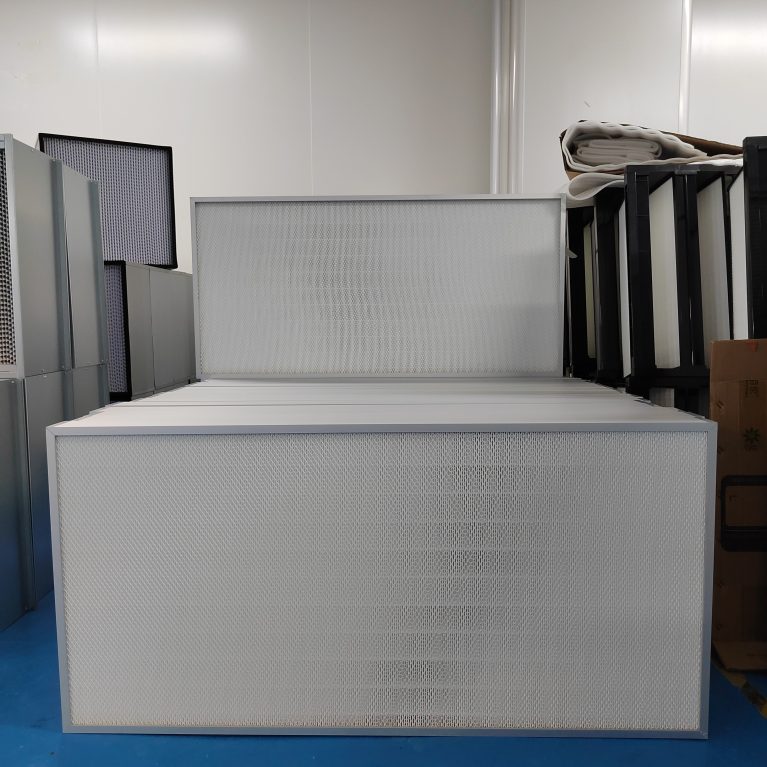
Les filtres en PTFE (filtres avec du polytétrafluoroéthylène comme matériau filtrant) et les filtres à haute efficacité sans séparateurs (filtres à haute efficacité avec de la fibre de verre et d'autres matériaux filtrants principaux et sans séparateurs) présentent des différences significatives en termes de matériaux, de performances, de scénarios d'application, etc. Les paragraphes suivants présentent une comparaison détaillée des dimensions du noyau : I. Différences dans les matériaux et les structures du noyau Éléments de comparaison : Filtre en PTFE, filtre non cloisonné à haute efficacité Le matériau du filtre central est le polytétrafluoroéthylène (PTFE), qui est un matériau membranaire polymère à haut poids moléculaire et qui se caractérise par sa résistance aux températures élevées et basses, ainsi que par son inertie chimique. Les matériaux filtrants de base sont principalement des fibres de verre superfines, quelques-uns étant en polypropylène (PP), etc. La filtration repose sur les fonctions d'interception et d'adsorption des fibres. Conception structurelle : Les matériaux filtrants sont généralement pliés pour augmenter la surface de filtration et peuvent être associés à différentes structures de support (telles que des cadres en métal ou en plastique), avec ou sans séparateurs (en fonction du modèle spécifique). Il adopte une conception sans séparateurs, et le matériau filtrant plié est fixé par un adhésif thermofusible ou un fil de soie, ce qui réduit la résistance à l'air et rend la structure plus compacte. Les matériaux utilisés pour le cadre sont principalement des matériaux résistants à la corrosion, tels que l'acier inoxydable et les profilés en aluminium, qui conviennent aux conditions difficiles.
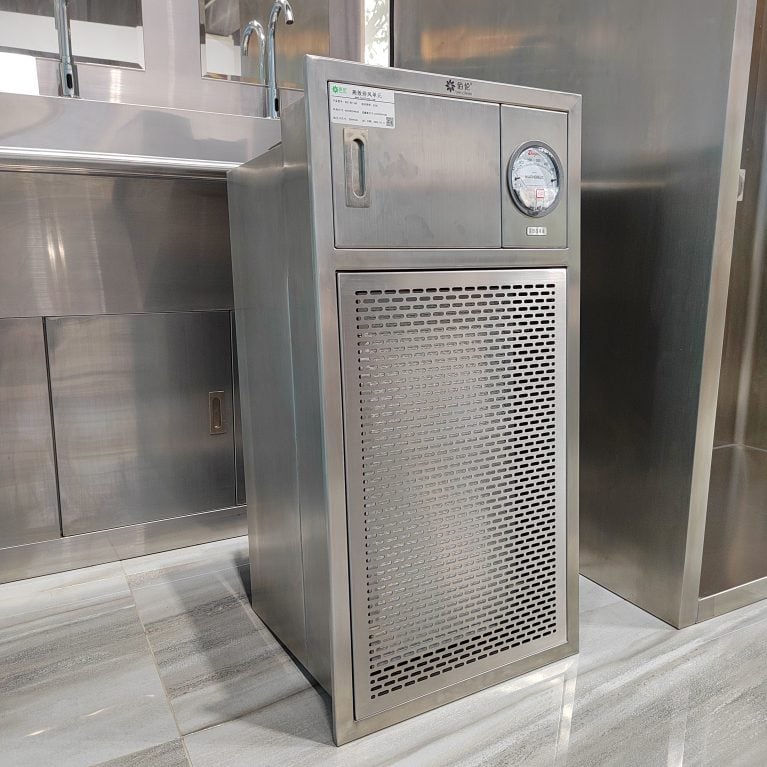
Le principe de fonctionnement du dispositif d'échappement et de filtration à haut rendement consiste à capturer, séparer et purifier les polluants atmosphériques grâce à l'effet synergique de l'échappement motorisé et de la filtration et de la purification à plusieurs niveaux, tout en contrôlant la direction du flux d'air, pour finalement rejeter de l'air propre ou des gaz d'échappement qualifiés. Son processus de base peut être décomposé selon les liens clés suivants : I. Guidage directionnel du flux d'air L'appareil génère une pression négative ou positive par le biais de ventilateurs (ventilateurs centrifuges, ventilateurs axiaux, etc.) pour former une trajectoire directionnelle du flux d'air, garantissant que les polluants sont collectés de manière "ciblée". Guidage par pression négative : Dans la plupart des scénarios (comme les hottes et les armoires de biosécurité), l'appareil crée une pression négative locale dans la zone où les polluants sont générés (comme les paillasses de laboratoire et les postes de travail de production), ce qui permet à l'air ambiant et aux polluants de s'écouler naturellement dans l'appareil et les empêche de se répandre dans l'environnement extérieur. Décharge à pression positive : L'air purifié ou les gaz résiduels sont mis sous pression par un ventilateur et évacués vers l'extérieur ou vers un système de traitement ultérieur le long d'un chemin prédéfini (tel qu'un tuyau d'échappement) afin de garantir un flux d'air stable et l'absence de reflux. Deuxièmement, filtration et purification en plusieurs étapes Selon le type de polluants (particules, gaz, etc.), les systèmes de traitement de l'air peuvent être équipés d'un système de filtration et de purification en plusieurs étapes.
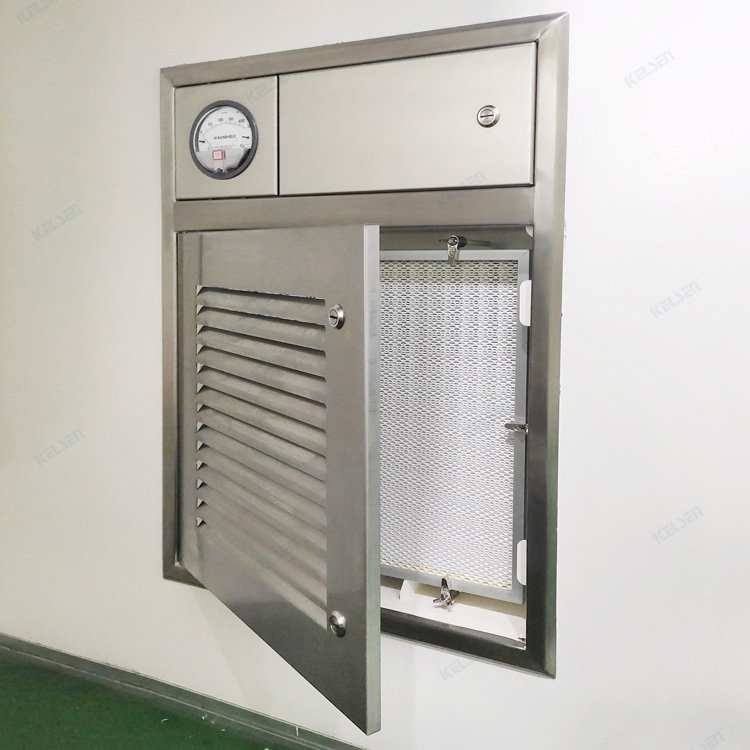
Le dispositif d'extraction et de filtration à haute efficacité intègre l'extraction et la filtration de haute précision, éliminant efficacement les particules, les gaz nocifs, les micro-organismes et autres polluants. Il est essentiel dans les domaines où les exigences en matière de propreté et de sécurité de l'air sont strictes. Ses principaux domaines d'application sont les suivants I. Domaine médical et des soins de santé Salles blanches d'hôpitaux et salles d'opération : Pendant les procédures, des aérosols et des substances volatiles sont produits. Les dispositifs d'extraction et de filtration à haut rendement éliminent rapidement les contaminants, préservent la stérilité et réduisent le risque d'infection des patients. Salle d'isolement pour maladies infectieuses : Dans les services d'isolement où se trouvent des patients atteints de maladies respiratoires infectieuses, ce dispositif peut filtrer et expulser rapidement les aérosols contenant des virus qui sont exhalés par les patients grâce à une ventilation par aspiration directionnelle, empêchant ainsi la propagation du virus au sein du service. Laboratoire de biosécurité : Ces laboratoires, qui manipulent des micro-organismes hautement pathogènes, nécessitent un contrôle strict des flux d'air. Des dispositifs d'extraction et de filtration à haute efficacité (par exemple, les systèmes d'extraction des enceintes de sécurité biologique) filtrent les micro-organismes nocifs générés pendant les expériences, évitant ainsi les fuites et protégeant le personnel et l'environnement. Ii. Domaine de la fabrication industrielle Dans l'industrie de la fabrication électronique, au cours des processus de production de puces, de semi-conducteurs et de composants électroniques de précision, des exigences extrêmement élevées sont imposées aux particules de poussière dans l'air (exigeant généralement un niveau de propreté allant de la classe 1 à la classe 100). Le système d'aspiration à haut rendement
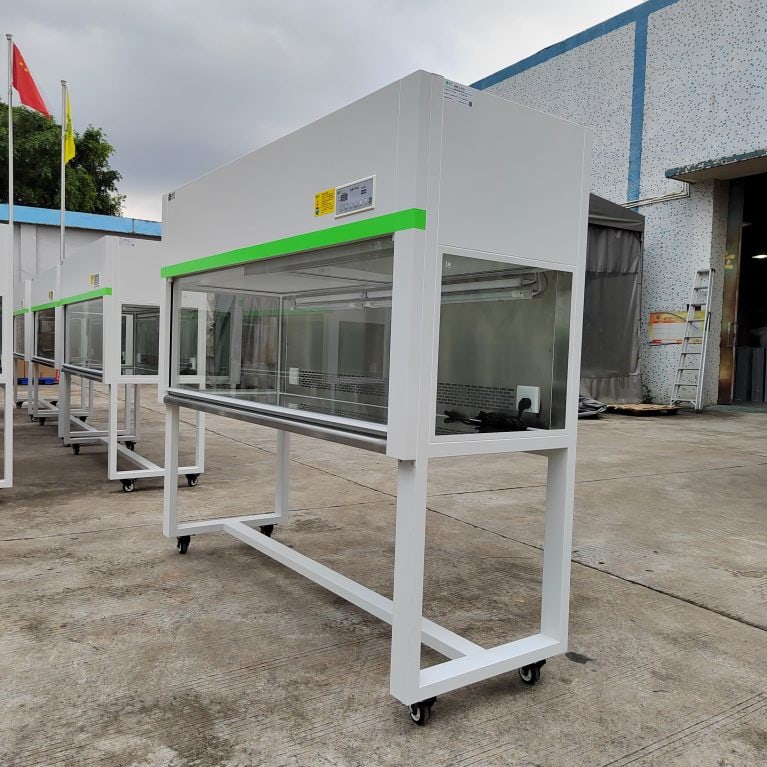
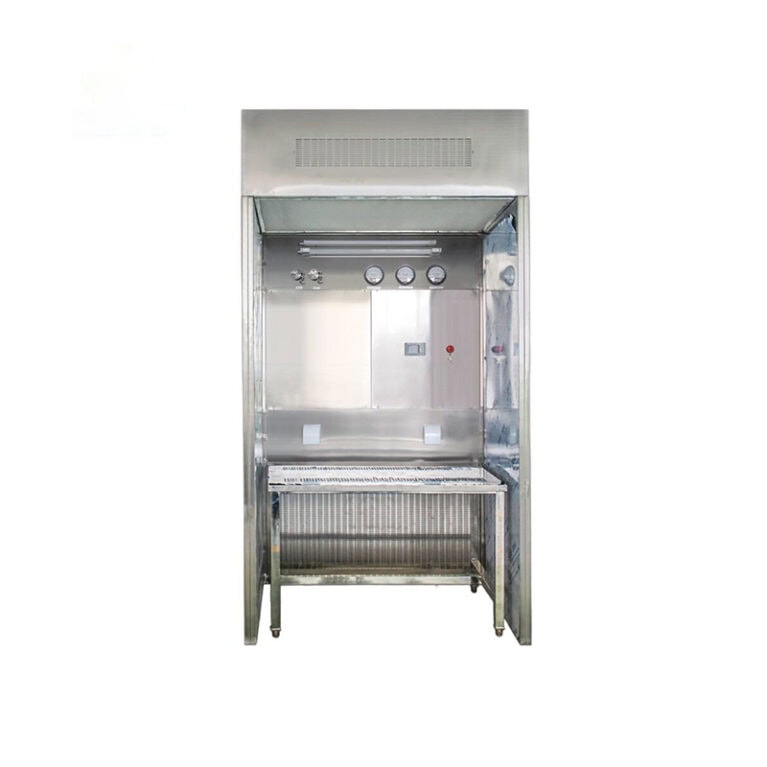
La forme d'organisation du flux d'air d'une hotte à flux laminaire est le facteur essentiel qui détermine son effet de nettoyage, sa facilité d'utilisation et ses performances en matière de protection. Elle fonctionne principalement grâce au ventilateur qui entraîne l'air à traiter par le système de filtration, puis forme une barrière stable de flux d'air dans la zone de travail, dans une direction spécifique. Les formes courantes d'organisation du flux d'air peuvent être divisées en deux catégories principales : le flux laminaire horizontal et le flux laminaire vertical. Certains modèles spéciaux combinent les caractéristiques des deux catégories ou ajoutent des flux d'air auxiliaires, comme indiqué ci-dessous : 1. Banc de nettoyage à flux laminaire horizontal Direction du flux d'air : L'air propre filtré est soufflé horizontalement depuis l'arrière (ou le côté gauche/droit) de l'établi perpendiculairement à la surface de travail, circule le long de la surface de l'établi jusqu'au côté de l'opérateur (ou côté avant) et revient finalement par le bord ou le bas de la surface de l'établi. Caractéristiques Le flux d'air couvre directement l'ensemble de la surface de travail, ce qui a un effet plus direct sur la propreté et la protection de la surface. Il convient aux opérations exigeant une grande propreté de l'établi (telles que l'assemblage de composants électroniques et le débogage d'instruments de précision). Comme le flux d'air
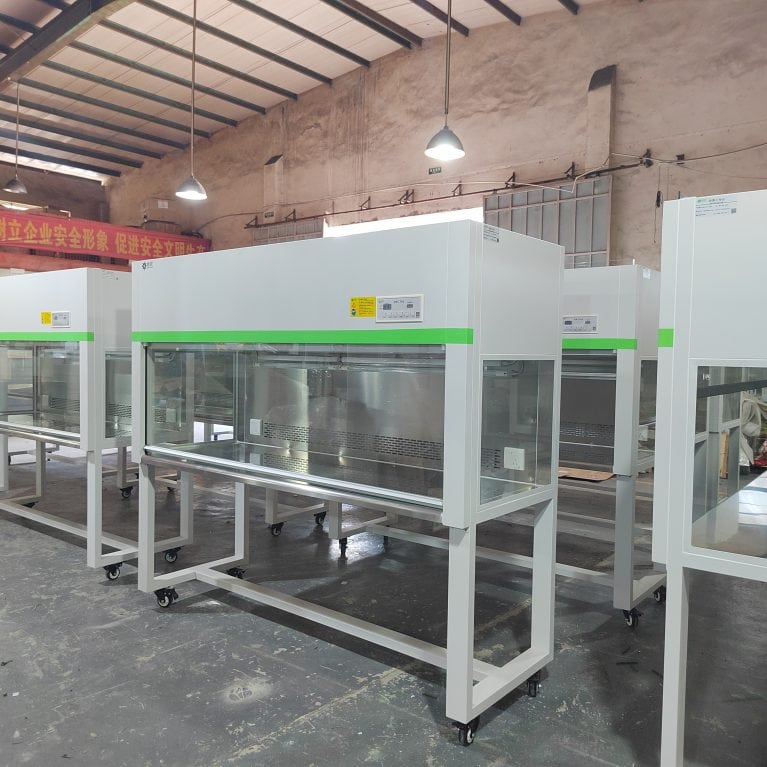
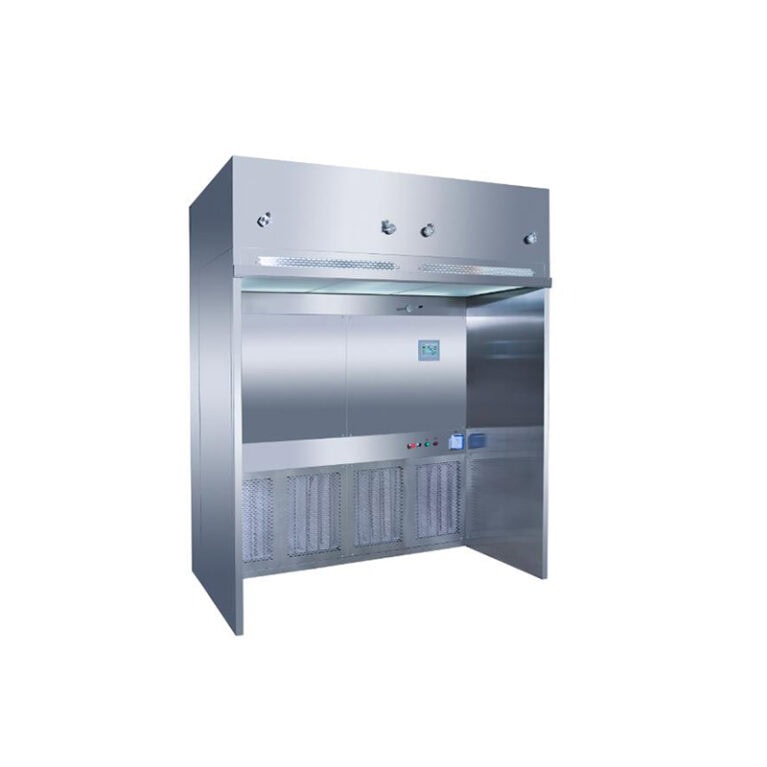
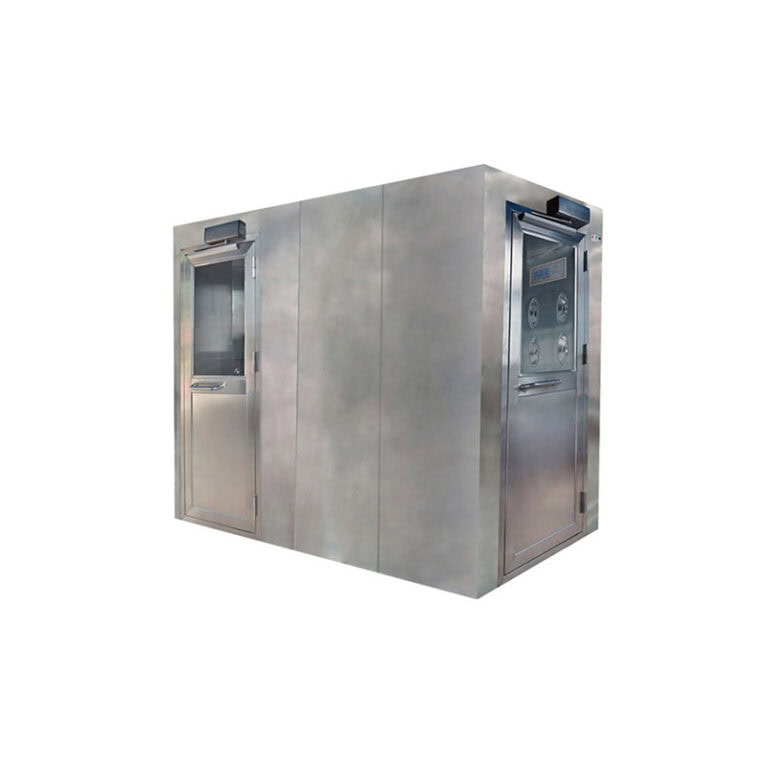
Une hotte à flux laminaire est un dispositif de purification qui permet de créer un environnement de travail stérile et exempt de poussière. Sa fonction principale est de contrôler la poussière, les micro-organismes et autres contaminants dans la zone de travail à un niveau extrêmement bas grâce à un système de filtration de l'air (généralement combiné à des filtres à haute efficacité), tout en formant une barrière de flux d'air stable pour empêcher la contamination externe de pénétrer. Grâce à cette caractéristique, le système est largement utilisé dans de nombreux domaines où les exigences en matière de propreté de l'environnement sont strictes : I. Sciences de la vie et biomédecine Expériences microbiologiques : Elle est utilisée pour l'isolement, la culture et l'identification de bactéries, de champignons, de virus et d'autres micro-organismes, afin d'éviter que les échantillons expérimentaux ne soient contaminés par diverses bactéries présentes dans l'environnement, tout en protégeant les opérateurs contre l'exposition à des micro-organismes pathogènes (certaines hottes à flux laminaire de type biosécurité peuvent assurer une protection bidirectionnelle). Culture de cellules et de tissus : Dans la culture de cellules animales, la culture de tissus végétaux et la recherche sur les cellules souches, elle fournit un environnement stérile pour la croissance des cellules afin d'éviter toute contamination cellulaire susceptible d'entraîner l'échec de l'expérience. Expériences de biologie moléculaire : lors de l'amplification par PCR, du clonage de gènes, de l'extraction d'acide nucléique et d'autres opérations, il est nécessaire d'éviter la contamination de l'acide nucléique ou l'interférence de l'ADN exogène. Un flux laminaire
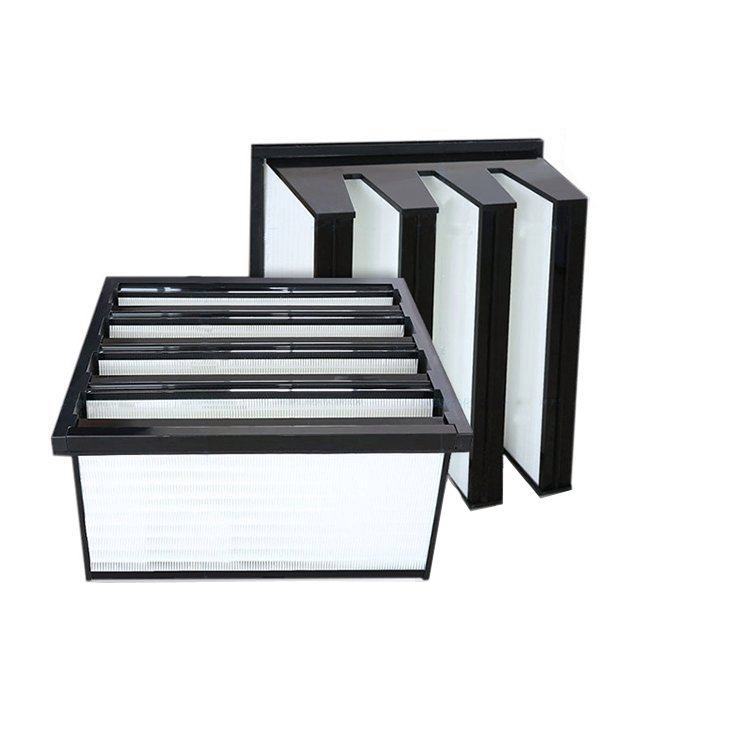
La résistance du filtre combiné à cadre plié est un indicateur important pour mesurer ses performances, car elle affecte directement la consommation d'énergie et l'efficacité opérationnelle du système de ventilation. Sa résistance (y compris la résistance initiale et la résistance finale) est principalement liée aux facteurs suivants : 1. Les caractéristiques du matériau filtrant lui-même Matériau et structure : La densité, le diamètre et la porosité des fibres des différents matériaux filtrants varient considérablement. Par exemple, les matériaux filtrants en fibres de verre superfines, en raison de leurs fibres fines et de leur faible porosité, ont une plus grande capacité à bloquer le flux d'air, et leur résistance est généralement plus élevée que celle des matériaux lâches tels que les tissus non tissés ou les filets en nylon. Si les fibres du matériau filtrant à structure plissée sont disposées de manière désordonnée, le chemin d'écoulement autour du flux d'air sera plus long et la résistance augmentera en conséquence. Épaisseur : Plus l'épaisseur du matériau filtrant est importante, plus la trajectoire du flux d'air est longue, plus la probabilité de collision et de friction avec les fibres est élevée, et la résistance augmente en conséquence. Par exemple, l'épaisseur du matériau filtrant des filtres à haute efficacité est généralement supérieure à celle des filtres primaires, et leur résistance initiale est également plus élevée. 2.
Le filtre combiné à cadre plié, avec sa grande surface de filtration et sa faible résistance, convient à de nombreux scénarios, notamment : les systèmes de ventilation et de climatisation pour les bâtiments civils. Dans les bureaux et les espaces commerciaux tels que les immeubles de bureaux, les centres commerciaux et les salles de réunion, les systèmes centraux de climatisation ou de ventilation utilisent souvent ces filtres comme pré-filtres. Ils retirent la poussière et les peluches, réduisant ainsi l'accumulation de poussière à l'intérieur du système, maintenant l'efficacité de l'équipement et assurant une bonne qualité de l'air intérieur. Installations médicales et de transport : Dans les grands espaces tels que les zones de traitement général des hôpitaux, les salles d'attente des aéroports et les salles d'attente des gares ferroviaires à grande vitesse, le filtre agit comme un filtre primaire ou à moyenne efficacité pour éliminer les particules en suspension dans l'air. Utilisé avec d'autres équipements de purification, il maintient la qualité de l'air et réduit les risques pour la santé. Processus de purification de l'air industriel En tant que dispositif de préfiltration : Dans les installations industrielles générales telles que la métallurgie, le pétrole, l'ingénierie chimique et la fabrication mécanique, les systèmes de ventilation centralisés ou les gros compresseurs d'air l'utilisent souvent comme dispositif de préfiltration pour intercepter d'abord les grosses particules de poussière et les impuretés, réduisant ainsi la charge sur l'équipement de filtration ultérieur et prolongeant la durée de vie des principaux composants de filtration. Purification générale de l'air : Il est utilisé pour la purification générale de l'air et la filtration intermédiaire dans l'air.
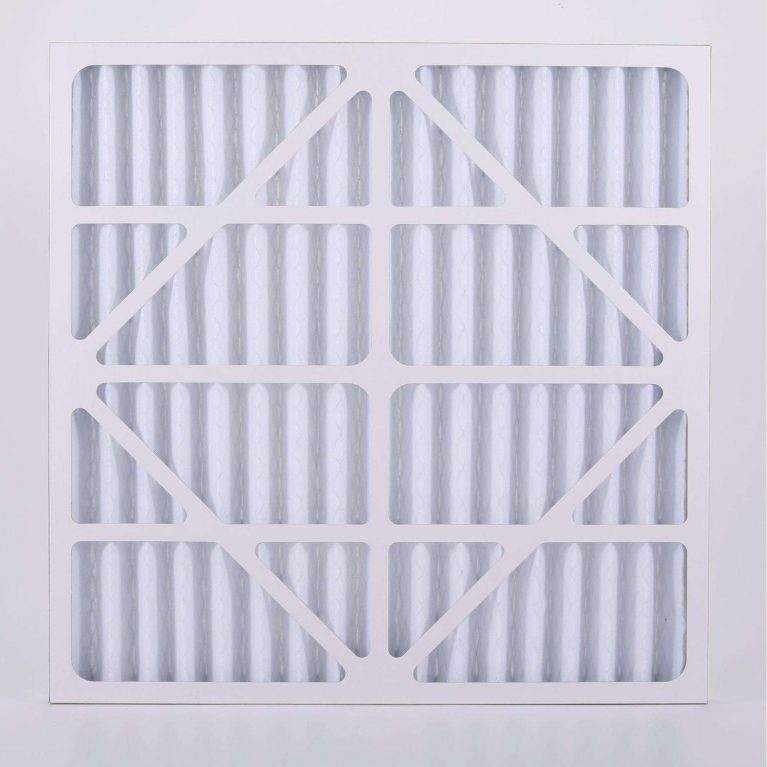
To determine whether a paper frame primary filter needs to be replaced, a comprehensive judgment should be made based on its filtration effect, operating status and appearance. The following are the specific judgment methods and standards: I. Judging through Resistance Changes (the most scientific method) The core function of the paper frame primary filter is to intercept particulate matter. As the accumulation of dust increases, the resistance of air passing through the filter material will gradually rise. When the resistance reaches a certain threshold, the filtration efficiency drops and the system energy consumption increases. At this point, replacement is necessary. Initial resistance: The resistance of a new filter (typically 5-15Pa, for specific details, please refer to the product parameter table). Final resistance: When the resistance reaches 2 to 3 times the initial resistance (for example, the initial resistance is 10Pa and the final resistance reaches 20 to 30Pa), it indicates that the filter material is severely clogged and needs to be replaced immediately. Operation method: Install differential pressure gauges before and after the filter, and record the resistance changes regularly. When the final resistance is reached, trigger the replacement. Ii. Judgment through Visual Observation (Intuitive Method) Regularly (it is recommended
