\n\n

NOUVELLES

Accueil / Actualités

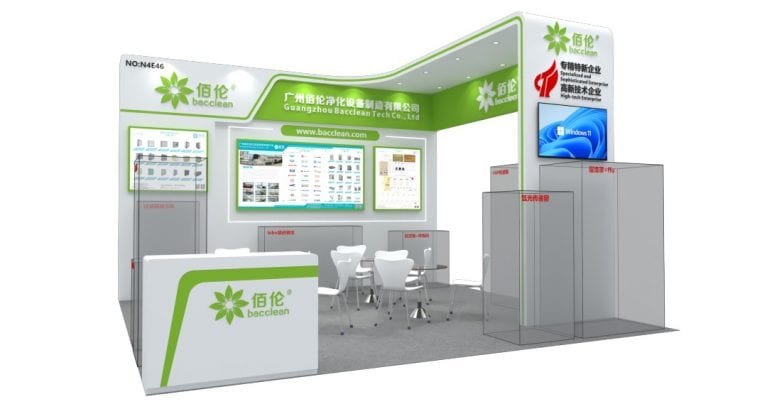
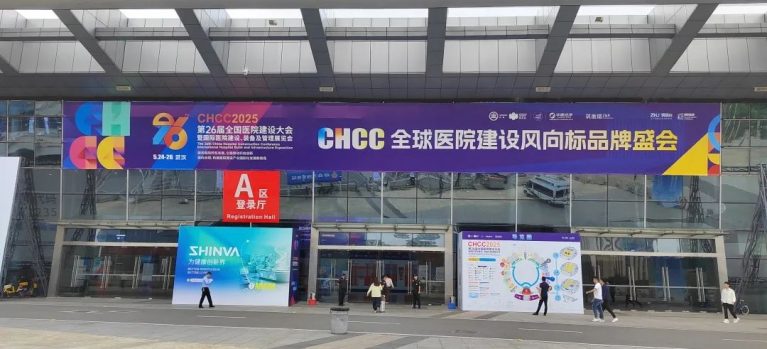
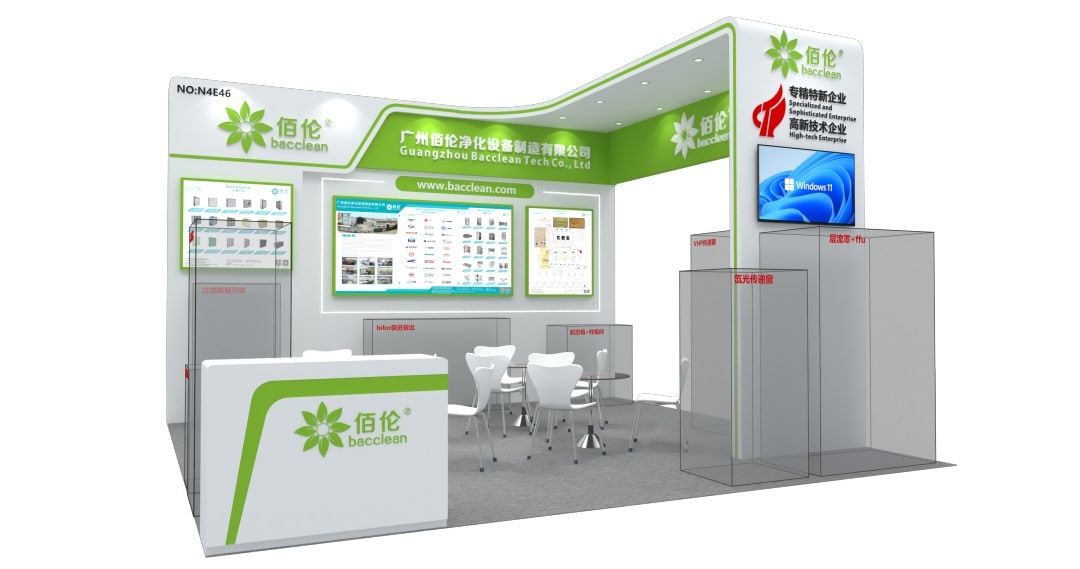
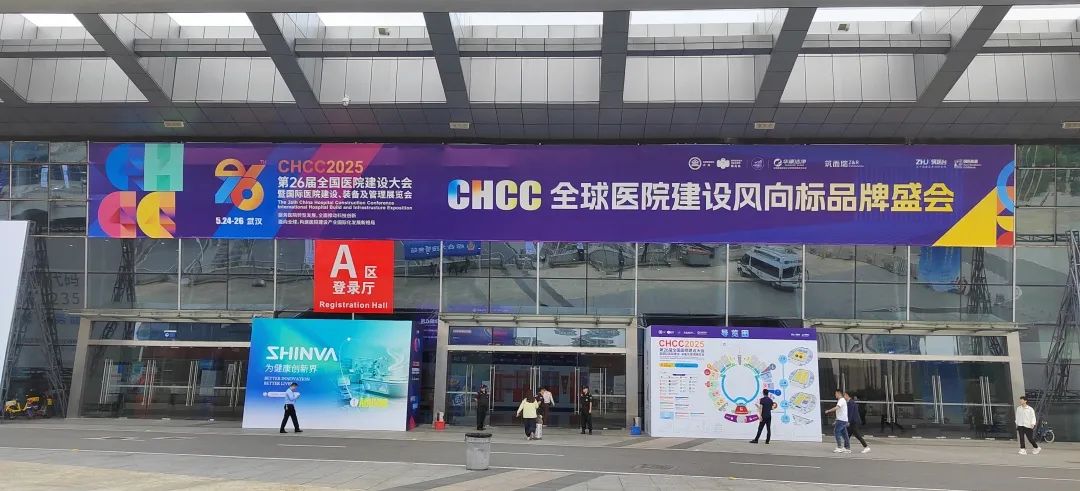
L'exposition de Bacclean lors de la 26e conférence nationale sur la construction d'hôpitaux s'est achevée avec succès.

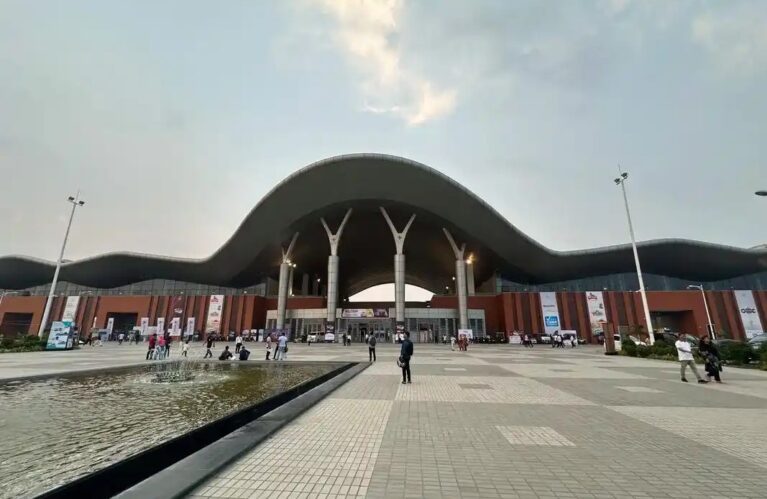
La 26e Conférence nationale sur la construction hospitalière (CHCC2025) s'est tenue en grande pompe au Centre international d'exposition de Wuhan du 24 au 26 mai 2025. Au cours de cette exposition, Bacclean, avec sa force technique professionnelle, ses services de produits de haute qualité et ses solutions innovantes, a pleinement démontré sa compétitivité dans le domaine de l'épuration hospitalière, attirant de nombreux collègues de l'industrie pour échanger des technologies et des solutions dans le domaine de l'épuration médicale.

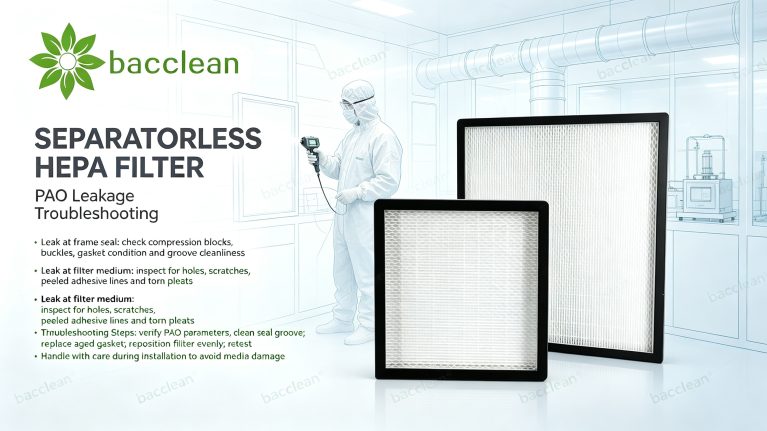
Separatorless HEPA Filter Fault Analysis: Causes & Troubleshooting for Leakage, Abnormal Pressure Drop and Hot Melt Adhesive Line Failure

Separatorless HEPA filters frequently suffer from three major faults during commissioning and long-term operation: PAO leakage detection failure, fluctuating pressure drop, and hot melt adhesive line failure. Fault root causes fall into three categories: manufacturing defects of the filter itself; issues with supporting FFUs, air supply frame, sealing rings; improper storage, transportation, installation and maintenance operations. Similar fault symptoms may stem from entirely different root causes. If the filter quality is directly judged as defective and repeated disassembly is carried out blindly, it will further damage the equipment and delay project commissioning progress. This article sorts out frequent on-site faults, analyzes inducing factors, and provides step-by-step troubleshooting and handling solutions to help engineering, validation and maintenance personnel quickly locate problems.

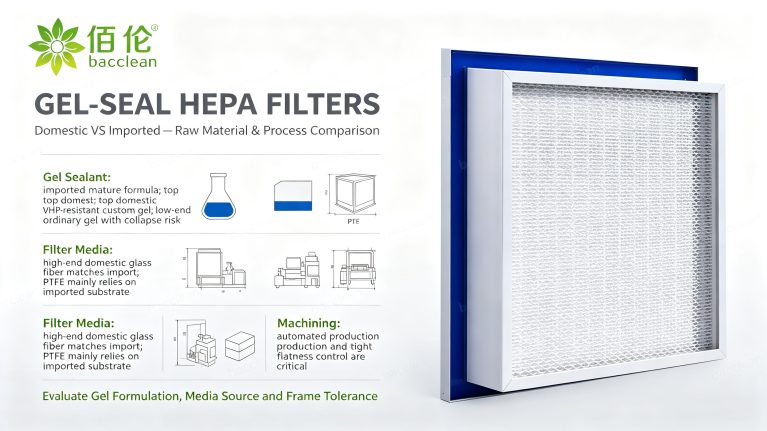
Comparative Evaluation of Gel-seal HEPA Filters: Differences Between Domestic and Imported Products & Procurement Notes

Gel-seal HEPA filters are frequently evaluated between leading domestic manufacturers and imported brands for high-grade projects such as Grade A/B biopharmaceutical cleanrooms and biosafety laboratories. For a long period, imported gel-seal HEPA filters occupied the major share of high-end cleanroom projects in China. In recent years, however, continuous technical iteration by top domestic purification equipment manufacturers has enabled qualified domestic products to replace imported options in numerous new construction, renovation and expansion projects.

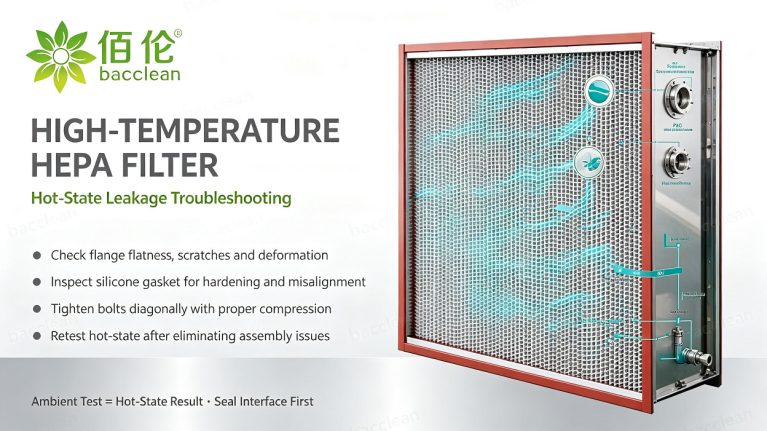
Fault Analysis of High‑Temperature Resistant HEPA Filters: Troubleshooting for Hot‑State Leakage, Abnormal Pressure Differential and Seal Aging

Most failures of high‑temperature resistant HEPA filters fall into three major categories: hot‑state leakage, rapid abnormal rise of pressure differential, and premature aging of sealing components. Root causes can be grouped into three aspects: manufacturing defects of filter materials; defects of matching components such as equipment flanges and gaskets; improper operations during installation, temperature ramping and disinfection & maintenance. Many failures perform perfectly under ambient temperature and only emerge after temperature rise, which are easily misjudged as inherent filter quality defects. This paper sorts out frequent field faults, analyzes root causes, and provides step‑by‑step troubleshooting workflows, helping equipment, validation and maintenance personnel quickly identify and resolve issues.

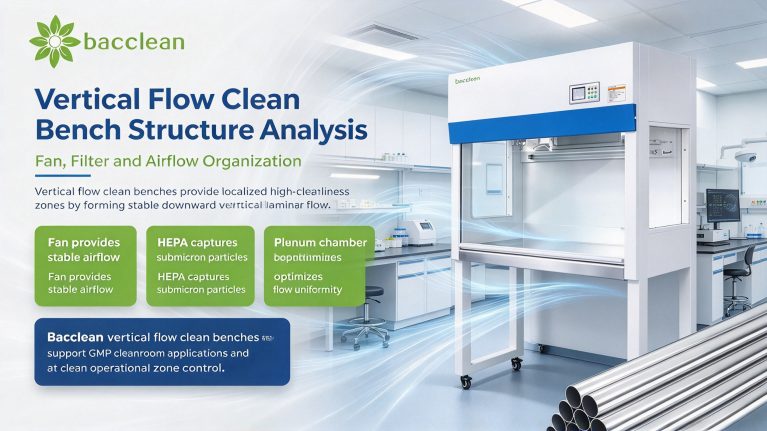
Vertical Flow Clean Bench Structure Analysis: Fan, Filter and Airflow Organization

Vertical flow clean benches are the most widely used local purification equipment in clean workshops and laboratories. Driven by the built-in fan and equipped with HEPA filters, they form stable downward vertical unidirectional laminar flow to build a local high-cleanliness zone inside the working chamber. They are widely applied in microbial testing, sample preparation, precision assembly, physicochemical experiments, aseptic operations and other scenarios. Different from horizontal flow clean benches that deliver airflow sideways, vertical flow benches send airflow from top to bottom. Contaminants are less likely to blow directly toward operators, making them more common in biology, pharmaceutical, electronics and other industries. The cleanliness level, noise and wind speed uniformity of the bench mainly depend on the matching performance of three core parts: fan, filter unit and airflow organization design. Each component is analyzed as follows.

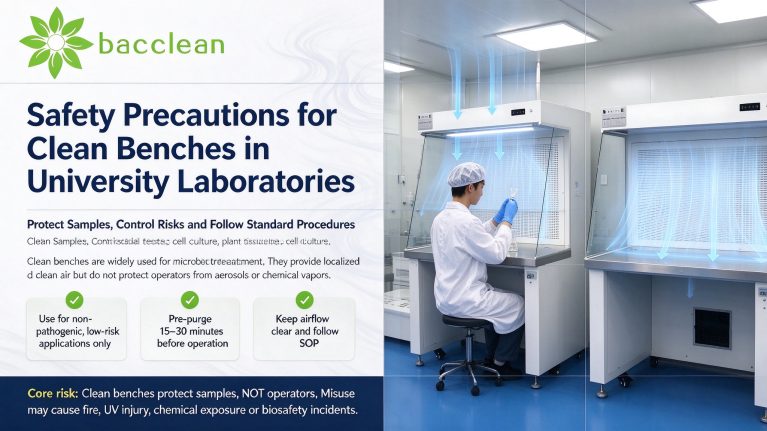
Safety Precautions for Clean Benches in University Laboratories

Clean benches are widely used local clean equipment for microbial experiments, cell culture, plant tissue culture, physicochemical sample pretreatment and precision component packaging in university laboratories. They are available in vertical flow and horizontal flow types. Many teachers and students only focus on clean operation while ignoring electrical, ultraviolet, airflow, reagent and biological risks. Improper operation may lead to sample contamination, equipment damage, skin burns, poisoning caused by reagent volatilization, and even biosafety incidents. Combined with the management requirements of university teaching and research laboratories, this paper sorts out the full-process safety points for clean bench operation to standardize behaviors and reduce laboratory hazards.

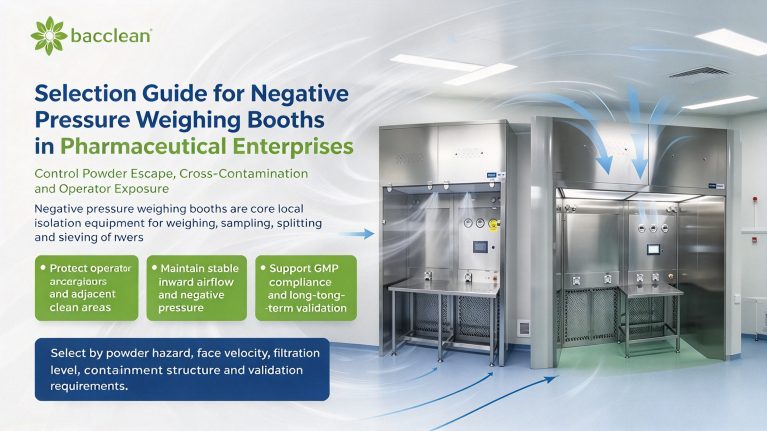
Selection Guide & Key Parameter Interpretation for Negative Pressure Weighing Booths in Pharmaceutical Enterprises

Negative pressure weighing booths are core local isolation equipment in GMP pharmaceutical workshops. They prevent dust escape and cross-contamination during weighing, sampling, material splitting and sieving of high-potency drug powders, hormones, cytotoxic anti-tumor drugs and allergenic powders. Proper selection helps meet GMP regulations, operational safety, cleanroom validation and long-term operation & maintenance costs. Poor selection often leads to failed validation, powder leakage, frequent filter clogging and excessive personnel exposure. This article provides a practical selection framework covering user requirement specification (URS), core technical parameters, powder hazard classification, structural configuration, GMP compliance validation and common pitfalls.