
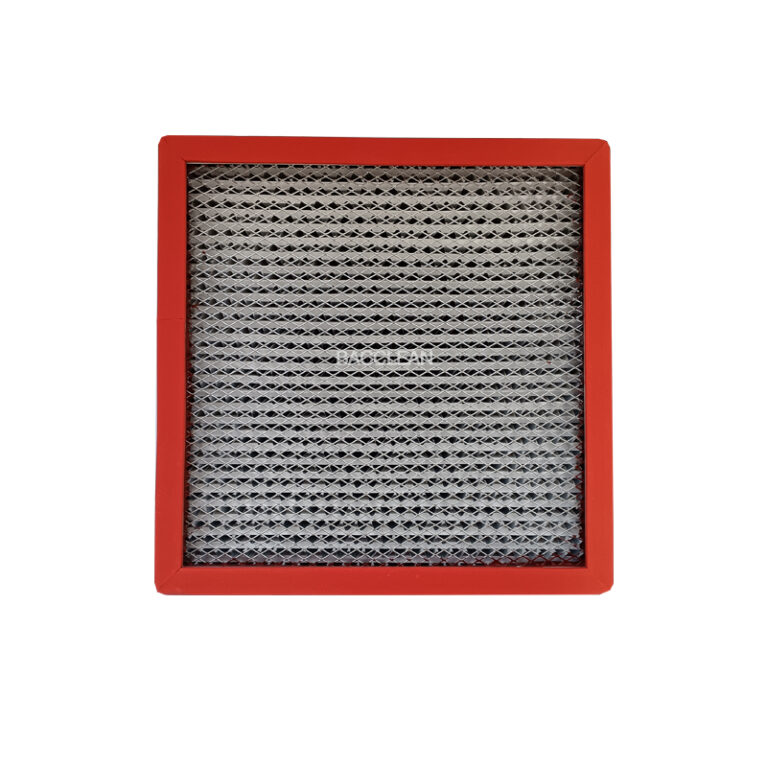
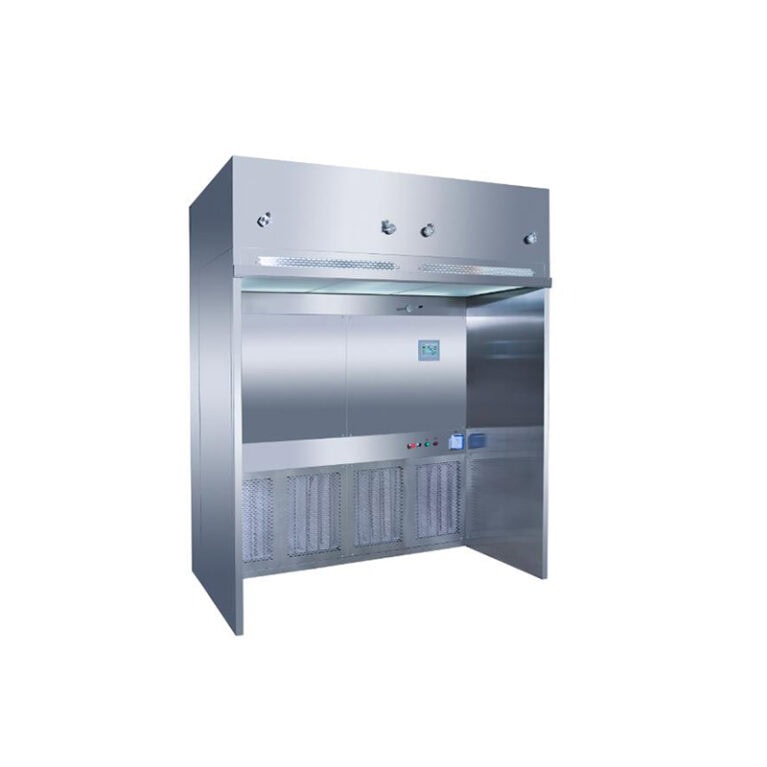
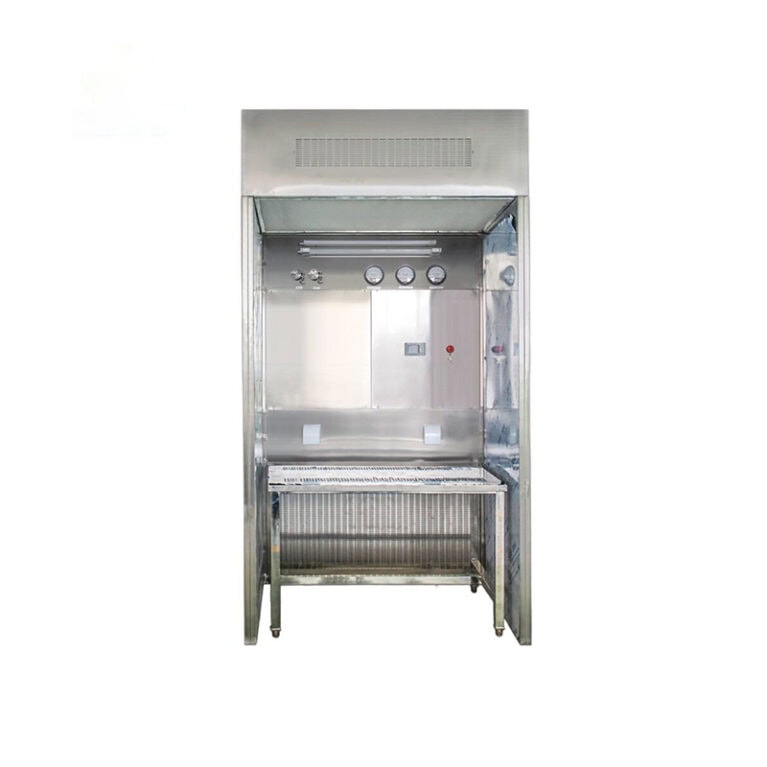
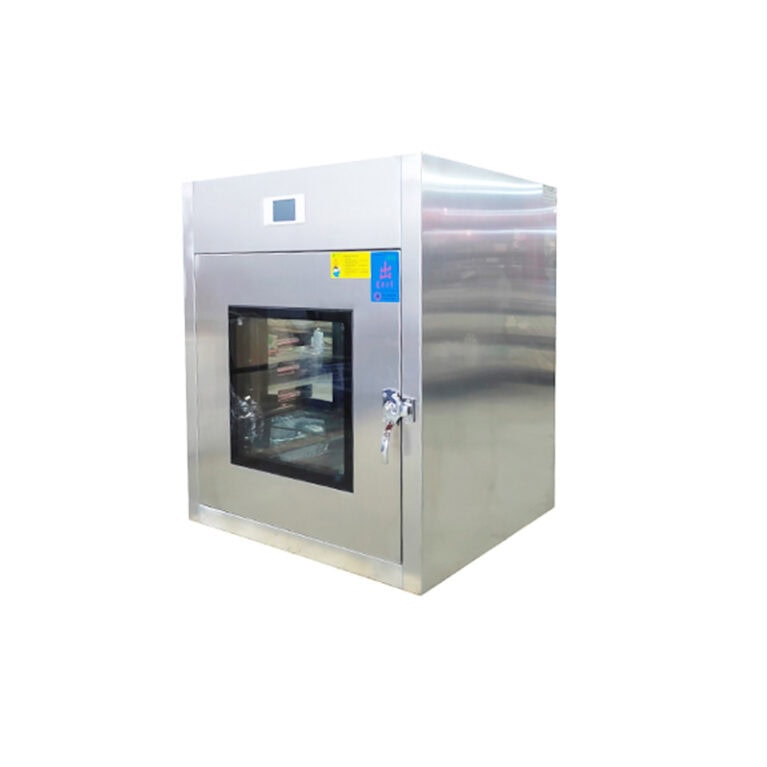
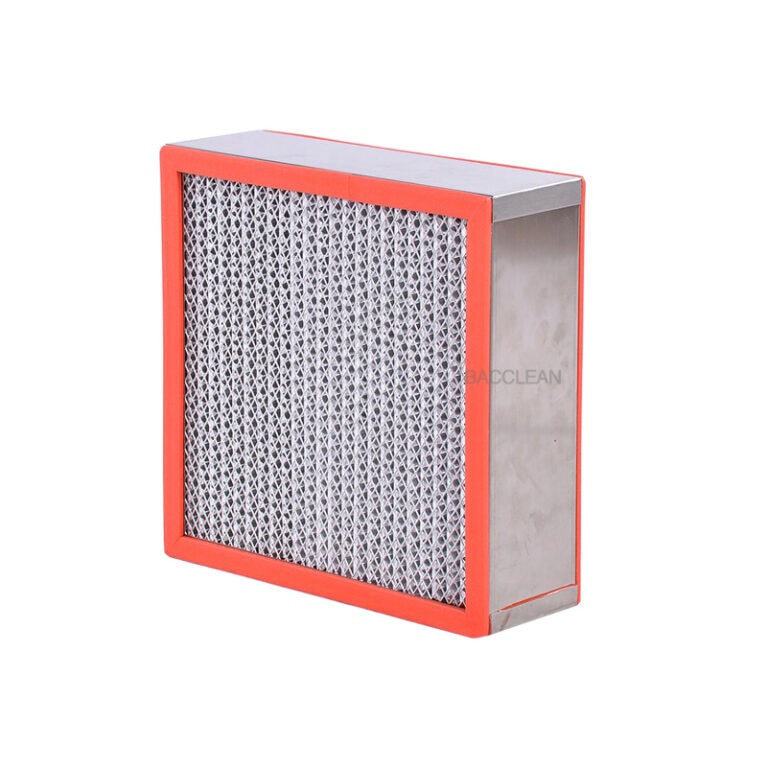
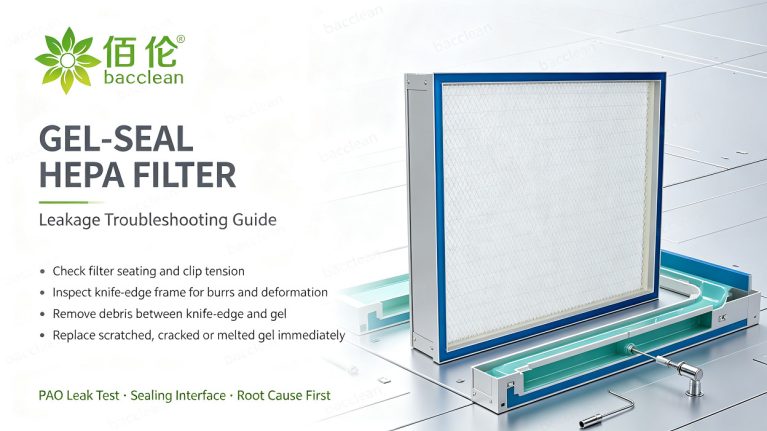
Fault 1: Leakage detected at frame sealing interface during PAO aerosol leak test, no leakage found on filter paper
Leakage points are concentrated at the sealing interface between jelly‑gel and knife‑edge, while filter paper remains intact. This indicates no damage to filter media, and the problem lies within the sealing system.
- Check installation seating status Verify whether the filter has fully settled in place by its self‑weight and whether locking clips are tightened with proper force. Insufficient clip tension prevents the filter from dropping into position, so the knife‑edge cannot fully embed into the gel. Excessive clamping force causes frame warpage and partial separation between gel surface and knife‑edge. Solution: Loosen locking clips, re‑hoist the filter to allow natural seating by gravity, then fasten clips evenly and moderately, and perform leak retest afterwards.
- Inspect knife‑edge frame of gel‑seal air outlet Check for distortion, burrs, notches and corrosion on knife‑edge edges. Sharp burrs will cut the jelly‑gel during filter seating and form continuous linear leakage gaps. Damaged knife‑edges on old air outlets are very common in renovation projects. If burrs exist, carry out grinding and repair under shutdown condition. Replace the complete gel‑seal air outlet frame if knife‑edges suffer severe deformation or notches.
- Check for debris trapped between knife‑edge and jelly‑gel Metal scraps and dust particles generated during ceiling construction may be sandwiched between knife‑edge and gel, creating tiny bypass leakage gaps. Lift out the filter, remove all foreign matters on knife‑edge, check whether gel surface is scratched, and reinstall only when gel remains intact.
- Visual inspection of jelly‑gel sealing surface Hoist out the filter and examine the full‑circle gel for scratches, notches and cracks. Once the jelly‑gel is cut, no repair measure is available. The filter shall be directly replaced and must not be put into service.
- Mismatched dimensional parameters between knife‑edge height and filter gel‑groove depth (hidden condition) Insufficient knife‑edge height leads to inadequate embedding depth and insufficient sealing allowance; over‑height knife‑edge presses against the groove bottom and completely crushes the gel. This is a parameter mismatch originated from early‑stage design‑selection. Verify drawing specifications of both components, adjust air‑outlet hardware or replace filters with compatible dimensions.
Fault 2: Passed leak test upon commissioning, intermittent sealing leakage occurs after months of operation
Intermittent leakage poses high difficulty for troubleshooting. The unit may pass leak‑testing occasionally yet show leak points again when system air pressure varies. Such faults are mostly attributed to aging and damage of jelly‑gel.
Frequent VHP (Vaporized Hydrogen Peroxide) disinfection in pharmaceutical workshops gradually hardens the jelly‑gel and generates micro‑cracks under long‑term exposure to disinfection gas. Subjected to air pressure fluctuation of supply‑air system, cracks open and close dynamically, resulting in sporadic leakage. Troubleshooting: Refer to operation‑maintenance ledger of the workshop and check cumulative VHP disinfection cycles. Lift out the filter and visually inspect jelly‑gel for hardening and fine cracks. Replace filters with aged gel. For subsequent selection, upgrade to special VHP‑resistant jelly‑gel version.
Besides, slight deformation of ceiling air‑outlet frame induced by thermal expansion and contraction under temperature change may also trigger intermittent leakage, which is frequently seen in renovated workshops. Verify fastening status of ceiling air‑outlet frames and rationality of thermal expansion allowance design.
Fault 3: Rapid abnormal rise of filter pressure differential, insufficient air volume and air change rate in cleanroom
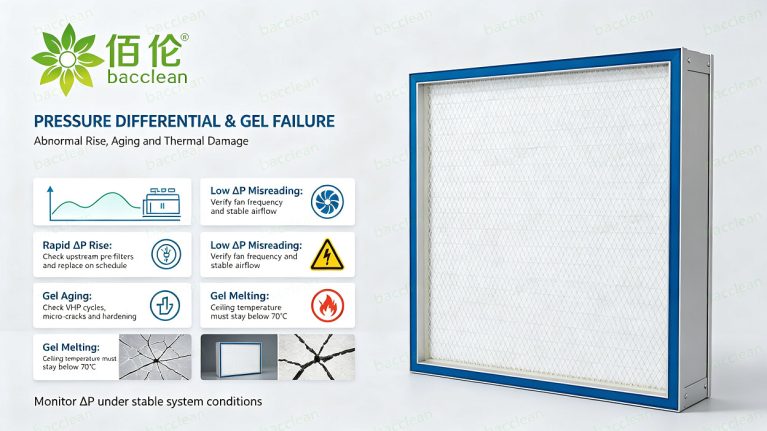
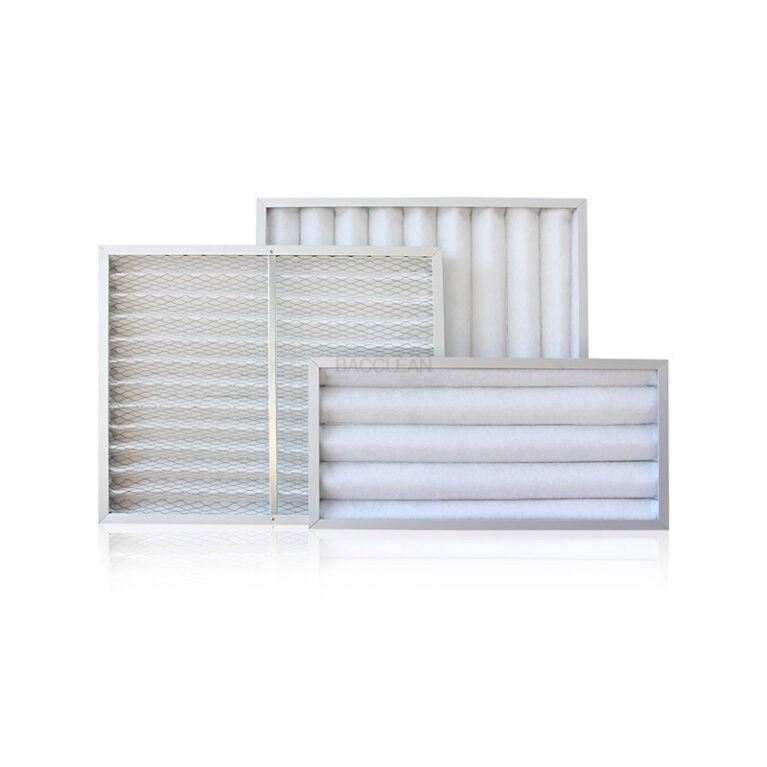
Sharp pressure‑differential increase is most frequently caused by failure of upstream pre‑filtration system. If pre‑filters (G4‑F8) are not replaced on schedule, massive dust particles directly impact HEPA filters and cause rapid clogging. Troubleshooting: Check pressure differential values of upstream pre‑filters and replace filter media timely if pre‑filtration performance degrades.
Meanwhile verify actual operating conditions of HVAC system. Confirm whether fan frequency has been reduced. Lower fan air volume will produce misleading low pressure‑differential readings of filters while actual supply‑air volume of the room becomes inadequate. Judge filter status based on pressure‑differential data collected under stable system conditions; do not compare with historical data directly after fan frequency conversion modification.
Another scenario: Partial blockage on filter air‑inlet side by thermal‑insulation scraps and construction debris reduces effective filtering area and leads to abnormally high pressure differential. Lift out the filter and clear upstream debris.
Fault 4: Jelly‑gel sagging, flowing, sticky substance precipitation
When jelly‑gel sags or flows, priority shall be given to ambient temperature check. Irreversible thermal softening and melting occur when actual temperature inside ceiling plenum exceeds 70 °C. Check whether gel‑seal filters are adjacent to high‑temperature pipelines and evaluate heat‑dissipation performance of ceiling plenum. Discard and replace filters with melted gel, and rectify heat‑source issues; sustained high‑temperature environment is prohibited for gel‑seal HEPA filters.
Sticky precipitation on gel surface arises from two aspects: insufficient chemical resistance of gel formulation eroded by organic solvents or high‑concentration disinfection gas; premature aging due to exceeded shelf‑life under long‑term storage. Evaluate process gas exposure of workshop. Select filters with chemically‑resistant gel formula if necessary, and optimize warehouse management to avoid overstock of filters.
Fault 5: Leak points detected on filter‑paper medium during leak test
Filter‑paper leakage may be induced by factory‑originated media defects, cracking of bonding sealant between filter paper and frame caused by violent vibration and collision during transportation & hoisting, or filter‑paper puncture by hard objects during on‑site installation. Troubleshooting: Hoist out the filter and inspect filter paper for breakage as well as frame sealant for cracking. Discard and replace filters with damaged filter‑paper. Optimize handling and hoisting procedures to prevent heavy impact.
One confusing on‑site phenomenon shall be noted: transient instrument alarm triggered by excessively fast scanning speed of leak‑test probe does not represent real leakage. Slow down scanning speed and repeat scanning to eliminate operation‑caused false alarms.
General Troubleshooting Principle: External Factors First, Filter Body Second
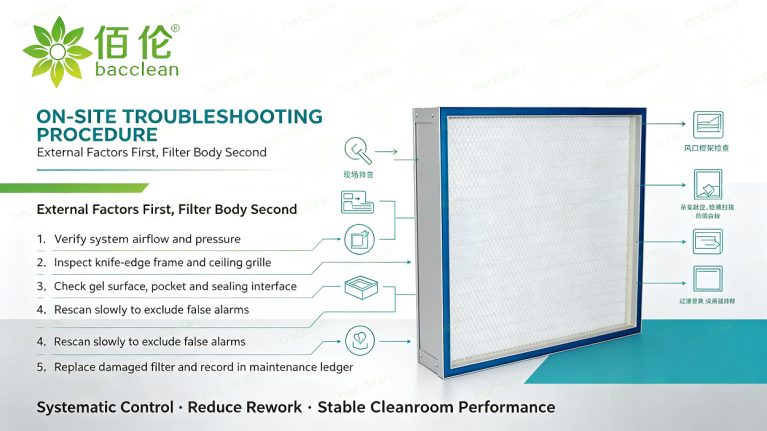
Prioritize verification of system operating conditions, grille frame performance and installation practice before judging filter‑body defects. Do not attribute leak‑test alarms directly to filter quality defects. Most on‑site problems originate from matching components and operation workflows.
After project delivery, bacclean provides fault‑diagnosis guidelines. Our technical team supports customers to locate root causes step‑by‑step in case of on‑site anomalies. The complete sealing system of gel‑seal HEPA filters involves filter hardware, air‑outlet frames, transportation‑storage, installation and disinfection‑maintenance. Systematic full‑chain control is essential to guarantee long‑term stable equipment performance.
