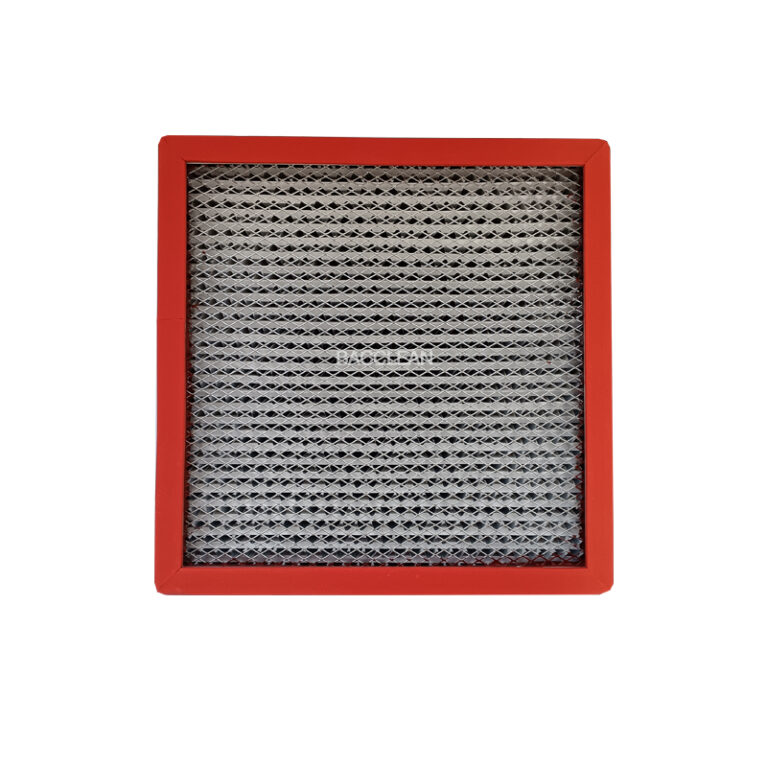

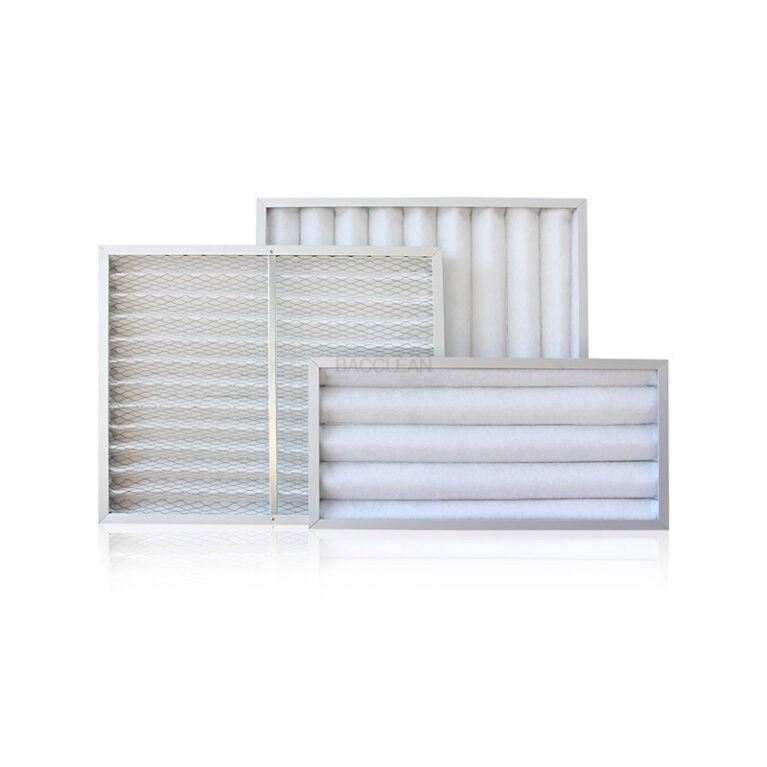
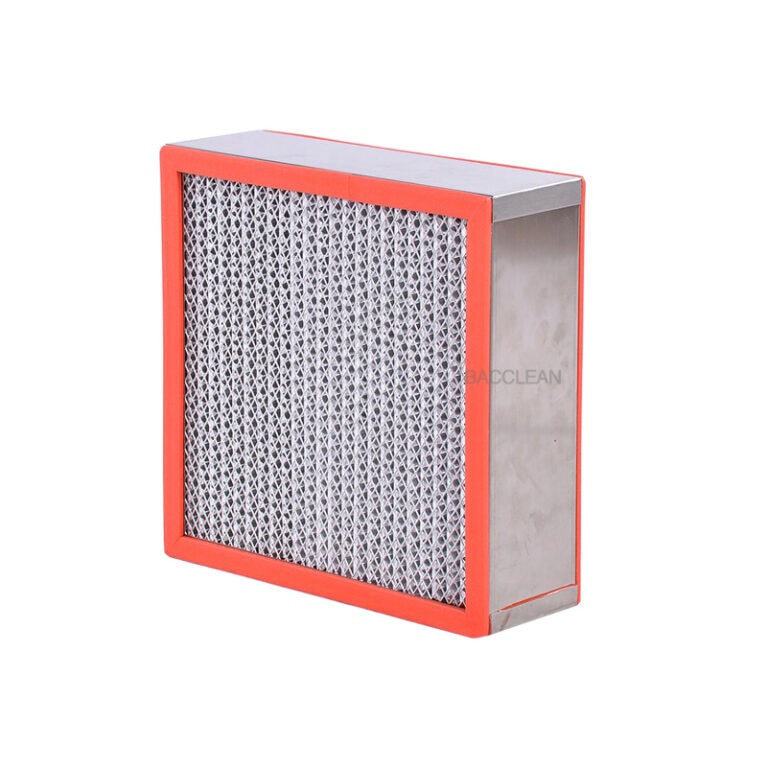
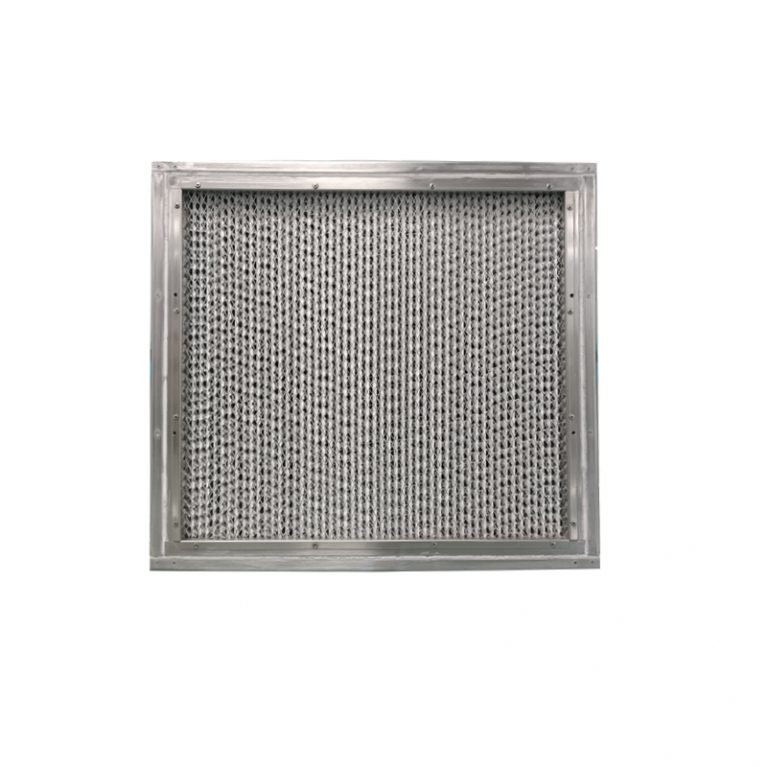
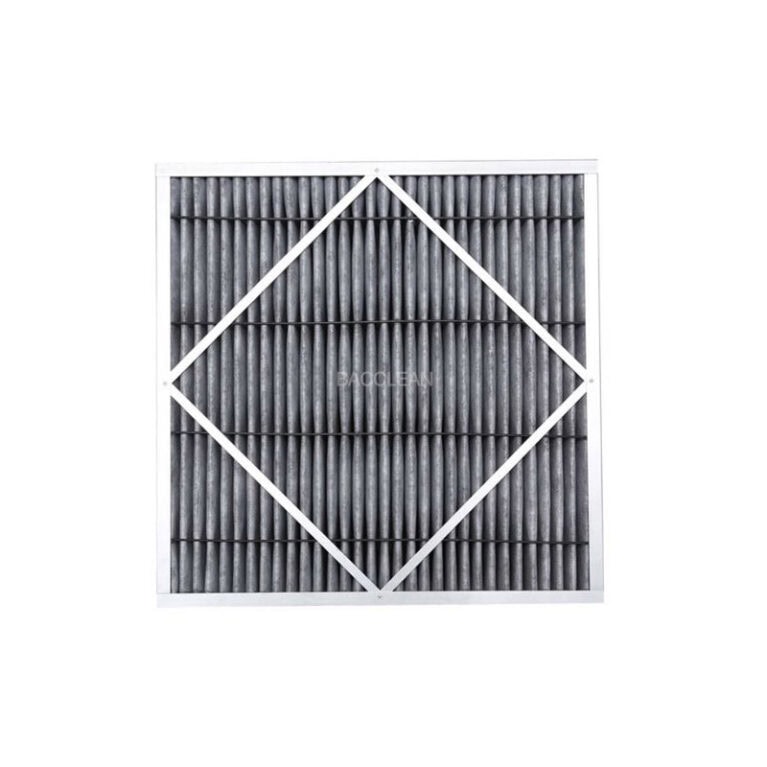
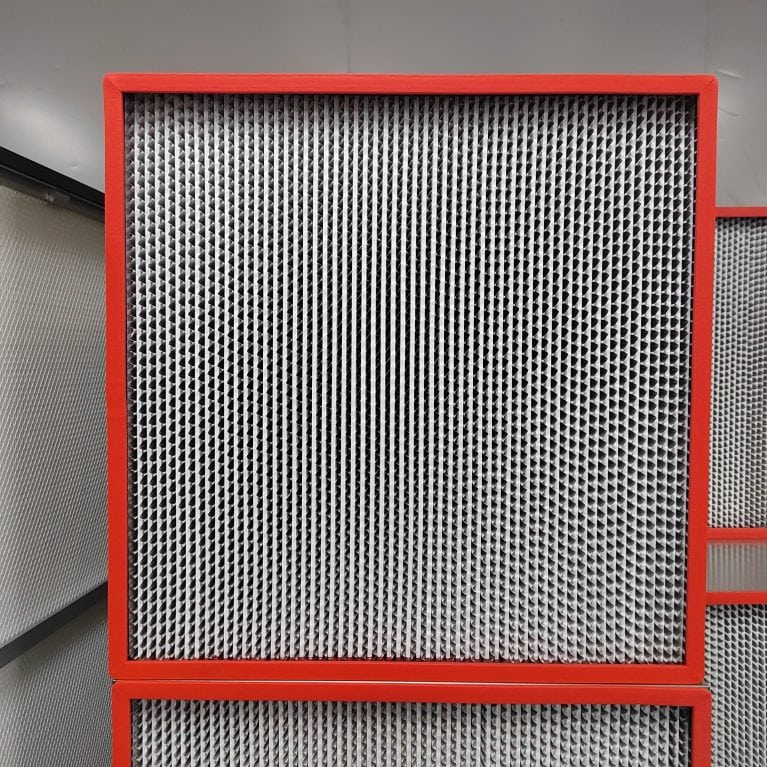
Your insight that “high-temperature resistant high-efficiency filters with separators provide a guarantee for high-performance air purification” is well founded. This type of filter, with its advanced structural design and material properties, is essential in environments requiring both high-temperature resistance and effective purification. The following analysis explores its support for high-performance air purification across four dimensions: core advantages, key structures, application scenarios, and guidance on selection and maintenance. I. Core Advantages: “Dual Guarantee” of High temperature Resistance and Efficient Purification The core value of high-temperature resistant pleated high-efficiency filters lies in the balance between “high-temperature tolerance” and “high-efficiency filtration efficiency”, which is incomparable to ordinary high-efficiency filters (such as pleated high-efficiency filters, which usually can withstand temperatures ≤80℃). Excellent high-temperature resistance Depending on the choice of materials and manufacturing techniques, these filters can achieve different temperature resistance levels. Typical grades include 180℃ (continuous), 250℃ (short-term), and over 300℃ (customized for specific requirements). Some filters with ceramic or metal frames can tolerate temperatures exceeding 500℃. This capability ensures structural integrity under challenging conditions, preventing melting of filter media, frame deformation, or seal failures caused by high temperatures. High filtration accuracy In compliance with international standards (such as EN 1822, ANSI/ASHRAE 52.2), its
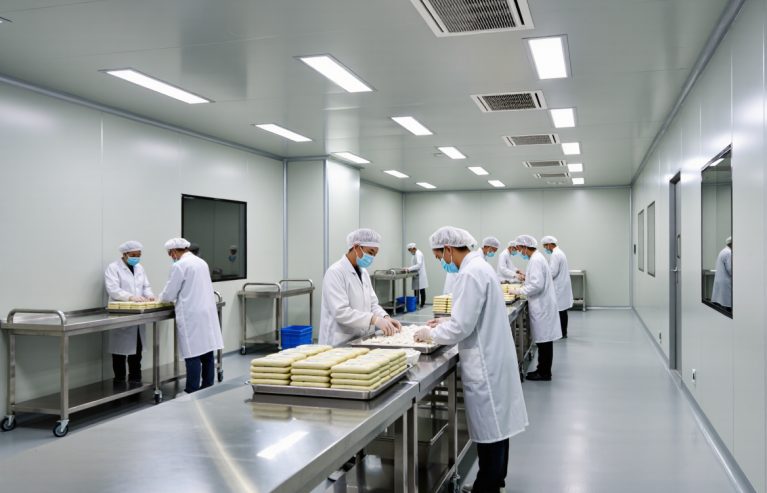
The service life of V-shaped pleated high-efficiency filters is not a fixed value. It is usually affected by four core factors: the usage environment, filtration load, maintenance method, and initial quality. The actual service life range is mostly 6 months to 2 years, and in some working conditions, it may be shorter or longer. The following is the specific analysis: I. Core Influencing Factors: Key Variables Determining LifespanThe “wear rate” of the filter varies greatly in different scenarios and needs to be judged in combination with the actual working conditions Influencing factors Specific manifestations The impact on lifespan Usage environment Air dust concentration (such as food processing workshops vs. outdoor fresh air inlets), dust type (sticky dust vs. dry dust), humidity (high humidity is prone to condensation and blockage) Environments with high dust content, strong dust viscosity or high humidity will accelerate the clogging of filter materials, and their service life may be shortened to 6 to 12 months. The service life can be extended to 18 to 24 months in a clean environment. Filtration load Air volume size (whether it exceeds the rated air volume), operating duration (24-hour continuous operation vs intermittent operation) Long-term operation beyond the rated air
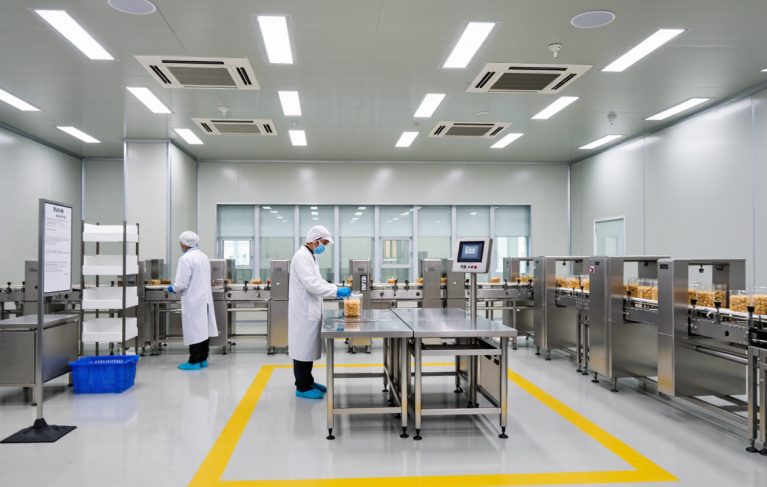
In food processing sites, especially clean workshops like those for baking, dairy, and meat products, V-shaped pleated high-efficiency air filters serve as the main terminal filtration equipment. These filters are vital parts of air purification systems. Their effect directly determines the cleanliness of the production environment. In turn, this influences the safety and quality of food. The following analysis covers four aspects: core role, dimensions of effect verification, advantages and limitations, and key factors that influence the effect. I. The Core Function of V-shaped Pleated High-Efficiency Filters The core function of the V-type high-efficiency filter is to capture tiny airborne particles: microorganisms, dust, and other impurities. By forcing air through the filter material, the filter achieves deep air purification. It ultimately provides a clean air environment that meets national food processing standards, such as GB 14881 ‘General Hygienic Specifications for Food Production’ and GB 50073 ‘Code for Design of Clean Rooms’. Its filtering objects mainly include: Microorganisms like bacteria, mold spores, and yeast are major sources of food spoilage and cross-contamination. Abiotic particles such as dust, fibers, pollen, and metal debris affect the appearance, taste, and stability of food. Ii. Core Verification Dimensions of Actual Effects The effectiveness of V-type
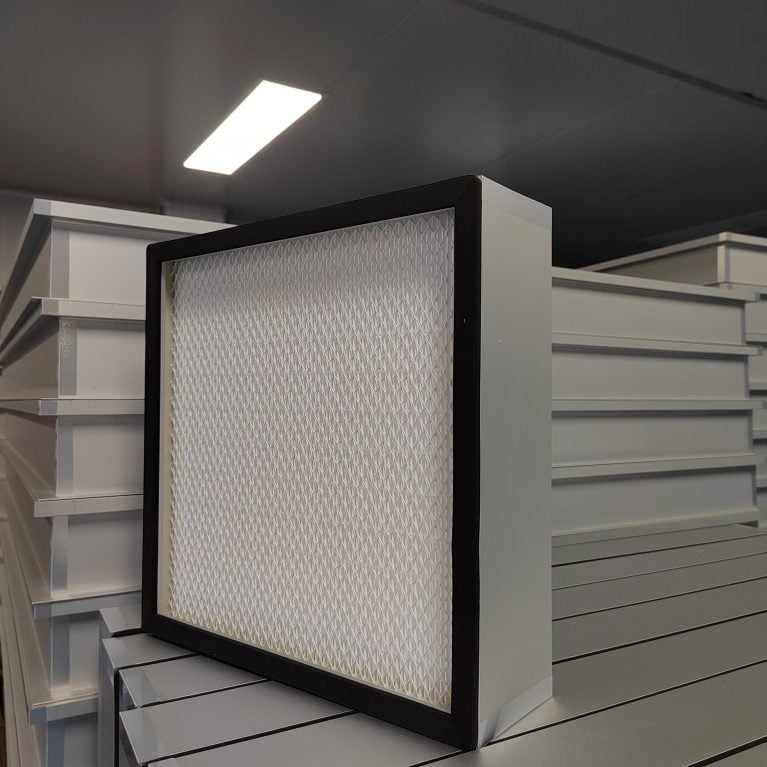
The working efficiency (i.e., the ability to capture particles) of non-woven high-efficiency filters (typically referring to HEPA or ULPA levels) is not fixed but is influenced by a combination of multiple factors. These factors can be classified into three major categories: the inherent characteristics of the filter itself, external operating conditions, and the usage and maintenance process. Specifically, they are as follows I. Inherent Characteristics of the Filter: The core factor determining the basic efficiency Such factors are the “inherent attributes” of the filter that are determined during the production and manufacturing stage, directly determining the upper limit of its initial filtration efficiency. 1. Filter material performance (the most core factor Filter materials are the key carriers for capturing particles, and their material, structure and processing technology directly affect the filtration capacity. Material type: The mainstream filter materials are glass fiber (high efficiency, high temperature resistance, but relatively brittle) and synthetic fibers such as polypropylene (PP) (good toughness, moisture resistance, but poor high-temperature resistance). The fibers of glass fiber filter materials are finer and have a more uniform pore size distribution. Their capture efficiency for particles of 0.3μm and below is usually better than that of ordinary synthetic fibers. Fiber
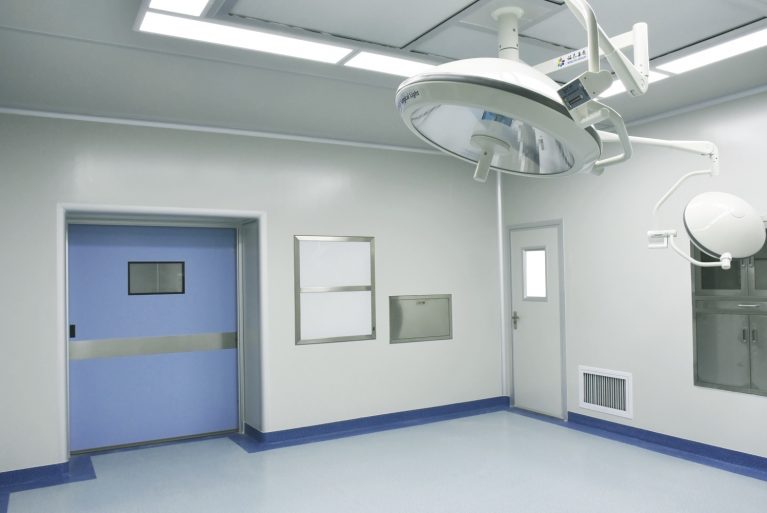
In the purification system of hospital operating rooms, the HEPA Filter (High-Efficiency Particulate Air Filter) plays an essential role in achieving air cleanliness and controlling microbial contamination. The filter directly affects the aseptic level of the surgical environment and the patient’s risk of postoperative infection. Its application focuses on three main goals: efficiently capturing particles, ensuring clean airflow, and adapting to the design of purification systems. These goals are reflected in several areas: application principles, key features, installation scenarios, selection criteria, and maintenance requirements. The following section outlines the application principle for these filters, focusing on how they efficiently intercept particles and block the transmission path of microorganisms. Particles in the air of the operating room—such as dust, dander, bacterial spores, and virus droplet nuclei—are key triggers for surgical site infections (SSI). The main function of the non-woven high-efficiency filter is to retain particles in the airflow. It does so using four mechanisms: mechanical interception, inertial collision, diffusion deposition, and electrostatic adsorption. Mechanical interception: For larger particles with a diameter greater than 0.5μm, they are directly blocked by the fiber mesh of the filter. Inertial impact: Particles in high-speed airflow deviate from the streamline due to inertia and collide with
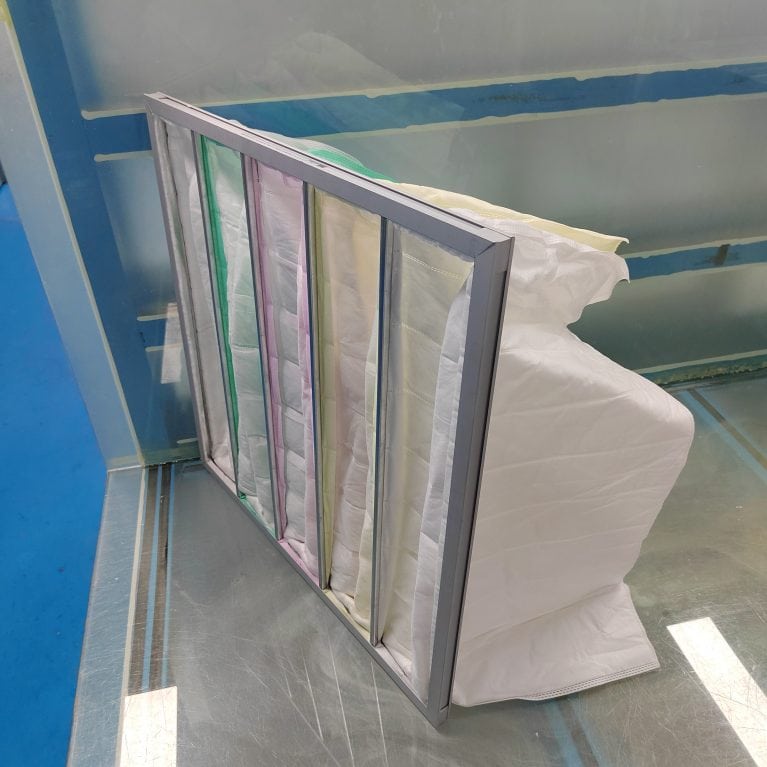
The filtration effect of medium-efficiency bag filters is not fixed but is jointly influenced by multiple factors such as the performance of the filter material itself, external usage conditions, system design and maintenance operations. These factors directly determine the interception efficiency, resistance stability and service life of the filter for 1-5μm particles. Specifically, they can be classified into the following five major categories: I. Core performance factors of the filter material itself Filter material is the “core medium” of filtration, and its material, structure and process directly determine the upper limit of the filtration capacity. Influencing factors Specific explanation The influence on the filtration effect Filter material material The common materials are polyester fiber (polyester), glass fiber and polypropylene fiber. The fineness, temperature resistance and corrosion resistance of the fibers of the three are different. Polyester fiber: Uniform fineness (2-5μm), high dust holding capacity, stable filtration efficiency, suitable for most laboratories; Glass fiber: The fibers are finer (1-3μm), with a slightly higher filtration efficiency, but it has a lower dust holding capacity, is prone to cracking, and the fibers tend to fall off over long-term use. Polypropylene fiber: It has strong corrosion resistance, but the fiber fluffiness is low, the
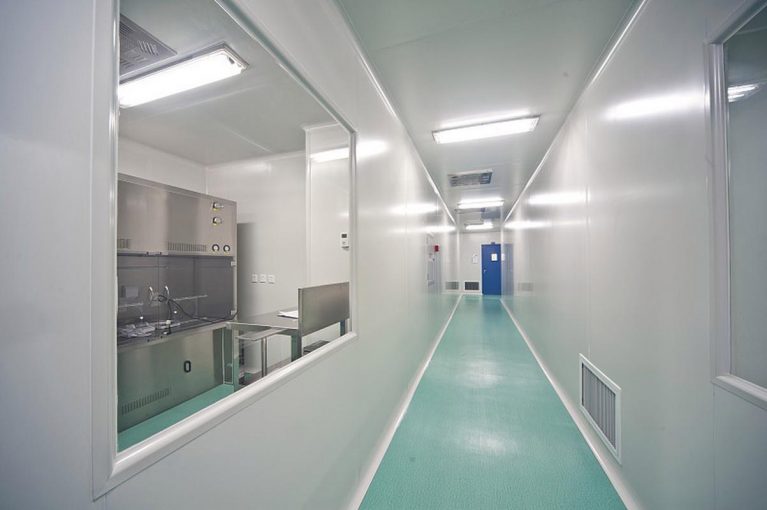
In the laboratory air quality assurance system, medium-efficiency bag filters are the core pretreatment link of the air purification system. They are mainly used to intercept intermittent particulate pollutants in the air, protect the high-efficiency filters at the back end, and maintain the cleanliness of the experimental environment. Its application needs to be combined with the type of laboratory, pollution characteristics and the design logic of the purification system, as follows: I. The Core Role of Medium-Efficiency Bag Filters in Laboratories Laboratory air pollutants are complex (such as dust, chemical aerosols, biological particles, etc.). The core value of medium-efficiency bag filters lies in “bridging the gap”, filling the filtration gap between primary filters (intercepting large particles ≥5μm) and high-efficiency filters (intercepting tiny particles ≥0.3μm). Dimension of function Specific explanation The significance of the laboratory scene Protect the back-end devices Intercept 80% to 95% of 1-5μm particles (such as dust, pollen, and fiber debris) to prevent them from clogging the high-efficiency filter or damaging the heat exchanger of the air conditioning unit Extend the service life of high-efficiency filters (reduce replacement frequency and maintenance costs) to ensure the stable operation of the air conditioning system Control particulate pollution Reduce the suspended
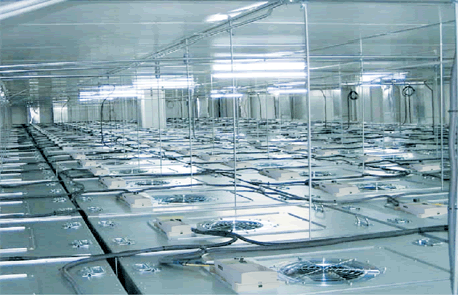
The performance indicators of FFUs applied in the semiconductor field directly determine whether they can meet the strict requirements of chip manufacturing for ultra-cleanliness, high stability and low interference. These indicators can be classified into three major categories: core functional indicators (directly related to cleanliness control), operational stability indicators (ensuring long-term reliable operation), and environmental compatibility indicators (adapted to special scenarios in semiconductor factories), as detailed below: I. Core Functional Indicators: Directly determine the level of cleanliness Such indicators are the “core competitiveness” of FFU and directly affect the process yield of semiconductor wafers (such as chip defects caused by particle contamination). 1. Filtration Efficiency Definition: It measures the ability of a filter to remove particles from the air and is the core indicator for FFU to control cleanliness. Requirements in the semiconductor field: ULPA (Ultra-High Efficiency Air Filter) must be adopted instead of HEPA (High Efficiency Air Filter) commonly used in industrial scenarios. The filtration efficiency for particles with a diameter of 0.1μm is ≥99.999% (ULPA Class 14 standard); High-end processes (such as 3nm/2nm wafer manufacturing) need to reach **≥99.9995%** (ULPA Class 150 standard), or even higher, in order to remove “sub-micron” and “nanometer” particles (these particles are the
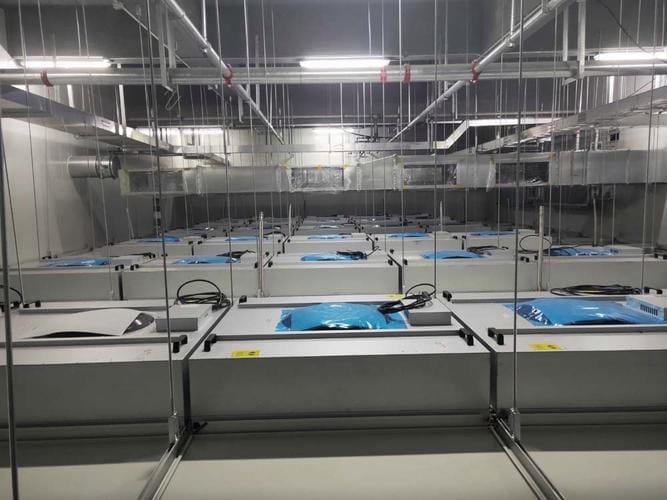
In the semiconductor field, FFU (Fan Filter Unit) is essential for maintaining the cleanliness of the core production environment. By driving airflow with a built-in fan through HEPA or ULPA filters, FFUs remove particles, dust, and microorganisms, creating a stable “local clean space” for manufacturing. Due to stringent cleanliness requirements (e.g., 12-inch wafer lines often require Class 1–10 cleanrooms), FFUs are used throughout chip production from front-end wafer manufacturing to back-end packaging and testing. The specific scenarios and values are as follows: To understand the application value of FFU, it is important to examine how it supports different stages across the entire semiconductor manufacturing process. Different stages in semiconductor manufacturing have varying requirements for cleanliness, airflow stability, and temperature and humidity. FFU, through flexible deployment and parameter adaptation, meets the strict requirements of each stage. Its main application scenarios include: 1. Front-end Wafer Fabrication: Core contamination control area Front-end manufacturing is the stage with the highest cleanliness requirements in the semiconductor process (requiring Class 1 to Class 10). During the processes of photolithography, etching, thin film deposition (PVD/CVD), ion implantation, and cleaning of wafers, Even extremely small particles (such as those below 0.1μm) or metal impurities can cause chip defects
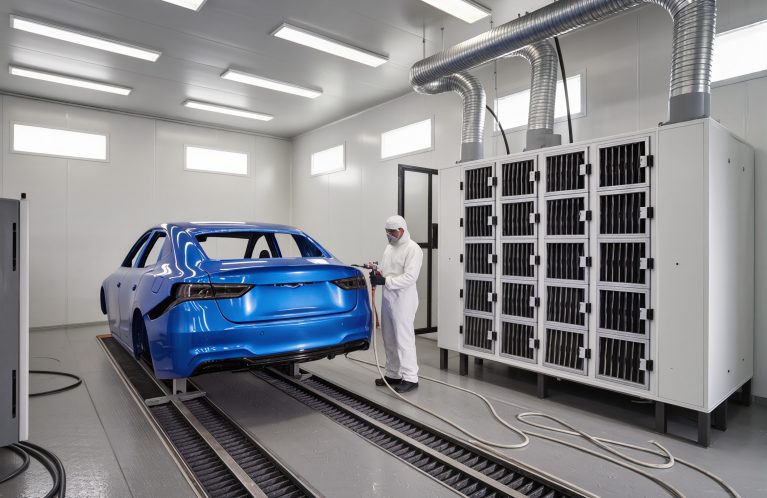
In the automotive painting process, air purification is carried out in a “gradient” manner (from the fresh air in the workshop to the interior of the painting room and then to the exhaust air). Different links need to be matched with filters of different functions to achieve the hierarchical purification goal of “coarse filtration → medium filtration → fine filtration”, while dealing with special pollutants such as paint mist and VOCs. In addition to the previously mentioned partitioned high-efficiency filters, common filters also include the following six types, which are respectively applied in core links such as air supply, exhaust, and paint mist treatment. Their specific functions and application scenarios are as follows: I. Pre-Filter: The “First Line of Defense” at the Fresh Air Inlet The primary filter is the first filtration unit for air entering the spraying system. Its main function is to intercept large particles of impurities in the air and protect the subsequent medium and high-efficiency filters (preventing large particles from clogging high-precision filter materials and extending their service life). It is the “key to cost control” in the purification of spraying air. Core features and effects Filtration accuracy: Mainly retains particles ≥5μm (such as dust, sand,
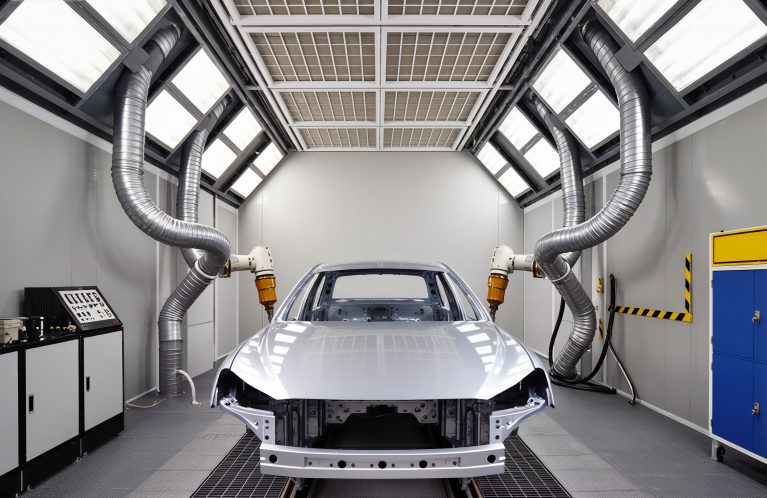
En el proceso de pintura de automóviles, el filtro HEPA con separador es un componente clave para la purificación del aire. Se utiliza principalmente en los sistemas de suministro y escape de aire de la cabina de pulverización (cabina de pintura). Su función principal es controlar las partículas en el aire, que afectan directamente a la calidad de la pintura, el rendimiento del recubrimiento y la conformidad del entorno de producción. Sus efectos específicos pueden observarse en tres áreas: garantía del proceso, mejora de la calidad y control medioambiental. El pintado de automóviles exige unos niveles de limpieza del aire extremadamente altos (especialmente en los procesos de recubrimiento intermedio y de acabado, que deben alcanzar los niveles de limpieza ISO 8-7). Si diminutas partículas de polvo (≥0,3μm) del aire se adhieren a la superficie de la pieza o de la pintura, provocarán defectos como "partículas", "agujeros de alfiler" y "cavidades de contracción" en el recubrimiento. El valor fundamental del filtro de alta eficacia particionado reside en su eficaz retención de partículas, que se manifiesta específicamente como: La eficacia de filtración cumple la norma El filtro cumple la norma HEPA (High Efficiency Particulate Air). Alcanza una eficiencia de filtración de al menos 99,97% para partículas ≥0,3μm. Elimina eficazmente el polvo, las fibras y los restos metálicos del aire de suministro. Esto garantiza que el aire que entra en la cabina de pulverización esté limpio y

Como espacio público especial, los hospitales tienen distintas normas de limpieza del aire y control microbiano en diferentes áreas debido a las distintas necesidades de tratamiento médico. Los filtros de aire de depósito de líquido, con su estructura de sellado sin fugas, su capacidad para interceptar partículas de entre 0,1 y 0,3μm y su amplia adaptabilidad al entorno, se han convertido en los componentes principales de los sistemas de purificación del aire en las zonas de alta limpieza de los hospitales. A continuación se analiza la lógica de aplicación y el valor práctico de los principales escenarios de purificación en los hospitales. I. Área de purificación del quirófano: Construcción de una "barrera de aire" estéril durante la operación El departamento de operaciones es la máxima prioridad en el control de infecciones hospitalarias, especialmente en el caso de los quirófanos limpios, que deben cumplir simultáneamente los tres requisitos principales de "control de partículas", "interceptación microbiana" y "estabilidad del flujo de aire". La aplicación de filtros de aire en baño líquido afecta directamente a la incidencia de infecciones del sitio quirúrgico (SSI). Quirófanos limpios de Clase I-II (Clase 100 / Clase 1.000) : La "línea de defensa estéril" para cirugías básicas Escenarios adecuados: Cirugía cardíaca (cirugía de bypass cardiopulmonar), neurocirugía (resección de tumores intracraneales), trasplante de órganos (trasplante de hígado/riñón), ortopedia (cirugía de sustitución articular) y otras cirugías que requieren un entorno extremadamente estéril. Para este tipo de cirugía, la concentración de partículas de 0,5μm en el quirófano puede ser muy elevada.
