
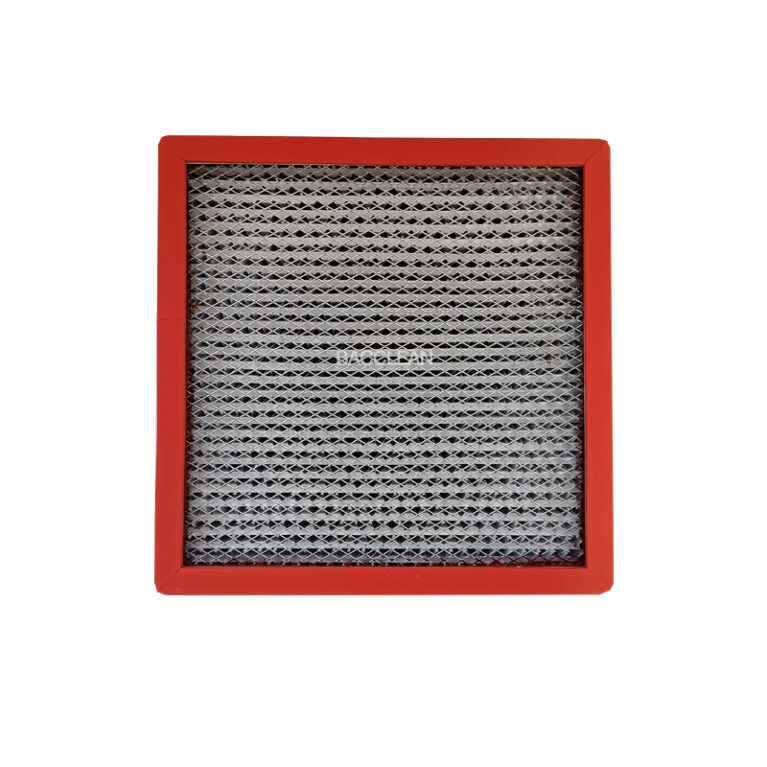
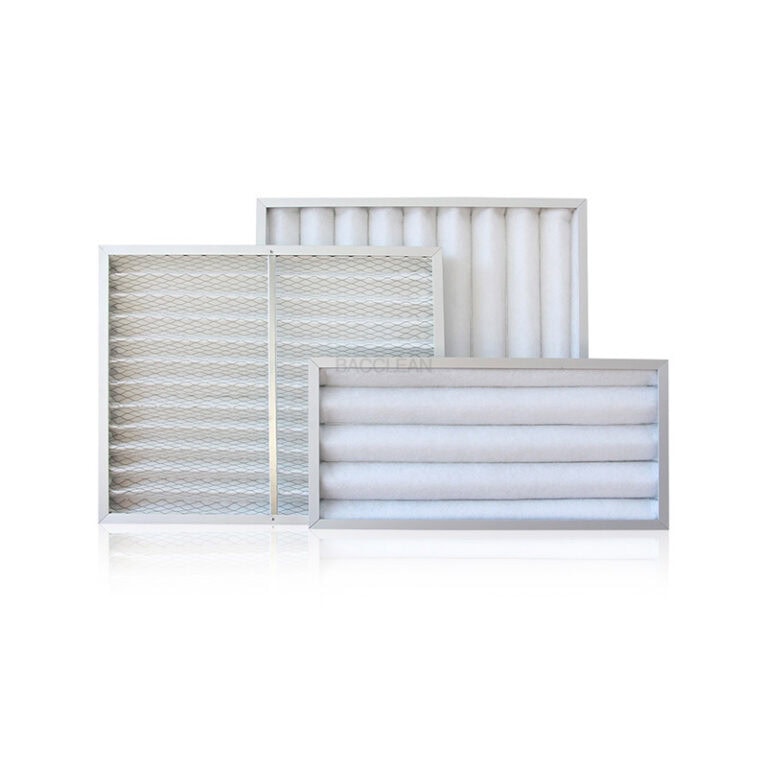
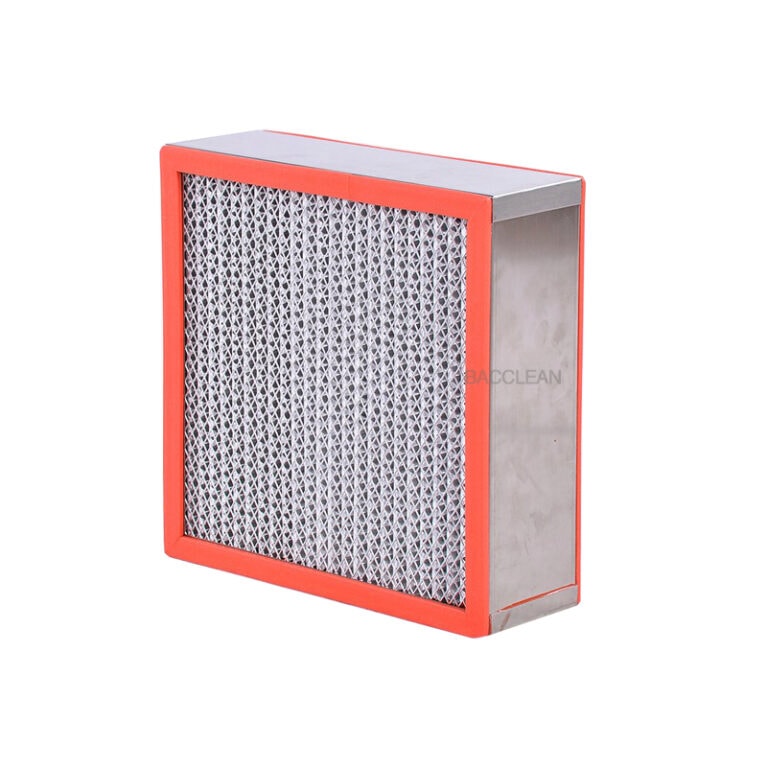
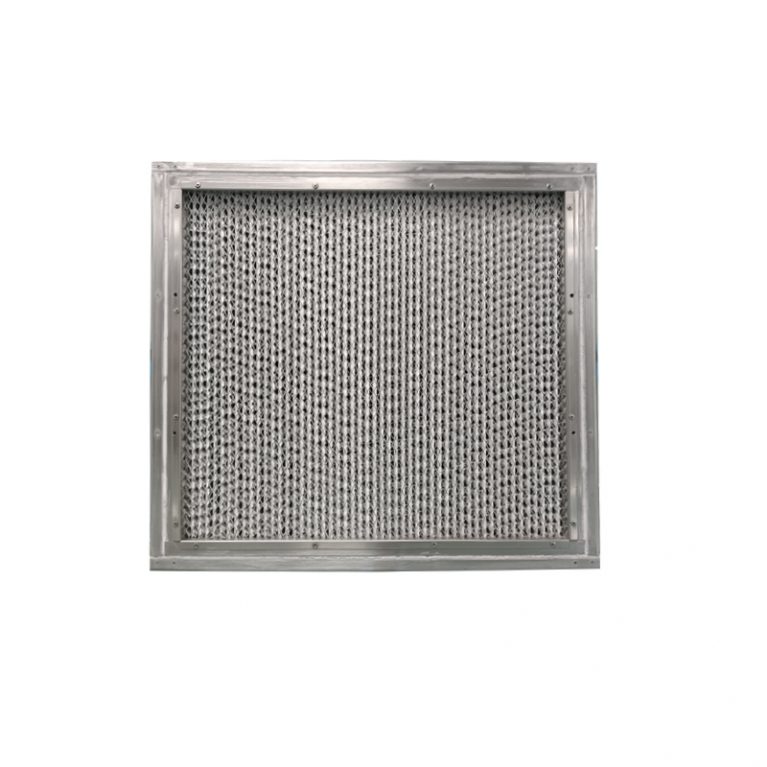
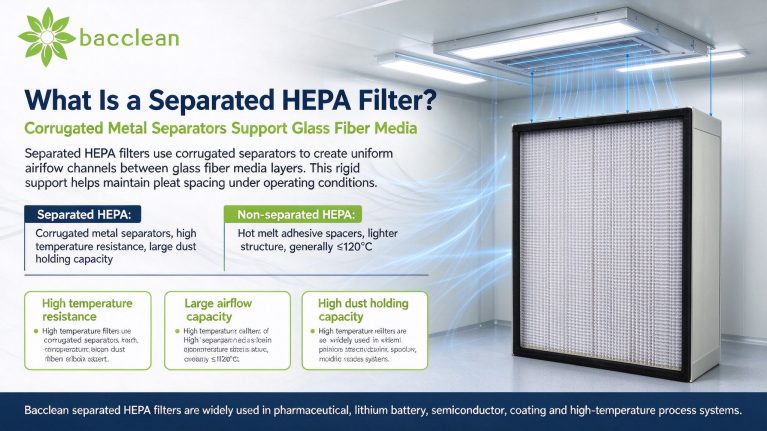
Simply put, a separated HEPA filter is a high-efficiency filter device with corrugated separators inserted between glass fiber filter papers to separate the filter papers layer by layer and form uniform air flow channels. Common separator materials include aluminum foil separators and stainless steel separators. The continuously folded separators prop open the fine glass fiber filter paper and maintain the spacing between each filter layer, preventing the filter paper from fitting together or collapsing under wind pressure and ensuring smooth airflow through the filter surface. The complete filter consists of ultra-fine glass fiber filter paper, corrugated separators, sealing adhesive, outer frame and sealing strips. Common outer frame materials include aluminum alloy, galvanized steel plate, 304/316 stainless steel, which can be flexibly matched according to temperature resistance and anti-corrosion requirements.
Many people confuse it with non-separated HEPA filters. The most intuitive difference lies in the supporting method: non-separated filters rely on hot melt adhesive threads to separate filter paper, featuring a lightweight structure and low resistance, but their long-term temperature resistance is generally no more than 120°C. In contrast, separated filters adopt rigid support from metal separators with outstanding high-temperature resistance, capable of adapting to high-temperature working conditions up to 250°C or even 350°C. Meanwhile, they have a larger expanded filter area and higher dust holding capacity, suitable for large-air-volume and long-term continuous operation systems.
Working Principle of Separated HEPA Filters
Its filtration mechanism is mainly deep-bed interception filtration. Relying on the complex fiber grid of ultra-fine glass fiber media, it captures suspended particles in the air through multiple mechanisms, including inertial impaction, diffusion interception, electrostatic adsorption and sieving. It does not simply block particles larger than pore size like a screen window.
- Diffusion effect: For submicron fine particles of 0.1~0.3μm, particles drift continuously under the Brownian motion of gas molecules and collide with the surface of glass fiber to be adsorbed and retained. This is the primary way for HEPA filters to capture tiny particles.
- Inertial impaction: Large dust particles move along with airflow. When the airflow turns around the fibers, particles break away from the airflow track due to inertia and directly hit and attach to the fibers.
- Interception effect: When the particle size is close to the gap size of fibers, the particles directly contact the fiber surface and get trapped.
- Electrostatic adsorption: Part of the glass fiber filter media carries weak static electricity, which can assist in adsorbing particles and further improve capture efficiency.
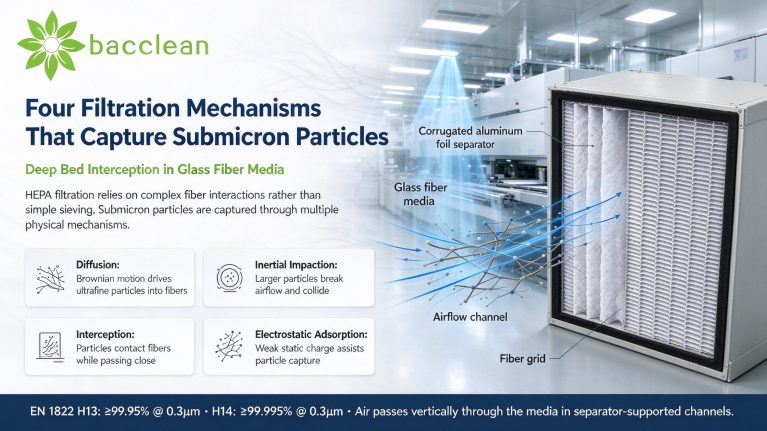
In industry standards, 0.3μm particles are taken as the characteristic detection particle size for HEPA filters. Under the EN1822 standard, separated H13 and H14 HEPA filters achieve filtration efficiency ≥99.95% and ≥99.995% for 0.3μm particles respectively. Airflow enters from the air inlet side, diverges evenly in the air channels formed by separators, passes vertically through the glass fiber filter paper, contaminants are trapped inside and on the surface of the filter media, and clean air is delivered from the air outlet side. The separators ensure that the filter layers will not be squeezed close under wind pressure, achieving even airflow distribution, avoiding excessive local flow velocity and maintaining stable filtration efficiency and resistance. As dust accumulates on the filter, the resistance rises gradually. When the resistance reaches the final resistance limit, the filter needs replacement to prevent air volume attenuation and substandard cleanliness. Meanwhile, the gap between the filter frame and filter media is pot-sealed with high-temperature resistant adhesive to bypass air leakage, which is also the key inspection position for PAO leak verification.
Application Scenarios
Combined with its structural characteristics, separated HEPA filters are more suitable for working conditions with large air volume, high temperature, high humidity and continuous long-time operation, complementary to non-separated filters. Typical scenarios are as follows:
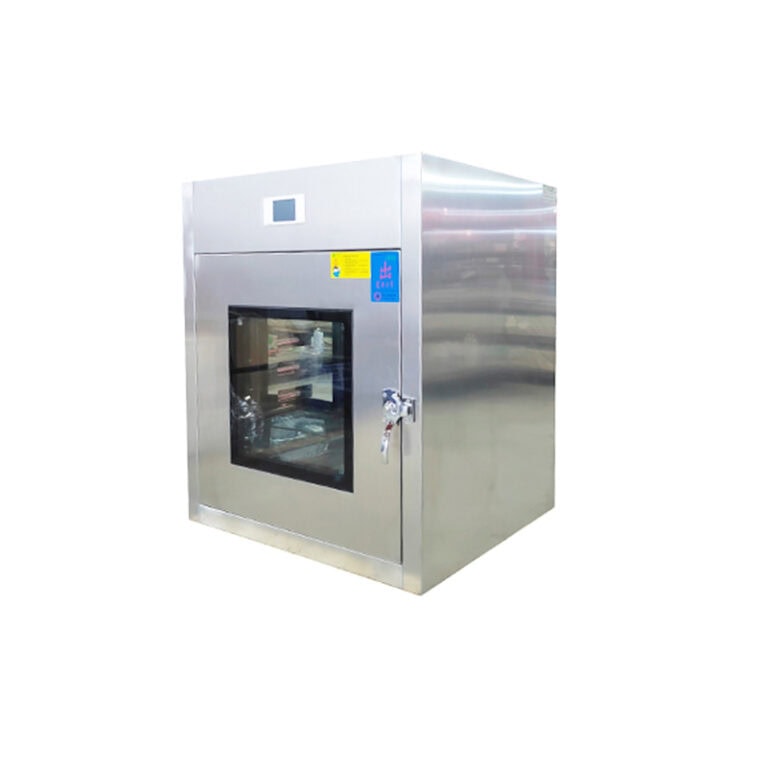
- Pharmaceutical industry: Dry heat sterilization ovens, depyrogenation tunnels and clean hot air circulation systems. Such processes run at high temperatures for a long time. Separated HEPA filters with silicone seal, aluminum foil or stainless steel separators are required to meet GMP requirements for cleanliness, low emission and integrity leak testing, and remove particulate matter and pyrogen contaminants in the air.
- New energy lithium battery & photovoltaic industry: Positive material sintering furnaces, coating ovens, tail gas and circulating air purification for high-temperature drying lines. Many lithium battery processes feature high temperature and heavy dust load. The advantages of separated filters with high dust holding capacity and high temperature resistance can reduce downtime caused by frequent filter replacement.
- Semiconductor and microelectronics manufacturing: Exhaust air filtration of partial high-temperature process chambers and high-temperature clean air supply. Non-separated filters in FFU are widely used for normal-temperature laminar flow environments, while separated filters with stainless steel frames are commonly adopted for high-temperature circulating air systems.
- Industrial coating and automobile painting lines: Terminal air supply filtration for spray booths and circulating air filtration of drying ovens, resisting high temperature and paint mist dust to ensure clean paint surface free of particle defects.
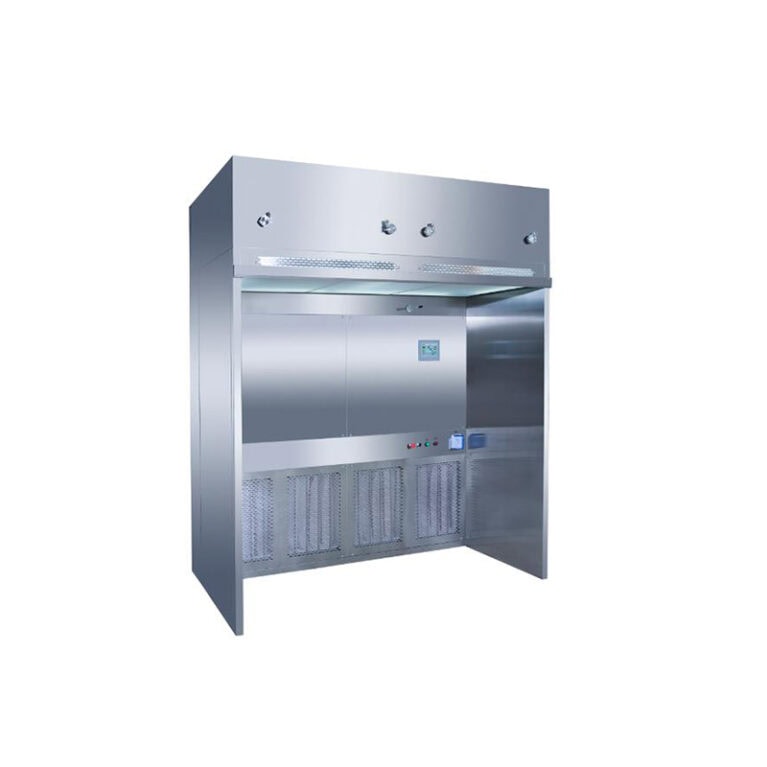
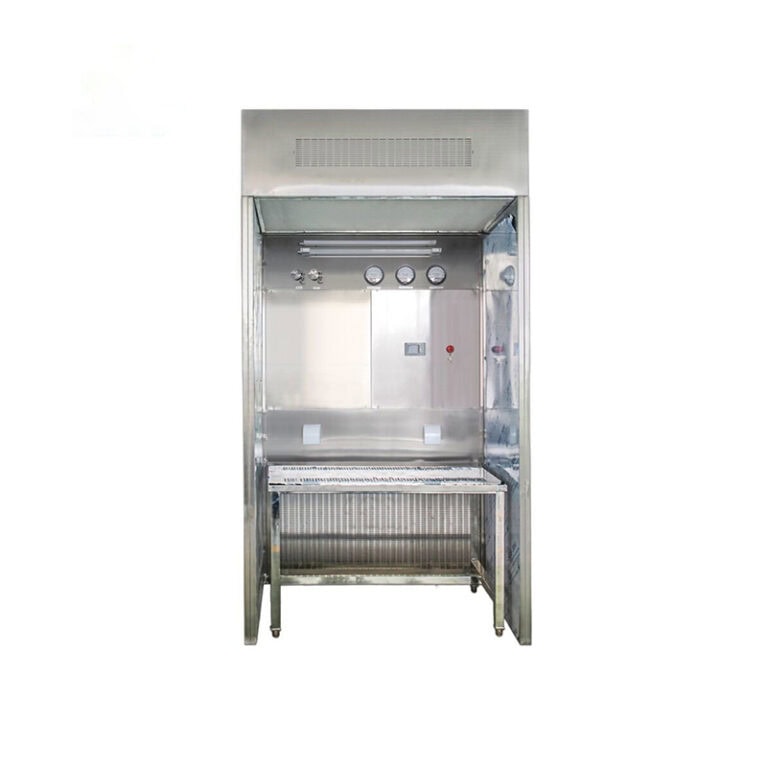
- Hospitals and biological laboratories: High-grade clean operating rooms, exhaust air of negative pressure isolation wards and biological safety cabinets. H14 high-grade separated HEPA filters can block pathogenic microbial aerosols.
- Food and cosmetic clean workshops: Air supply for high-temperature sterilization and cooling sections, complying with SC clean specifications and preventing products from particulate contamination.
- Special working conditions: High-temperature heat treatment equipment, chemical tail gas purification, clean air systems for aerospace component heat treatment. High-temperature models sealed with inorganic ceramic adhesive can withstand continuous operating temperature above 300°C.
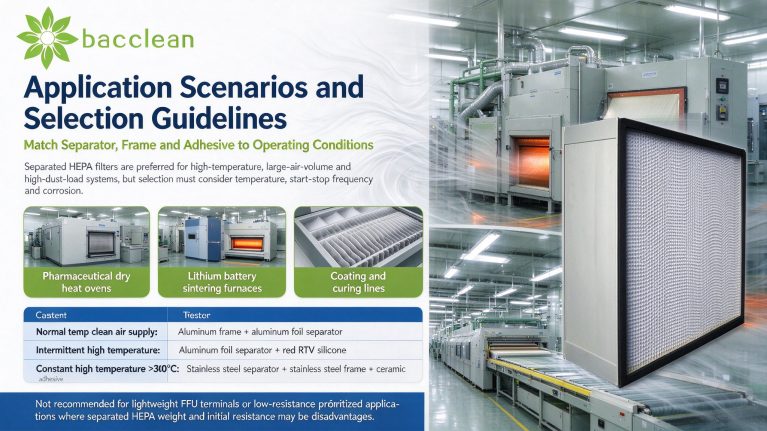
There are also unsuitable scenarios: normal-temperature FFU laminar flow hoods, spaces with compact layout, weight-sensitive equipment and air supply terminals prioritizing low resistance generally choose non-separated HEPA filters, because separated filters are heavier with relatively higher initial resistance.
Key Selection Tips
When selecting products, do not only focus on filtration grade. It is necessary to match the working conditions comprehensively: aluminum frame + aluminum foil separator + normal-temperature polyurethane adhesive for normal-temperature clean air supply; aluminum foil separator + red RTV silicone seal for intermittent high-temperature ovens with alternating cold and hot cycles; stainless steel separator and stainless steel outer frame matched with inorganic ceramic sealing adhesive for constant high-temperature working conditions above 300°C. PAO leak test shall be carried out before and after commissioning to confirm no leakage and guarantee stable operation of the clean system.
In conclusion, the separated HEPA filter is a classic solution for high-temperature and heavy-load working conditions in the clean filtration field. The metal separator is its core structural feature distinguishing it from non-separated products. It captures submicron particles through multiple filtration mechanisms and plays an irreplaceable role in high-temperature circulating air, large-air-volume and high-dust-load purification scenarios.
