
Different Door Opening Mechanisms
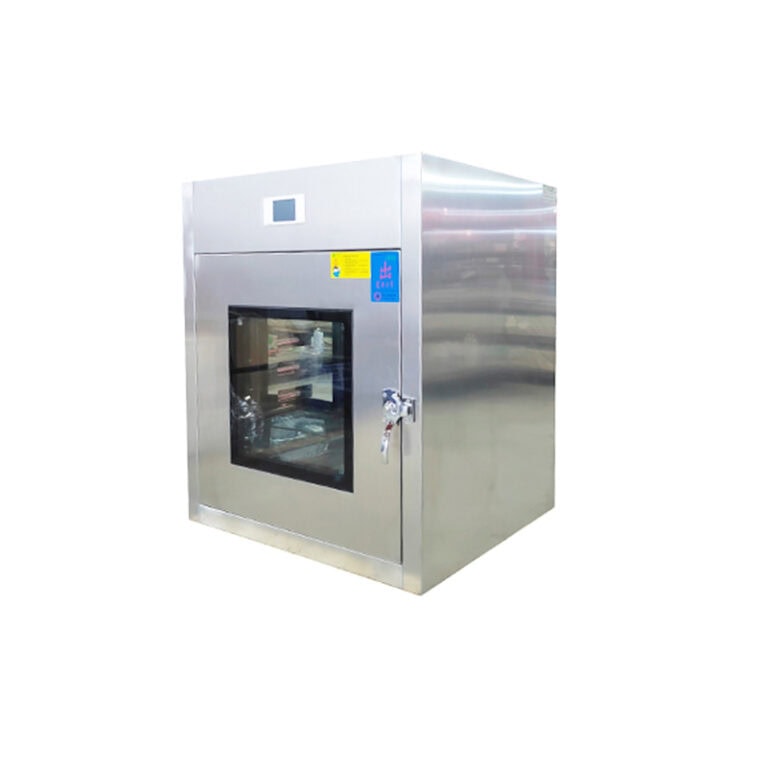
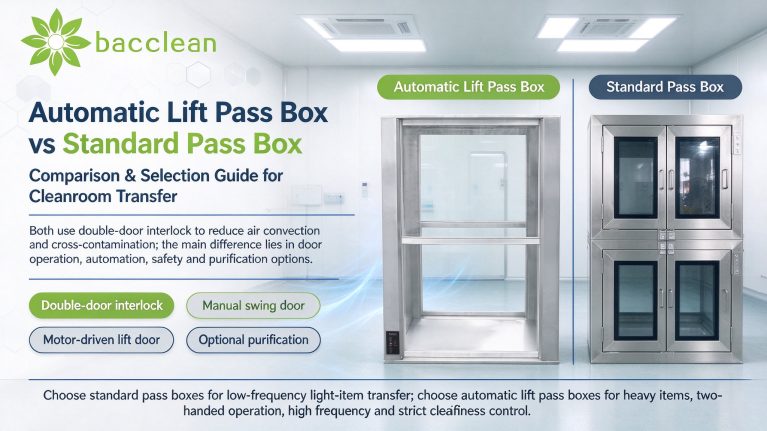
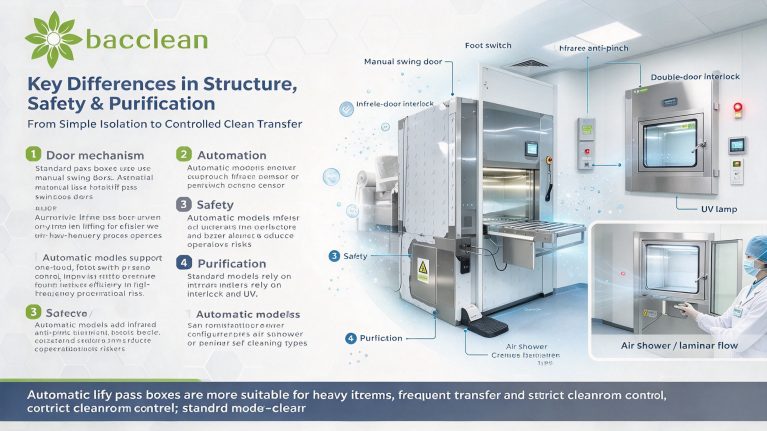
Standard pass boxes are equipped with manual swing doors. Operators need to push or pull the door to place and retrieve materials. The automatic lift pass box adopts motor-driven lifting doors. The door rises and falls automatically, freeing operators from manual door operation and bringing greater convenience when carrying materials with both hands.
Automation & Operation Efficiency
Standard pass boxes feature a simple structure and fully manual operation, suitable for low-frequency transfer of light-weight items. Automatic lift pass boxes support multiple control modes including one-touch lift, foot switch and sensor activation. They deliver higher transfer efficiency and better meet GMP requirements for reducing human contact and contamination risks.
Safety Performance
Standard pass boxes are generally only equipped with an interlock function, and UV lamps are optional on some models. Automatic lift pass boxes are normally equipped with additional safety protections such as infrared anti-pinch, obstacle rebound, door status indicators and buzzer alarms, to avoid pinching injuries or damage to transferred goods.
Purification Expansion Capability
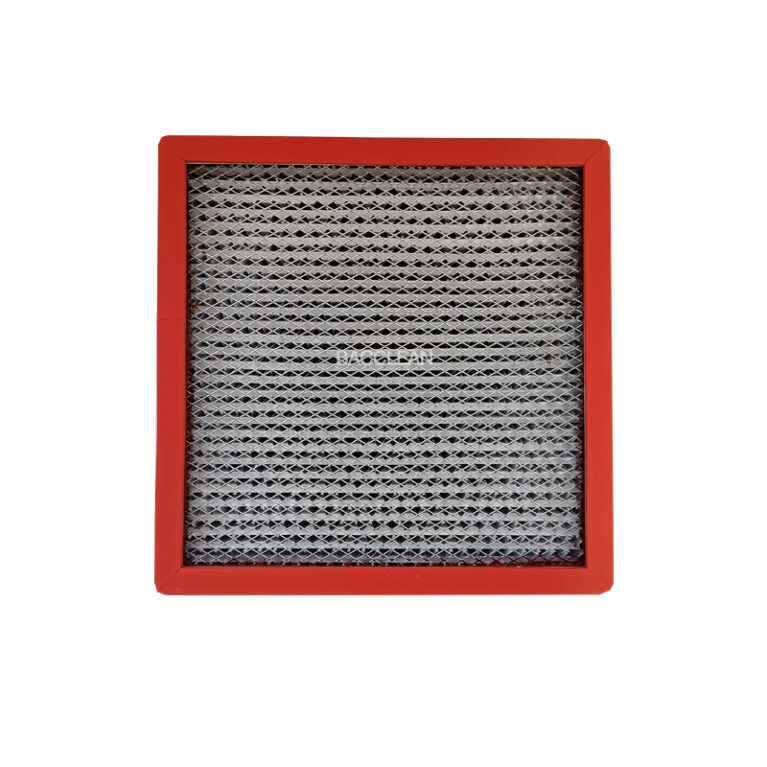
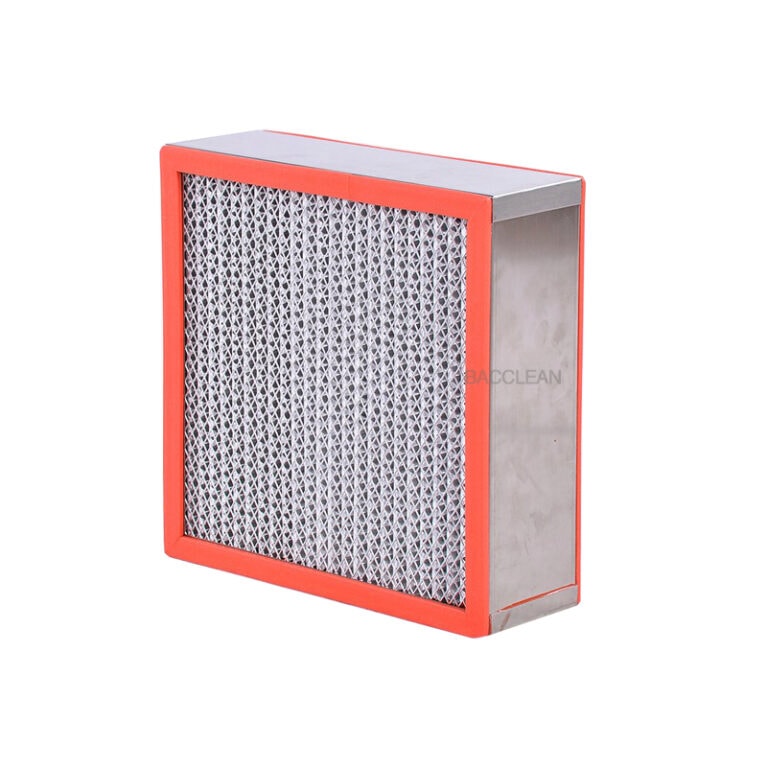
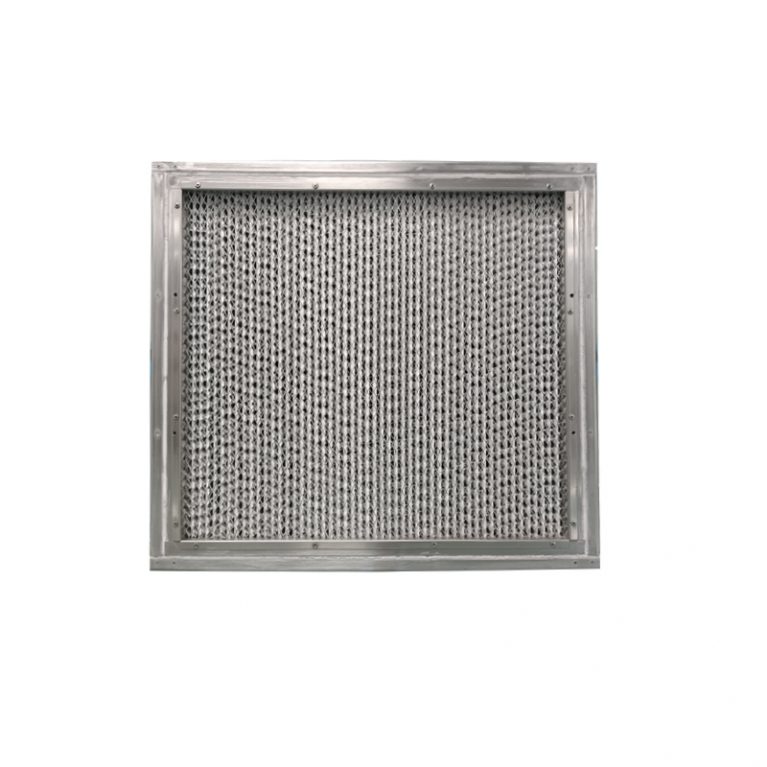
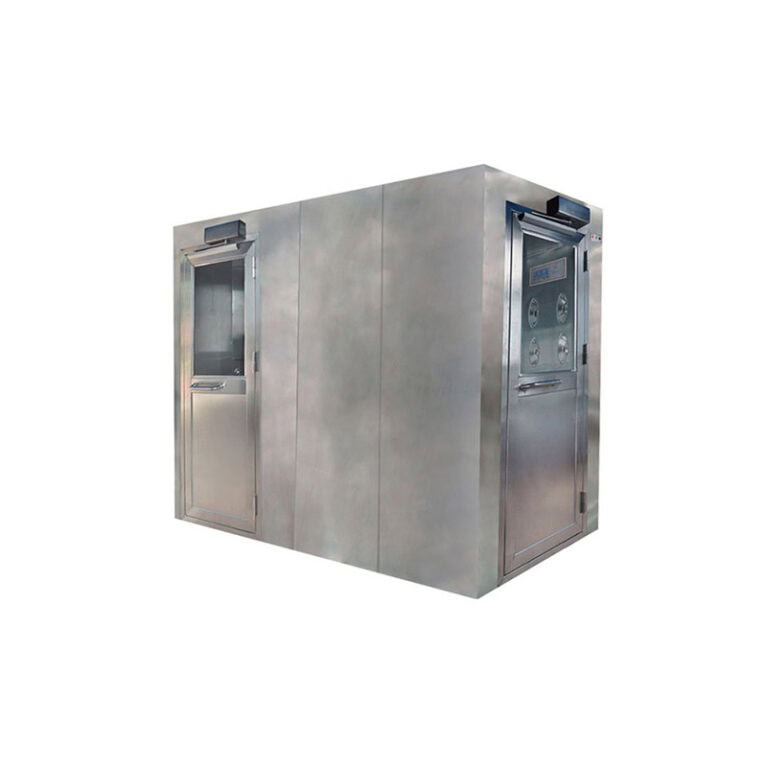
Standard pass boxes rely mainly on interlock and UV disinfection for isolation and sterilization. The cavity usually has no self-cleaning or air-shower function. Automatic lift pass boxes can be customized into air-shower type, laminar flow self-cleaning type or basic type according to process requirements. The air-shower type generates high-speed clean airflow through HEPA filters to blow dust off item surfaces; the laminar flow self-cleaning type maintains high cleanliness inside the cavity, with some models reaching ISO Class 5; the basic type is used only for isolation transfer.
Applicable Scenarios
Standard pass boxes are suitable for laboratories, electronics workshops, food workshops and other scenarios with low-frequency clean transfer. Automatic lift pass boxes are preferred for hospital CSSD, sterile dispensing rooms, operating rooms, pharmaceutical workshops, biological laboratories and other sites featuring high transfer frequency, strict cleanliness control or transfer height difference requirements.
Cost & Maintenance
Standard pass boxes have a simple structure, lower cost and easy maintenance. Automatic lift pass boxes come with motors, control systems, sensors and lifting mechanisms, which lead to higher procurement cost and more complex maintenance work. In return, they provide higher automation, enhanced safety and lower cross-contamination risk.
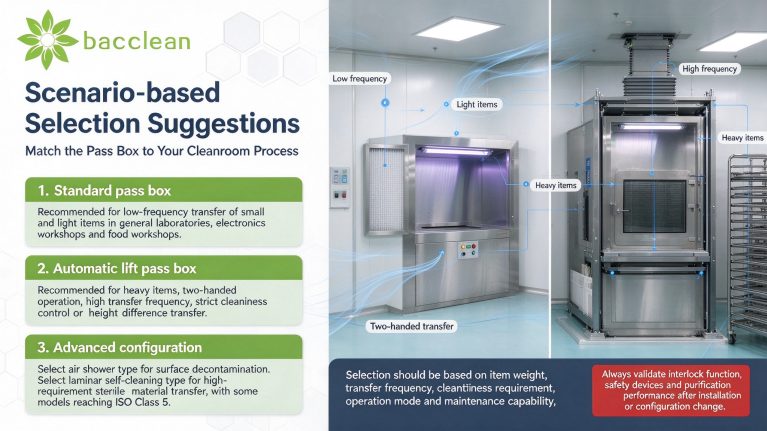
Selection Recommendations
A standard pass box is sufficient for transferring small, light items between clean zones with low transfer frequency. Choose an automatic lift pass box if you handle heavy items, carry goods with both hands, have high transfer frequency, strict cleanliness requirements, or need transfer across height differences. For processes requiring stricter particle control on incoming materials, air-shower or laminar flow self-cleaning versions of automatic lift pass boxes are recommended.
