
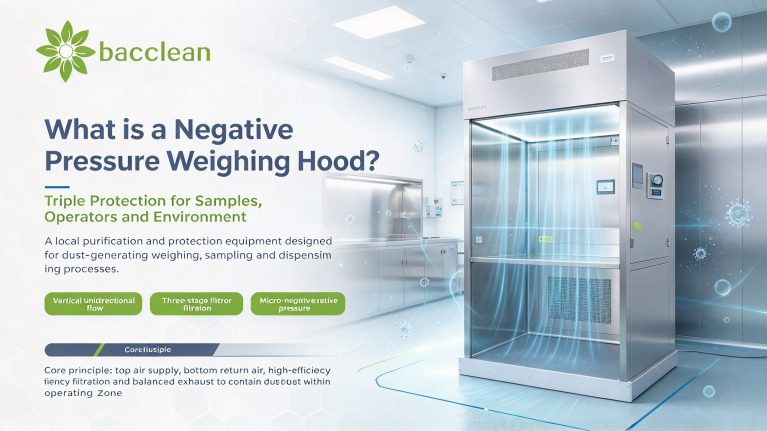
What is a Negative Pressure Weighing Hood?
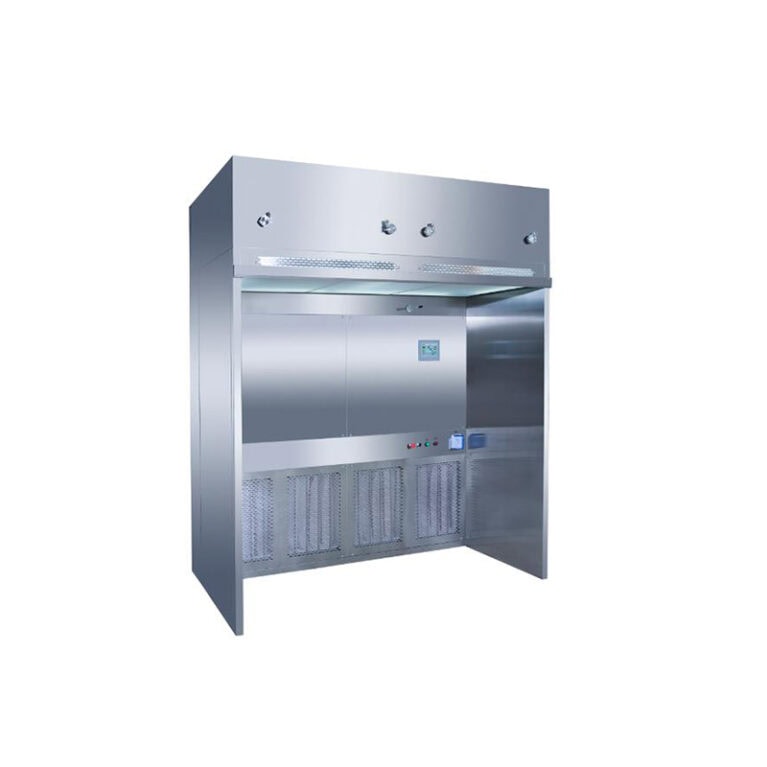
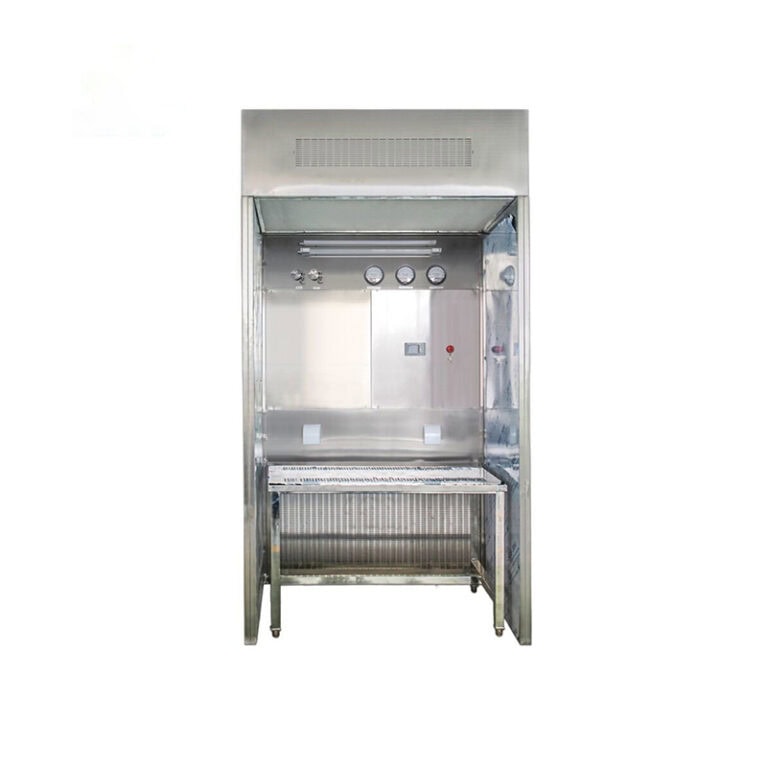
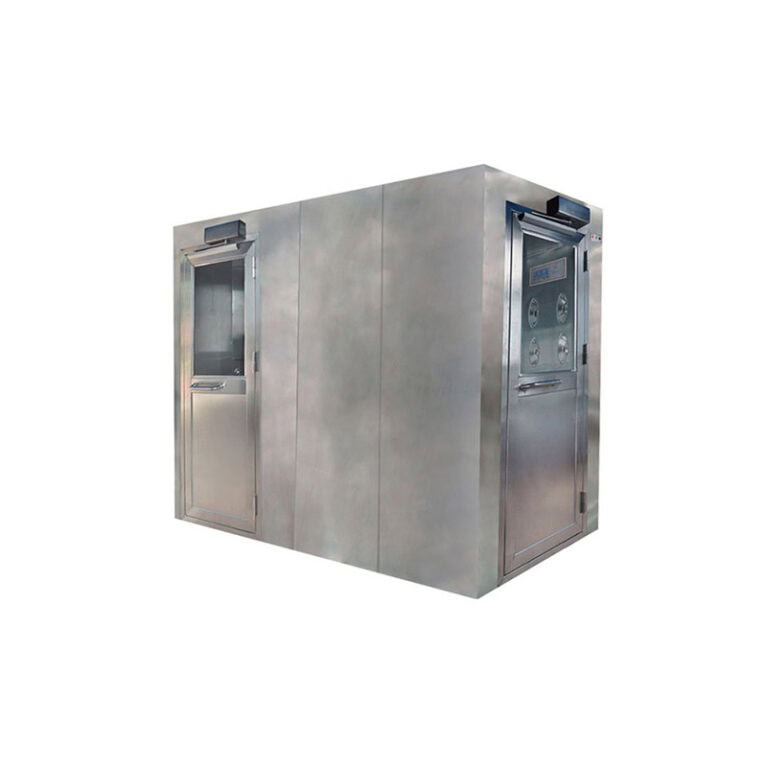
The negative pressure weighing hood generally adopts a modular structure, consisting of working zone, return air box, fan box, air supply box and outer enclosure. The main body is mostly made of 304 stainless steel with smooth surface for easy cleaning.
Its core purpose is not merely to supply clean air, but to solve the problem of dust escape during weighing operations. Dust is easily generated when raw materials are poured, weighed and subpackaged. Once dust leaks out, it may cause cross-contamination, affect balance accuracy, or be inhaled by operators. With the design of top air supply, bottom return air + micro-negative pressure + high-efficiency filtration, the negative pressure weighing hood contains dust inside the operating zone and prevents contamination of the cleanroom environment.
How Does Vertical Unidirectional Flow Control Dust?
The negative pressure weighing hood adopts vertical unidirectional flow design. Clean air is evenly delivered downward through the top HEPA filter, flowing over the working zone at a stable cross-section velocity to form a unidirectional laminar flow like a clean air curtain.
When powder is poured or weighed, the generated dust is quickly pressed down by the downward airflow and enters the bottom or rear return air duct along with the return air. In this way, dust is less likely to rise into the operator’s breathing zone or spread to adjacent workstations, reducing the risk of cross-contamination.
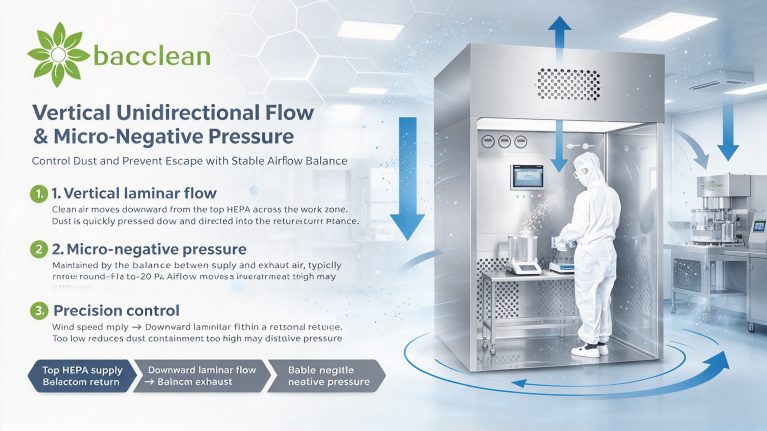
The stability of vertical unidirectional flow is critical. If the wind speed is too low, dust cannot be effectively contained; if the wind speed is excessively high, weighing may be disturbed and materials may scatter. Therefore, the wind speed of the working zone shall be maintained within a reasonable range, and adjusted through wind speed sensors and variable frequency fan control.
How Does the Three-Stage Filtration System Work?
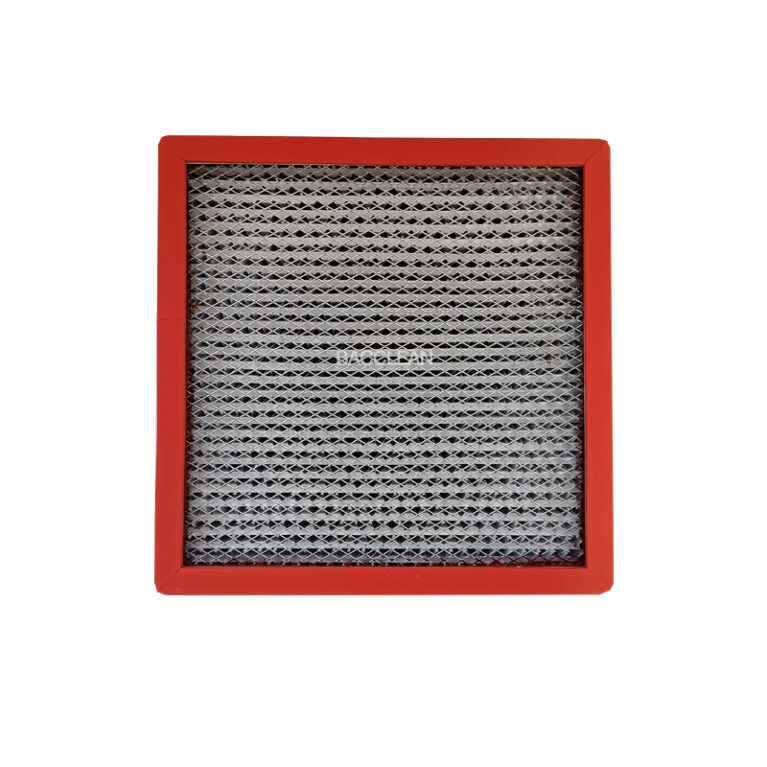
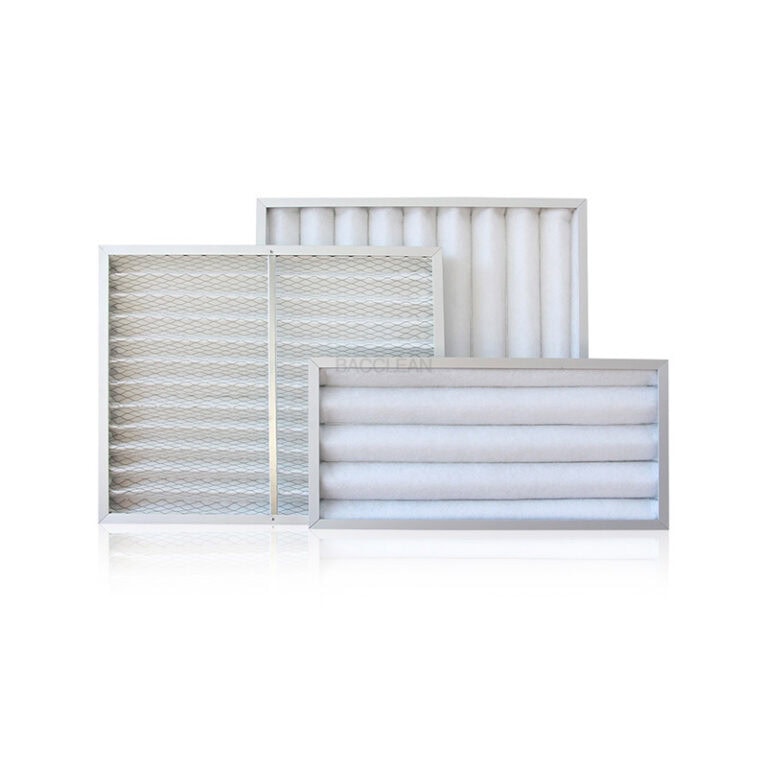
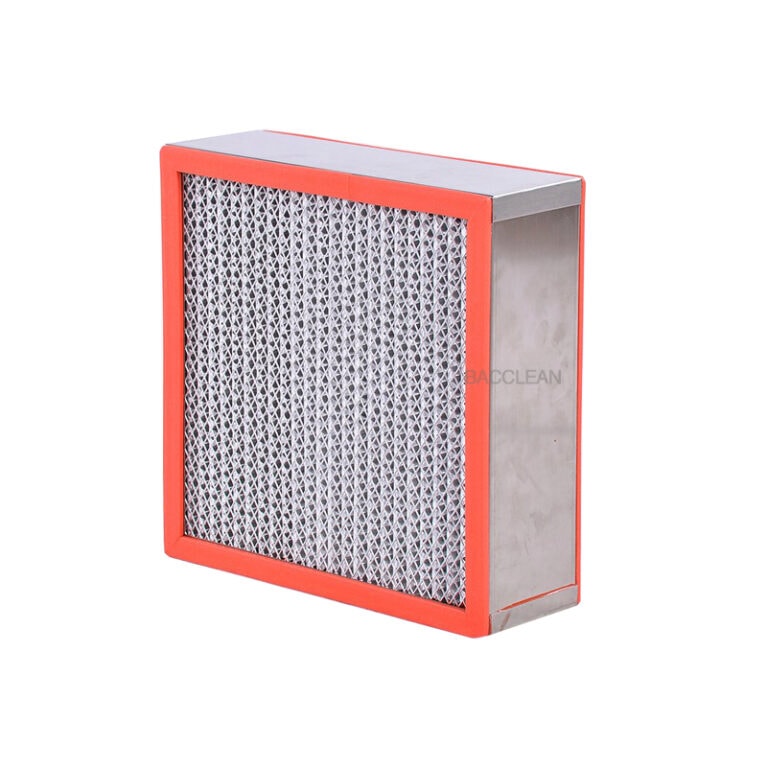
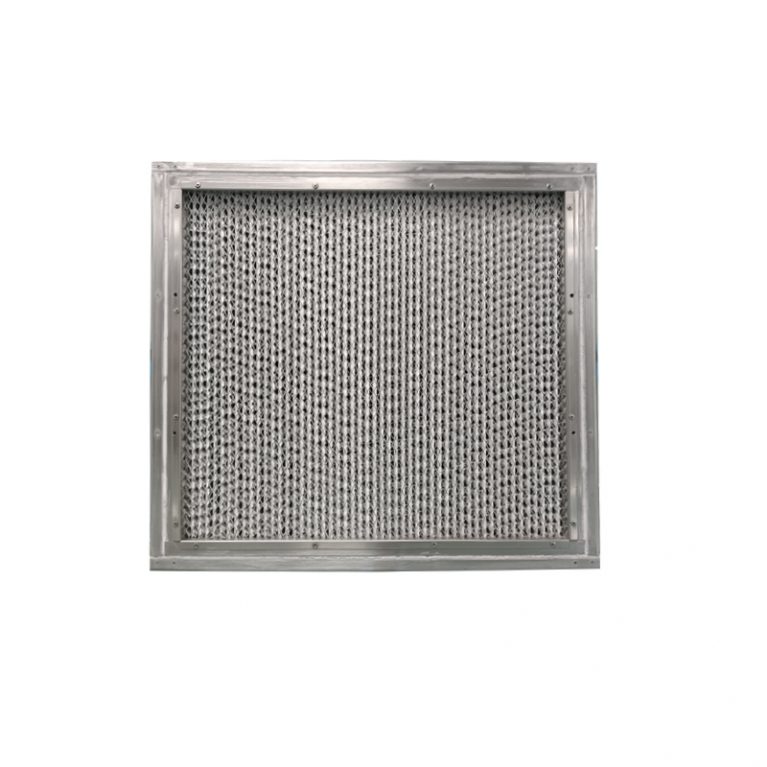
Air treatment inside the negative pressure weighing hood adopts three-stage filtration: pre-filter, medium-efficiency filter and HEPA filter. Ambient air first passes through the pre-filter to intercept large dust particles, then further purified by the medium-efficiency filter. After that, the centrifugal fan sends the air into the plenum chamber, and the air becomes clean after passing through the HEPA filter, which can trap particles ≥0.3μm and achieve high cleanliness level in the working zone.
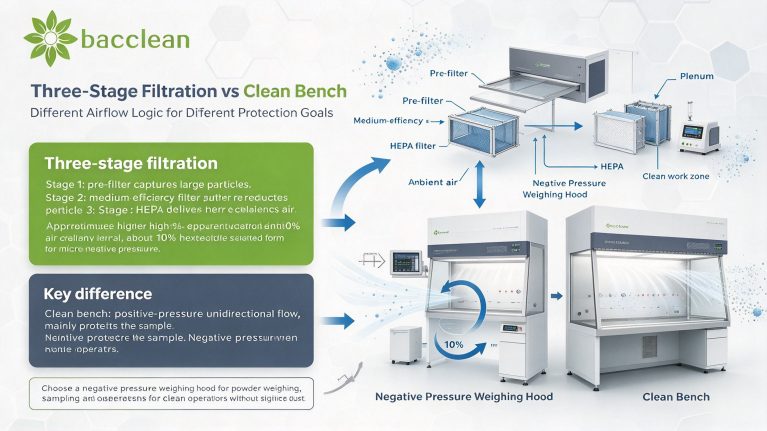
Most of the filtered clean air circulates inside the working zone, while a small portion is exhausted through the exhaust regulating plate. This internal circulation mode maintains local high cleanliness, and forms micro-negative pressure by adjusting exhaust ratio to prevent dust leakage.
How is Micro-Negative Pressure Formed?
The micro-negative pressure of the weighing hood is not generated by strong forced exhaust, but controlled by the balance between supply air volume and exhaust air volume. Generally, about 90% of clean air circulates inside the working zone, and around 10% is discharged out of the unit, keeping the operating zone at micro-negative pressure relative to the background cleanroom.
The common negative pressure range is -5Pa ~ -20Pa, and higher negative pressure can be configured for high-protection scenarios.
Under micro-negative pressure, the airflow direction is generally inward. Even if there are gaps on the equipment, ambient air flows inward, and internal dust-laden air is hard to escape. Combined with differential pressure sensors and alarm systems, the stability of negative pressure can be monitored in real time.
Difference from Clean Bench
The clean bench is mainly designed to protect samples with positive-pressure unidirectional flow, delivering clean air to cover the operating area. The negative pressure weighing hood focuses more on dust control and operator protection, confining dust inside the operating zone by micro-negative pressure.
Therefore, negative pressure weighing hood is preferred for weighing powder, raw materials and active ingredients. If only local Class 5 (ISO 5) clean environment is required without obvious dust generation, a clean bench or laminar flow hood is suitable. For pathogenic microorganisms, viruses or high-risk biological aerosols, biosafety cabinets or isolators of corresponding grades shall be selected.
Key Points for Selection & Operation
During model selection, focus on working zone size, wind speed uniformity, negative pressure stability, filter configuration, differential pressure monitoring, alarm function and material cleanability. In field operation, avoid blocking the return air outlet or frequently crossing the laminar zone with arms, which will damage the airflow organization. When filter differential pressure exceeds the limit, wind speed is abnormal or negative pressure becomes unstable, inspect the status of pre-filter, medium-efficiency filter and HEPA filter in time.
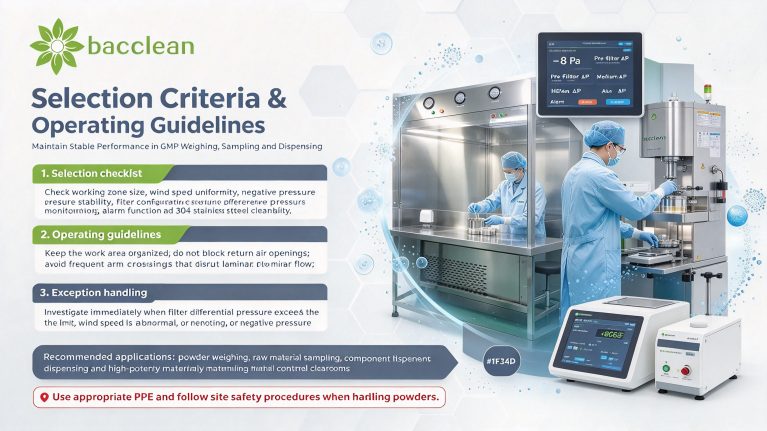
In product promotion, the negative pressure weighing hood can be introduced around vertical unidirectional flow + three-stage filtration + micro-negative pressure protection, highlighting its value in dust control and cross-contamination prevention for GMP weighing, subpackaging and sampling processes.
