
1. Step 1: Clarify User Requirements (URS)
Many buyers only specify dimensions for quotation, ignoring decisive factors. Confirm the following items first, which directly determine equipment grade and cost:
-
Powder hazard level: Low-risk ordinary excipients, or high-potency allergenic materials (cytotoxic drugs, hormones, penicillins)? Hazard level decides whether full containment, BIBO (Bag-in-Bag-out) filter change and anti-cross-contamination structure are mandatory.
-
Material properties: Particle size, dust generation tendency, corrosiveness and moisture-proof requirements. Chlorine-containing, bromine-containing and strong acid/alkaline powders demand special interior materials and filtration systems.
-
Working scenario: Fixed station for continuous weighing, or mobile unit for docking with material drums and trolleys? Whether sieving, mixing and splitting will be performed inside the booth.
-
Installation environment: Installed in Grade C or Grade D clean areas. Room size and doorway width determine overall dimensions and access method.
-
Cleanliness & validation requirements: Local ISO 5 (Class 100) required? Third-party PAO leak test, complete IQ/OQ/PQ validation documents and data traceability?
-
Manpower & capacity: Single-person or dual-person operation? Daily batches and total powder volume define working area size and fan configuration.
2. Interpretation of Core Technical Parameters (Selection Basis)
2.1 Face Velocity (Inflow Air Speed) — Top Containment Indicator
A stable inward airflow at the opening is essential to stop powder from escaping outward.
-
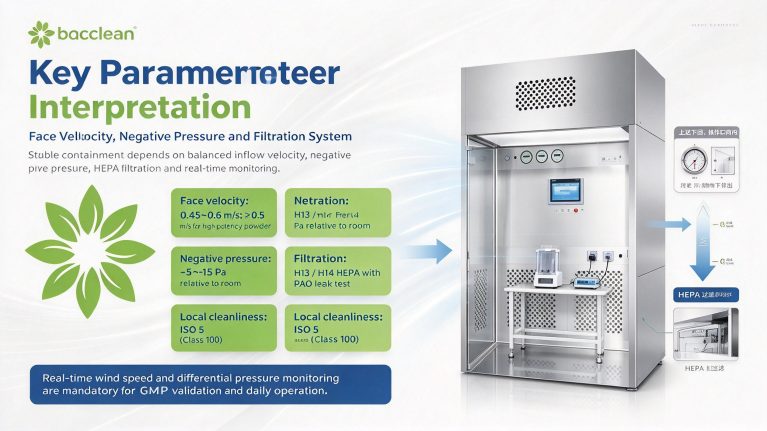
Standard range: Face velocity at the operation opening: 0.45~0.6 m/s; ≥0.5 m/s is recommended for high-potency powders.
-
Risks of low wind speed: Inward airflow fails to contain dust, causing particle diffusion, operator exposure and environmental contamination.
-
Risks of excessive wind speed: Turbulence forms, making powder fly violently inside the booth and leading to weighing errors from airborne particles.
-
Mandatory configuration: Real-time wind speed monitoring with audible & visual alarms when velocity drops below the lower limit; this is a key monitoring point for GMP validation and daily operation.
2.2 Negative Pressure & Airflow Pattern
Maintain stable negative pressure of -5 Pa ~ -15 Pa relative to the surrounding room, ensuring all dust-laden air flows inward and downward toward the exhaust outlet without spreading into the workshop. Airflow must be unidirectional, smooth and free of eddies and dead zones. Conduct smoke visualization test upon acceptance to confirm no outward leakage.
2.3 Filter Configuration & Filtration Efficiency
Two-stage independent HEPA filtration (supply air + exhaust air) is standard configuration:
-
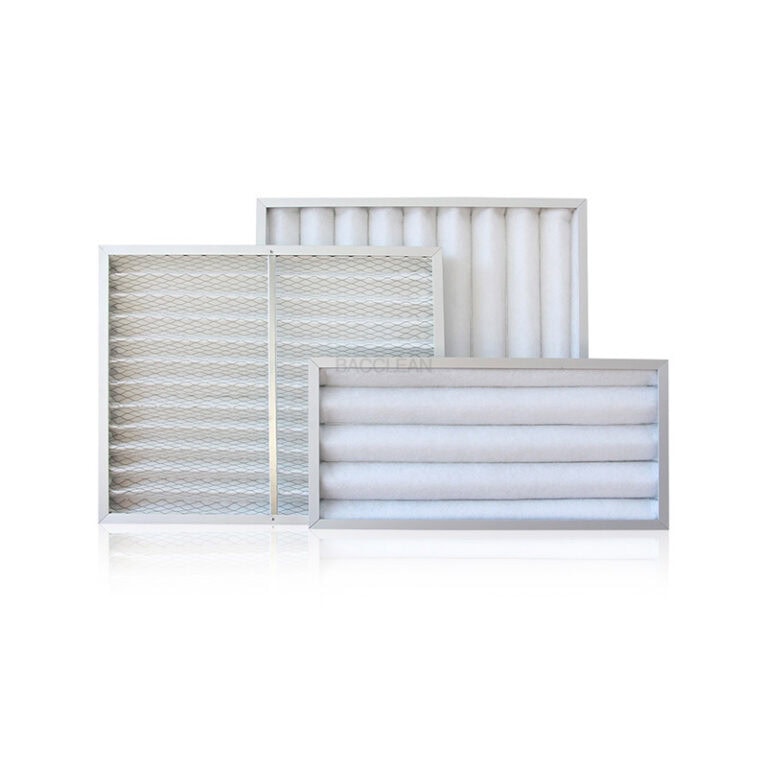
Pre-filter: Captures coarse particles to protect downstream HEPA filters and extend service life.
-
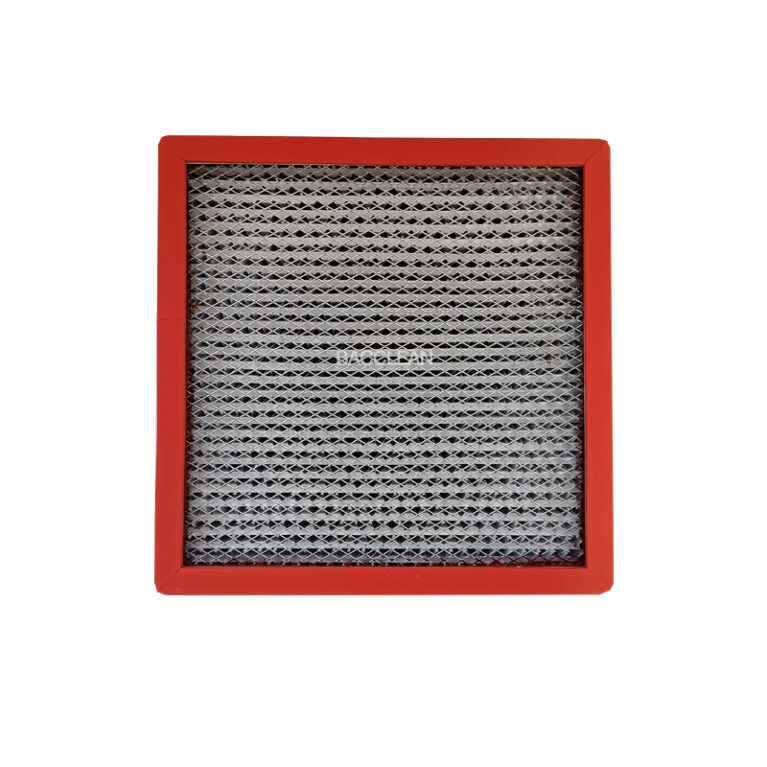
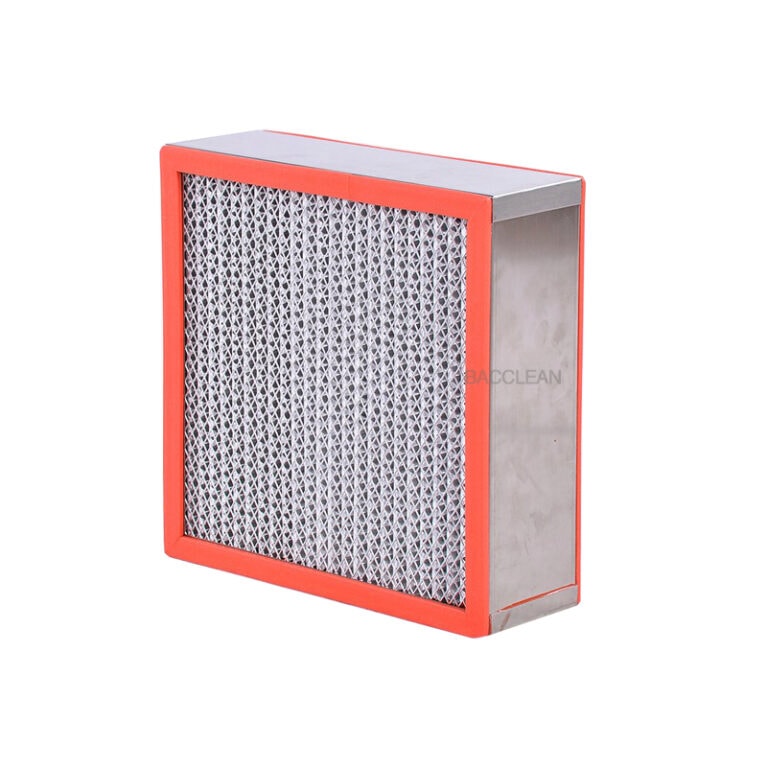
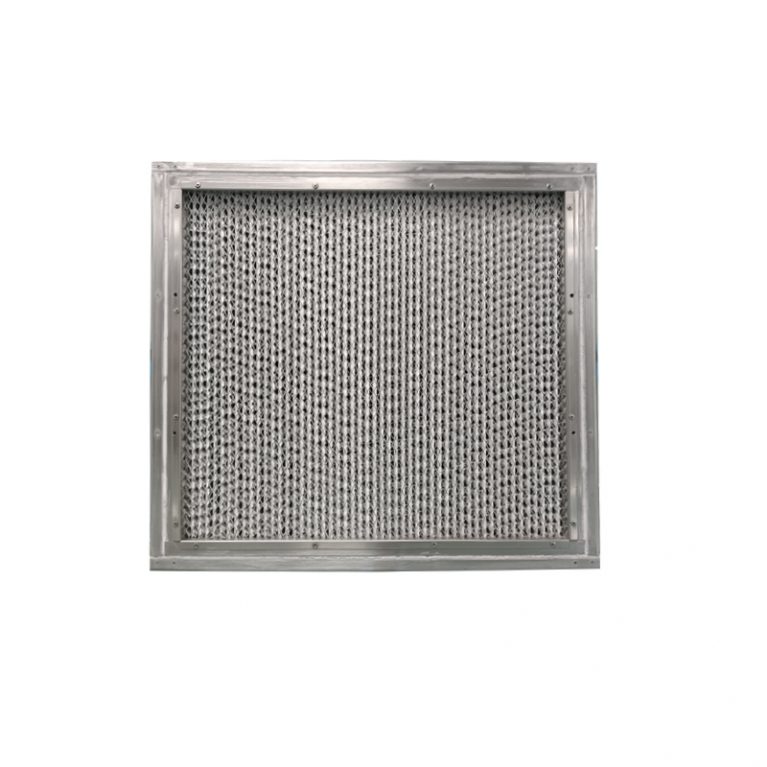
HEPA filter: H13 or H14 grade. H14 achieves ≥99.995% efficiency for 0.3 μm particles; H14 is prioritized for high-potency powders.
-
Exhaust HEPA acts as the final barrier to ensure clean exhaust without polluting the workshop and outdoor atmosphere.
-
BIBO (Bag-in-Bag-out): Mandatory for cytotoxic and high-potency formulations. The exhaust HEPA adopts BIBO safe replacement structure, so contaminated filters can be changed without personnel dust exposure.
-
Acceptance criterion: The whole booth must pass PAO aerosol leak test with zero leakage at filter media and frame seals.
2.4 Cleanliness Class
The internal working zone must reach ISO 5 (Class 100). Downflow air filtered by terminal HEPA forms local unidirectional laminar flow, complying with GMP requirements that high-potency material weighing shall be carried out in a negative-pressure isolated ISO 5 environment.
2.5 Material & Internal Structure
-
Inner chamber, worktop and baffles: SUS304 stainless steel (SUS316L for corrosive powders), smooth surface with fully radiused corners without dead corners for easy decontamination and no powder accumulation.
-
Integrated worktop without gaps to avoid powder trapping.
-
Outer shell: Cold-rolled steel with electrostatic epoxy coating or stainless steel for anti-rust and easy cleaning.
-
Observation window: Tempered anti-fog safety glass with wide viewing field.
2.6 Wind Speed & Differential Pressure Monitoring System
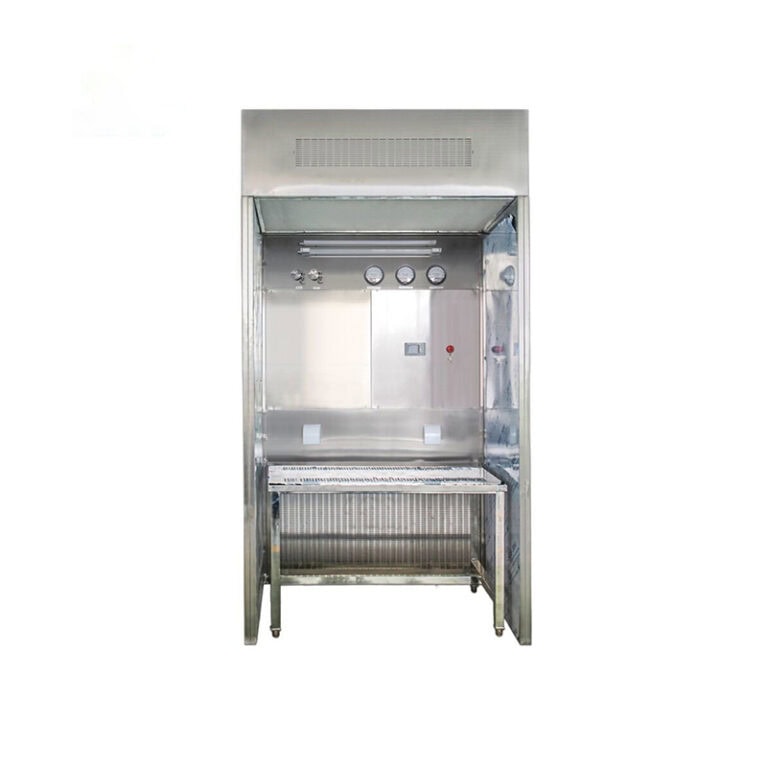
Standard equipment: face velocity sensor, inlet/outlet differential pressure gauge (to monitor filter resistance), negative pressure monitor and audible-visual alarms. Rising filter resistance indicates dust clogging and requires timely cleaning or replacement; low wind speed triggers automatic alerts. These are mandatory for GMP validation and daily operation.
2.7 Lighting & Sterilization
-
Clean LED lighting with sufficient illuminance for weighing, low heat generation and no dust accumulation.
-
Optional UV germicidal lamp with interlock protection, only activated when no personnel are present.
-
VHP (Vaporized Hydrogen Peroxide) sterilization interface can be reserved for high-grade cleanroom applications.
3. Graded Selection by Powder Hazard Level
Configure the booth progressively according to material risk:
-
Low-risk ordinary powders (starch, common excipients, general raw materials) Basic model: SUS304 inner chamber, pre-filter + H13 HEPA, face velocity 0.45 m/s, differential pressure monitoring; fixed or mobile type optional.
-
Medium-potency powders (common APIs, pigments, moderately allergenic materials) Upgraded configuration: H13/H14 HEPA, face velocity ≥0.5 m/s, dual supply & exhaust HEPA, dual wind speed & differential pressure alarms, optional UV lamp.
-
High-potency / cytotoxic / hormonal powders (Mandatory configuration) H14 HEPA filters, BIBO exhaust filter housing, face velocity ≥0.5 m/s, strict negative pressure isolation, fully welded stainless steel without dead corners, complete independent validation documents, dual-key management if required, and dedicated anti-cross-contamination design. Such projects require whole-unit tightness test and dust containment test to limit operator exposure dose.
4. Structural Options
-
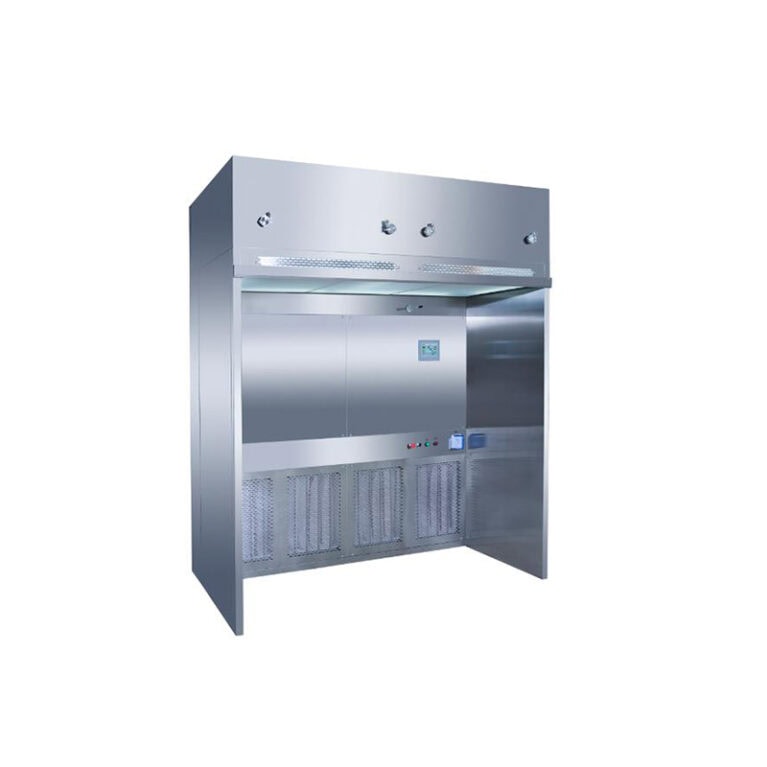
Fixed vs Mobile: Fixed booths suit permanent stations and material drum/trolley docking with stable airflow and consistent validation results, preferred for stable pharmaceutical production processes. Mobile models with swivel casters are for multi-station rotation and space-limited sites.
-
Single-person vs Double-wide: Select internal working width based on capacity and operating space to ensure weighing and sampling movements do not block the unidirectional airflow.
-
Integrated vs Split: Integrated type features compact structure and easy on-site installation; split assembly is adopted for oversized units or narrow site access.
-
Custom docking options: Height-adjustable feet, material drum/trolley interface, anti-vibration weighing platform (to minimize weighing deviation), modified door positions and L-shaped corner layouts are available as non-standard customizations.
5. Validation & Compliance Requirements (Acceptance Red Lines)
-
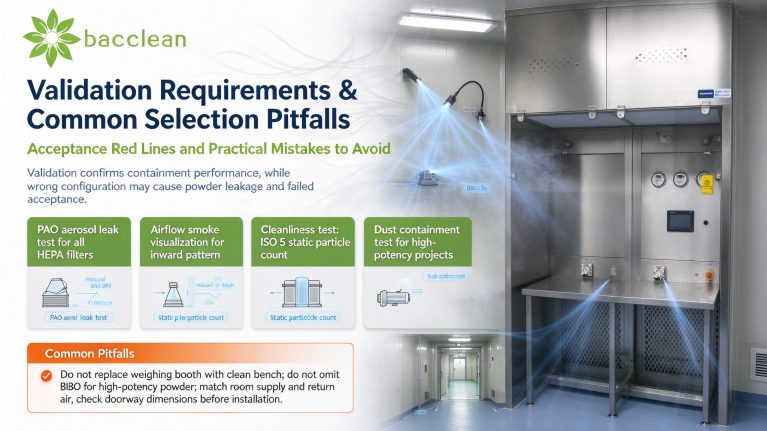
Factory & On-site Leak Test: PAO aerosol integrity test for all HEPA filters to eliminate seal leakage.
-
Face Velocity Test: Multiple measuring points to verify wind speed uniformity within allowable deviation range.
-
Airflow Visualization Test: Smoke test to confirm consistent inward airflow without eddies or outward particle escape.
-
Cleanliness Verification: Static airborne particle count meets ISO 5 requirements.
-
Dust Containment Test: For high-potency projects, verify zero external dust leakage and qualified occupational exposure limit (OEL).
-
Document Delivery: Supplier shall provide material certificates, PAO leak reports, wind speed test records and operation manuals, and support full IQ/OQ/PQ validation. For cytotoxic applications, obtain tightness test records and BIBO filter change SOP training.
6. Common Selection Pitfalls
-
Focus only on low price while omitting key configurations such as BIBO and specified face velocity, resulting in validation failure and powder leakage.
-
Replace negative pressure weighing booth with ordinary clean bench: the two adopt opposite airflow logic, so the clean bench cannot prevent outward dust escape.
-
Omit BIBO structure for high-potency applications, exposing maintenance personnel to toxic powder during filter replacement and creating severe occupational health risks.
-
Mismatch the booth with room supply & return air system; insufficient workshop ventilation fails to maintain negative pressure and invalidates containment performance.
-
No wind speed and differential pressure monitoring & alarms; operators cannot detect filter clogging or insufficient airflow in daily operation.
-
Ignore on-site doorway dimensions, leading to equipment unable to enter the workshop after delivery.
Conclusion
The core principle for selecting negative pressure weighing booths is to first define the powder hazard level, then lock down key technical parameters. Standard models control costs for low-risk ordinary powders; high-potency and cytotoxic formulations must be equipped with H14 HEPA, BIBO filter housing, face velocity above 0.5 m/s, stable negative pressure and complete monitoring & alarm systems, together with full GMP validation documents. Meanwhile, match the equipment with installation conditions, workshop ventilation and production capacity to balance GMP compliance and long-term O&M costs. This ensures safe, compliant and durable containment equipment that fundamentally eliminates dust exposure and cross-contamination risks.
Bacclean provides one-stop service including selection consultation, non-standard customization, on-site PAO leak testing and full set of GMP validation documents delivery.
