
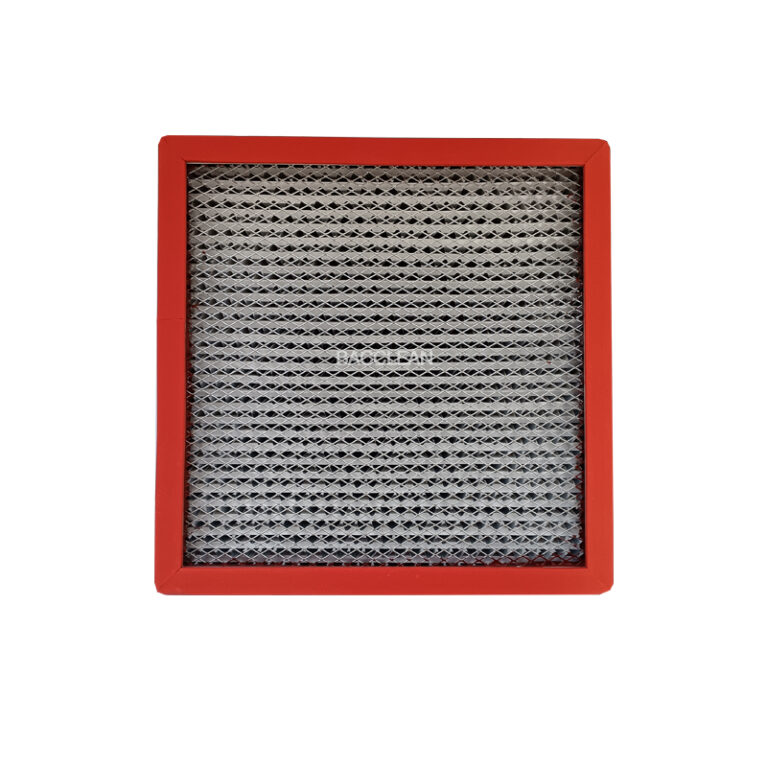
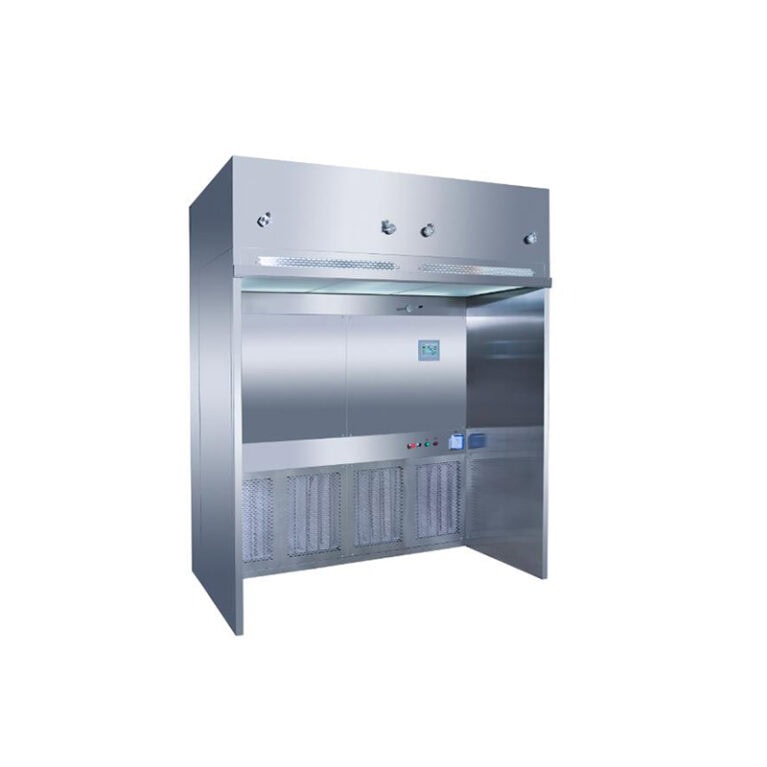
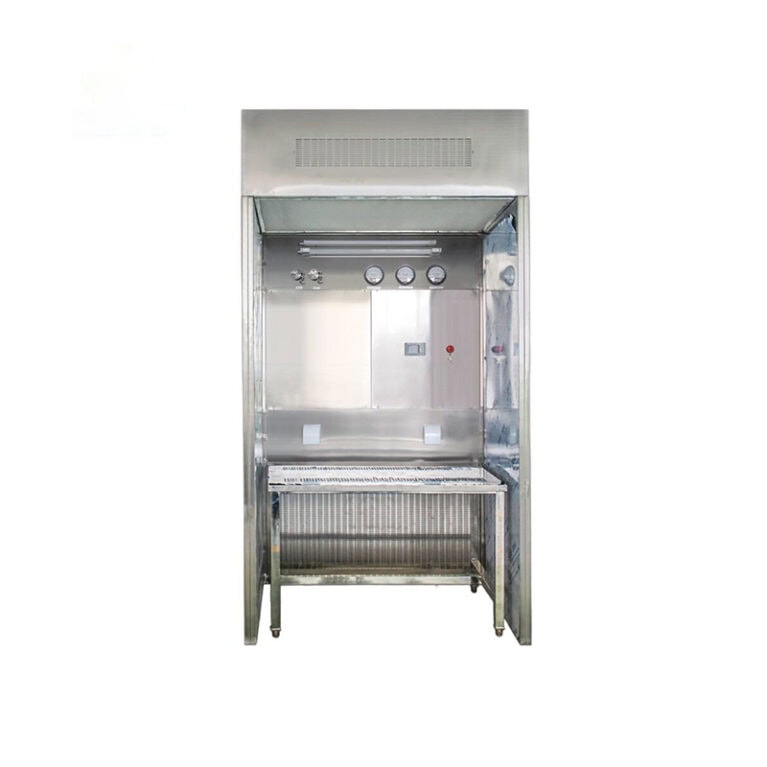
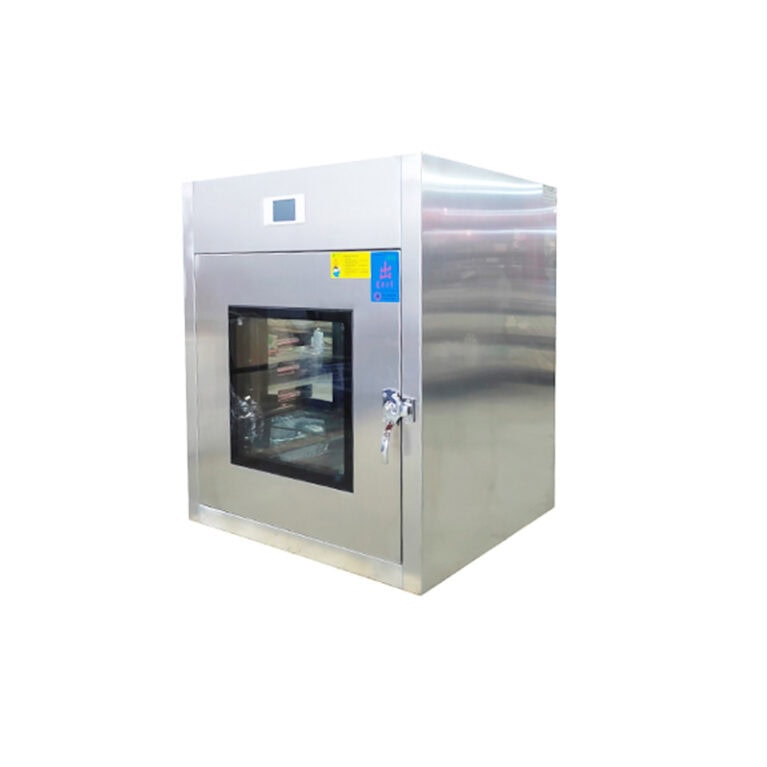
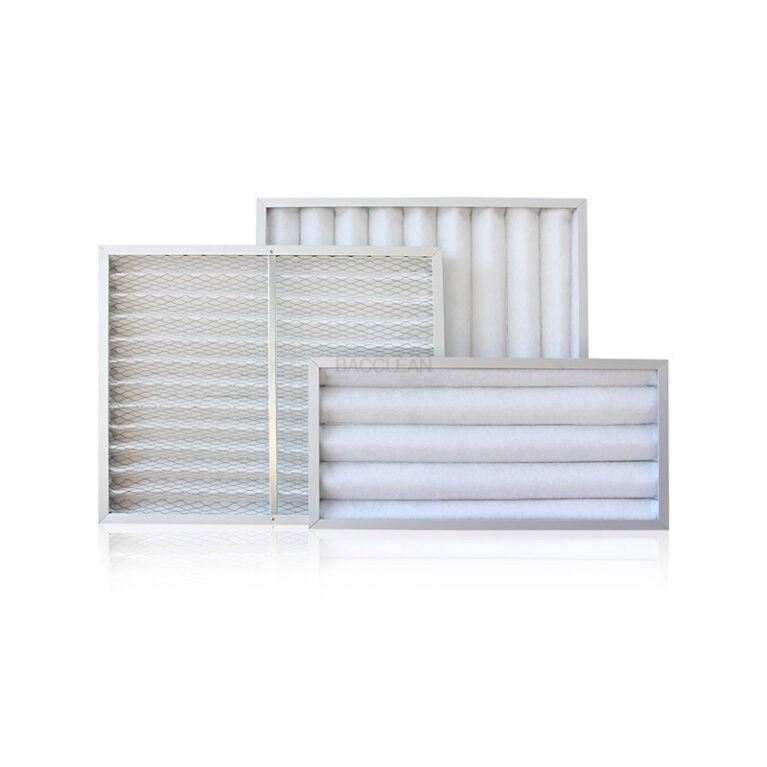
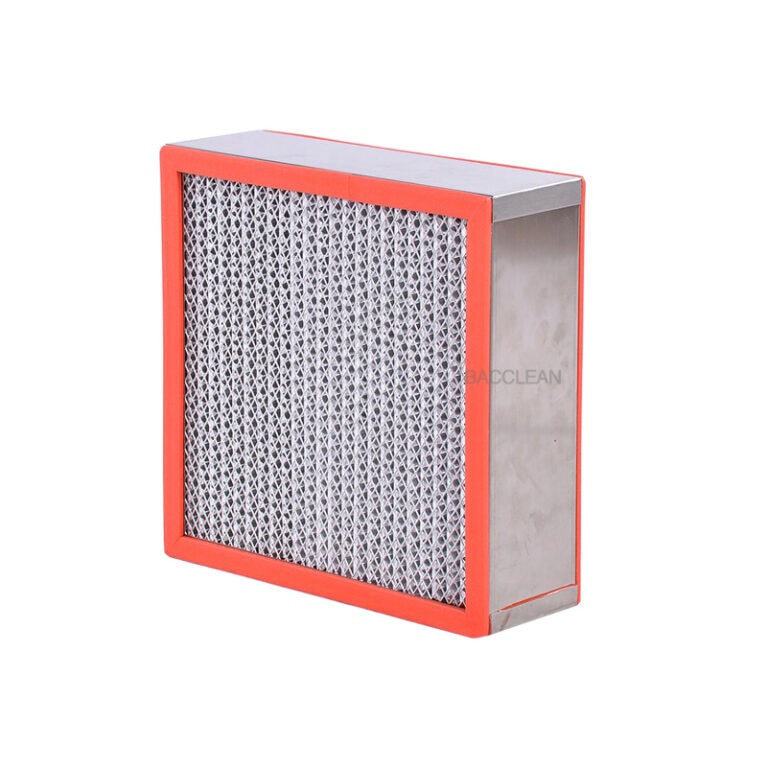
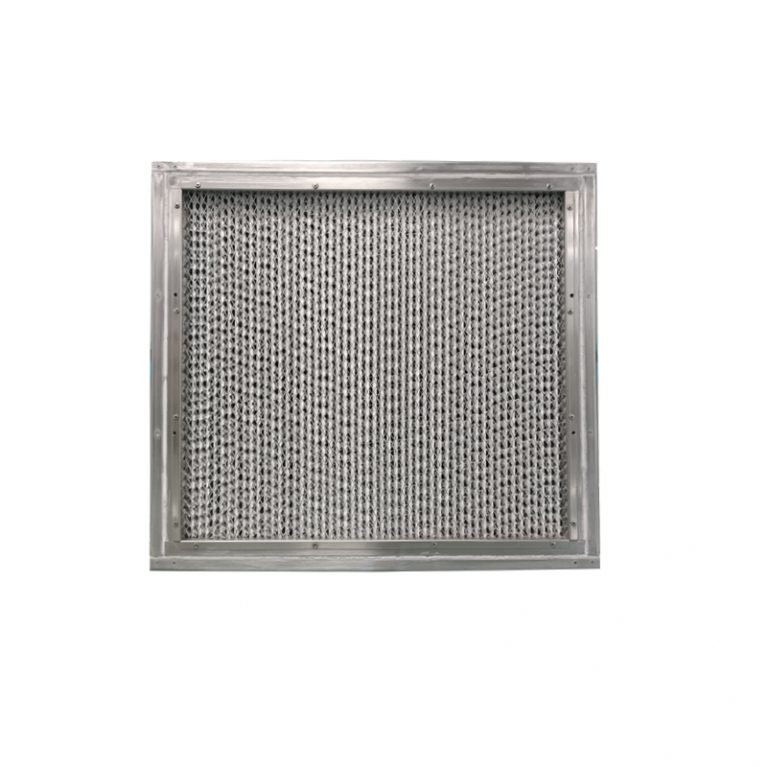
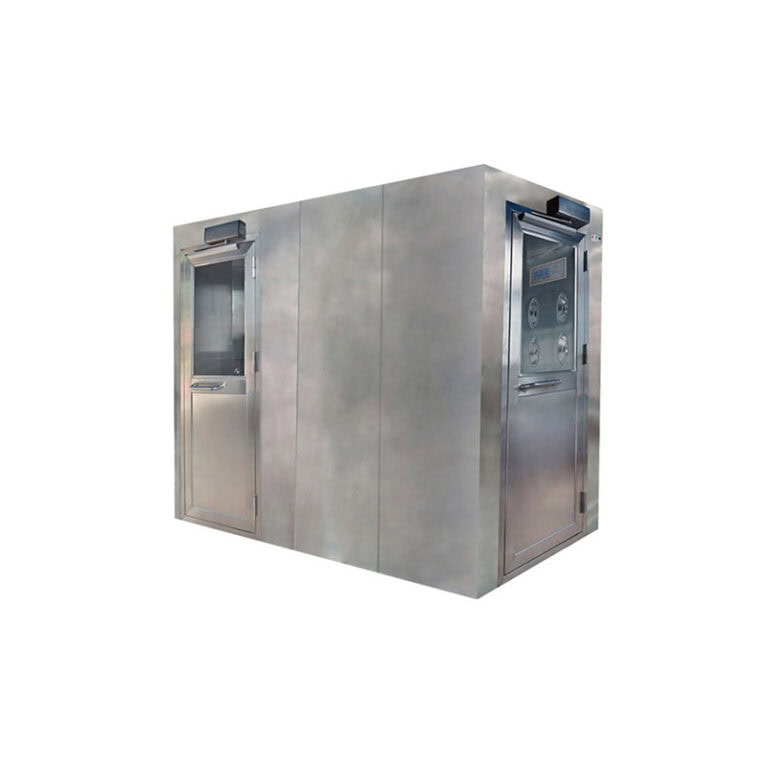
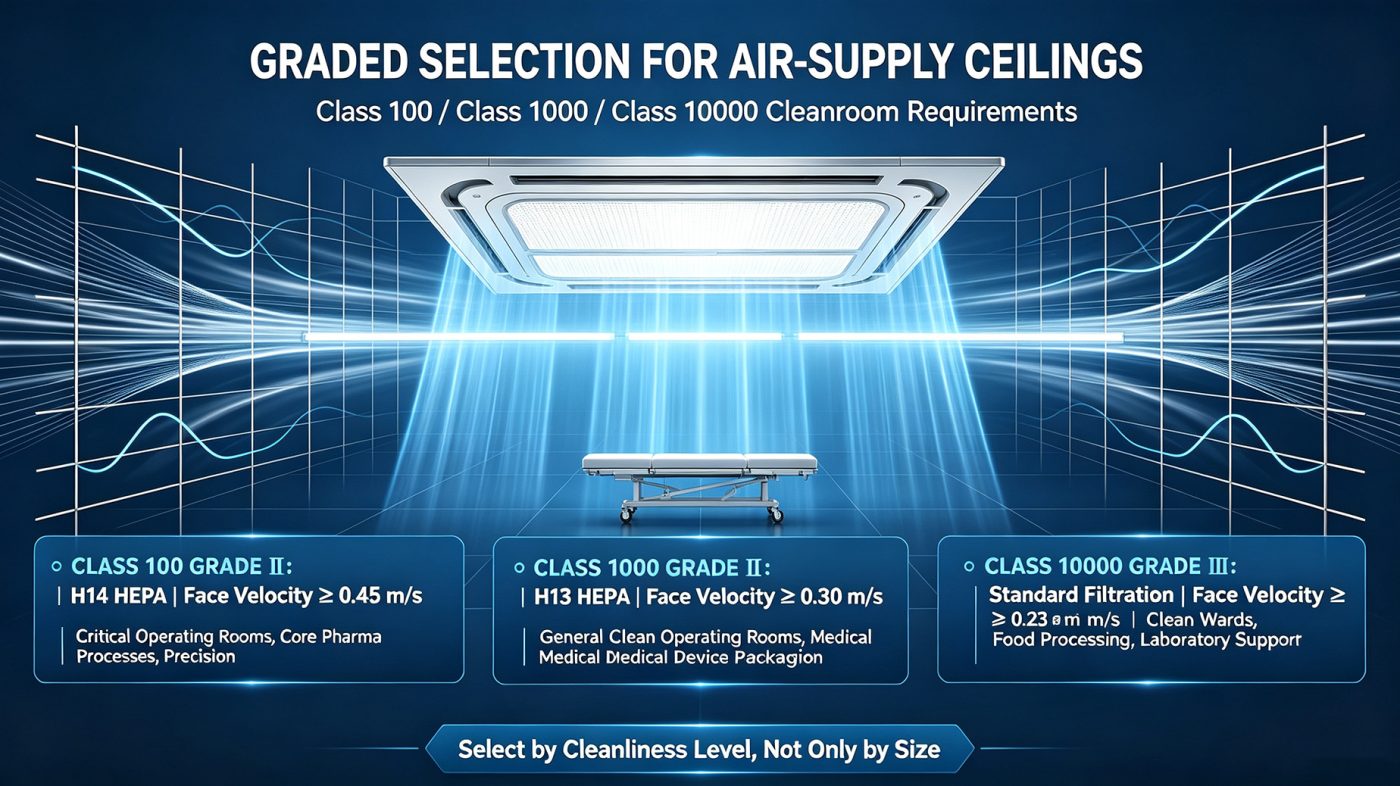
Air supply ceilings are classified and selected according to cleanliness levels. The mainstream are divided into three levels: 100-level (Class I), 1000-level (Class II), and 10,000-level (Class III). They are suitable for different scenarios. Class I 100-level air supply ceiling is mainly adapted for first-class operating rooms in tertiary hospitals, core processes of sterile pharmaceutical production, and high-end chip precision processing scenarios. It uses H14-level high-efficiency filters, with a supply air velocity of ≥0.45m/s, covering the core operation area with uniform airflow without dead corners, and supporting dynamic cleanliness stability and standard achievement. Class II 1000-level air supply ceiling is suitable for ordinary clean operating rooms, medical device sterile packaging workshops, and biological reagent production workshops. It uses H13-level high-efficiency filters, with a supply air velocity of ≥0.3m/s, high pressure stability, and can meet the needs of regular sterile production operations. Class III 10,000-level air supply ceiling is suitable for ordinary clean wards, food processing clean workshops, and laboratory auxiliary clean areas. The basic filtering configuration can meet the scene requirements, with higher cost-effectiveness.
In addition to classification selection, targeted configuration upgrades need to be made based on the characteristics of the scenarios. In the semiconductor precision manufacturing scenario, electrostatic protection needs to be strengthened. The grounding resistance of equipment metal components should be ≤1Ω, and the filter frame should be sealed with conductive glue to prevent electrostatic adsorption of dust and electrostatic breakdown risks. At the same time, the amplitude of equipment micro-vibration should be ≤5μm to avoid vibration affecting the precision of precise processing. In the GMP pharmaceutical workshop scenario, the equipment should reserve DOP online leak detection interfaces to support regular leak detection of high-efficiency filters and facilitate compliance audits. A wind pressure monitoring module should be equipped to monitor the stability of the supply air. In food and medical scenarios, the entire machine is made of stainless steel anti-corrosion material, resistant to disinfectant and food cleaning agent corrosion, and easy to clean without residues.
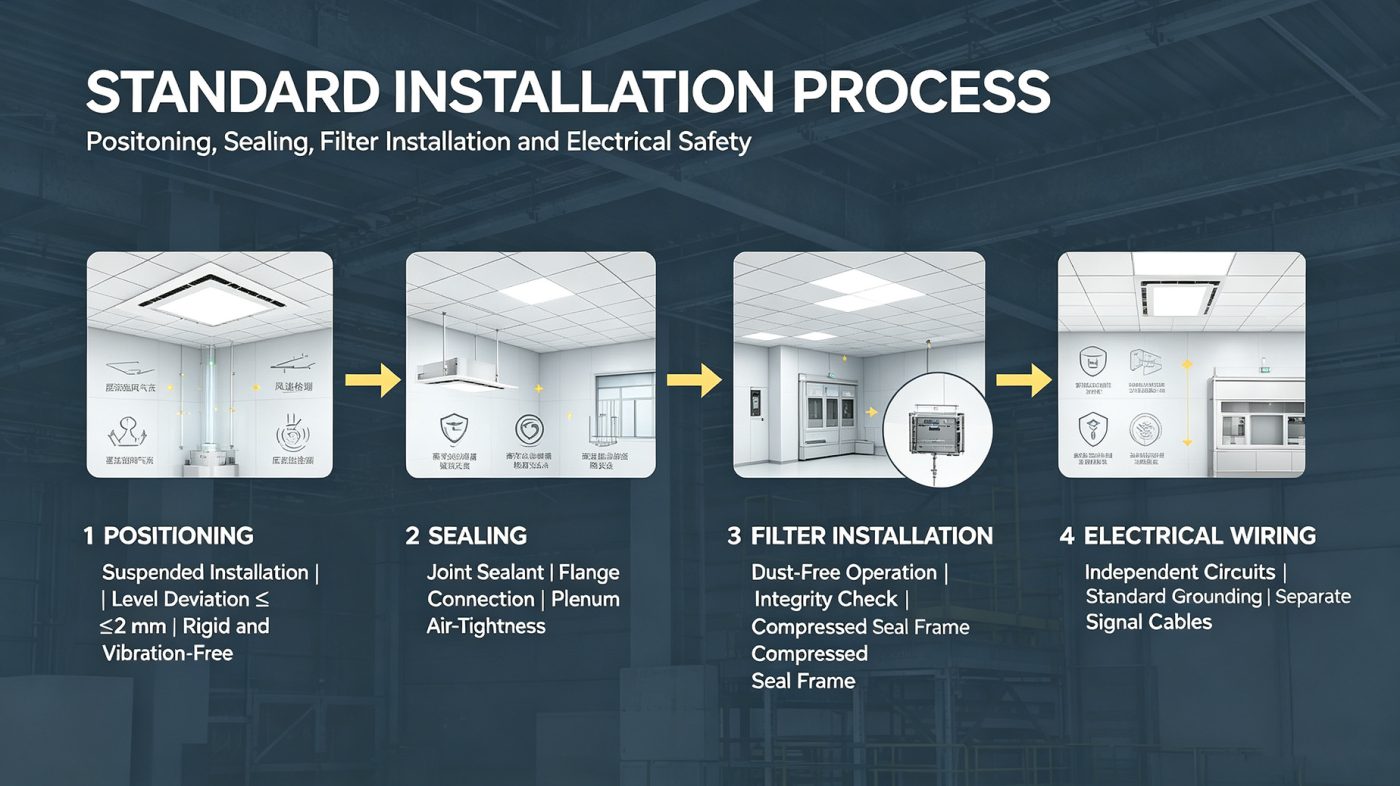
Standardized installation processes are the core for equipment to operate stably. The key installation procedures and technical points are as follows. First, the basic installation positioning uses the suspended standard installation method to ensure that the horizontal deviation of the equipment is ≤2mm, the installation is firm without shaking, and no vibration offset during operation. Second, sealing treatment. The gaps between the equipment and the seams of the frame and the ceiling are sealed with special sealing glue to prevent air leakage from the gaps. The interface of the static pressure box uses a flange sealing structure to ensure the overall airtightness. The filter installation process must be dust-free operation, strictly inspect the integrity of the filter, without damage or leakage, and after installation, press and seal the frame to avoid air short circuit. Electrical installation requires independent wiring, standard grounding, and separation of the lines of the fan and monitoring module to avoid signal interference and ensure the stable operation of the intelligent monitoring system.
After equipment installation, standardized debugging and acceptance procedures need to be executed. During the debugging stage, key tests include uniformity of supply air velocity, airtightness of the cavity, equipment noise, and stability of pressure difference. Ensure that all parameters meet the standards of the corresponding cleanliness levels. After filter leak detection and airflow flow type testing, eliminate turbulent flow and air leakage problems. Acceptance requires reference to the “Technical Specifications for Hospital Clean Operating Rooms” and “Design Specifications for Clean Factories”, testing static and dynamic cleanliness, floating bacteria, and settling bacteria indicators, and only after all indicators are met can it be put into use.
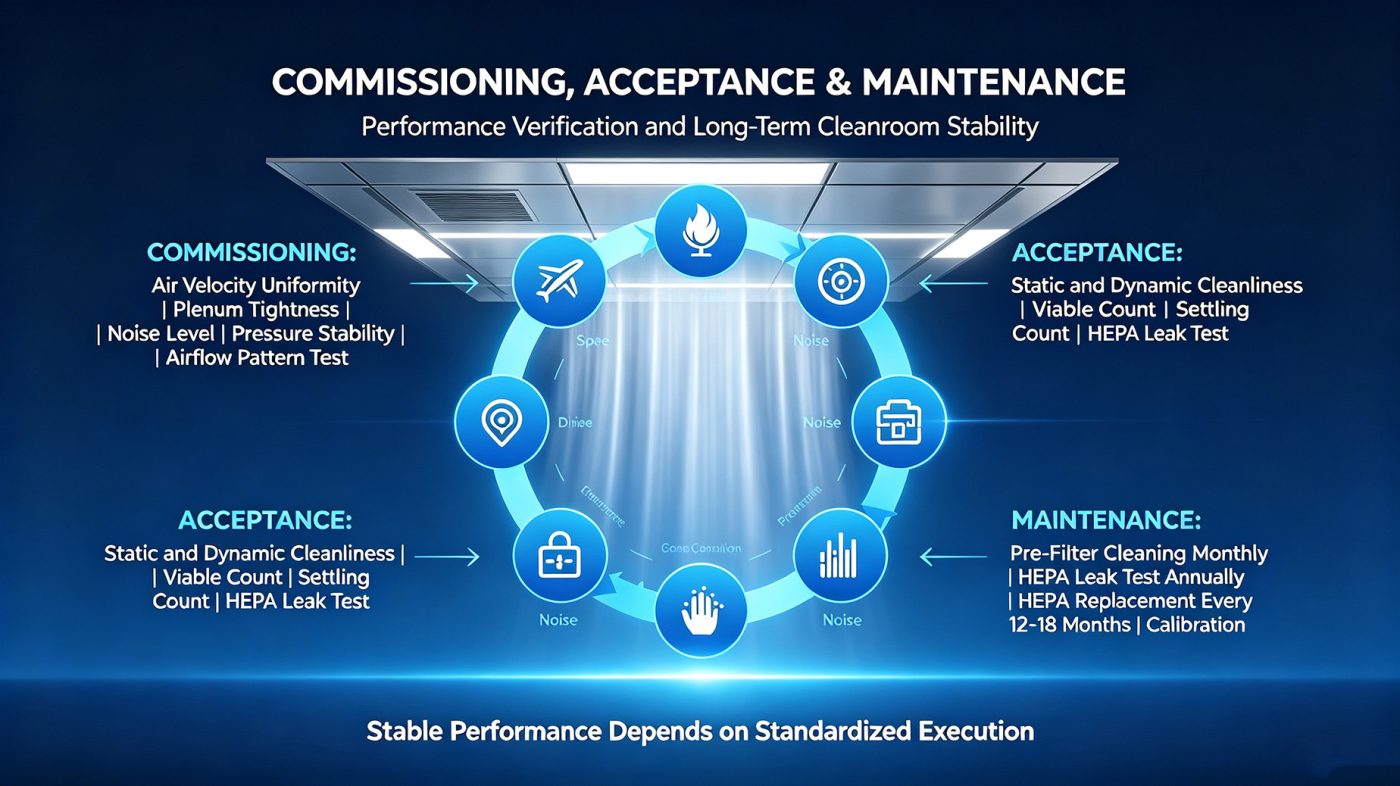
In terms of daily operation and maintenance, a hierarchical maintenance mechanism needs to be established: the primary filter screen should be cleaned once a month and replaced quarterly. The high-efficiency filters are inspected for leaks annually and replaced every 12 to 18 months; the wind speed and pressure difference monitoring equipment is calibrated every six months, and the overall air tightness of the machine is tested once a year. Aging sealing components are promptly repaired to ensure the purification performance and operational stability of the air supply ceiling over the long term.
