
I. Core High‑Frequency Faults and Troubleshooting Methods
-
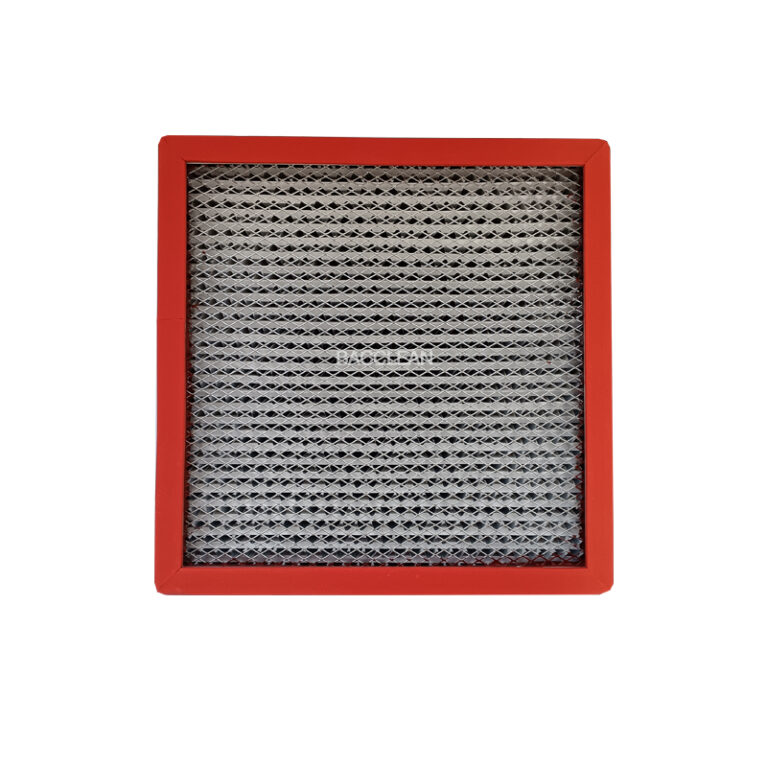
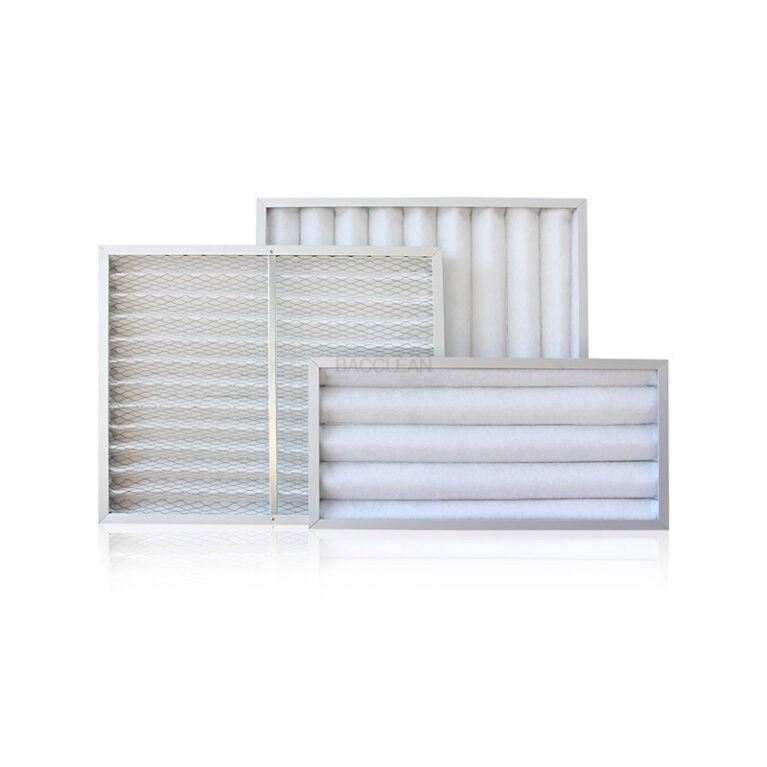
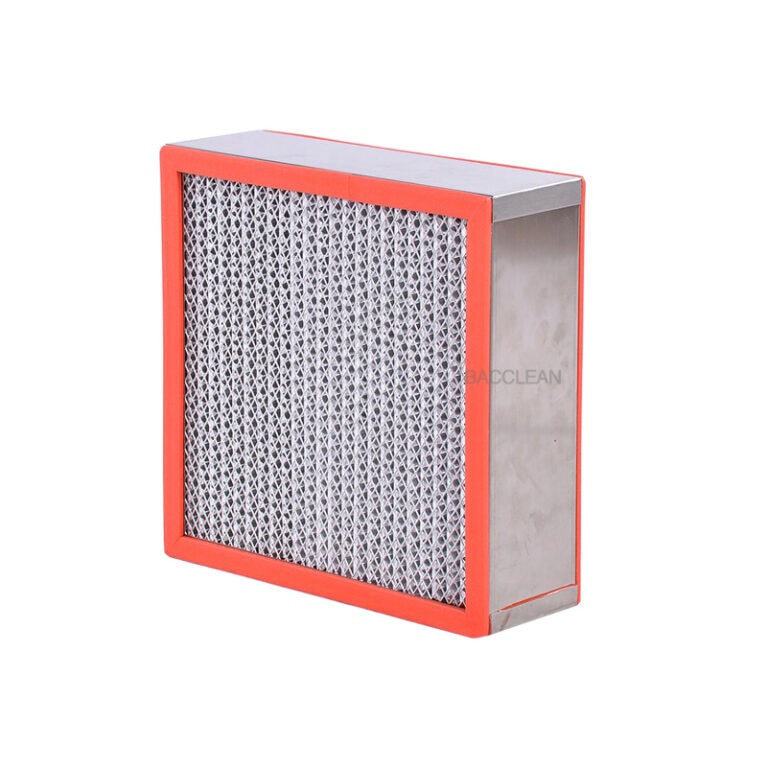
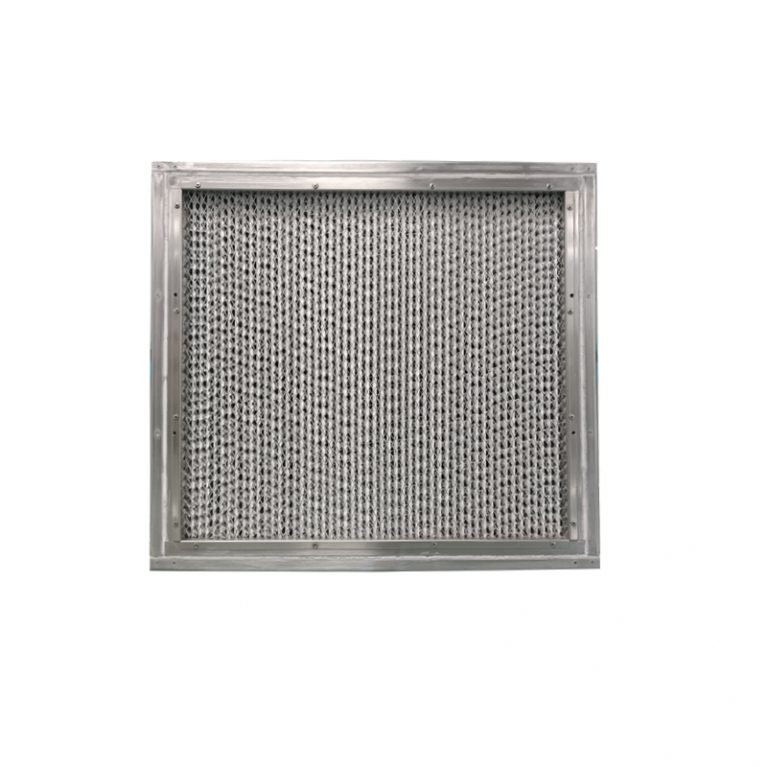
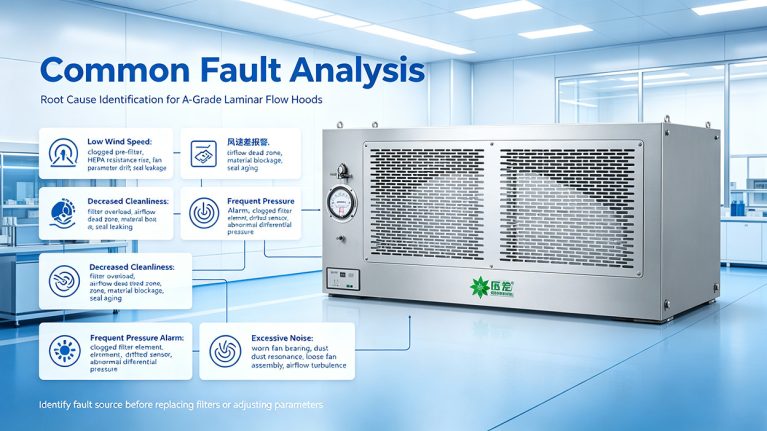
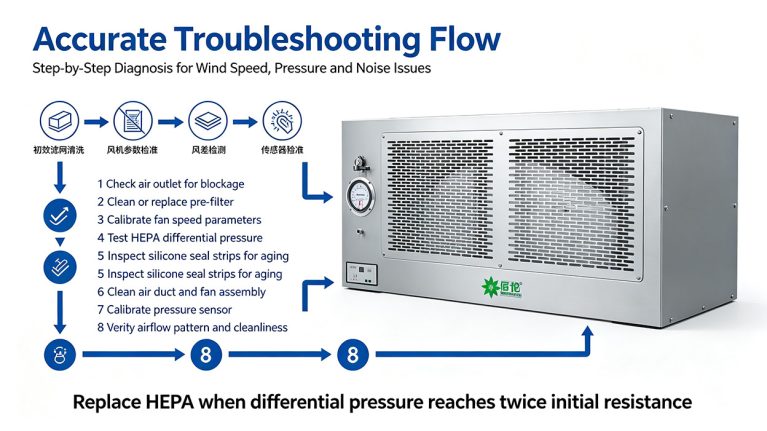
Low wind speed & decreased cleanliness Main causes: dust‑clogged pre‑filters, excessive resistance of HEPA filters, drifted parameters of variable‑frequency fans, and sealing air leakage. Troubleshooting sequence: clean the pre‑filter first; calibrate fan wind‑speed parameters; test filter pressure difference. Replace HEPA filter elements immediately once pressure difference reaches twice the initial resistance. Meanwhile inspect whether silicone sealing strips are aged and causing air leakage.
-
Excessive operating noise Mostly caused by worn fan bearings, dust‑induced resonance inside air ducts and loose fan mounting. Solutions: fasten fan assemblies, remove dust accumulated in air ducts, and replace aged fan components.
-
Frequent pressure‑difference alarms Likely triggered by clogged filter elements or drifted sensor readings. Calibrate sensor values and check filter‑element clogging status.
-
Local airflow eddies & dead zones Caused by installation offset, damaged flow‑equalizing membrane or blocked by materials. Adjust equipment mounting position, replace flow‑equalizing membrane, and standardize material placement at workstations.
II. Graded Maintenance Standards
‑Daily maintenance: Check equipment status and wind‑speed stability upon startup; clear workstation debris and avoid blocking the air‑outlet surface. ‑Weekly maintenance: Wipe equipment housing and air‑outlet surface to keep free of dust and stains. ‑Monthly maintenance: Dismantle and clean G4 pre‑filters; check integrity of sealing strips; calibrate fan operating parameters. ‑Quarterly maintenance: Conduct wind‑speed uniformity test, spot check of cleanliness and airflow pattern inspection; keep complete test records. ‑Annual maintenance: Fully inspect HEPA filter sealing performance and overall operating conditions; replace aged sealing accessories and failed filter elements.
III. Optimization Tips for Long‑Term Operation
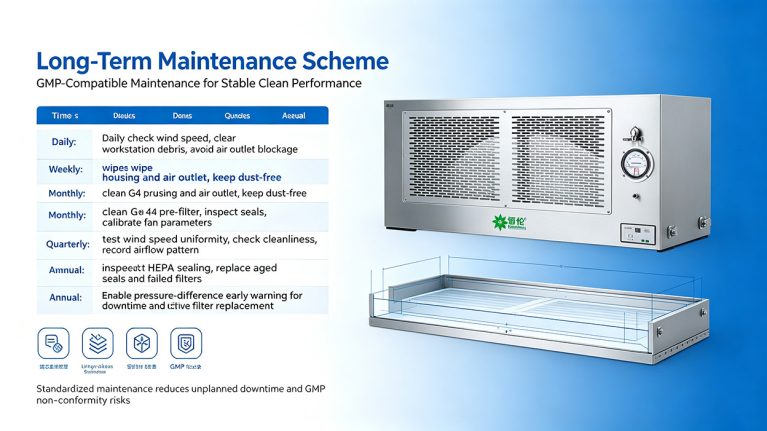
Do not stack articles directly above laminar flow hoods; avoid frequent start‑stop cycles. Do not spray highly corrosive disinfectants directly onto filter zones during workshop decontamination. Adjust filter replacement cycles according to workshop dust concentration; shorten service intervals under high‑dust conditions. Enable pressure‑difference early‑warning function to realize predictive filter replacement and prevent unplanned downtime.
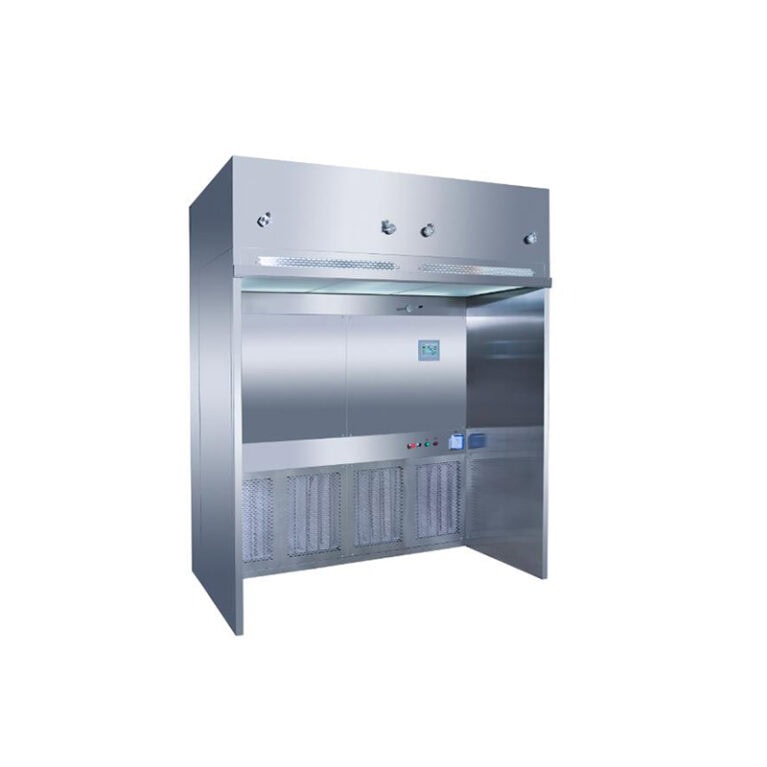
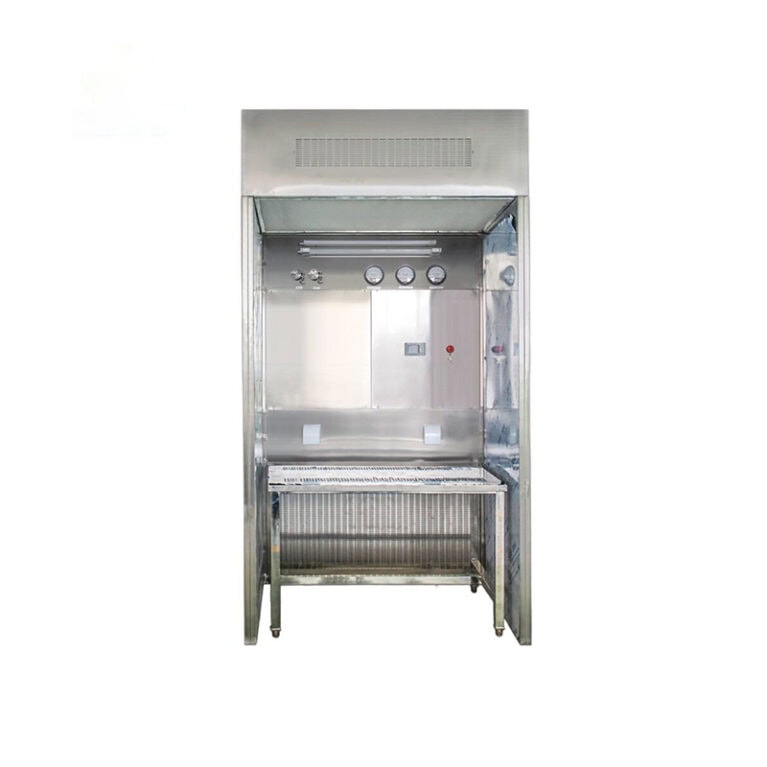
A standardized system for fault diagnosis and maintenance ensures year‑round compliant performance of A‑grade laminar flow hoods, and mitigates risks of production shutdown and non‑conformity during GMP inspections.
