
1. Worktable / Working Area Size: Confirm Operation Space First & Reserve Margin
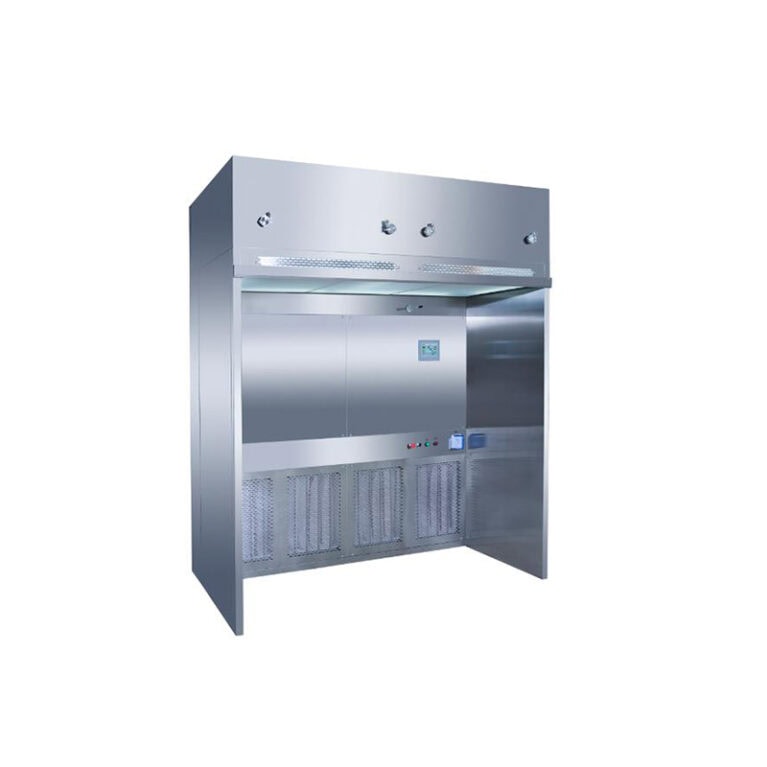
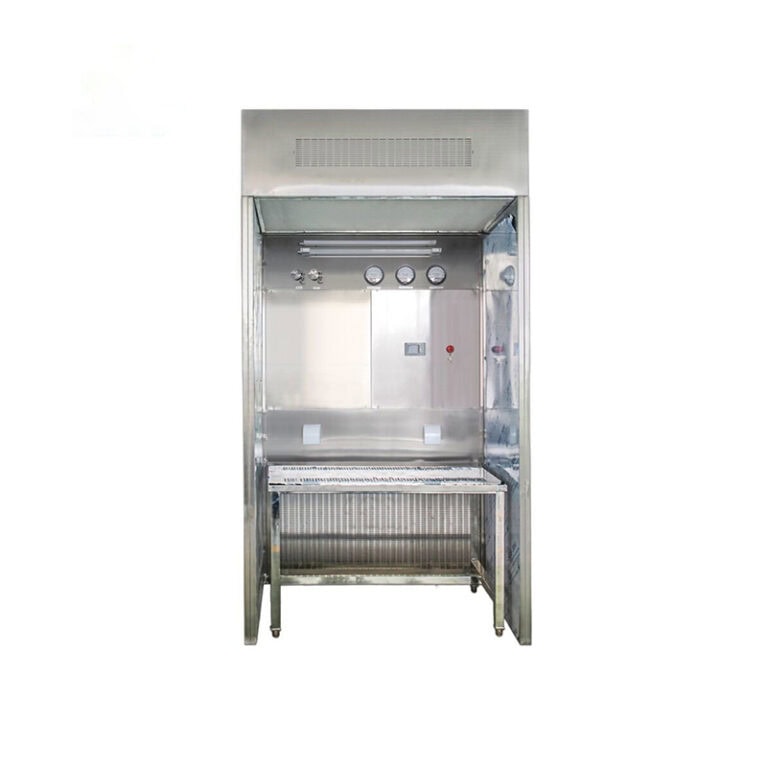
Distinguish the effective inner working size and outer frame size. Many wrong selections happen when choosing by outer dimension while ignoring usable inner space. Effective working area is the zone for weighing, placing barrels, balances and turnover containers. It is marked as Width × Depth.
-
Select according to the maximum barrel, balance base and transfer box, reserve enough space for arm movement, scooping and feeding to avoid disturbing airflow near laminar boundary.
-
Standard sizes: 1000 / 1200 / 1300 / 1500 / 1800 / 2400 type. Single-person operation: 1200~1500mm width; double-person feeding & large barrel dispensing: ≥1800mm.
-
Recommended depth: 800~1000mm. Too shallow depth will break the inlet airflow easily when arms stretch in, causing powder escape.
-
Internal height: reserve space for barrel stacking and top plenum, check ceiling height and doorway for equipment access.
-
Optional independent shockproof stand for balance, separated from booth cabinet to avoid weighing drift caused by fan vibration.
Note: Larger size is not always better. Larger working area increases load on fan and filters, making velocity and negative pressure harder to stabilize. Do not blindly choose oversized booth for high-potency & toxic powder.
2. Air Velocity: Two Independent Indicators — Laminar Velocity & Inlet Face Velocity
Two separate velocity parameters, mandatory test items during OQ validation:
-
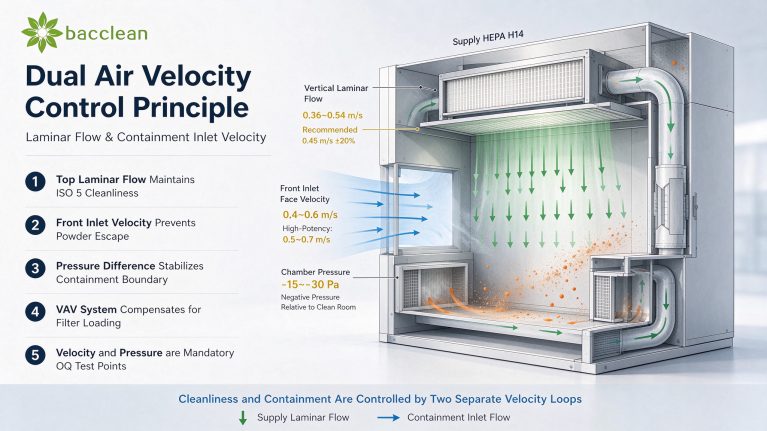
Top vertical laminar velocity (clean air velocity in working zone): Standard range 0.36~0.54m/s, recommended 0.45m/s ±20%, uniformity deviation ≤±15%.
-
Low velocity: poor anti-disturbance ability, powder floating, particle out-of-specification.
-
Over-high velocity: loud noise, airflow impact re-suspends settled dust and disturbs precision balance.
-
Low-risk excipients adopt middle range; high-potency & sensitizing powder focus on velocity uniformity instead of simply raising speed.
-
-
Front inlet face velocity (key for dust containment): Air flows from clean room into booth to block powder escaping. General range 0.4~0.6m/s; high-potency, hormone, anti-tumor powder: 0.5~0.7m/s, equipped with VAV system to compensate airflow automatically as filter clogging. Reference pressure: Chamber maintains -15Pa ~ -30Pa relative to outside clean room, prevent reverse airflow.
3. Filter Configuration: Separate Supply Air Filter & Exhaust Air Filter
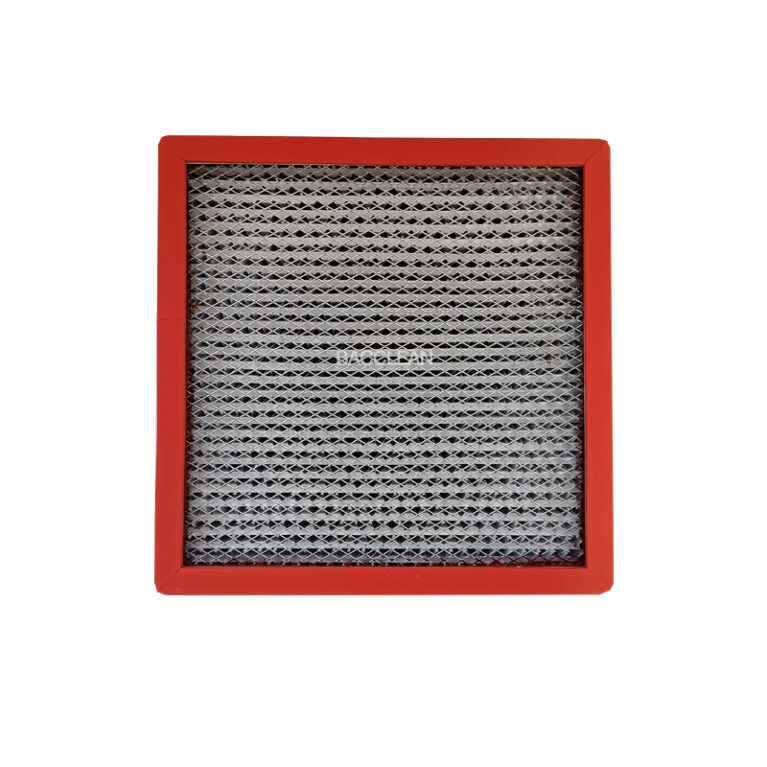
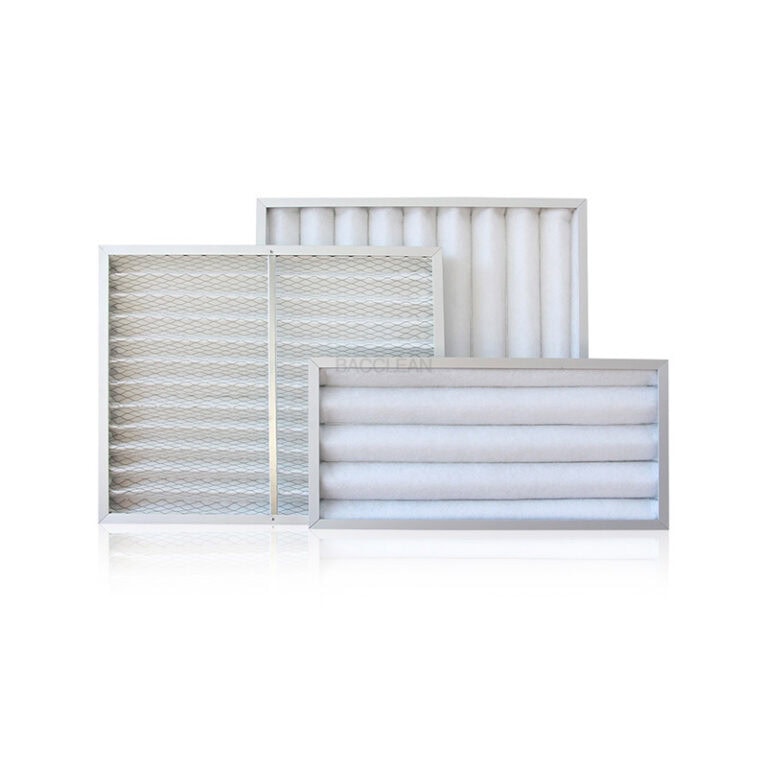
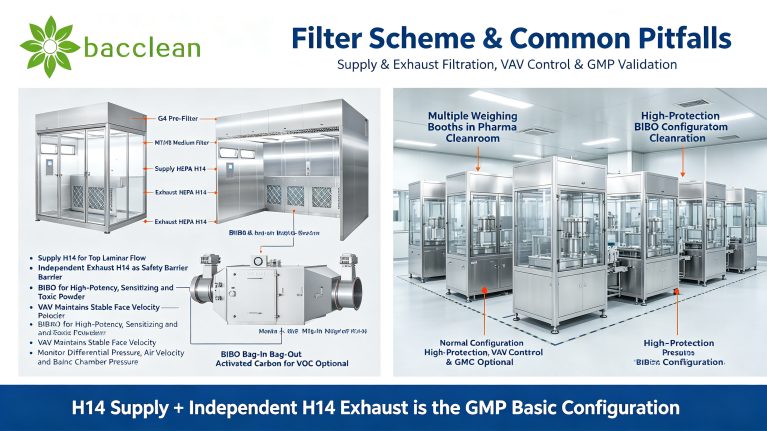
Standard filtration chain: G4 pre-filter → M7~M8 medium filter → H14 supply HEPA; independent H14 exhaust HEPA. Upgrade to BIBO (Bag-In Bag-Out) for high-risk materials.
-
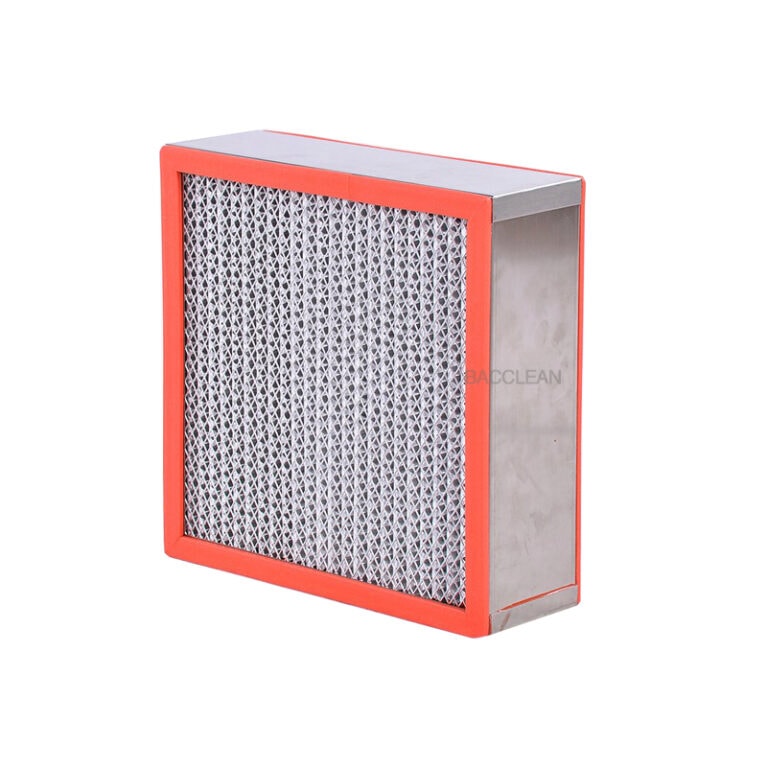
Supply HEPA (top laminar): H14 for GMP projects; H13 only for low-risk excipients in Grade D auxiliary area. H14 is required for aseptic and high-potency materials. U15 ULPA for nano-powder ultra-clean scenarios. Gel seal preferred for PAO scanning leak test.
-
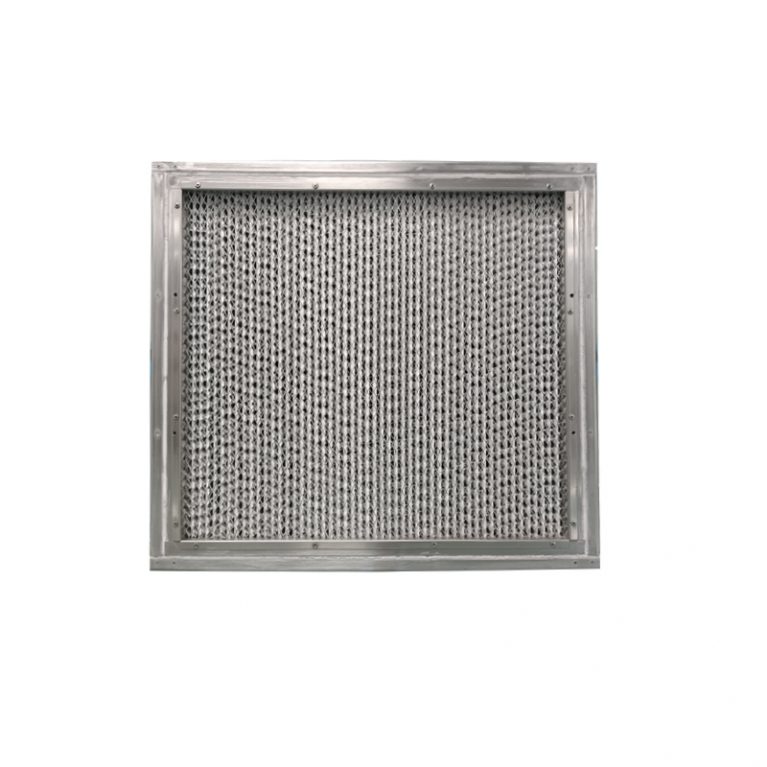
Exhaust HEPA (critical safety barrier): Independent exhaust H14 is indispensable. Powder is captured by exhaust HEPA after pre-filtration before returning to workshop or discharging outdoor.
-
Common excipients: single H14 exhaust filter
-
High-potency, sensitizing, toxic & hormone powder: BIBO exhaust HEPA, filter replacement without direct contact with dust
-
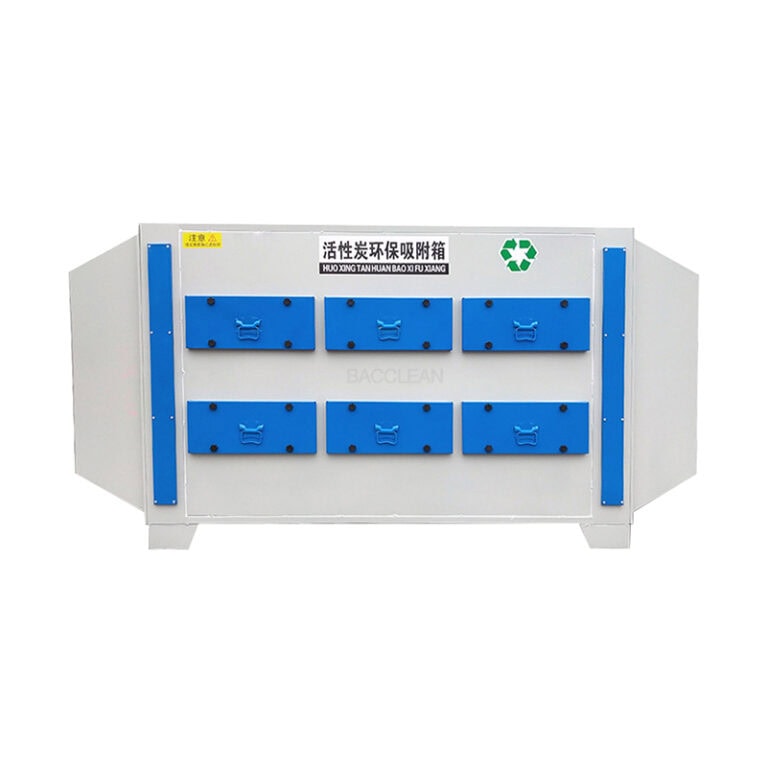
Volatile solvent & odor: add activated carbon filter after exhaust HEPA for VOC removal
-
-
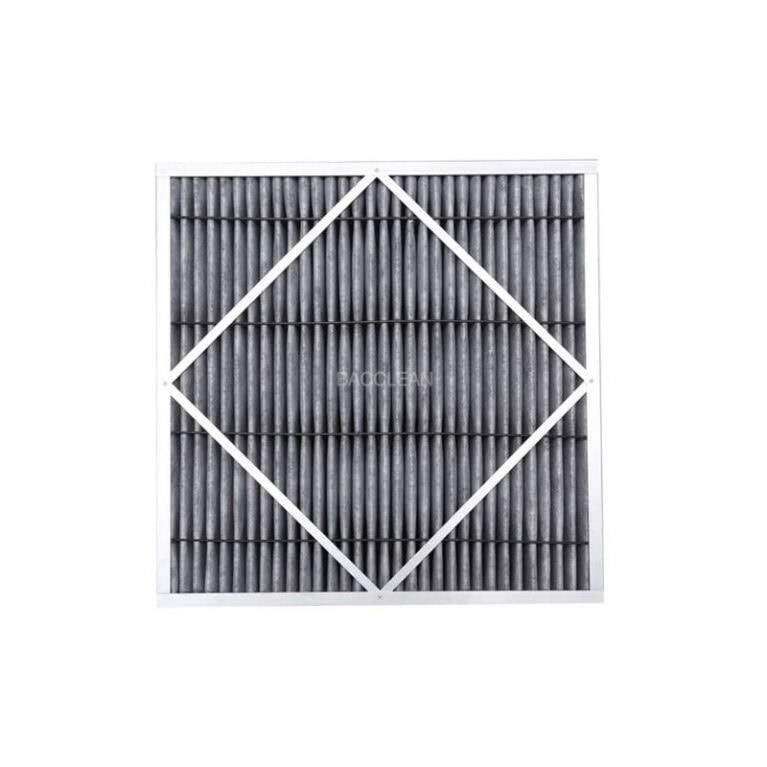
Pre-filters (G4+M7/M8): Protect main HEPA and extend service life. Differential pressure alarm is recommended for high-dust stations.
Full air circulation path: Top H14 delivers downward laminar flow → Dust is drawn to lower return air grille → G4+M7 pre-filtration → Fan pressurization. ~90% air recirculates to supply plenum, ~10% air passes exhaust H14 and discharges, continuously sustaining negative pressure.
4. Auxiliary Selection Points for GMP Validation
-
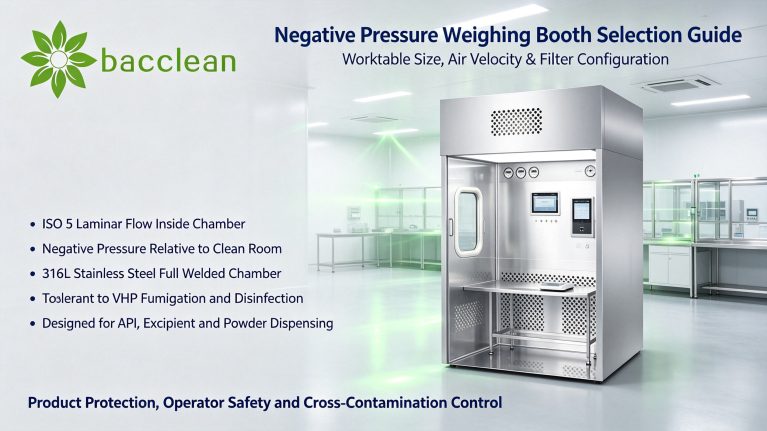
Material: 316L stainless steel inner chamber, full welded rounded corners, no dead corners for VHP fumigation and disinfection wiping. Outer cabinet: 304 stainless steel or powder coated steel.
-
Control system: Fixed frequency for low-risk materials; VAV variable air volume for high-potency & strict validation projects, with velocity & pressure sensors, auto speed compensation, alarm and data logging for audit trail.
-
Monitoring ports: Differential pressure of supply HEPA / exhaust HEPA, laminar velocity, inlet face velocity, chamber pressure difference, all measurable and exportable.
-
Explosion-proof: Flameproof fan, electric components and sensors for combustible powder & solvent environment.
5. Common Selection Mistakes
-
Confuse with clean bench: Clean bench supplies positive outward airflow, while weighing booth runs negative pressure inward airflow for powder containment.
-
Only install one set of HEPA without independent exhaust HEPA: Toxic powder will leak into clean area once filter is damaged.
-
Reduce laminar velocity for balance accuracy, resulting in insufficient inlet face velocity and powder escape.
-
Adopt fixed fan without VAV: Air volume decays gradually with dust loading, velocity and negative pressure fail without visible warning.
-
Oversized worktable with insufficient exhaust capacity, negative pressure cannot be established.
Conclusion
When selecting negative pressure weighing booth, define protection level first by material toxicity and dust generation, then confirm effective worktable size according to barrels and operation mode. Control laminar velocity and inlet face velocity separately to guarantee cleanliness and containment. H14 supply HEPA + independent H14 exhaust HEPA is the basic GMP configuration, upgrade BIBO for high-potency powder. With VAV system, velocity & pressure monitoring and seamless stainless steel chamber, stable particle control, dust isolation and validation compliance can be achieved.
