
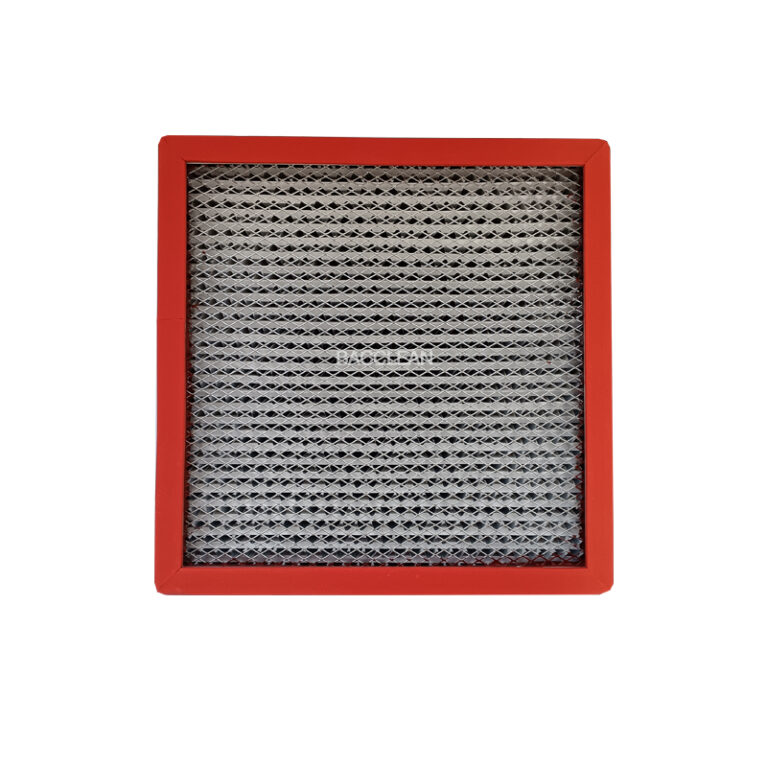
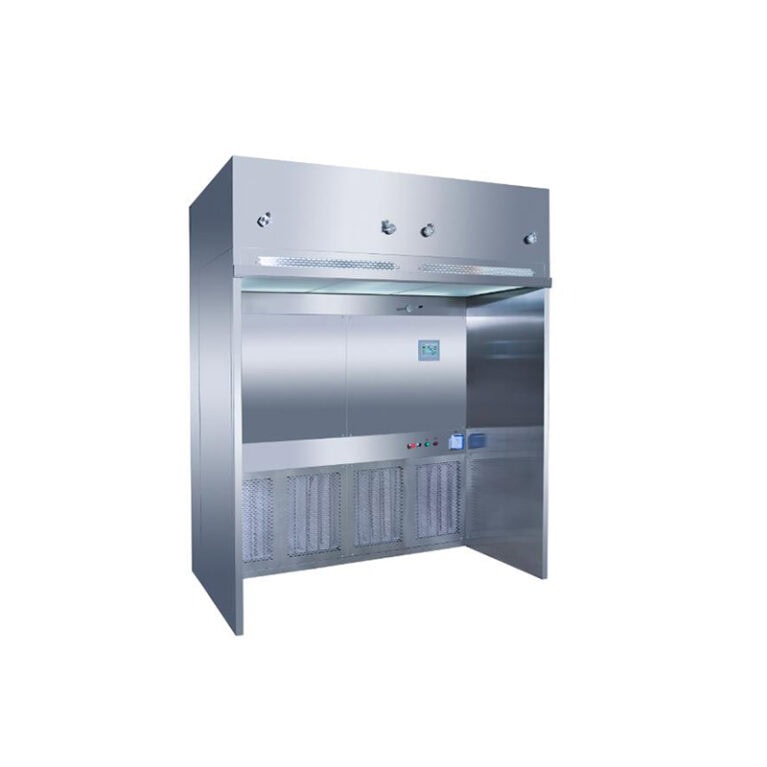
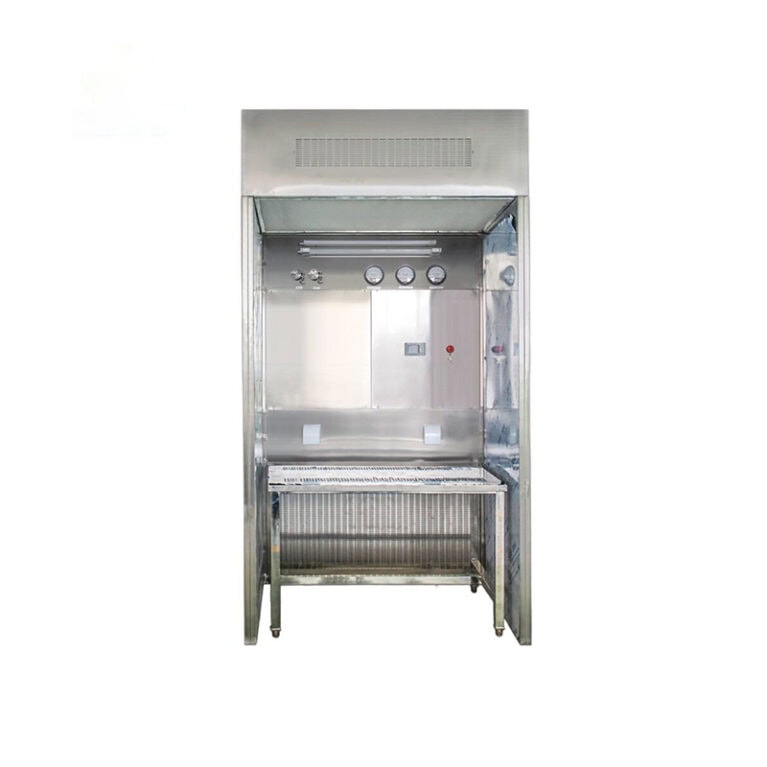
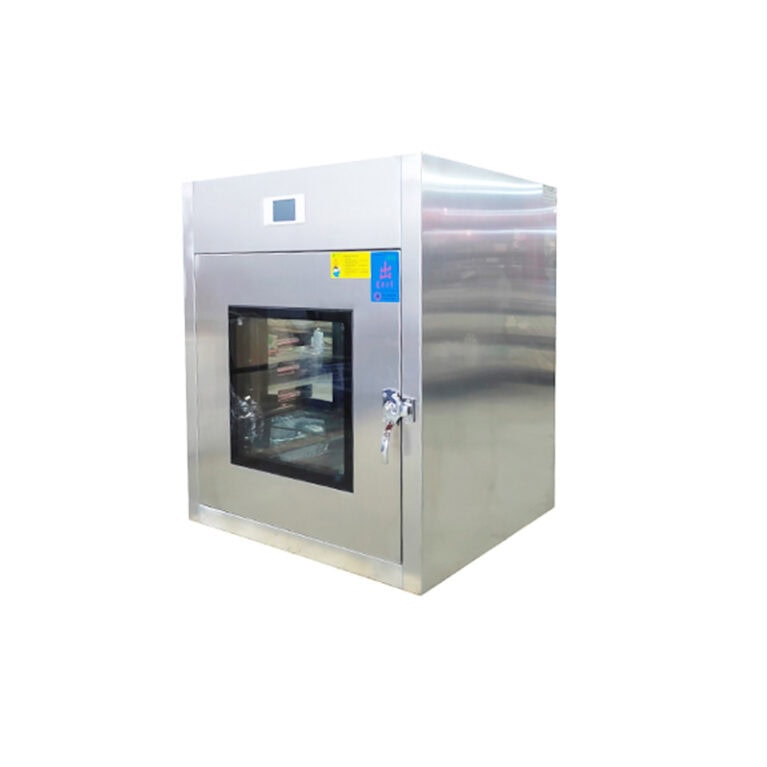
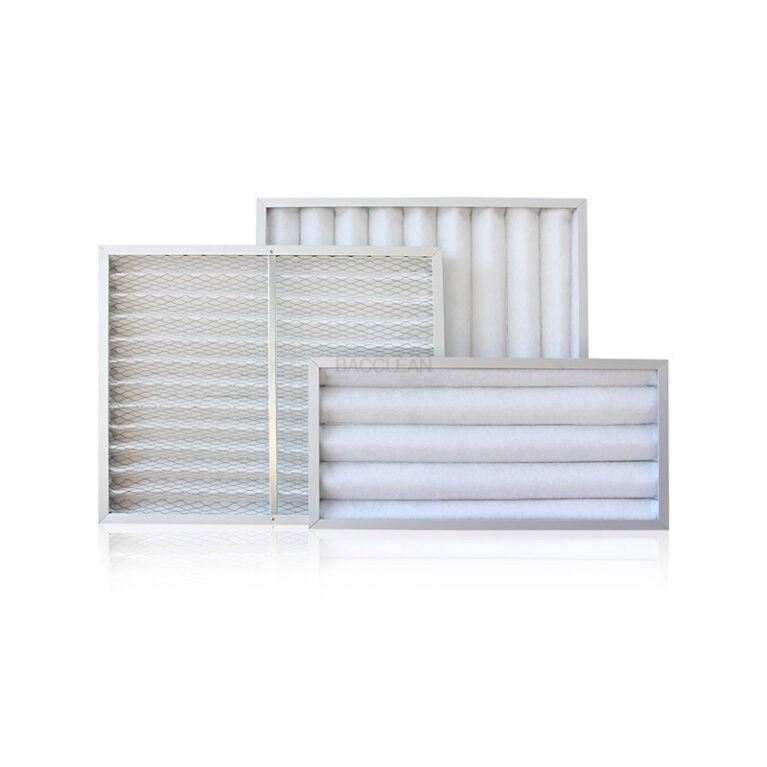
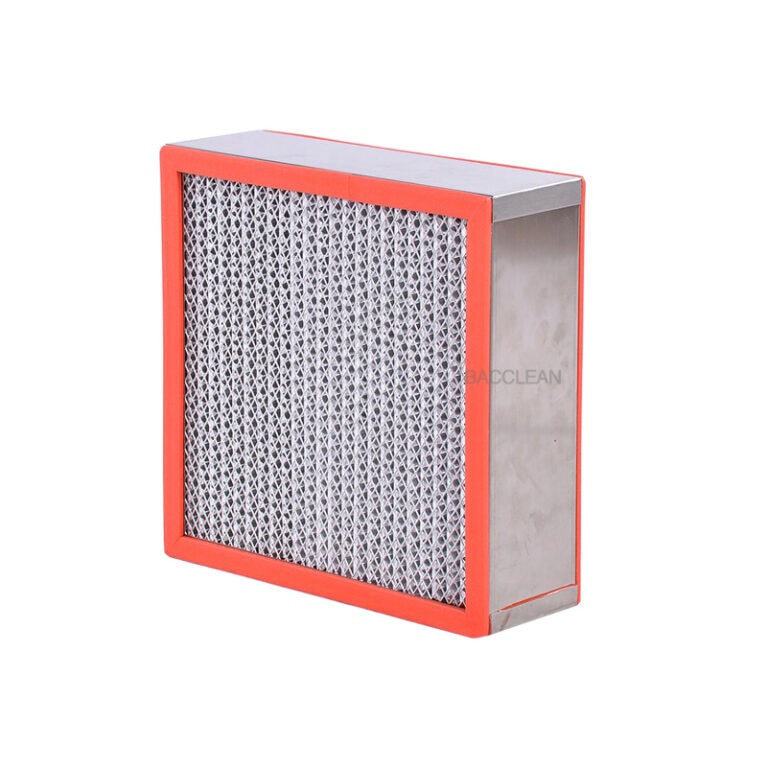
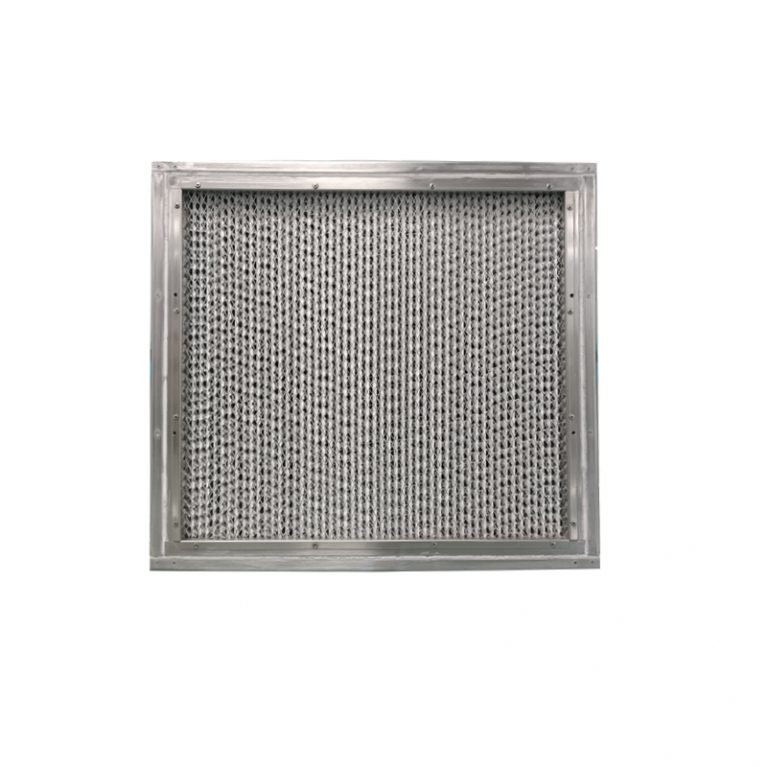
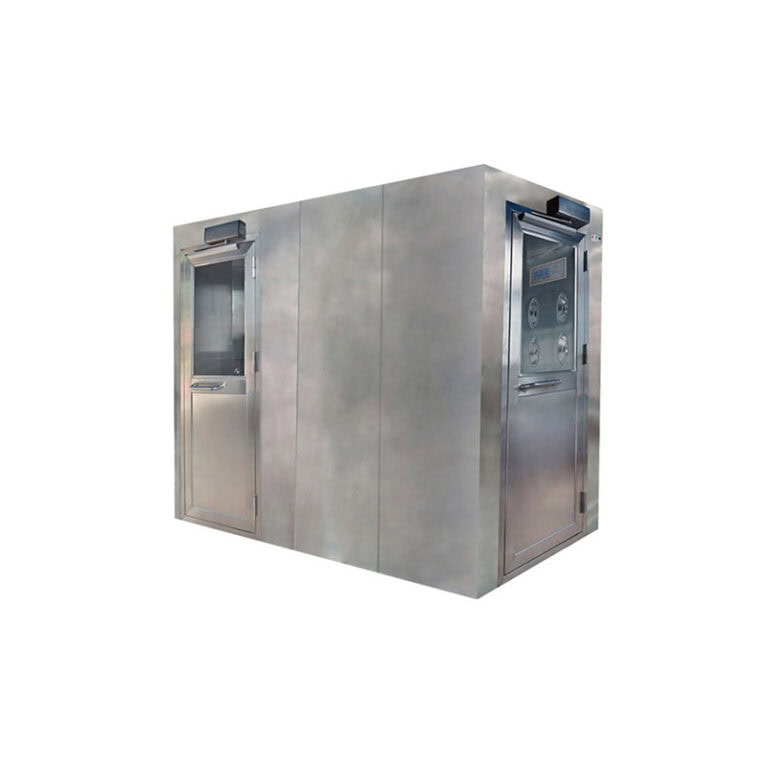
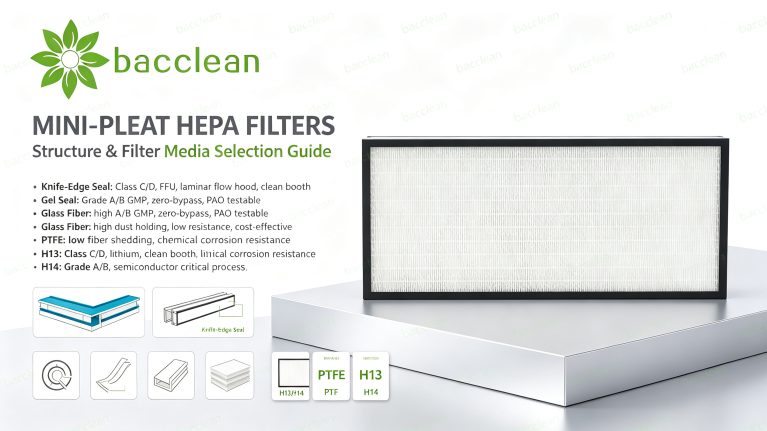
First, confirm the installation structure, which falls into two categories: knife-edge sealed mini-pleat HEPA filters and gel-seal mini-pleat HEPA filters. Knife-edge sealed mini-pleat HEPA filters achieve sealing by compression of external gaskets. They are suitable for FFU fan filter units, standard knife-edge air outlets, laminar flow hoods and clean booths. Featuring simple assembly and disassembly as well as moderate cost, they are applicable to most Class C/D clean areas and partial non-high-risk Class B zones. The knife-edge structure highly relies on the flatness of the mounting frame, gasket quality and assembly compression. Improper installation may lead to bypass leakage.
Gel-seal mini-pleat HEPA filters are integrated with gel troughs at the bottom. The metal knife-edge of gel-seal air outlets cuts into the gel to form a seal. They are mainly used in high-risk sterile clean areas such as Grade A/B biopharmaceutical zones, delivering zero-bypass sealing and meeting GMP requirements for PAO leak testing of every unit. For gel-seal types, gel formulation must be distinguished between standard gel and VHP-resistant gel. Meanwhile, the temperature limit of the gel shall be followed; they cannot be deployed in continuously high-temperature environments.
Second, determine filtration efficiency class. H13 is mostly used for Class C and D cleanrooms, lithium battery plants, general laboratories and clean booths. H14 is adopted for Grade A/B sterile biopharmaceutical zones and key semiconductor processes, where strict PAO leak testing is required. The efficiency class shall strictly match the cleanroom design grade. Downgrading is prohibited, while blind adoption of H14 for all scenarios shall be avoided to prevent unnecessary cost waste.
Third, select filter media: glass fiber media or PTFE media. Glass fiber filter media delivers balanced overall performance, high dust holding capacity, good resistance performance and high cost-effectiveness. It is the preferred option for most pharmaceutical, lithium battery and laboratory projects. PTFE filter media features chemical corrosion resistance and low fiber shedding. It is suitable for special semiconductor processes exposed to strong disinfection gas and with strict control over particulate release. Its disadvantages include higher initial resistance, higher procurement cost and weaker dust holding capacity compared with glass fiber. Service life will be shortened under heavy dust load. Air pressure margin of air handling units or FFUs must be calculated during selection.
Fourth, select filter depth. Common depths on the market are 50mm, 65mm, 90mm and 110mm. Depth directly determines the expanded area of filter media and affects initial resistance and dust holding capacity.
- 50mm thin mini-pleat HEPA: Compact and space-saving. Suitable for low-airflow and low-dust-load conditions such as internal filter units of small laminar flow hoods and biosafety cabinets. Limitation: limited media area and low dust holding capacity. Not recommended for large-area FFUs in high-dust lithium battery workshops.
- 65mm depth: Universal specification balancing footprint and dust holding capacity. Widely used in ordinary clean booths, medium & small FFUs and air outlets for most Class C/D cleanrooms.
- 90mm depth: Large expanded filter media area, excellent dust holding capacity and low initial resistance. It is the mainstream choice for large-area FFU systems in new energy lithium battery workshops and also widely adopted for pharmaceutical air outlets with balanced overall performance.
- 110mm heavy depth: Maximum media area and best dust holding performance. Suitable for high-airflow and heavy-dust-load scenarios where longer filter service life is expected. Limitation: larger overall depth, so installation space in ceiling or equipment interior must be verified.
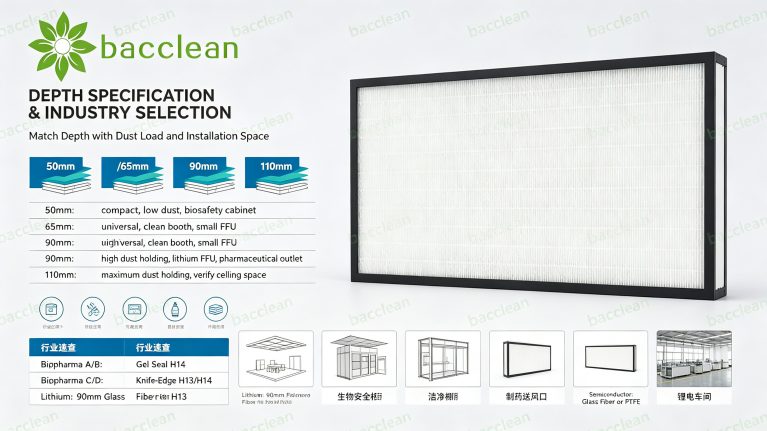
Core logic for depth selection: The higher the dust generation of working conditions, the deeper the recommended filter to improve dust holding capacity and extend service life. Simply choosing thin filters to cut procurement cost will result in frequent replacement and higher overall operation & maintenance cost in the long run.
Next is selection summary for typical working conditions across industries. Biopharmaceutical GMP Workshops Class C/D clean zones: Knife-edge sealed mini-pleat HEPA, H13/H14 glass fiber media, depth 65–90mm. Grade A/B high-risk sterile zones: Gel-seal mini-pleat HEPA filter, H14 class. VHP-resistant gel is mandatory for zones with frequent VHP fumigation, mainly glass fiber media. PTFE media shall be evaluated for local points with strong solvent volatilization.
New Energy Lithium Battery Clean Workshops For high-dust processes such as electrode coating and electrolyte filling, 90mm mini-pleat HEPA with H13 glass fiber high dust-holding media is preferred for ceiling FFUs. Large-scale deployment of 50mm thin filters is not recommended. The upstream pre-filtration system must be properly configured to protect HEPA filters.
Semiconductor & Panel Manufacturing Glass fiber H13/H14 for general processes. PTFE mini-pleat HEPA for processes sensitive to fiber shedding and exposed to corrosive gas. Verify that equipment air pressure can withstand the higher initial resistance brought by PTFE.
Laboratories, Biosafety Cabinets & Small Laminar Flow Hoods Space-limited and low-airflow scenarios, mostly 50/65mm knife-edge mini-pleat HEPA. Disinfection gas resistance of filters for biosafety cabinets shall also be confirmed.
Clean Booths H13 is commonly adopted according to cleanroom class, 65–90mm depth, knife-edge sealing, matched with FFUs.
Constraints for special working conditions: For high-humidity environments, verify the moisture resistance of hot melt adhesive to prevent failure of poor-quality adhesive lines under humidity. For continuous high-temperature environments, the normal operating temperature of standard mini-pleat HEPA filters generally does not exceed 70℃. High-temperature resistant HEPA filters shall be used instead for over-temperature scenarios. For workshops with massive organic solvent volatilization, frame sealant and hot melt adhesive of glass fiber filters may be eroded, so material compatibility needs assessment. For frequent VHP disinfection: gel formulation shall be checked for gel-seal types; gasket material shall be verified for knife-edge types.
Key acceptance requirements for selection: For high-grade GMP projects, every filter shall be individually tested with individual test reports, instead of only batch sampling reports. For overseas export projects, comply with EN1822 standard. Verify frame flatness to avoid sealing risks caused by warped frames.
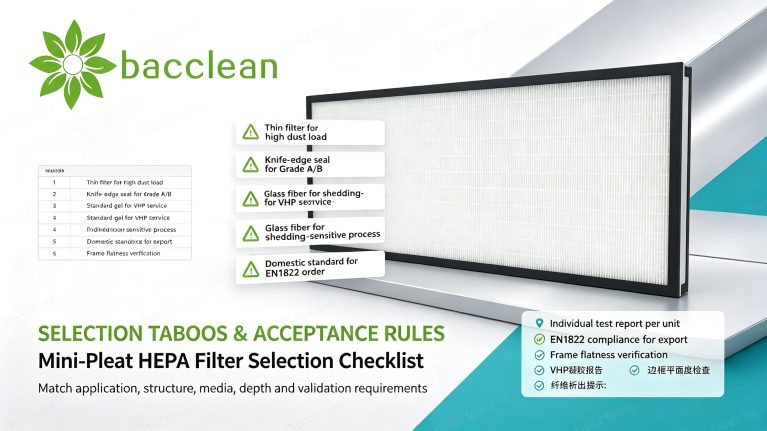
Common selection pitfalls:
- Only focus on outer dimensions while ignoring the impact of depth on dust holding capacity and service life; adopt thin filters in high-dust conditions leading to frequent replacement.
- Deploy knife-edge sealed mini-pleat HEPA in Grade A/B sterile zones, which cannot achieve zero-bypass sealing.
- Use standard gel directly for gel-seal applications with frequent VHP fumigation, resulting in gel aging and leakage at a later stage.
- Select glass fiber media for shedding-sensitive scenarios without evaluating fiber release risk.
- Apply domestic test standards for export projects which fail to meet customers’ EN1822 requirements.
Mini-pleat HEPA filter selection requires comprehensive matching of working conditions, installation constraints, performance and validation requirements, rather than simply specifying length, width, height and efficiency. bacclean supplies mini-pleat HEPA filters in both knife-edge and gel-seal structures with multiple optional depths, glass fiber or PTFE filter media. Individual testing is available per domestic standards and international EN1822 standard, together with complete datasheets and validation documents to support filter selection for cleanroom projects across multiple industries.
