
Installation Specifications and Operating Procedures for Clean Room FFU and Precautions
I. Pre-construction Preparation Precautions
All construction personnel must wear dust-proof suits, masks, head covers, dust-proof gloves, and dust-proof shoes. It is strictly prohibited to touch the FFU cabinet, high-efficiency filter paper, and sealing rubber strips with bare hands.
The installation site should be thoroughly cleaned and dusted before construction. Cross-construction (electric welding, cutting, grinding dust operations) is prohibited to avoid dust pollution of the filter element.
After unpacking the FFU and high-efficiency filter, handle them gently. It is strictly forbidden to invert, lay flat and heavily press, or bump and drop; the filter must not be placed vertically against the wall for squeezing.
Check the model, size, voltage, control method (single control / group control) of the FFU and accessories (sealing rubber strips, suspension rods, bolts, control lines). If any parts are damaged, return and replace immediately.
The frame and framework of the clean room should be adjusted and corrected in advance. The horizontal deviation should be ≤ 2mm/m. The ceiling and suspension rods must meet the load of the FFU. It is strictly prohibited to install beyond the load capacity.
II. Installation Precautions for FFU
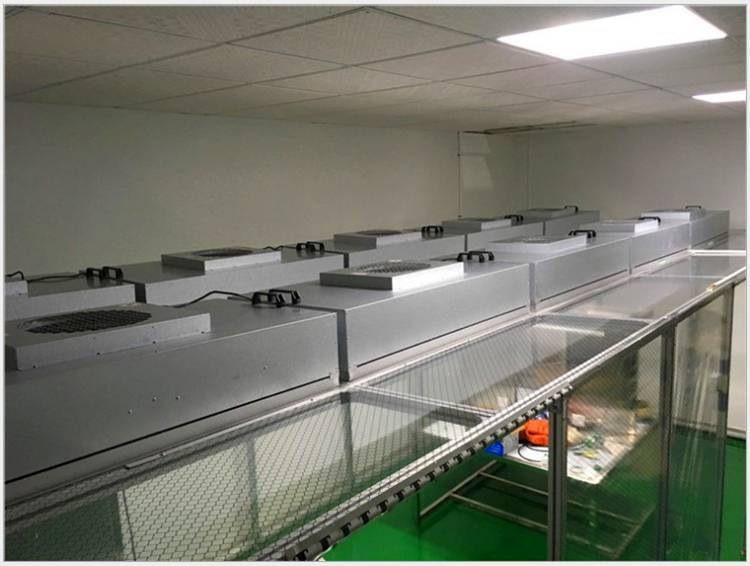
The air outlet surface of the FFU must face downward. It is strictly forbidden to install it upside down. Install according to the layout diagram from the center to the periphery in sequence, and arrange neatly without misalignment.
Sealing rubber strips must be installed completely between the FFU and the frame edge. The rubber strips must have no breaks, no gaps, and no stretching deformation. The joints should be staggered and overlapped.
Fix the bolts diagonally and evenly in several stages. Do not lock them on one side all at once to prevent the FFU cabinet from deforming and the seal from leaking air.
During the installation process, wipe the interfaces and frames with a dust-free cloth at any time to prevent debris, wire ends, and dust from remaining on the sealing surface.
It is strictly prohibited to open holes, cut, or privately modify the FFU cabinet to avoid damaging the structure and sealing performance.
III. Precautions for High-Efficiency Filter Installation
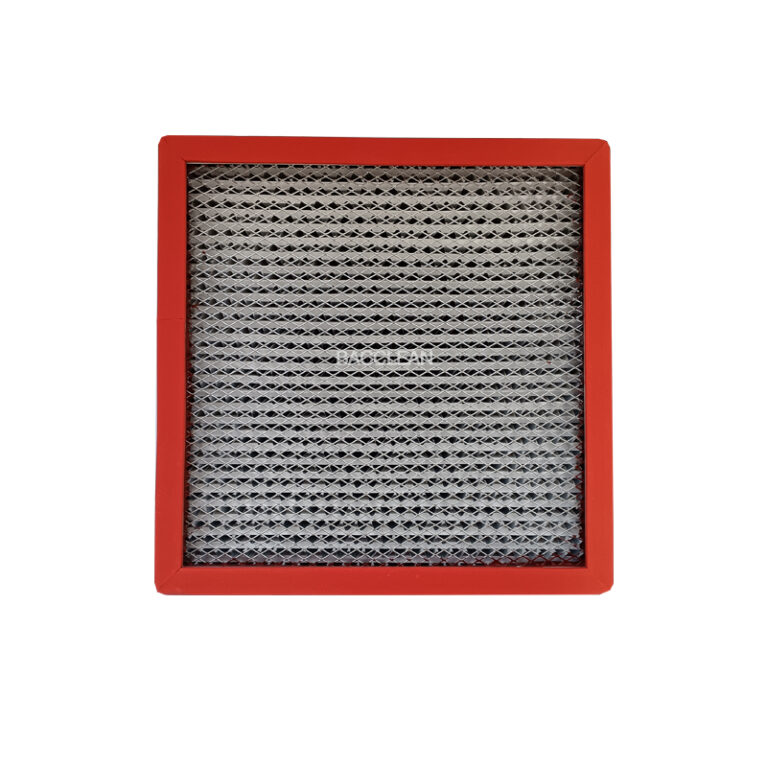
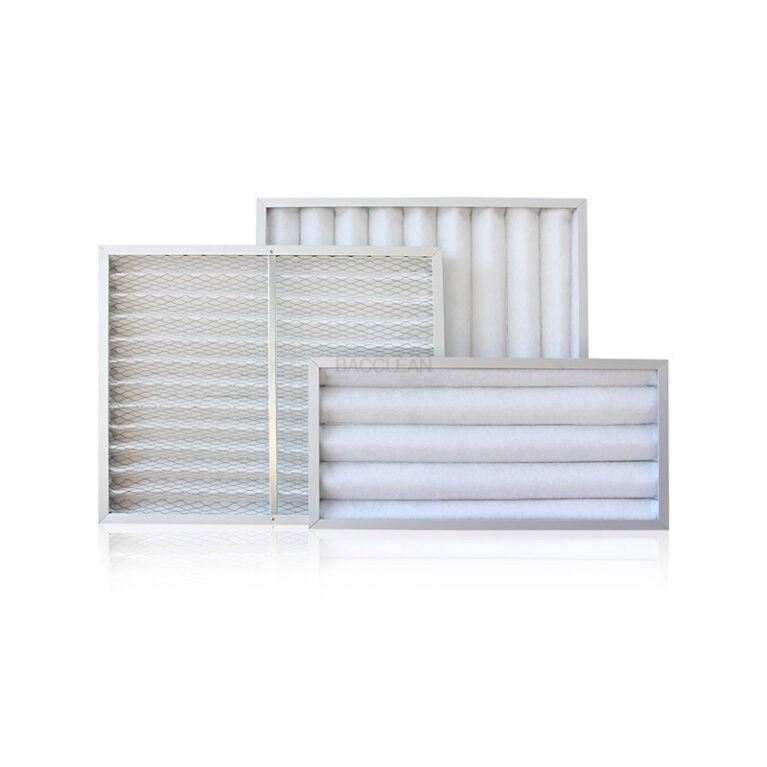
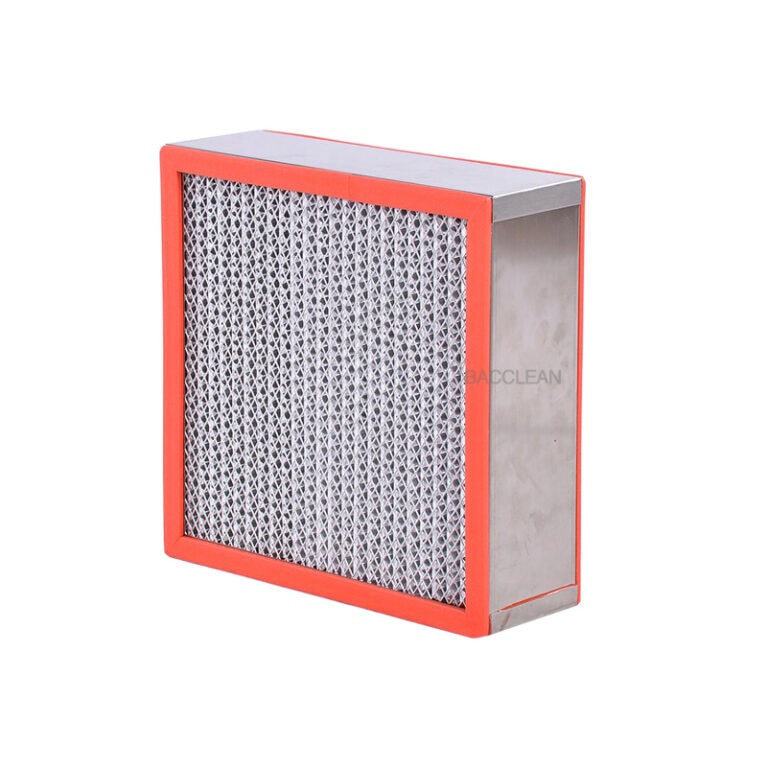
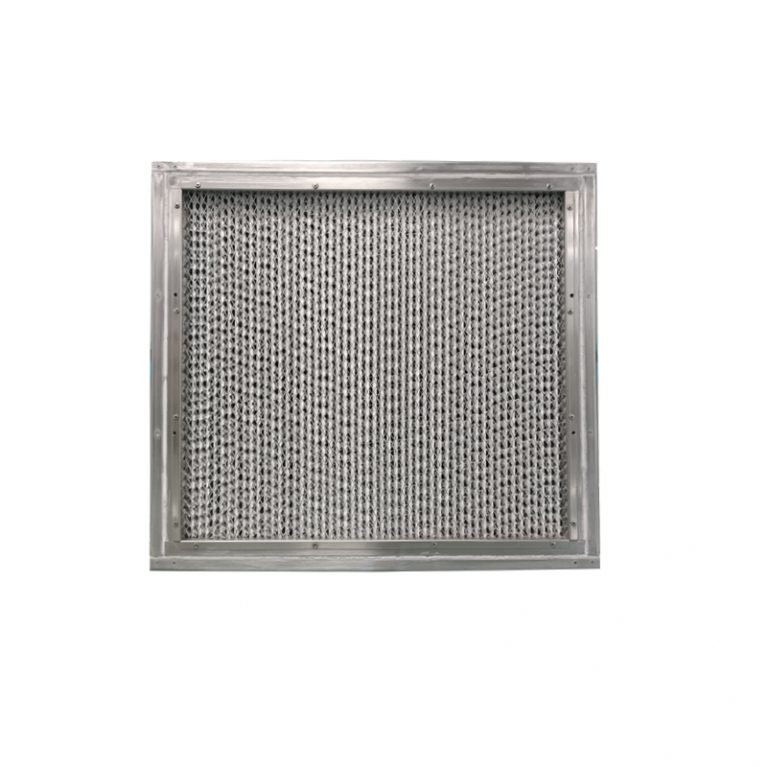
During transportation and installation, only grasp the aluminum frame of the filter. It is strictly forbidden to touch the filter paper, partition plates, and sealing surface.
Before installing the filter, visually inspect again: the filter paper must be free of damage, cracking, the rubber strips must be intact, and the filter must not be deformed or damaged due to excessive pressure.
After installation, immediately cover the filter with a dust-proof protective film. Do not remove it before conducting tests and acceptance.
Different air volumes and different specifications of filters must not be mixed and used. The resistance and air volume in the same area must be consistent.
IV. Electrical Wiring and Control Precautions
Strictly perform power-off operations. It is strictly prohibited to connect wires, dismantle wires, or perform maintenance while powered on. After the construction is completed, use a multimeter to measure insulation. The insulation to ground must be ≥ 1MΩ before power supply.
The power lines and control lines should be neatly arranged. They should avoid the air intake and airflow areas. The connection points should be well insulated and wrapped. Grounding must be reliable. The grounding resistance must be ≤ 4Ω.
The power supply lines and control lines of the EC fan should be clearly identified as live, neutral, and ground. It is strictly prohibited to connect the phases in the wrong sequence. The FFU address codes of the group control must be encoded one by one. They must not be repeated to avoid control disorder.
A separate leakage protection switch must be set up. It is strictly prohibited to share the circuit with high-power equipment to prevent voltage fluctuations from burning out the FFU motor.
After wiring is completed, make proper line markings. Strong and weak electrical lines should be separated. The shielding layer should be grounded according to the specification on one end only.
V. Inspection and Leak Detection Precautions
After the system installation is completed, perform overall self-cleaning first, then conduct PAO aerosol leak detection. The installation must be qualified before it can be put into production and use.
The scanning speed for leak detection should not be too fast. Move at a uniform speed of 2-3cm from the filter surface. Focus on scanning the filter frame, rubber strip joints, and the interface between the FFU and the frame.
The wind speed test should be conducted using the five-point method. The deviation of the wind speed should be controlled within the allowable range specified by the standard. If the wind speed is too low or too high, the gear should be adjusted.
During the debugging period, keep the doors and windows of the clean room closed, reduce personnel movement, and avoid disturbing the airflow to affect the laminar effect and particle detection data.
Leakage-prone areas must not be patched up or ignored. They must be re-adjusted for sealing, the rubber strips replaced, or the filters reinstalled after re-inspection until they are qualified.
VI. Daily Startup and Operation Precautions Power-up sequence: First, turn on the main power supply → Start the FFU in groups → Slowly adjust to the rated wind speed. Do not suddenly open at full load all at once.
After powering on, perform pre-cleaning for 15 to 30 minutes. Wait until the dust particles, pressure difference, temperature and humidity are stable before entering the operation.
During operation, do not frequently start or stop the FFU at will. Do not privately adjust the wind speed gears. Avoid air flow disorder and non-compliance with cleanliness standards.
The clean shelter should maintain a slight positive pressure state. Close the door promptly. Do not leave doors and windows open for a long time for convection.
If abnormal sounds, severe vibrations, sudden drop in wind speed, or unpleasant odors and heating are detected during operation, immediately stop the machine and cut off the power supply for inspection. Do not operate with faults.
VIII. Precautions for Power-off and Shutdown Maintenance
Power-off sequence: First, turn off the FFU one by one → Turn off the control power supply → Finally, cut off the main power supply.
Before long-term shutdown, run the self-cleaning for 30 minutes first, then turn off the power and close the door. Reduce internal dust accumulation.
During the shutdown period, the dust-proof membrane of the filter should be retained. Regularly check whether the sealing rubber strip is aged, cracked or fallen off.
Do not directly rinse the FFU box and filter with water. Cleaning can only be done by lightly wiping the surface with a dust-free cloth and isopropanol.
IX. Safety and General Prohibited Items Precautions
Do not touch the high-efficiency filter paper with bare hands or dirty hands. Do not smoke, eat, or discard debris in the clean shelter.
Do not step on the FFU box or the frame of the dragon bone structure. Do not suspend heavy objects on the clean shelter ceiling or on the FFU.
Do not install or use FFU in humid or corrosive environments without authorization to prevent motor leakage and box rusting.
Non-professionals are prohibited from disassembling the FFU motor, control board, or filter to avoid damaging the seal and electrical safety.
