
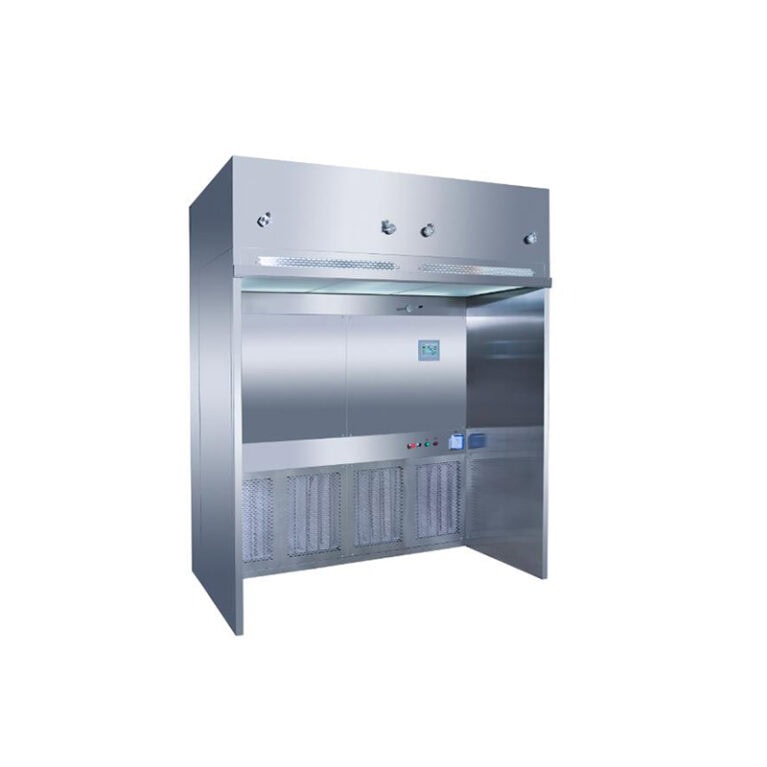
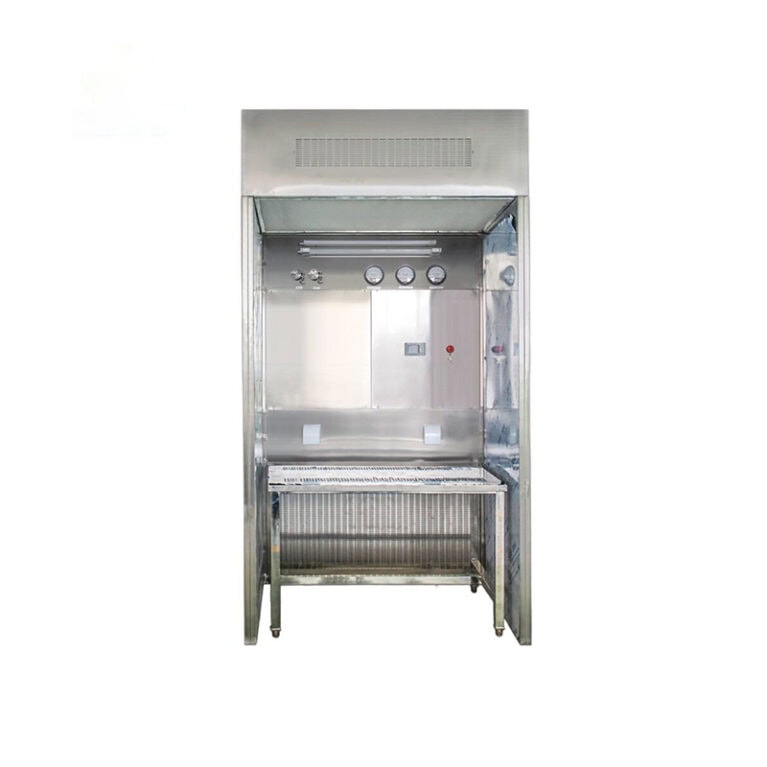
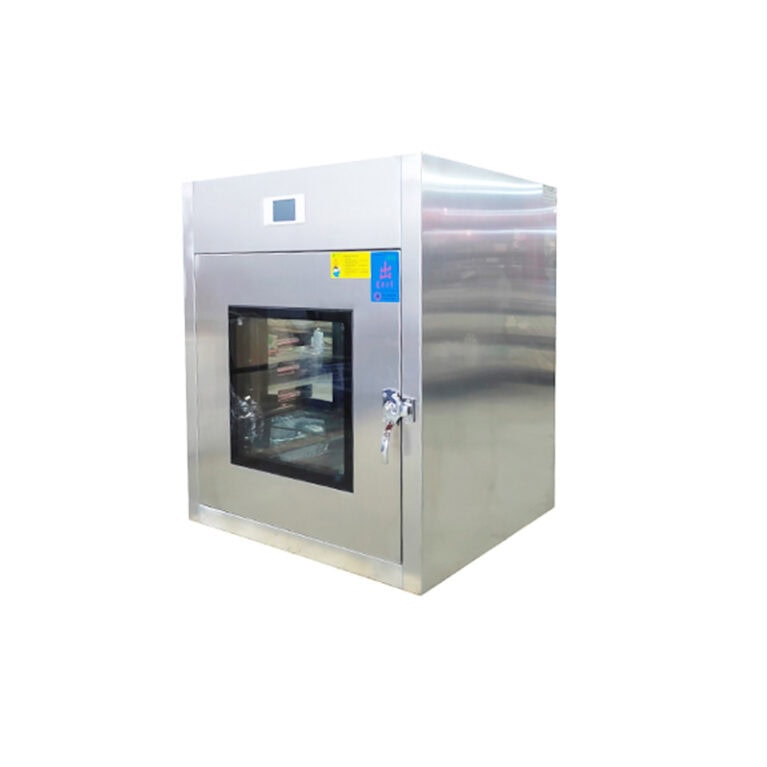
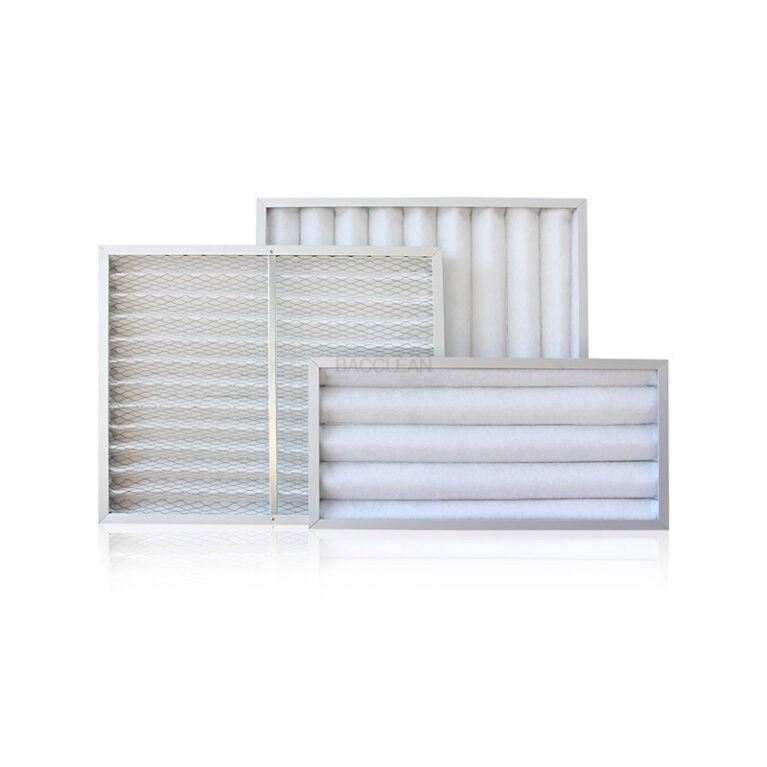
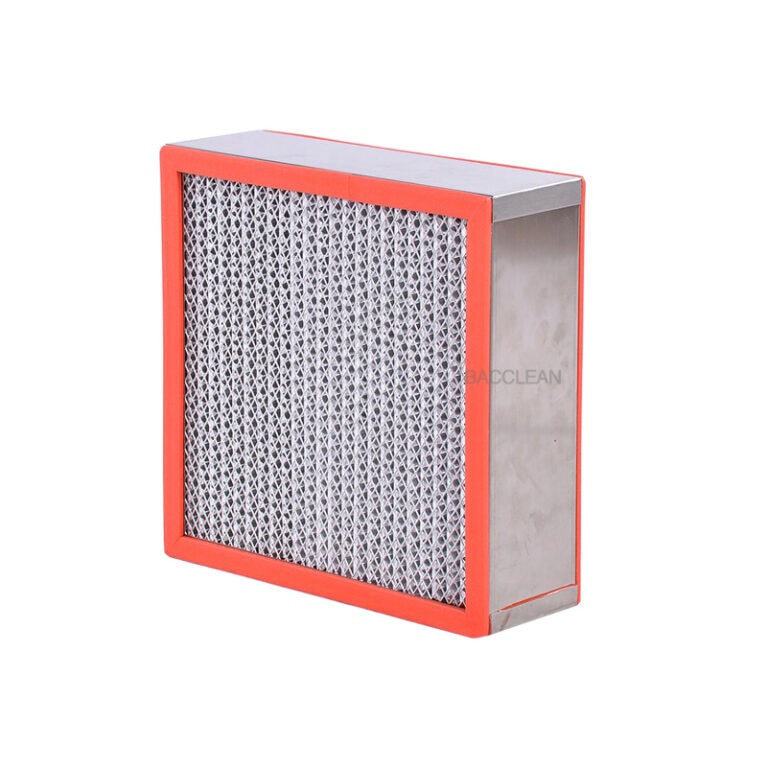
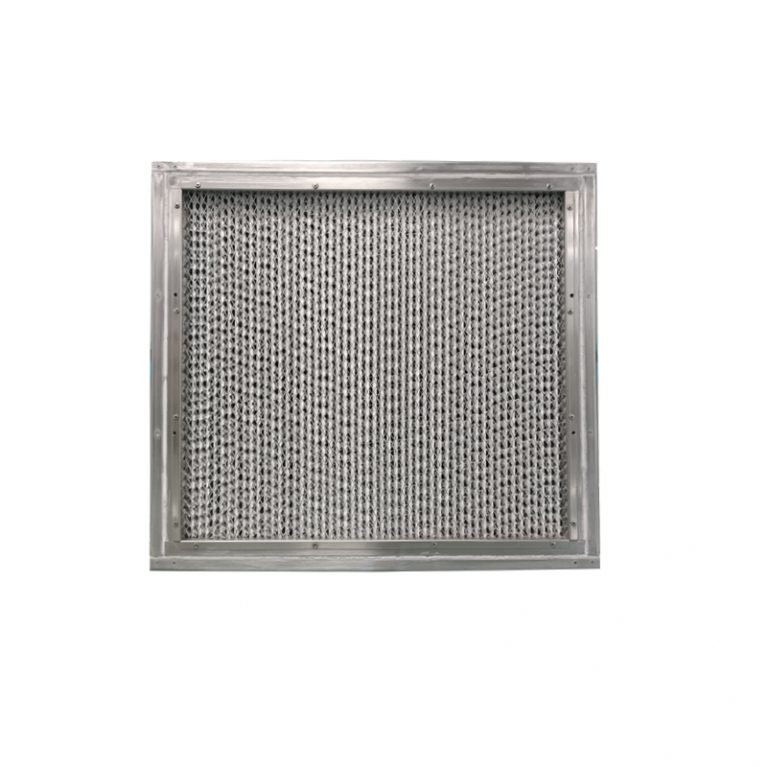
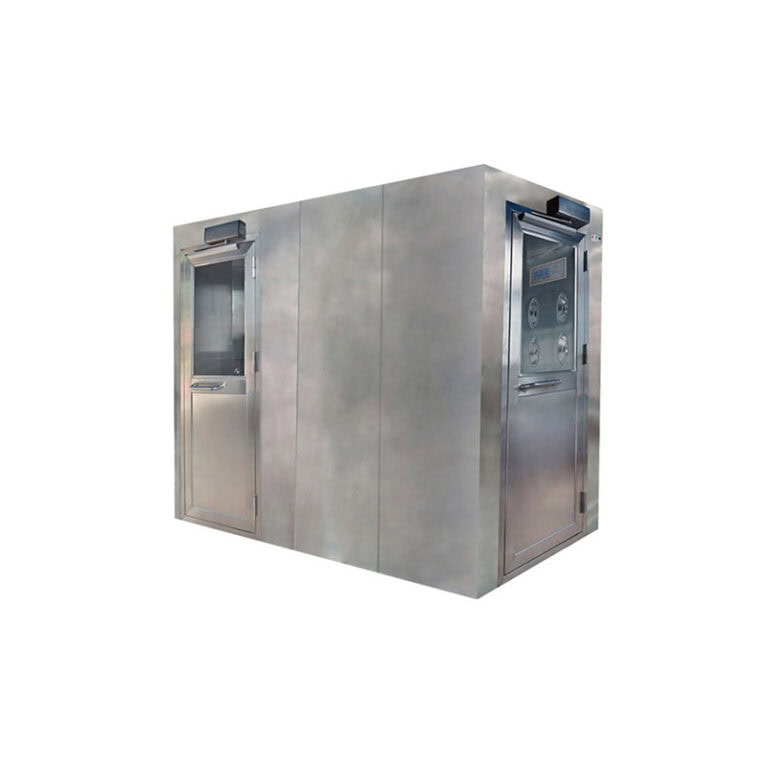
The revised GMP explicitly stipulates that Class A unidirectional‑flow clean zones shall be deployed for critical processes such as filling of sterile preparations, open‑surface liquid‑pharmaceutical handling and aseptic sampling. Class A laminar flow hood represents the most cost‑effective and flexibly‑retrofittable local Class‑A purification equipment available. Many enterprises possess hardware‑compliant units, yet suffer from excessive airborne viable particles and settleable bacteria during dynamic production, and consequently fail on‑site inspections, which arises from ill‑conceived air‑distribution design, improper installation clearance and insufficient validation activities.
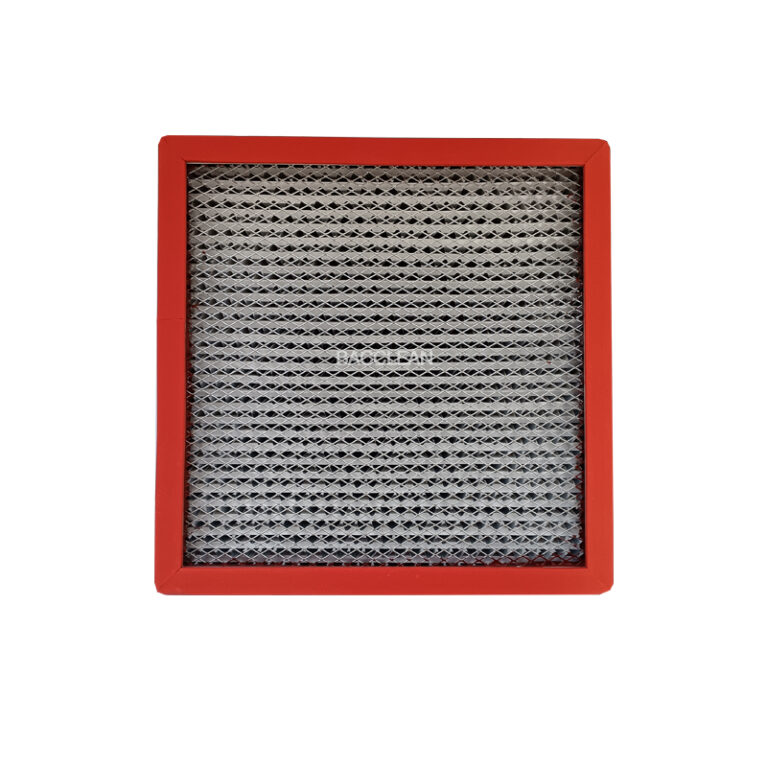
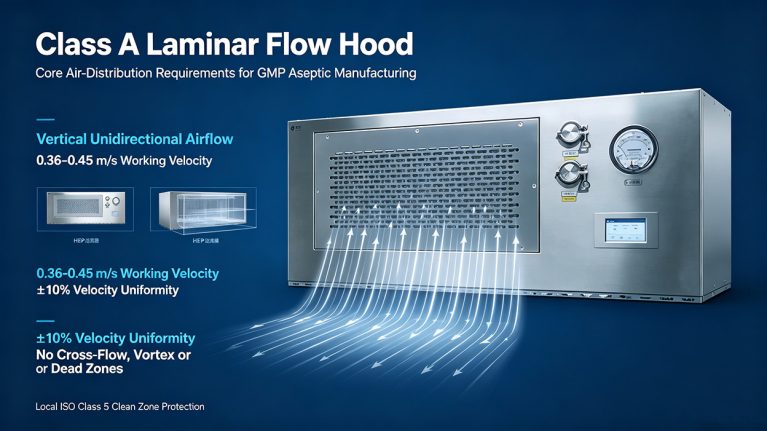
Core acceptance criteria for qualified air distribution of Class A laminar flow hood: full‑range vertical unidirectional air supply; working‑zone air velocity stably maintained at 0.36‑0.45 m/s; overall‑face air‑velocity uniformity deviation ≤ ±10 %; absence of cross‑flow, vortex and dead zones. Major contributors to airflow turbulence include uneven fan air pressure, degraded flow‑equalizing performance of plenum chamber, mounting‑seal leakage of HEPA filters, insufficient clearance between equipment and wall/ceiling surfaces, and airflow obstruction induced by operator activities.
From the equipment‑design perspective, high‑grade Class A laminar flow hoods adopt fully‑enclosed plenum chambers integrated with integral flow‑equalizing membranes, replacing conventional simple flow‑equalizing plates. Such configuration converts turbulent air pressure into uniform static‑pressure discharge and guarantees consistent air discharge across the entire filter face. Variable‑frequency constant‑air‑velocity systems automatically compensate for airflow decay caused by filter dust accumulation, maintaining compliant air velocity over service time and preventing the common phenomenon where newly‑commissioned units pass acceptance yet exhibit insufficient air velocity after half‑year operation.
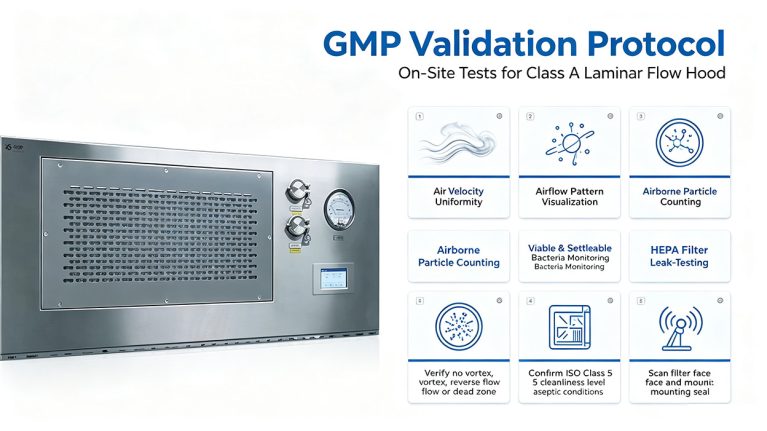
On‑site GMP validation consists of five pivotal tests: air‑velocity uniformity test, airflow pattern visualization test, airborne particle counting test, airborne viable particle & settleable bacteria monitoring, and filter leak‑testing. Smoke visualization shall be implemented in airflow pattern testing to directly verify the absence of vortex, reverse flow and dead zones. Dynamic testing shall simulate routine operator manipulation and equipment operating conditions to sustain compliant clean‑room classification under realistic production scenarios.
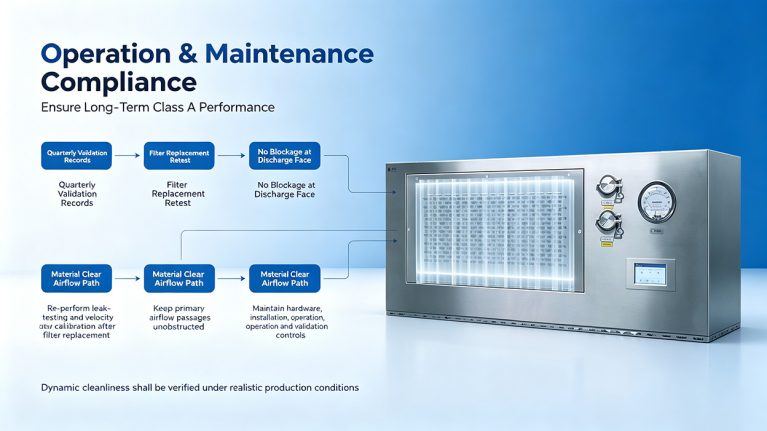
Compliance essentials for operation‑maintenance and validation: Enterprises shall establish quarterly validation records. Leak‑testing and air‑velocity calibration must be reperformed upon each filter replacement. Blockage against the discharge face of laminar flow hoods is strictly prohibited during daily operation. Workplace materials shall be positioned away from primary airflow passages. Full‑dimension controls covering hardware, installation, operation‑maintenance and validation shall be enforced to ensure long‑term compliance of Class A laminar flow hoods with GMP aseptic‑production requirements.
