
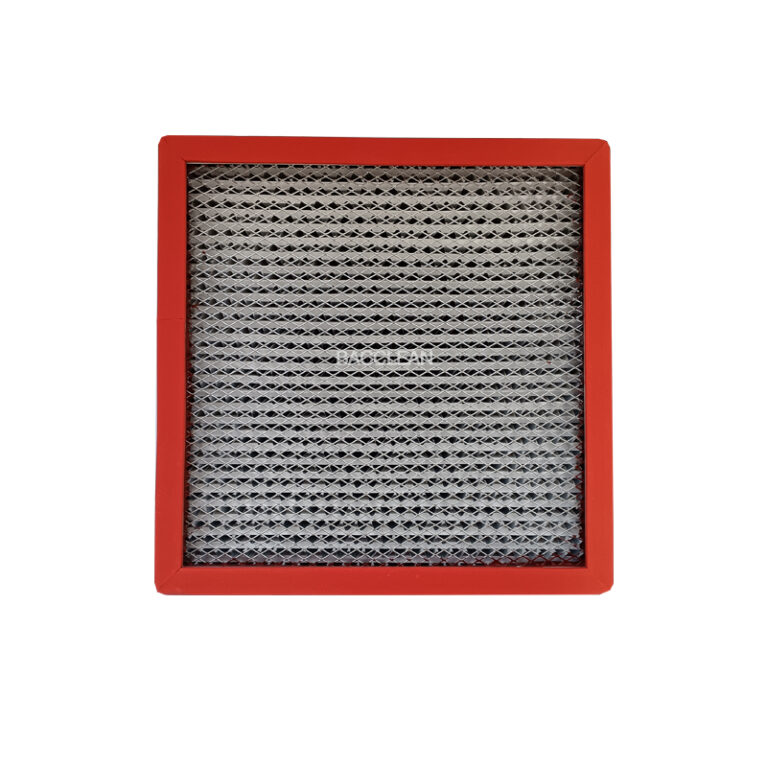
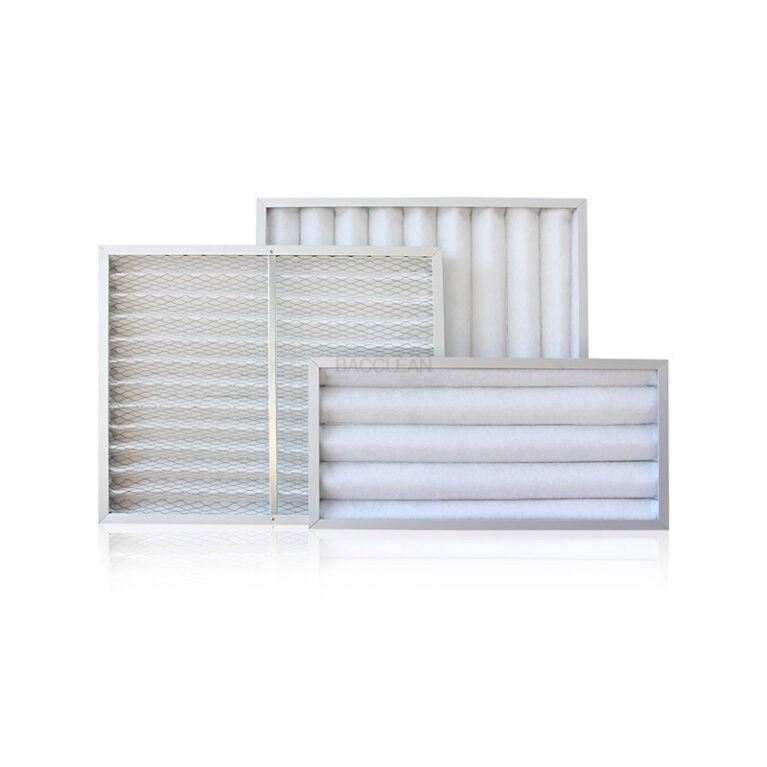
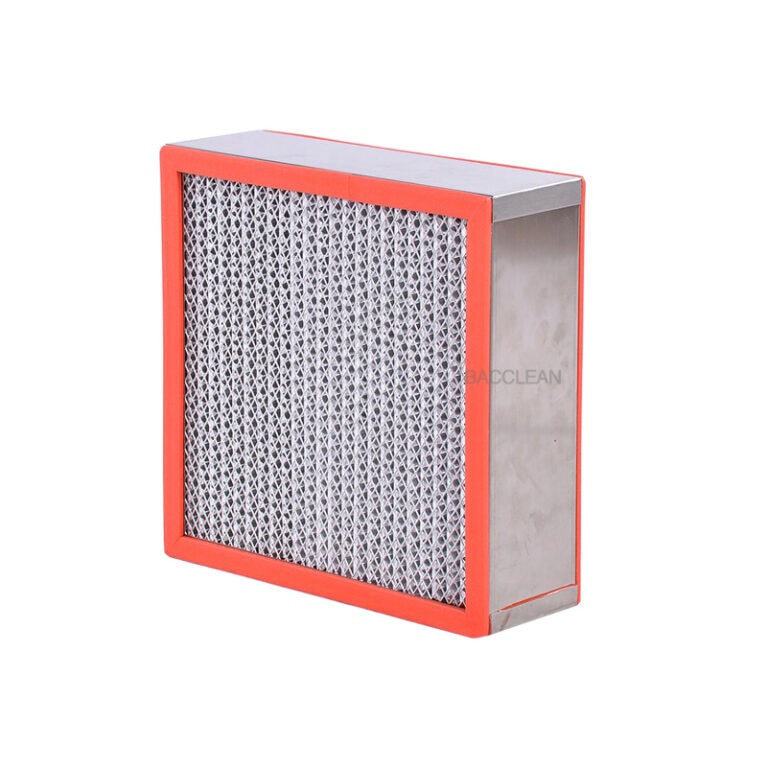
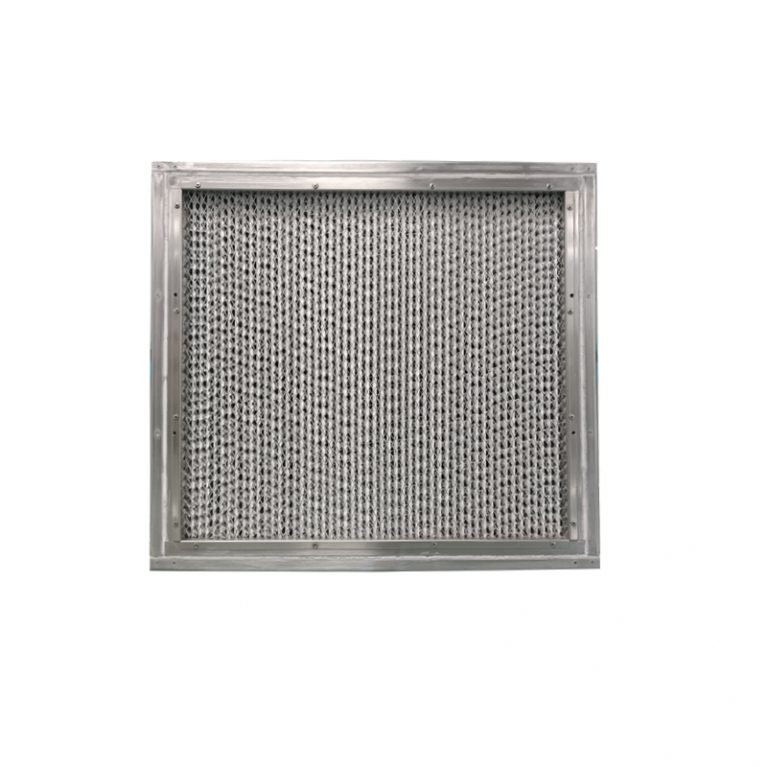
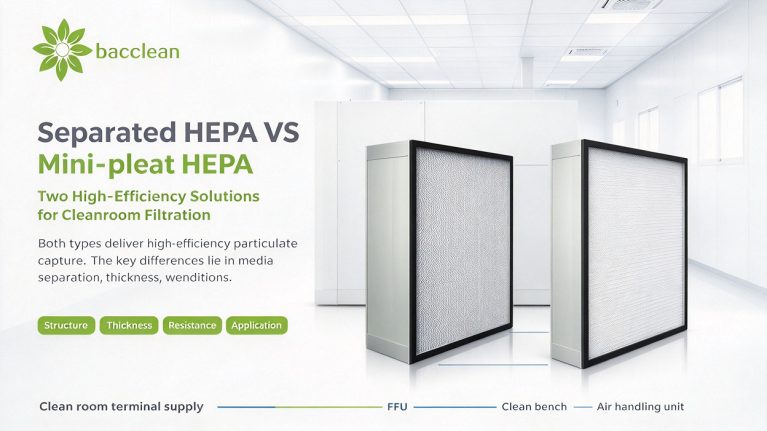
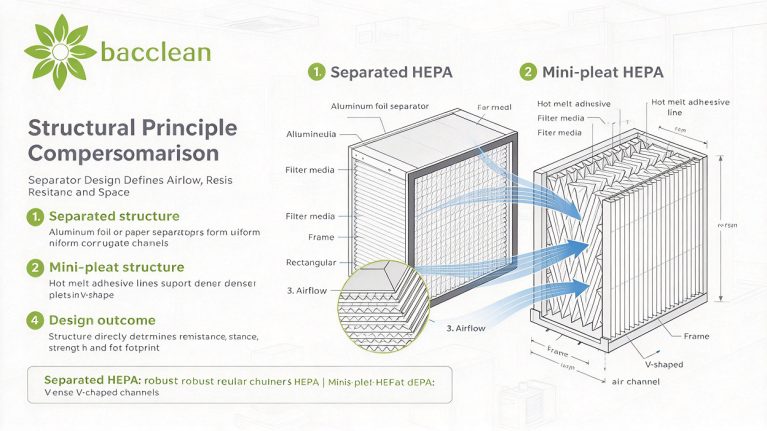
Different Separation Structure Separated HEPA filters use aluminum foil, kraft paper or offset paper as separators to form uniform corrugated air channels for folded filter media. Mini-pleat HEPA filters adopt hot melt adhesive lines to separate filter media. The filter paper is folded more densely to form V-shaped or W-shaped air channels.
Thickness & Weight Separated HEPA filters are generally thicker and heavier, with common thicknesses of 120mm, 150mm, 220mm and even 292mm. Mini-pleat HEPA filters are thinner and lighter, typical thickness: 50mm, 69mm, 70mm, 75mm, 90mm. A 50mm mini-pleat filter can often reach the same performance as a 150mm separated HEPA filter.
Resistance & Airflow Performance Thanks to denser pleats and larger effective filtration area, mini-pleat filters have lower initial resistance and more uniform airflow under the same air volume, ideal for energy-saving terminal air supply. Separated HEPA filters feature rigid construction. Air passages remain stable under high airflow and high pressure, suitable for large air handling units and central air conditioning systems with large air volume.
Temperature & Humidity Resistance Among separated HEPA filters, aluminum separator types have excellent high temperature and moisture resistance, perfect for high-temperature drying lines, humid environments and sites with drastic temperature & humidity fluctuations. Paper separator models are cost-effective, yet paper separators may shrink, deform and release particles under unstable ambient conditions, so they are cautiously used in high-grade cleanrooms. Mini-pleat HEPA filters are designed for standard clean environments, with a maximum operating temperature around 80℃, not suitable for high-temperature working conditions.
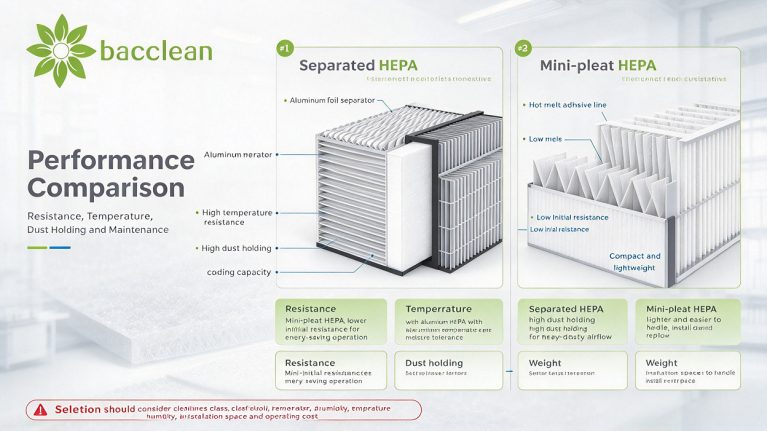
Dust Holding Capacity & Service Life Separated HEPA filters have stable rectangular channels and high dust holding capacity, fit for long-term heavy-duty operation. V-shaped channels of mini-pleat filters enable even dust accumulation with gentle resistance rise, offering competitive service life in normal clean environments. Service life also depends on dust concentration, pre-filter configuration, operating airflow and replacement differential pressure setting.
Installation & Maintenance Mini-pleat filters are compact and lightweight for easy handling, installation and replacement. They are widely matched with FFUs, clean benches, HEPA supply air outlets and ceiling terminals with limited space. Separated HEPA filters are bulky and require larger installation space during replacement, while their high structural strength makes them suitable for large air handling units and central air supply systems.
Application Selection Guide Mini-pleat HEPA is preferred for FFUs, clean benches, ceiling HEPA boxes, ISO5/ISO7/ISO8 cleanroom terminals, limited ceiling space and energy-saving requirements. Separated HEPA is the better choice for large air handling units, central air conditioning terminals, high airflow supply, high temperature/humidity conditions and scenarios requiring high mechanical strength. For high-grade sterile areas and GMP high-risk zones, liquid-seal HEPA filters are further recommended to improve sealing integrity and leak-test stability.
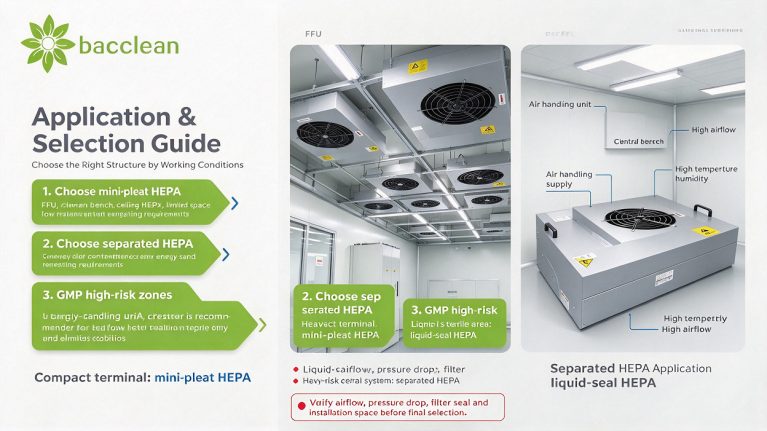
Quick rule of thumb: Choose mini-pleat when space is limited, energy saving is required, or used for FFU & ceiling terminal; Choose separated HEPA for large airflow, high temperature resistance and central air handling units.
