
1. Risk Boundary in Selection: Distinguish Clean Benches from Biosafety Cabinets to Avoid Misuse
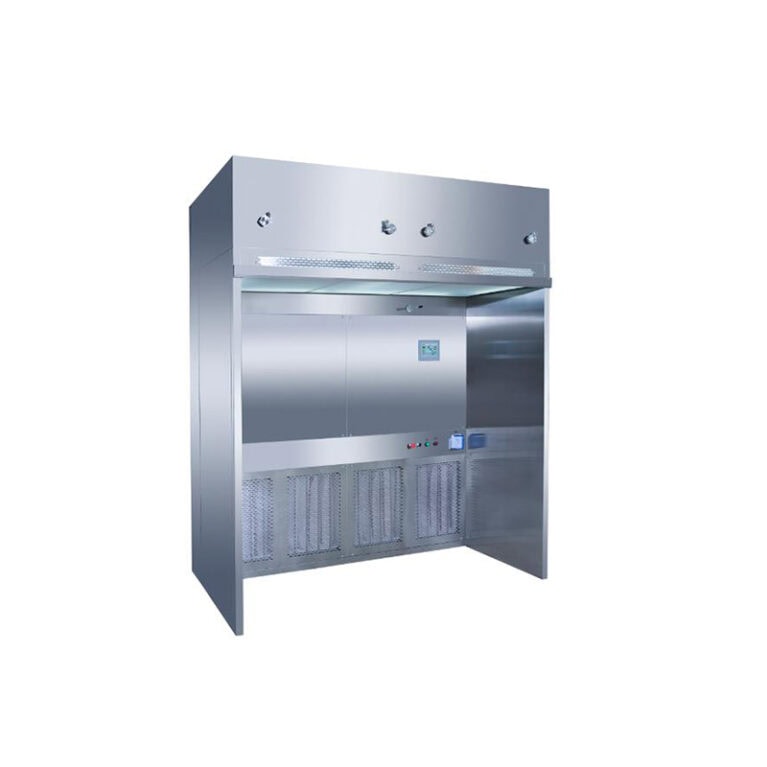
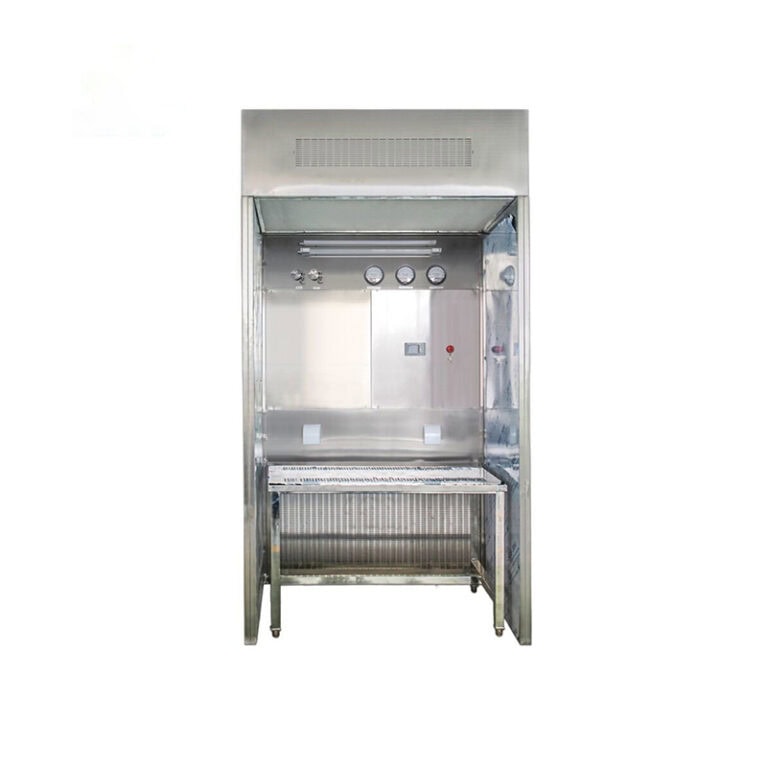
This is the most common safety misunderstanding in university laboratories and a key focus of laboratory safety inspections. A clean bench is a positive-pressure unidirectional-flow device. Its core function is to supply clean air to protect samples or test pieces, and it does not protect operators.
-
The airflow of a horizontal flow clean bench blows directly toward the operator’s face, and aerosols generated will blow straight at personnel. It is prohibited for operations involving pathogenic microorganisms, pathogenic bacteria, infectious bacterial liquid or virus samples.
-
Although the airflow of a vertical flow clean bench flows downwards with a lower risk of aerosol overflow, it is still a positive-pressure device without a negative-pressure exhaust filtration system. It is also not suitable for experiments with highly pathogenic microorganisms.
-
Experiments involving pathogenic bacteria, infectious materials, viruses and high-risk biological aerosols must be carried out in Class II or higher biosafety cabinets. It is a major safety hazard to substitute clean benches for such operations.
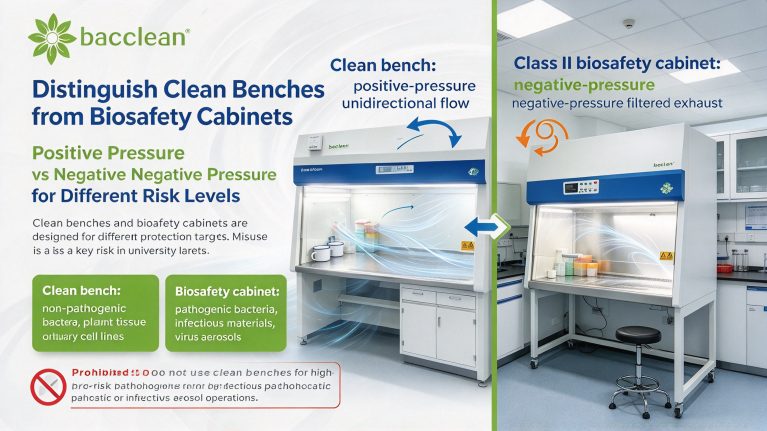
Clean benches can only be used for ordinary non-pathogenic bacteria, yeast, mold, plant tissue culture, non-infectious cell lines, and aseptic dispensing of physicochemical samples in teaching experiments.
2. Pre-operation Safety Inspection
-
Check the power supply circuit, plug and control panel for damage, aging and leakage traces. Never operate the control panel with wet hands. In case of circuit failure, abnormal fan noise or burning smell, cut off the power immediately and report to the laboratory administrator. Do not start the faulty equipment.
-
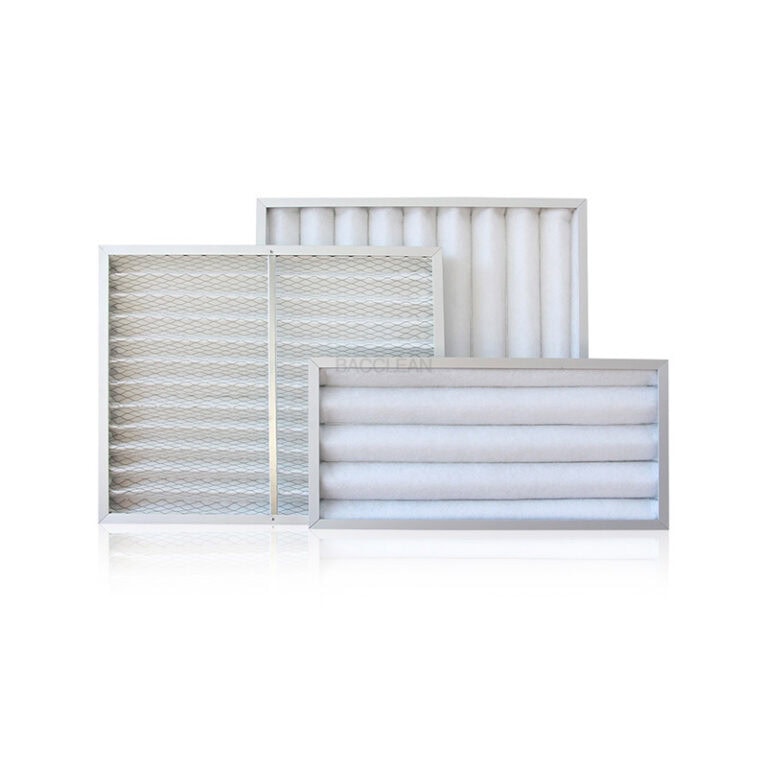
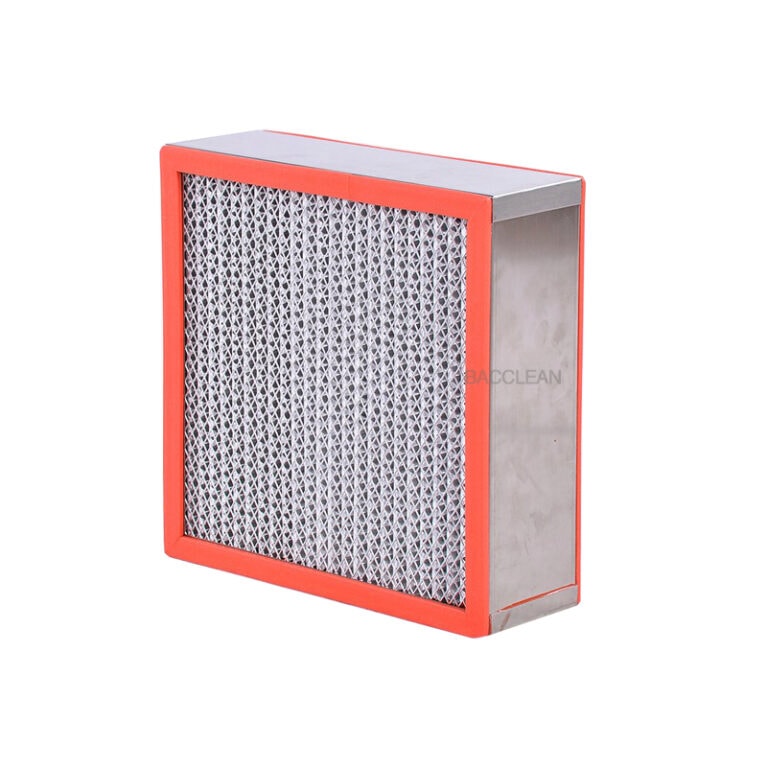
Confirm the emergency stop button is reset. Check whether the differential pressure and wind speed readings are normal, and review the differential pressure records of primary and HEPA filters. Do not start experiments if the resistance exceeds the limit or the air volume is insufficient, otherwise the cleanliness will fail.
-
Clear all leftover consumables, centrifuge tubes, waste liquid, discarded culture medium and scraps inside the chamber. Residual bacterial liquid and culture medium are prone to miscellaneous bacteria growth and will disturb the laminar airflow.
-
Check whether the UV lamp and lighting work properly, and verify the UV interlock function: the UV lamp should automatically power off when the sash is opened. Equipment with failed interlock is forbidden to use, to prevent UV radiation injury to eyes and skin.
-
Check the surrounding environment in advance: place the equipment away from doors, windows, air-conditioning outlets and busy aisles. External airflow impact will break laminar flow and bring external contaminants. Do not stack cartons, reagent bottles or sundries around the bench; reserve space for ventilation and emergency evacuation.
3. Safety Specifications for Startup, Pre-purging and Disinfection
-
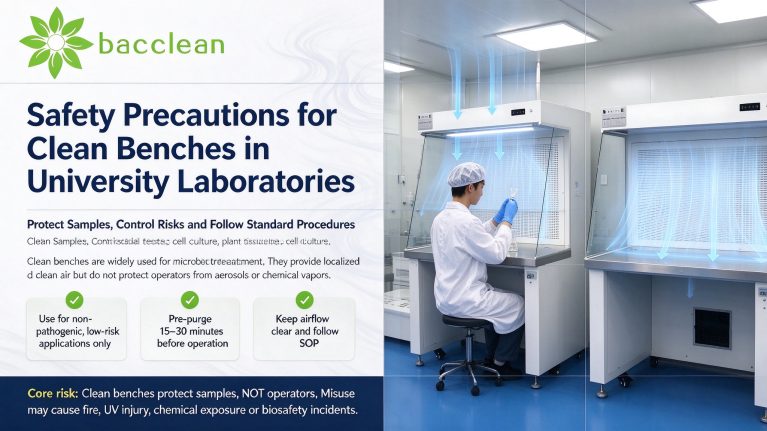
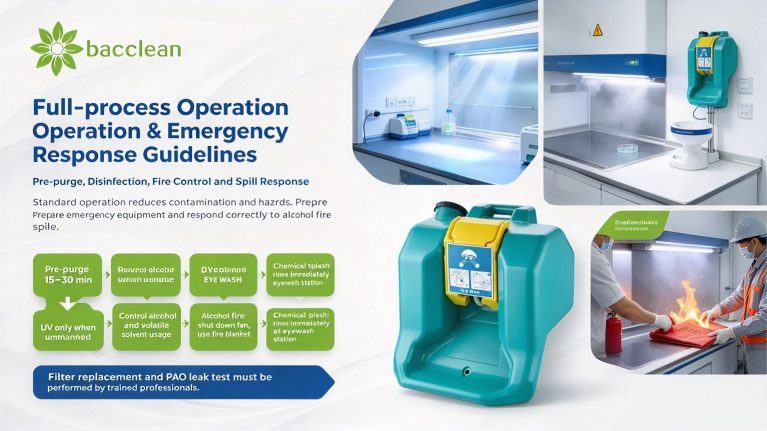
Startup sequence: Turn on the fan first and pre-purge for 15–30 minutes. If the equipment has been shut down for more than 24 hours, just disinfected, or fitted with new filters, extend pre-purging to more than 30 minutes to discharge accumulated dust inside the duct and chamber. Start the experiment only after the wind speed stabilizes within the standard range.
-
UV disinfection safety: The UV lamp can only be used for timed disinfection when no one is present and the sash is closed. UV light can damage the cornea and burn skin. It is forbidden to reach or lean into the chamber while the UV lamp is on. After disinfection, run the fan for more than 15 minutes to fully decompose ozone before operation. Ozone irritates the respiratory tract and may cause sore throat and cough.
-
Safety of disinfectant reagents: 75% ethanol is preferred for surface disinfection. Use an appropriate amount when spraying and wiping. Do not spray a large volume of alcohol directly onto the HEPA filter. Ethanol is flammable; accumulated alcohol vapor in the confined chamber may catch fire when encountering static electricity or electric sparks. Wait until the alcohol fully volatilizes before starting the experiment. Do not pour concentrated strong acid or strong alkali directly on the bench surface.
4. Safety Control During Experiment Operation
-
Personal protection: Wear a clean lab coat, disposable gloves and clean cap before entering the operation zone. Long hair must be tucked inside the cap, and a protective mask is required. Wear goggles additionally when handling volatile and irritating reagents. Ordinary cotton gloves are not allowed, as cotton fibers easily shed and contaminate samples. Replace gloves immediately if torn or contaminated by bacterial liquid or reagents.
-
Material placement safety: All consumables and reagents shall be cleaned and disinfected outside before moving into the chamber. Place items along both sides as much as possible. Do not block the rear HEPA air outlet or return air vent. Follow the principle of “clean upstream, contaminated downstream”: place uncontaminated samples near the filter side, and treated samples and waste downstream. Avoid stacking items too high, which will block airflow and form eddies.
-
Reagent and waste liquid management: Minimize the storage of volatile organic solvents such as methanol, acetone and chloroform inside the bench. If a small amount must be used, an external exhaust clean bench is preferred. For ordinary internal-circulation models, volatile reagents will accumulate continuously inside the chamber and cause poisoning after inhalation. Collect experimental waste liquid in sealed waste cups. Do not leave waste liquid open on the bench, and transfer it to the laboratory waste liquid bucket in time instead of storing it in the chamber for a long time.
-
Operation control: Avoid large arm movements, rapid pulling of arms and violent shaking of centrifuge tubes. Severe disturbance will destroy the unidirectional laminar flow, leading to sample contamination and higher risk of aerosol diffusion. Open caps and pipette bacterial liquid gently to reduce liquid splashing.
-
Open flame control: Most clean benches in universities prohibit the use of alcohol lamps inside. Ethanol vapor mixed with open flame can easily cause flash fire. Electric sterilizers for inoculation loops are preferred for aseptic inoculation. If alcohol lamps are required for teaching purposes, strictly control the alcohol volume and keep them away from paper consumables. Confirm the flame is completely extinguished after the experiment.
5. Safe Shutdown Procedure after Experiment
-
Seal and store samples first. Remove all consumables, centrifuge tubes, petri dishes and waste from the bench. No samples or waste liquid shall be left inside. Dispose of contaminated waste by classification as laboratory hazardous waste and biological waste, and transfer it as required; do not pile it inside the bench for a long time.
-
Wipe the bench surface, inner wall and baffle with lint-free cloth and disinfectant along the airflow direction from back to front. After wiping, keep the fan running for another 10–15 minutes to blow out suspended aerosols and volatiles from the chamber.
-
Turn off the lighting and fan. If UV disinfection is needed, close the sash before starting UV timing. Remember to turn off the UV power after disinfection to avoid long-time idling damage to the lamp tube and continuous ozone generation.
-
Cut off the main power supply and cover with a dust cover for long-term idle equipment, and complete equipment registration.
6. Equipment Maintenance and Periodic Verification Safety
-
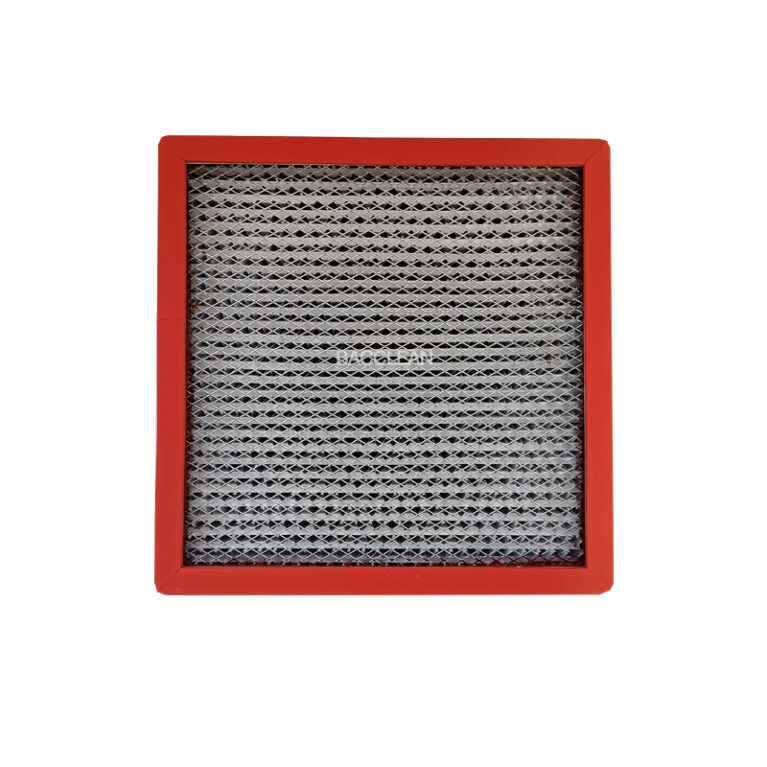
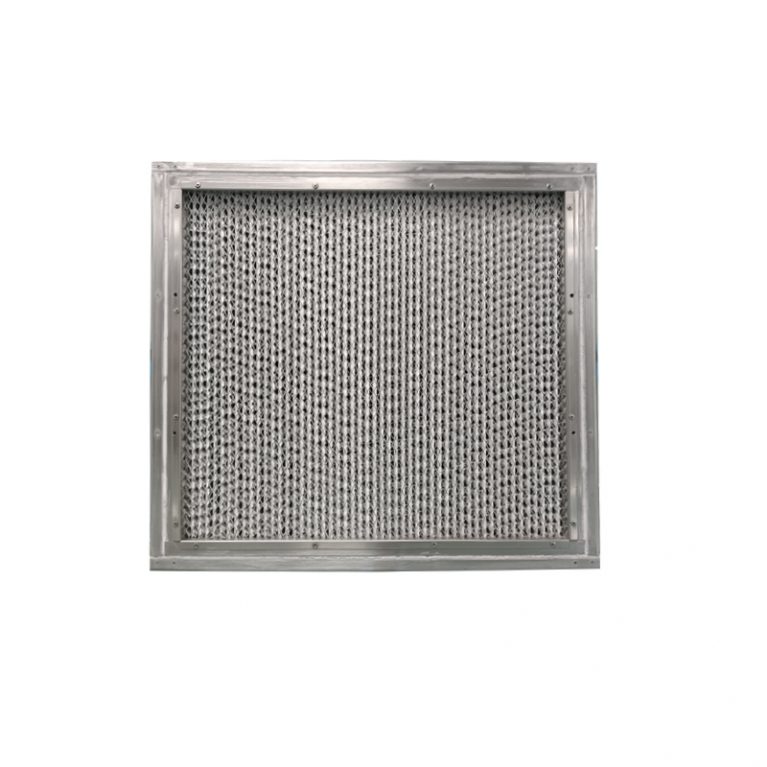
Clean or replace primary filters regularly according to differential pressure. Wear masks and gloves during replacement, collect dust centrally and do not beat or blow the filter casually in the laboratory. The HEPA filter is a core component and shall not be disassembled by students. HEPA replacement and PAO leak test must be performed by professional personnel. Moisture or damage to the HEPA media will lead to contamination leakage.
-
Inspect fan shock absorbers, circuit terminals, UV lamp tubes, interlock switches and alarm systems regularly. Report faults to the laboratory supervisor immediately and do not disassemble the electric control box for repair by yourself.
-
Conduct particle counting, wind speed testing and PAO leak test periodically and keep records as required by the laboratory management system. Stop using the equipment and post an out-of-service label if the test fails. Restart it only after maintenance and passing re-verification.
-
For anti-static clean benches used in chip and optical component experiments, confirm reliable grounding. When handling electrostatic-sensitive components with ordinary models, wear anti-static wristbands to prevent electrostatic breakdown of samples and avoid static ignition of organic vapor.
7. Emergency Response
-
Alcohol fire: Shut down the fan immediately, and extinguish the fire with a dry powder fire extinguisher or fire blanket. Do not use water.
-
Reagent splashed on skin or eyes: Rinse immediately at the nearest emergency eyewash/shower station and seek medical attention promptly.
-
Large-area spill of bacterial liquid contaminating the bench: Stop operation, secure samples, cover the contaminated area with appropriate disinfectant for sufficient contact time, and follow the laboratory biological contamination emergency plan.
-
Electric leakage, abnormal noise or smoke from equipment: Cut off the main power supply at once, evacuate personnel and report to the administrator. Do not restart the equipment.
8. Additional Laboratory Management Requirements
-
Implement the usage log system. Record the user, time, experiment content and equipment status for each use.
-
Organize regular training for students to distinguish clean benches, biosafety cabinets and fume hoods, and prevent misuse.
-
Post clear labels on equipment, indicating equipment type, applicable experiment scope, prohibited operations and emergency contact teacher.
Resumen
The safety of clean benches in university laboratories relies on two core bottom lines: do not perform high-risk biological aerosol experiments in clean benches, and control hazards including alcohol, organic solvents, UV radiation and electrical risks. Most safety accidents occur because students are unfamiliar with equipment principles, skip pre-purging and disinfection procedures for convenience, or confuse clean benches with biosafety cabinets. Strict implementation of the above specifications can protect samples from contamination and prevent burns, poisoning, fire and biological contamination incidents at the source.
