
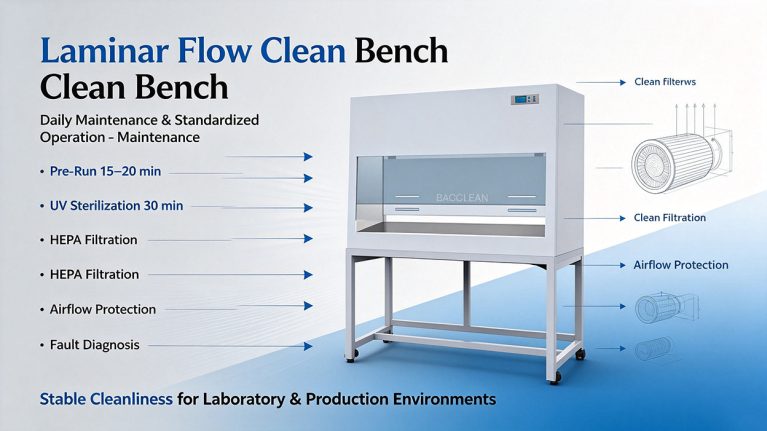
Standardized daily operation serves as the foundation for fault reduction and service‑life extension. Prior to operation, start up the equipment for a 15‑20 min pre‑run, together with 30‑min UV lamp sterilization to thoroughly eliminate residual microorganisms and dust inside the chamber. During operation, avoid blocking air supply outlets and return‑air inlets; do not place sundries to obstruct airflow passages. Violent movements that disturb airflow shall be prohibited so as to prevent intrusion of external contaminants. Upon completion of operation, clear materials and residues on the work surface, wipe and disinfect the work surface and inner chamber, turn off the UV lamp and fan, and prevent equipment loss caused by prolonged no‑load running. Open‑flame operations and preparation of corrosive reagents inside the equipment are strictly forbidden to avoid damage to filters and chamber structures.
Hierarchical periodic maintenance constitutes the core of operation‑maintenance work, divided into four modules: daily cleaning, monthly maintenance, quarterly overhaul and annual replacement.
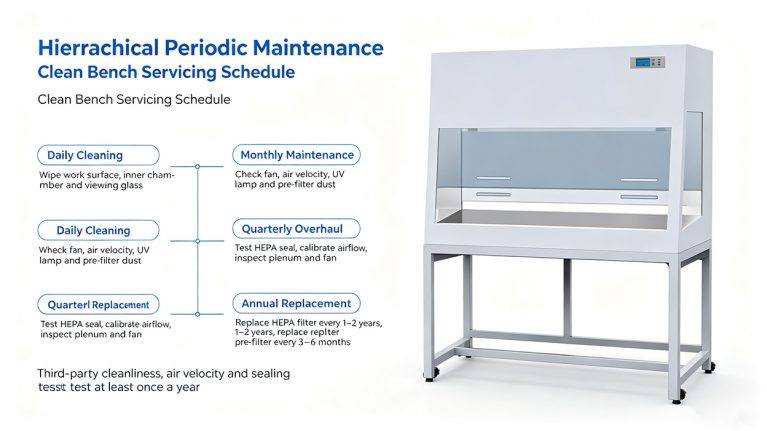
- Daily Cleaning: After daily use, wipe the work surface, inner wall and viewing glass with lint‑free cloth and 75 % alcohol to remove surface dust and residual contaminants; clear sundries from supply‑air and return‑air outlets every week to ensure unobstructed airflow.
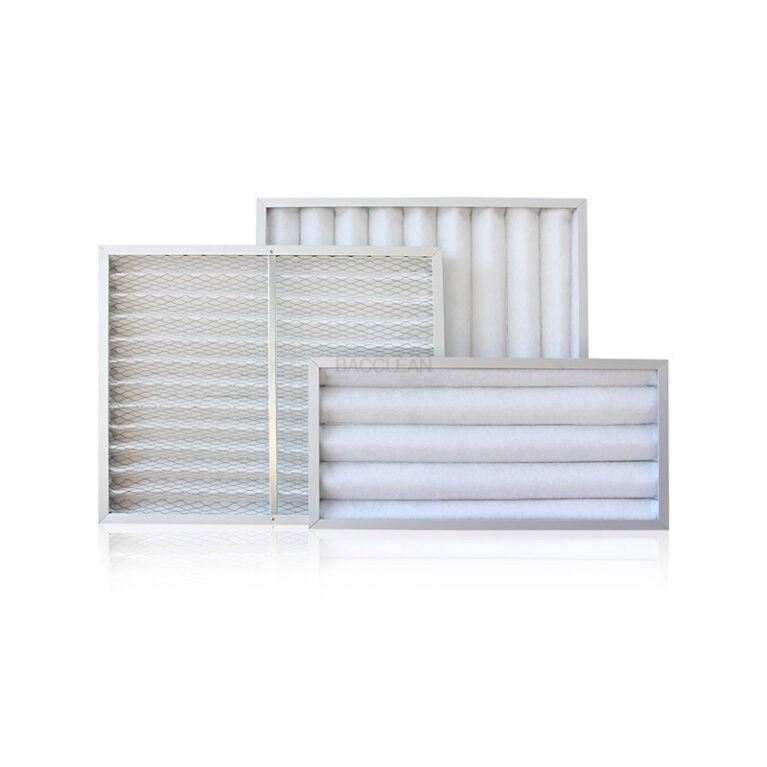
- Monthly Maintenance: Inspect fan operating status and stability of supply‑air velocity; verify sterilization performance of UV lamps; fasten electrical connections; wipe surface dust on pre‑filters to prevent blockage.
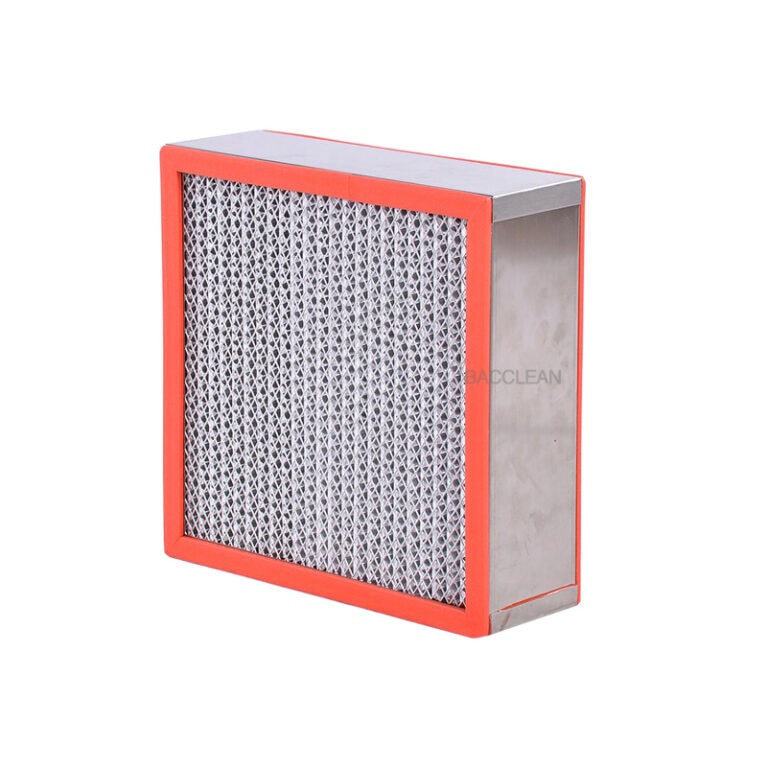
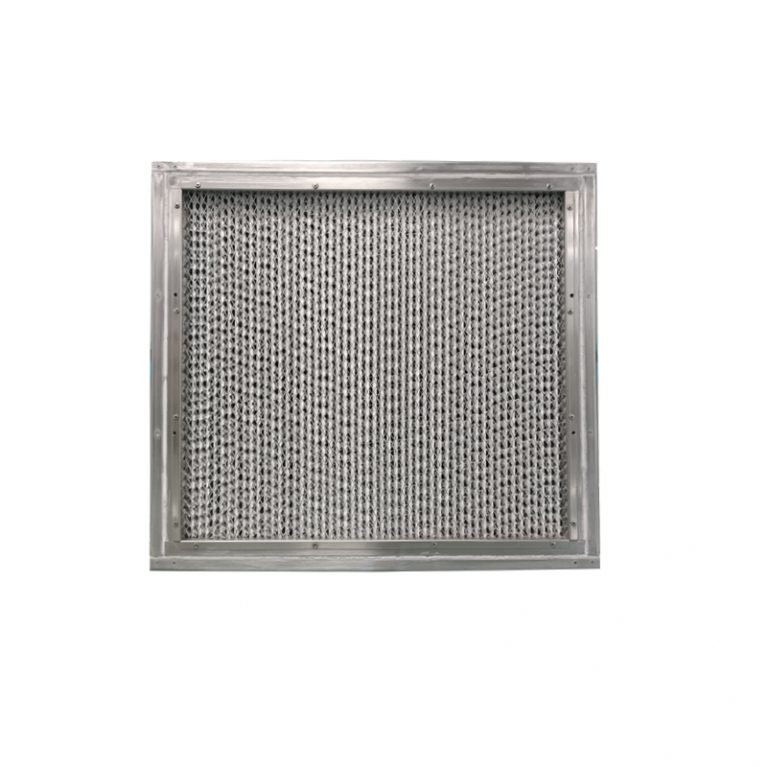
Quarterly In‑depth Overhaul: Fully inspect sealing performance of HEPA filters, eliminate air‑leakage risks, calibrate supply‑air velocity, test cleanliness indicators of the equipment, remove dust accumulated inside the plenum chamber, check shock‑absorbing assemblies and fan conditions, and promptly resolve abnormal noise and air‑velocity fluctuation.
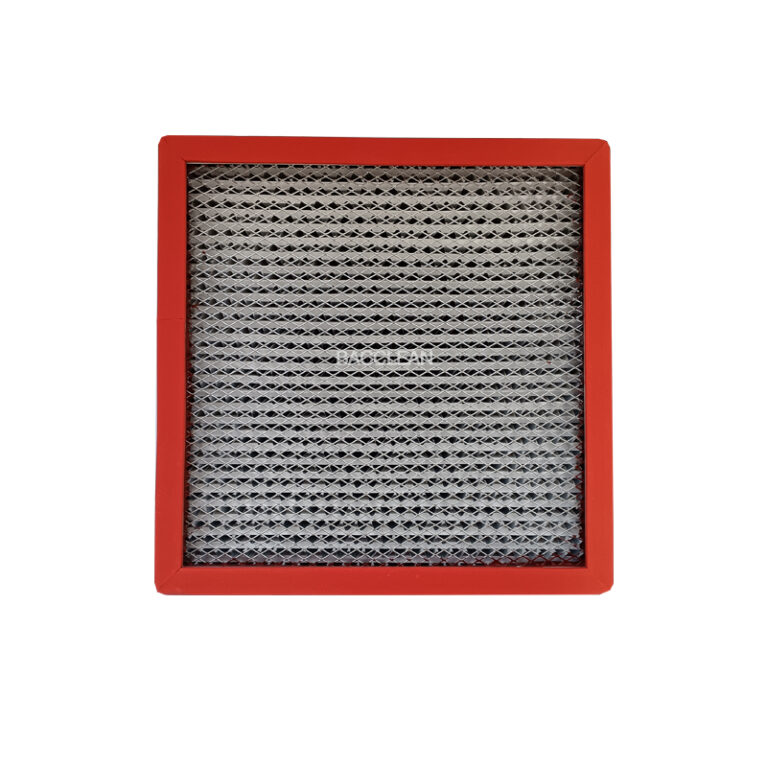
Annual Core Component Replacement: As consumable parts, HEPA filters feature a service life of 1‑2 years under normal operating conditions and shall be replaced annually. This prevents excessive cleanliness level caused by filter ageing and declined filtration efficiency. Pre‑filters shall be replaced every 3‑6 months; the replacement interval can be adjusted flexibly according to dust concentration of the operating environment.
Precise diagnosis and countermeasures are sorted out for frequently‑encountered industrial malfunctions.
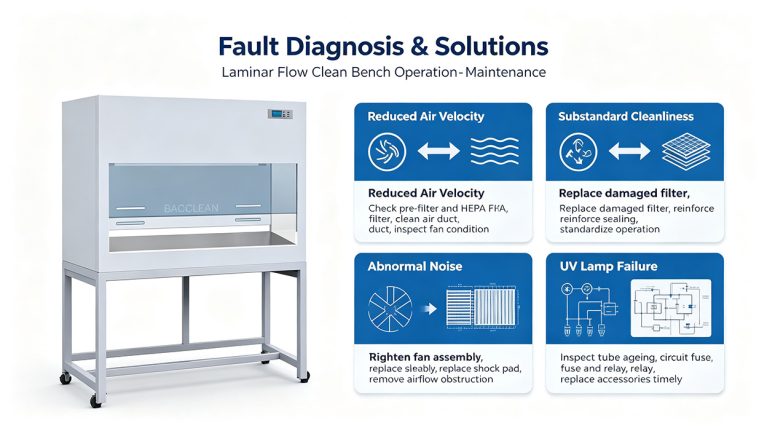
- Reduced air velocity and weak air supply: Mostly caused by blocked pre‑filters / HEPA filters, dust accumulation & wear on fans or blocked air ducts. Countermeasures include cleaning pre‑filters, replacing aged HEPA filters, removing dust inside air ducts and overhauling fan conditions.
- Substandard cleanliness level and frequent sample contamination: Root causes cover damaged filters, sealing air leakage, non‑standard operation and failed UV lamps. Take actions including filter replacement, reinforcement of sealing structures, standardization of operating procedures and UV tube replacement.
- Abnormal operating noise and excessive sound level: Mainly induced by loose fans, failed shock absorption and airflow turbulence. Fasten fan assemblies, replace shock‑absorbing pads and check for airflow‑obstructing factors.
- Non‑illuminating UV lamp and disabled sterilization: Inspect tube ageing status, circuit fuses and relay conditions, replace accessories and repair circuits in a timely manner.
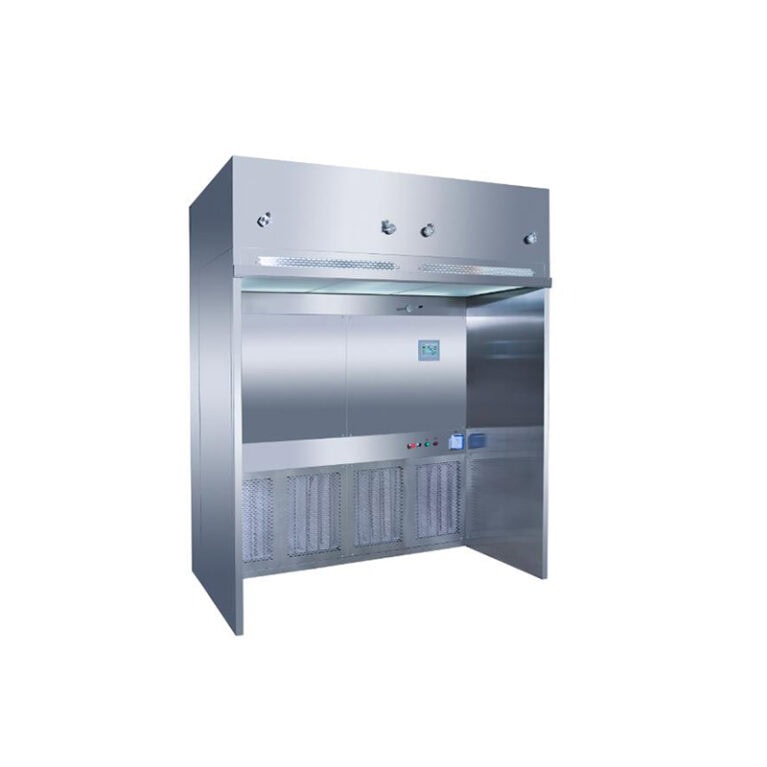
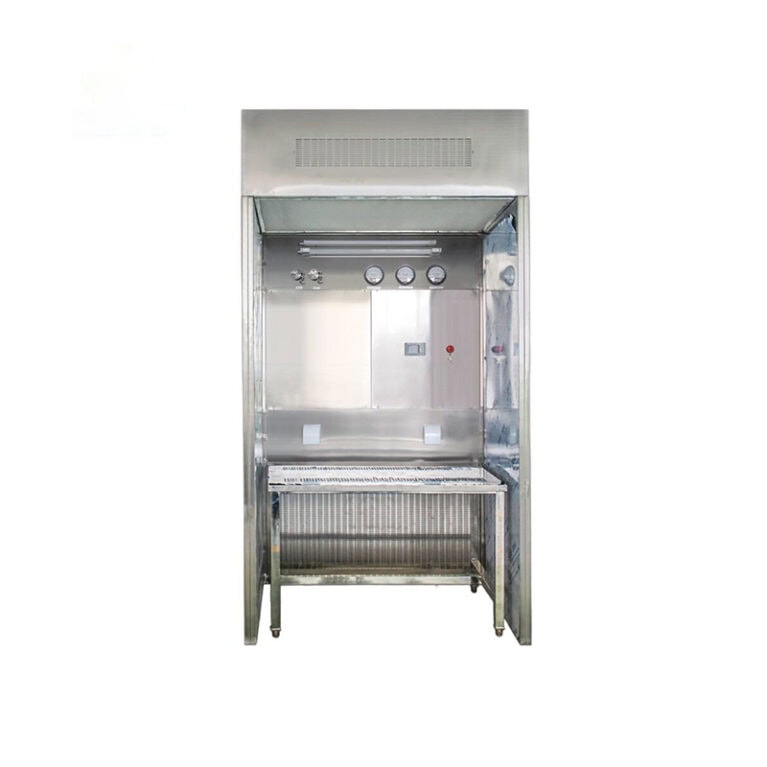
Furthermore, professional calibration and testing shall be performed periodically. Third‑party testing on cleanliness level, air velocity and sealing performance shall be conducted at least once per year to ensure equipment parameters comply with industrial standards. For long‑term idle equipment, cut off power supply, complete cleaning and implement dust‑proof sealing. Before restart, conduct full‑range sterilization and pre‑run inspection; confirm normal operating conditions before putting into service. Standardized operation‑maintenance can effectively reduce equipment failure rate, extend service life, and consistently maintain high‑precision clean performance of laminar flow clean benches.
