
1. Filtration Efficiency & Leak Test Standard (Basic Quality Requirement)
The efficiency class shall be determined in accordance with EN 1822, including H13 and H14. The label of “Class 100” claimed verbally by suppliers shall not be taken as the only reference.
-
H13: MPPS (Most Penetrating Particle Size) overall efficiency ≥99.95%
-
H14: MPPS overall efficiency ≥99.995%
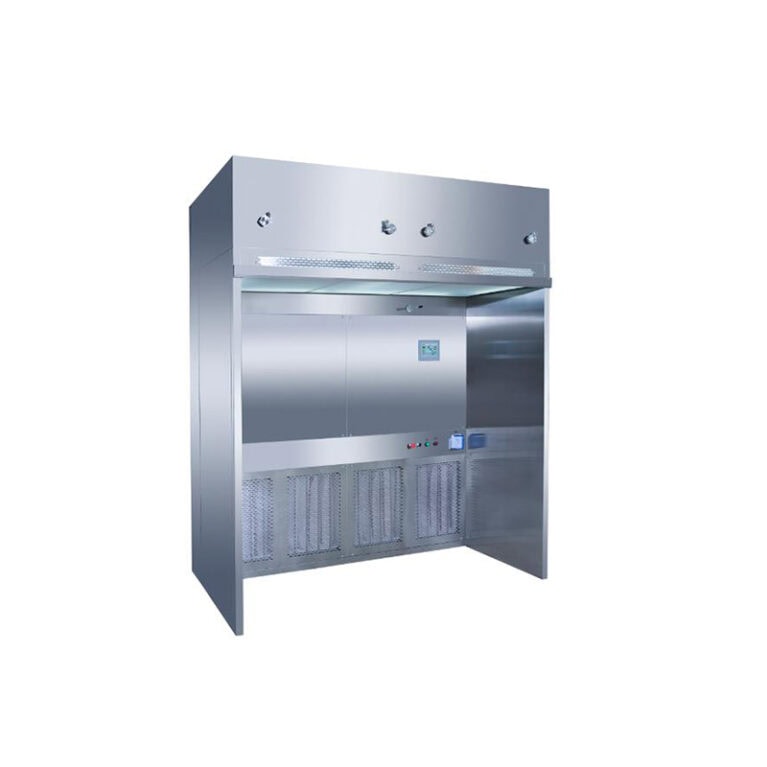
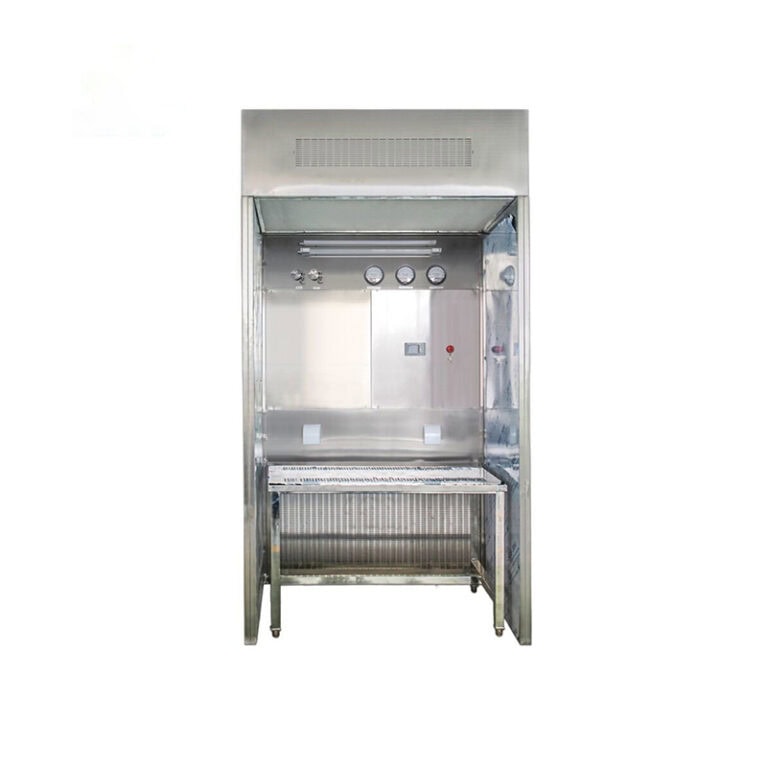
H14 is preferred for high-risk scenarios such as GMP aseptic areas, semiconductor workshops and weighing room exhaust.
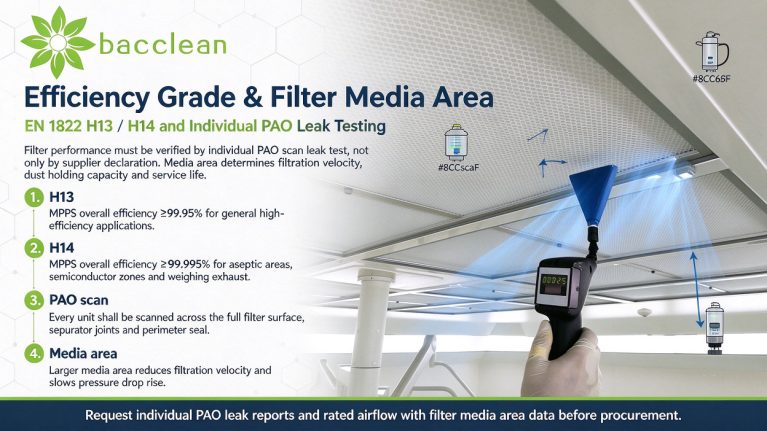
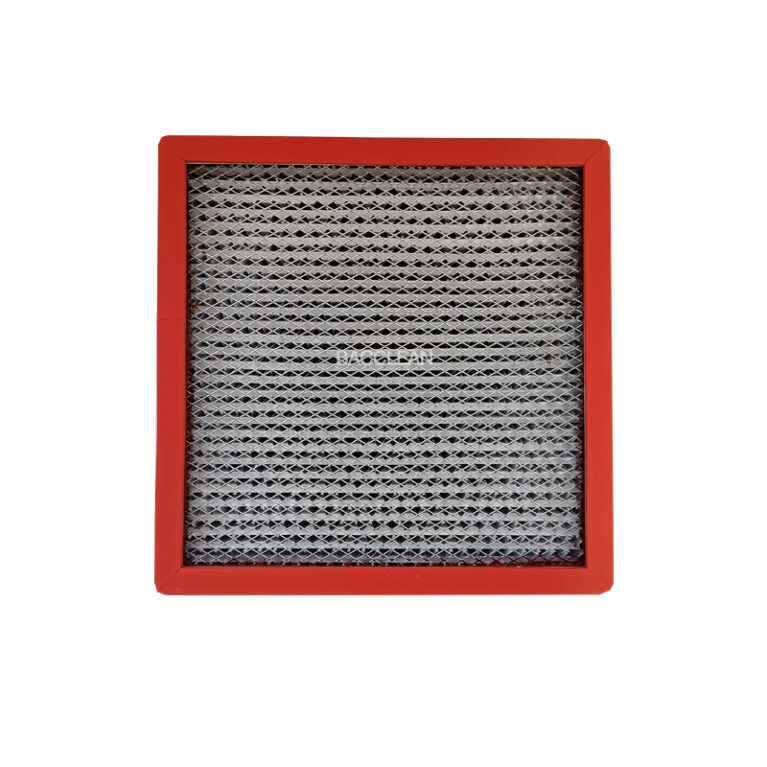
Mandatory requirement for qualified products: Individual PAO scan leak test for every unit, instead of sampling inspection. Leakage points of separated HEPA filters mostly appear at the bonding position between filter media and separators, the glue sealing position between filter media and frame, and gaps of sealing gaskets. Inferior products only adopt sampling inspection. Micro-leakage may exist at bonding gaps of separators, resulting in out-of-spec particle concentration on site after installation, which is difficult to troubleshoot.
Verification tips: Request individual PAO leak test reports delivered together with goods. The scanning records shall cover the entire filter surface, separator joints and peripheral sealing edges. Avoid products that only provide batch type test reports without individual leak records.
2. Filter Media Area & Rated Airflow (Determine Filtration Velocity and Service Life)
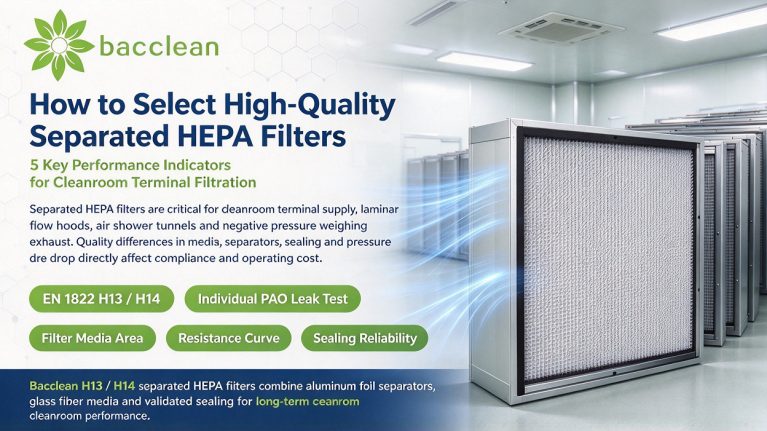
For separated HEPA filters with the same outer frame size and thickness, the pleat pitch and separator spacing vary among manufacturers, leading to a huge difference in the total area of filter media. This is an easily overlooked indicator. The filter media area directly determines filtration velocity. Lower filtration velocity brings stable filtration performance, slow pressure drop increase and higher dust holding capacity.
Reliable suppliers will clearly mark the total unfolded filter media area and rated airflow instead of only providing outline dimensions. For conventional glass fiber filter media, the recommended operating filtration velocity is controlled at 0.03~0.06 m/s. The actual operating airflow is suggested to be kept at 70%~85% of the rated airflow, and long-term operation under full rated airflow shall be avoided.
Identification tips: Under the same airflow, products with larger filter media area perform better. Premium products feature uniform separator spacing and sufficient pleats, without reducing pleats to cut raw material cost. Be cautious if the supplier only provides outline dimensions without filter media area data.
3. Initial Resistance, Final Resistance and Resistance Curve (Matching Fan System)
Initial resistance refers to the pressure loss of a new filter under rated airflow. For H13 separated HEPA filters with aluminum foil separators and glass fiber media, the reasonable initial resistance range is generally 220~280 Pa; H14 models have slightly higher resistance. Lower resistance does not always mean better performance. Unusually low resistance usually comes from reduced filter media area and excessive filtration velocity. It shows favorable resistance at the initial stage, yet the pressure will surge rapidly after dust accumulation and shorten service life.
Qualified suppliers can provide complete resistance rising curves and clearly mark the recommended final resistance value. Normally, the final resistance is set to around twice the initial resistance, serving as the threshold for differential pressure alarm and filter replacement. Inferior products only offer a single initial resistance value without dust loading resistance curves, leaving no basis for later operation and maintenance. This may cause blocked filters, airflow drop, and substandard wind speed of air showers or laminar flow hoods.
During selection, the fan pressure margin shall be calculated comprehensively based on initial resistance plus final resistance, rather than only the initial resistance of new filters.
4. Separator Material, Frame and Structural Rigidity (Adapt to Working Conditions and Prevent Deformation & Air Leakage)
As the skeleton of separated HEPA filters, separators directly determine temperature resistance, moisture resistance and negative pressure resistance:
-
Aluminum foil separator: High rigidity, stable flow channel, certain moisture tolerance; the first choice for most clean air supply and exhaust applications
-
Paper separator: Low cost, vulnerable to moisture, prone to swelling and debonding in humid environment; prohibited for exhaust, high-humidity and frequently cleaned areas
-
Plastic separator: Resistant to weak acid and weak alkali corrosion, suitable for process exhaust with a small amount of chemical vapor for AMC control
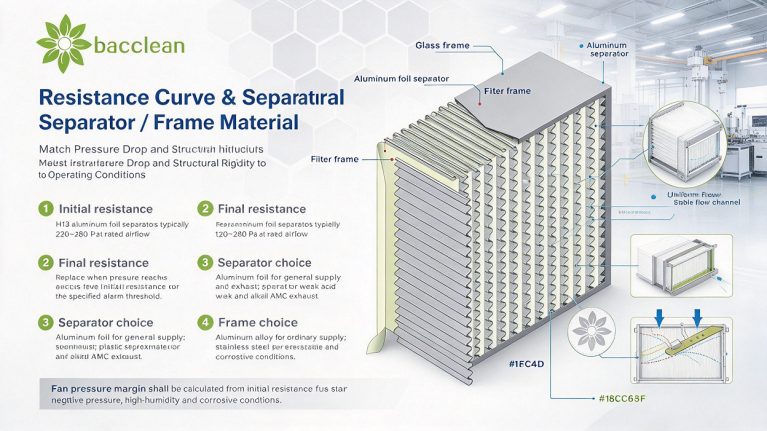
Frame materials include aluminum alloy, galvanized steel and stainless steel. Stainless steel frames are preferred for negative pressure exhaust, high-humidity and corrosive working conditions; aluminum alloy is sufficient for ordinary air supply.
For high-quality products, separators are firmly bonded without virtual bonding or debris shedding. They are resistant to deformation under repeated negative pressure impact. Inferior aluminum foil separators are thin with few bonding points. After repeated negative pressure impact, separators will loosen and filter media will collapse, causing internal leakage.
Sealing gaskets also need to be checked. Silicone and EPDM are commonly used. For semiconductor AMC control projects, silicone-free sealing formulation must be specified to avoid product contamination caused by siloxane precipitation.
5. Sealing Structure and Installation Adaptability (Eliminate Bypass Leakage)
Even premium filter media will lose clean performance once sealing fails. There are two main sealing types: compression sealing and liquid tank sealing.
-
Compression sealing: Rely on uniform pressing plate to compress the sealing gasket. High-quality products feature continuous sealing gaskets with uniform elasticity and flat, non-deformable frames. Diagonal locking during installation is applicable to laminar flow hoods, air shower tunnels and ordinary air outlets.
-
Liquid tank sealing: Applied to high-grade cleanroom ceiling terminal and systems that cannot be shut down frequently. Premium liquid tank frames have high flatness and uniform immersion depth, avoiding overhead or partial separation from the sealing gel.
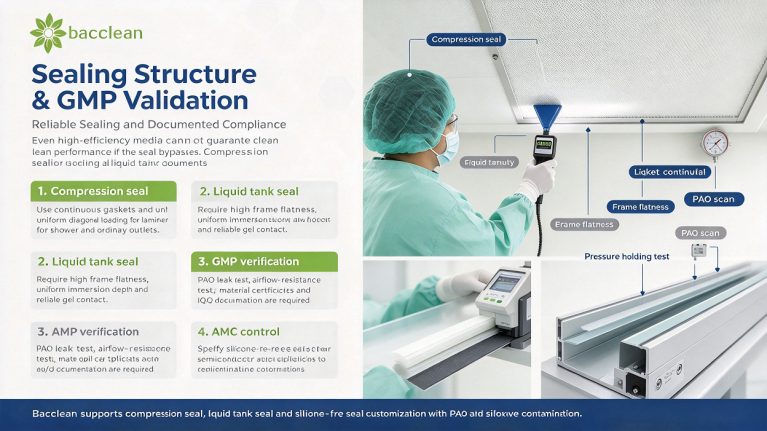
Identification tips: Low-cost products have thin frames prone to warping, and gaps exist at joints of sealing gaskets. Partial air leakage may occur after compression, and continuous alarm at the frame edge during PAO leak test. Qualified filters are controlled for frame flatness before delivery, with integrated sealing accessories and fewer joints.
Supplementary Verification Points
-
Filter media: Ultrafine glass fiber filter media is preferred. Distinguish glass fiber media from PP media; PP media has low temperature resistance and is forbidden for high-temperature working conditions.
-
Temperature resistance: Conventional aluminum foil separated glass fiber filters can be continuously used at ≤80℃. Special high-temperature models are required for high-temperature scenarios.
-
Dust holding capacity: Larger filter media area brings higher dust holding capacity and longer replacement cycle, suitable for exhaust stations with high dust concentration.
-
Delivery documents: Besides PAO reports, request airflow-resistance test reports and material certificates (separator, sealing, filter media).
Quick Checklist to Avoid Pitfalls
Many purchasers only compare outline dimensions and unit price, ignoring the above five indicators, and end up purchasing products with identical appearance but degraded performance. Features of qualified separated HEPA filters: individual PAO leak test, sufficient filter media area, complete resistance curve, separator and frame matching working conditions, and reliable sealing solution.
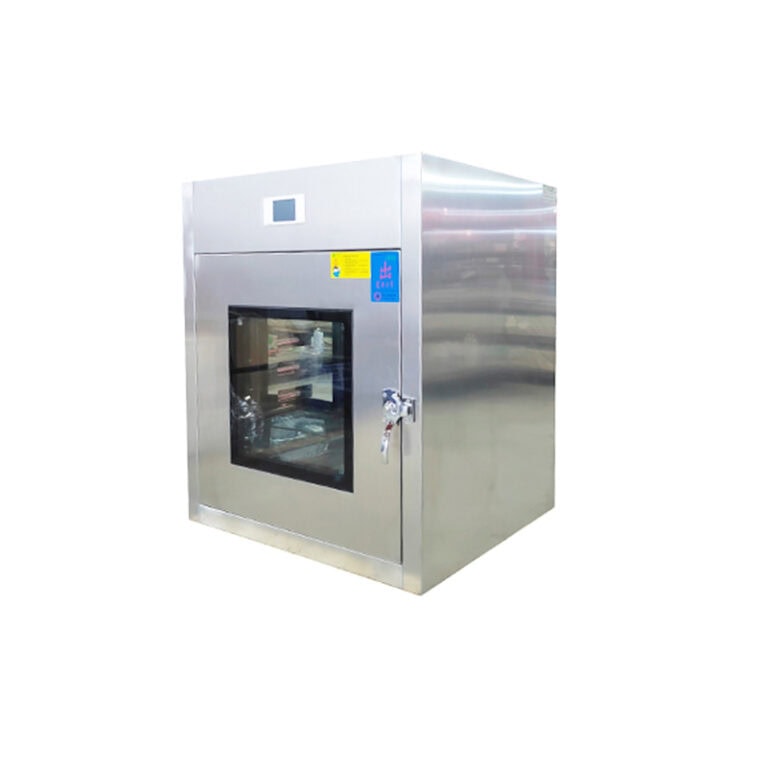
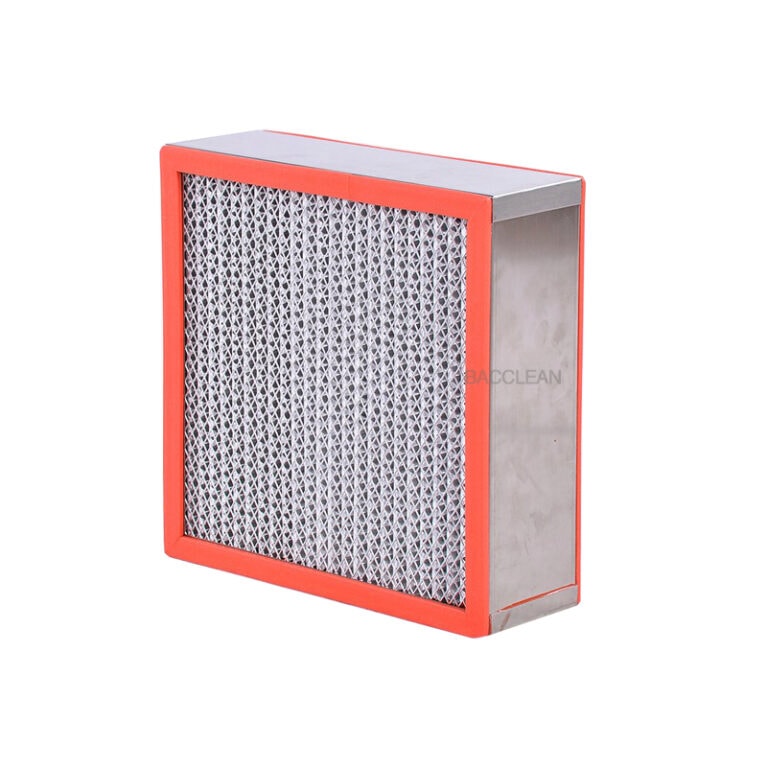
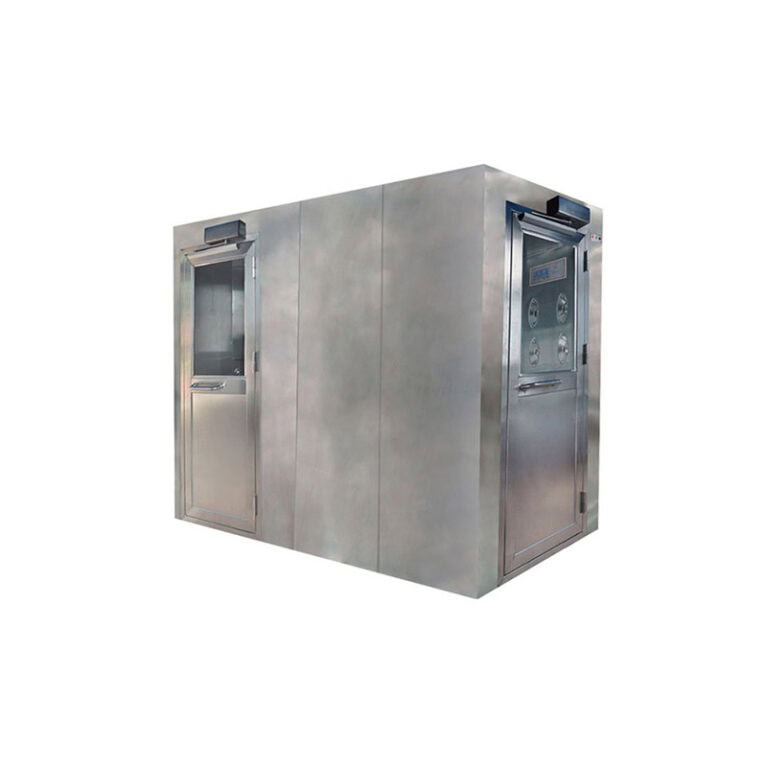
Bacclean H13/H14 separated HEPA filters adopt aluminum foil separators and glass fiber filter media. Customization for compression sealing, liquid tank sealing and silicone-free sealing is supported. Each filter is delivered with PAO leak test and airflow-resistance test reports, suitable for cleanroom air supply, laminar flow hoods, air shower tunnels, negative pressure weighing room exhaust and other applications.
