
1. Core Definition & Design Orientation
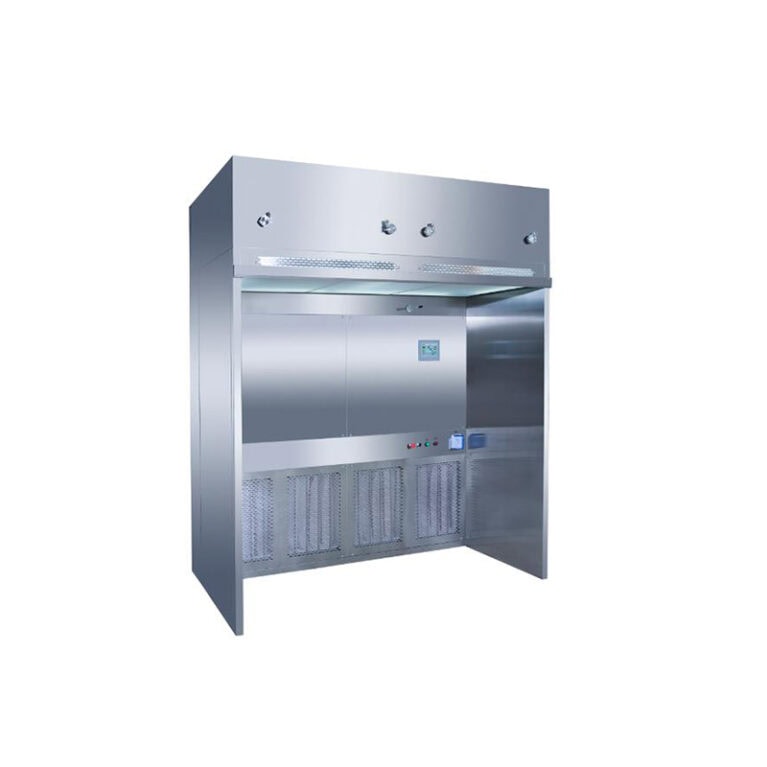
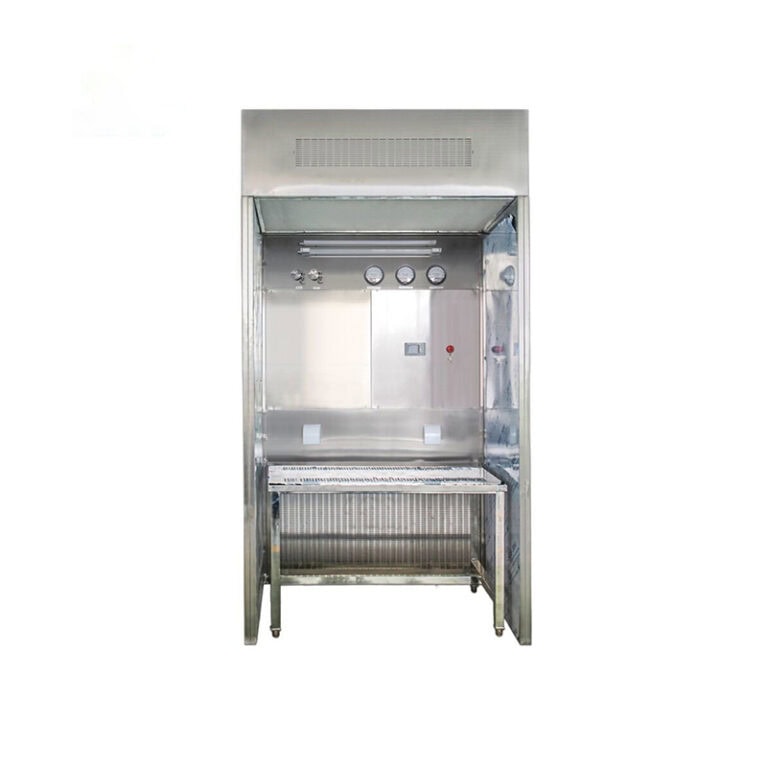
Negative Pressure Weighing Booth
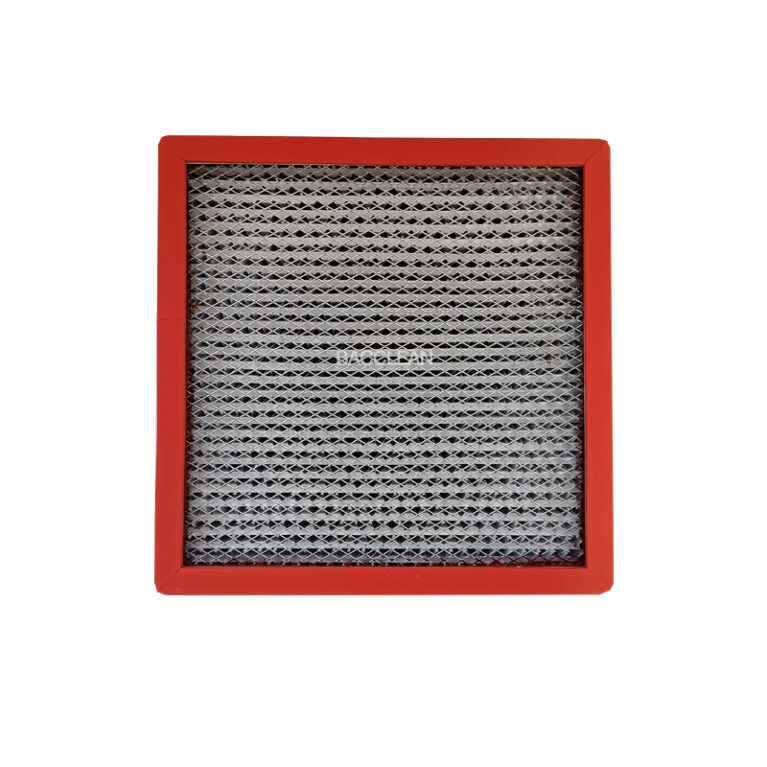
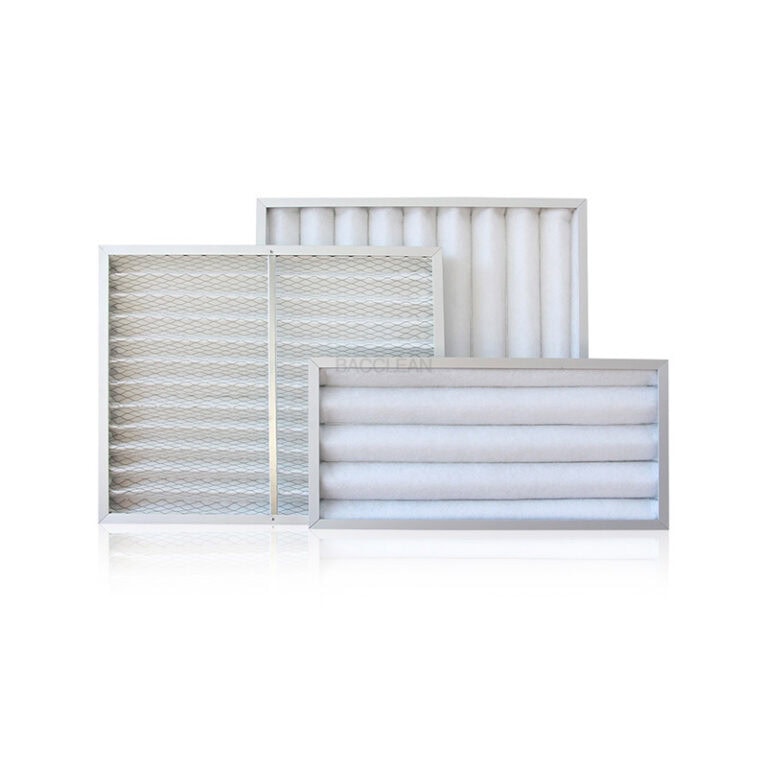
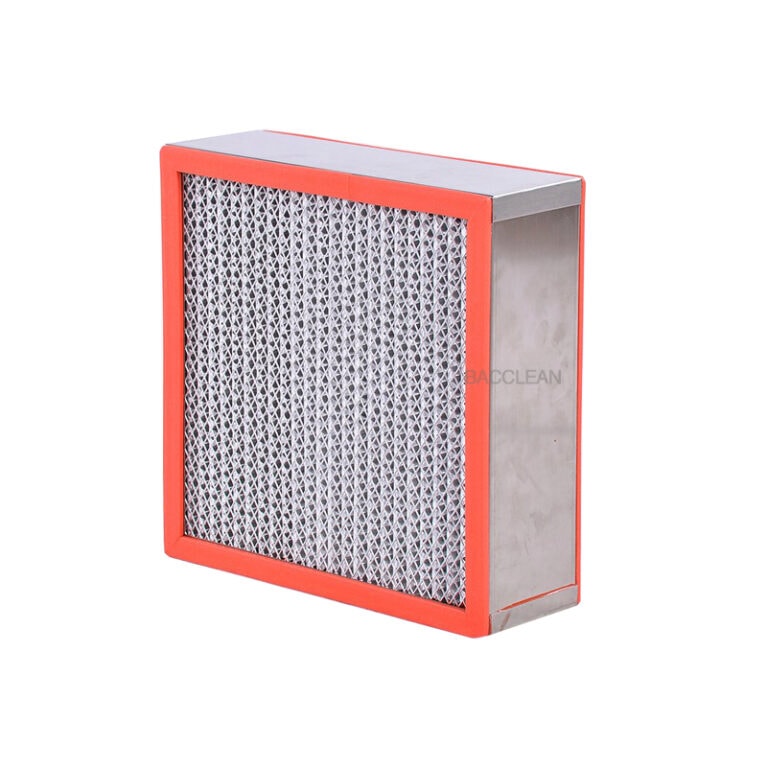
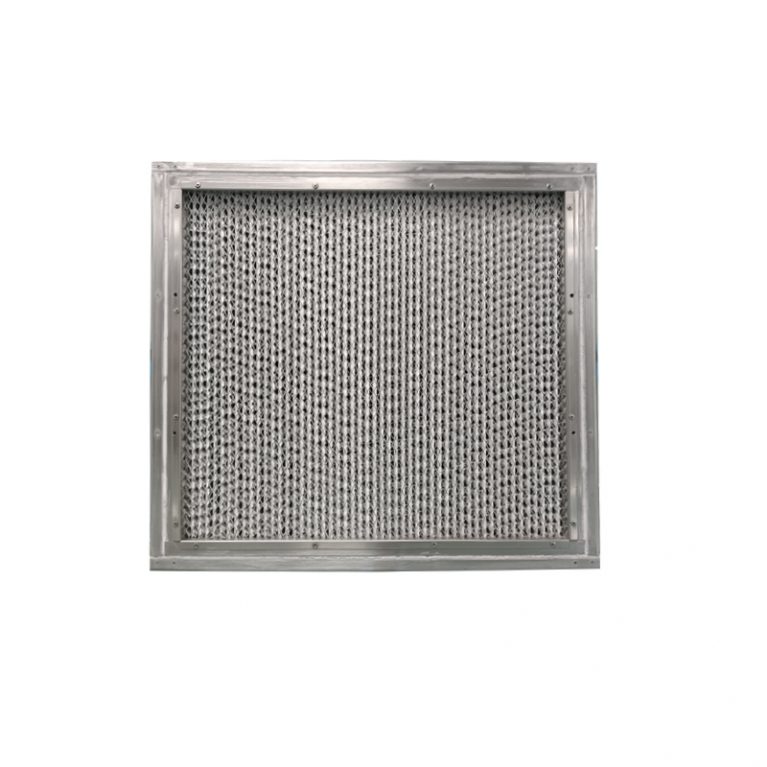
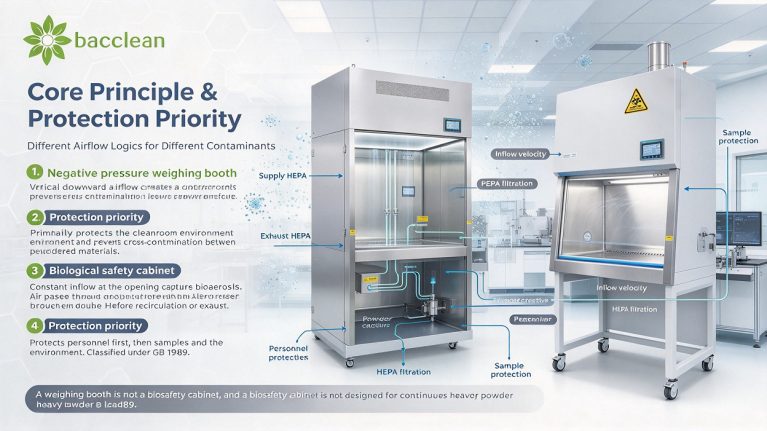
Also known as a weighing hood or negative pressure charging hood, it is a powder containment equipment, widely deployed in GMP cleanrooms as a local negative pressure isolation unit for weighing, dispensing, sampling, sieving and mixing of solid powder materials. A directional negative pressure environment is formed inside the chamber together with an independent filtration and exhaust system to capture dust and pharmaceutical aerosols generated during powder handling. It prevents powder leakage into the surrounding cleanroom and avoids cross-contamination between different raw materials. Protection priority: Protect the cleanroom environment and other products, while reducing the exposure risk of operators to high-potency powders. Airflow logic: Negative pressure is maintained within the working zone so that dust-laden air cannot escape outward. Air passes through pre-filter and HEPA before exhaust. The unit is installed in Grade C / Grade D clean areas, and the internal operating zone generally reaches ISO Class 5 (Class 100) cleanliness. Standard filter configuration: Supply HEPA + exhaust HEPA. H14 HEPA is selected for some high-potency projects. A BIBO (Bag-In/Bag-Out) structure is optional for safe filter replacement without powder exposure.
Biological Safety Cabinet (BSC)
A biological safety cabinet is dedicated to the containment of bioaerosols for operations involving microorganisms, viruses and infectious samples. It is classified under the national standard GB 19489. It relies on stable inflow negative airflow, physical barriers and double HEPA exhaust filtration to block the escape of infectious aerosols generated during operation, preventing operators from inhaling pathogenic microorganisms and protecting samples from external contamination. Protection priority: Protect operators first, followed by the surrounding environment and test samples. Airflow logic: A constant inward inflow velocity is maintained at the work opening. Aerosols are captured after air flows inward through the access window, then filtered by double HEPA before discharge. Depending on the classification, exhaust air can be discharged directly outdoors or partially recirculated.
2. Protected Objects & Protection Level Comparison
Negative Pressure Weighing Booth
It has no biosafety classification and is not categorized as biosafety equipment; there is no BSC Class I / II / III rating. Protected objects: High-potency APIs, hormonal powders, anti-tumor cytotoxic powders, toxic chemical powders, sensitizing raw materials, pigment powders and other solid dusts. It can contain powder dispersion, yet it is not validated for bioaerosol biosafety performance. It is not suitable for handling viruses, pathogenic bacteria, live strains or infectious materials. Negative pressure control index: The typical inflow velocity at the opening is 0.45~0.6 m/s to maintain stable negative pressure and prevent powder escape.
Biological Safety Cabinet (Classified per GB 19489)
-
Class I BSC: Inward negative airflow protects personnel; exhaust passes through HEPA filtration. Samples are vulnerable to contamination by room air, so this type is rarely used today.
-
Class II BSC (A1/A2/B1/B2, most widely adopted):
-
Type A2: 70% air recirculation, 30% exhaust. Suitable for most routine pathogenic microorganism tests.
-
Type B2: Total exhaust type, 100% air discharged outdoors with no internal recirculation. Suitable for infectious samples combined with volatile toxic chemicals. Class II cabinets deliver triple protection for personnel, samples and the environment, and are the mainstream model for microbiology laboratories in universities, CDC and pharmaceutical factories.
-
-
Class III BSC: Fully enclosed glove box design with the highest protection level, used for highly pathogenic microorganisms. Key indicators: The inflow velocity at the work window is strictly specified in the national standard, and periodic microbial challenge testing is required.
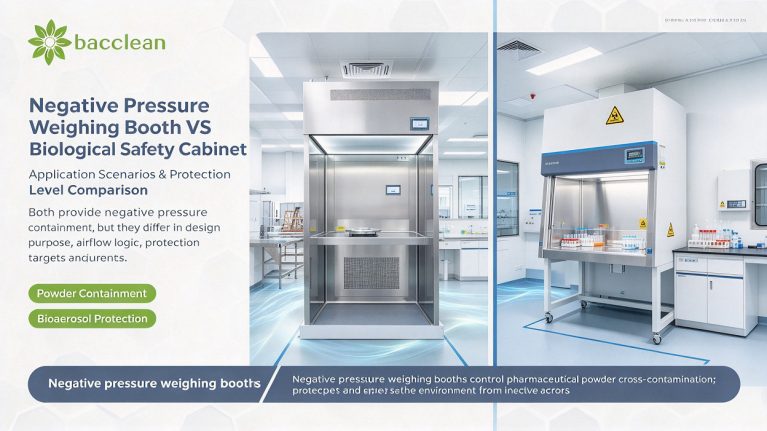
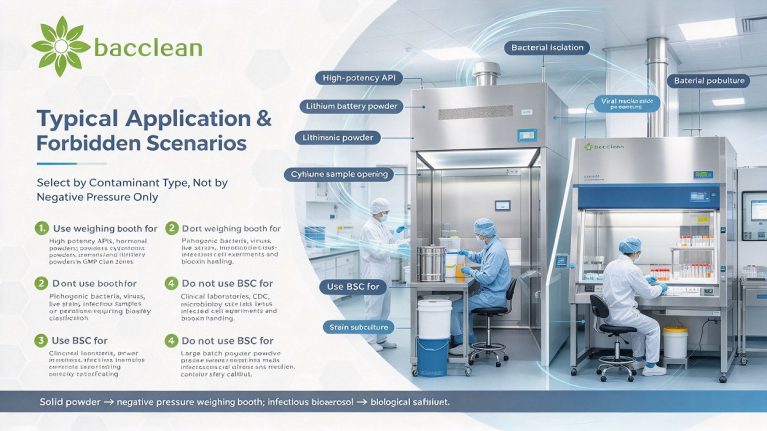
Summary of core distinction: Negative pressure weighing booth = control powder cross-contamination, for pharmaceutical powders / solid high-potency materials. Biological safety cabinet = control infectious bioaerosols, for live bacteria, viruses and biological samples.
3. Application Scenarios
✅ Typical scenarios for negative pressure weighing booth
-
GMP pharmaceutical workshops: Weighing, sampling, dispensing, milling and sieving of high-potency APIs, hormones, cytotoxic anti-tumor drugs and sensitizing powders;
-
Weighing of herbal powder, pigments, dyes and additives to suppress dust generation and cross-contamination;
-
Sampling and micro-charging of powders for lithium battery, new material and chemical industries;
-
Installed in Grade C/D clean zones to achieve local ISO Class 5 cleanliness, control dust spread and comply with GMP requirements for cross-contamination prevention;
-
Extended applications: Capsule filling charging and powder excipient dispensing. ❌ Not suitable for: Operations with pathogenic bacteria, viruses, live strain culture or infectious samples; reactions involving large volumes of highly volatile toxic solvents (no dedicated design for chemical aerosol control).
✅ Typical scenarios for biological safety cabinet
-
Hospital clinical laboratories and CDC: Bacterial isolation, pre-processing of viral nucleic acid, opening of positive samples and strain subculture;
-
Microbiology laboratories of universities and pharmaceutical enterprises: Operations with pathogenic strains, virus-infected cell experiments and positive control testing;
-
Processing of animal pathogenic samples and biotoxin samples;
-
Class II Type B2 total exhaust models can handle infectious samples together with a small amount of volatile chemical reagents. ❌ Not recommended for: Large-batch powder weighing and charging. Powder readily adheres to HEPA media and causes rapid filter clogging, which disturbs airflow barrier stability. Residual powder is difficult to fully decontaminate, making it unsuitable for continuous dusty operations.
4. Differences in Airflow Pattern, Structure & Validation Requirements
Airflow Organization
Negative pressure weighing booth adopts surrounding negative pressure containment. It features a spacious working chamber to accommodate weighing balances, pallets and material drums for open powder operations. Biological safety cabinet has a compact working cavity with standardized inward inflow airflow at the access window. The chamber is designed for small samples such as test tubes, petri dishes and centrifuge tubes.
Cleaning & Maintenance
Negative pressure weighing booth is engineered for powder service. The inner surface is smooth for convenient wiping and vacuum cleaning. Focus is placed on monitoring dust loading of exhaust filters. BIBO filter options enable safe filter replacement without powder exposure for high-potency applications. Biological safety cabinet chamber is designed for biological decontamination, compatible with 75% ethanol and VHP vaporized hydrogen peroxide sterilization. It focuses on bioaerosol control. Although filter replacement also requires containment measures, it is not suitable for long-term heavy dust loading.
Validation Items
Negative pressure weighing booth validation focuses on negative pressure value, face velocity, dust containment test, cleanliness, PAO leak test of filters and cross-contamination risk assessment to meet GMP requirements. Biological safety cabinet validation focuses on inflow velocity, airflow smoke pattern test, microbial challenge test and PAO leak test, complying with GB 19489.
5. Common Pitfalls in Equipment Selection
Pitfall 1: “Both work under negative pressure, so weighing booths can be used for pathogenic bacterial tests.” ❌ Incorrect. Negative pressure weighing booths have not undergone biosafety performance qualification. The airflow configuration cannot reliably contain bioaerosols, which creates infection risks for operators and will be deemed a major non-conformity during regulatory inspections.
Pitfall 2: “Biological safety cabinets can be used for pharmaceutical powder weighing.” ❌ Not recommended. Powder clogs filters rapidly and destabilizes airflow. Residual dust on internal surfaces cannot be fully decontaminated, which leads to cross-contamination for subsequent microbiological tests and increases maintenance costs significantly.
Pitfall 3: “Both are equipped with HEPA filters, so their protection performance is equivalent.” ❌ Incorrect. HEPA is only a filter component. Protection capability is determined by airflow structure, opening control and validation protocol. Even with identical H14 filters, a weighing booth and a biological safety cabinet serve fundamentally different purposes.
6. Quick Selection Guide
Solid high-potency pharmaceutical powder / sensitizing powder → Negative Pressure Weighing Booth Live bacteria, viruses and infectious biological samples → Class II Biological Safety Cabinet Primary risk: Powder cross-contamination and powder exposure → Choose Negative Pressure Weighing Booth Primary risk: Bioaerosol infection and personnel biological exposure → Choose Biological Safety Cabinet Deployment environment: GMP Grade C / D clean workshop → Prioritize Negative Pressure Weighing Booth Deployment environment: Microbiology laboratory or PCR laboratory → Prioritize Biological Safety Cabinet
Conclusion
Although both negative pressure weighing booths and biological safety cabinets isolate contaminants via negative pressure and HEPA filtration, they belong to two distinct categories of equipment. The negative pressure weighing booth is powder containment equipment to resolve powder escape and cross-contamination during pharmaceutical powder charging and weighing. The biological safety cabinet is specialized for pathogenic bioaerosol control to protect operators from biological infection. When selecting equipment for a project, first identify the contaminant type: solid powder or infectious bioaerosol. The two devices are not interchangeable. Bacclean supplies both negative pressure weighing booths and Class II biological safety cabinets. Customization against URS, PAO leak testing and full GMP validation documentation are available.
