
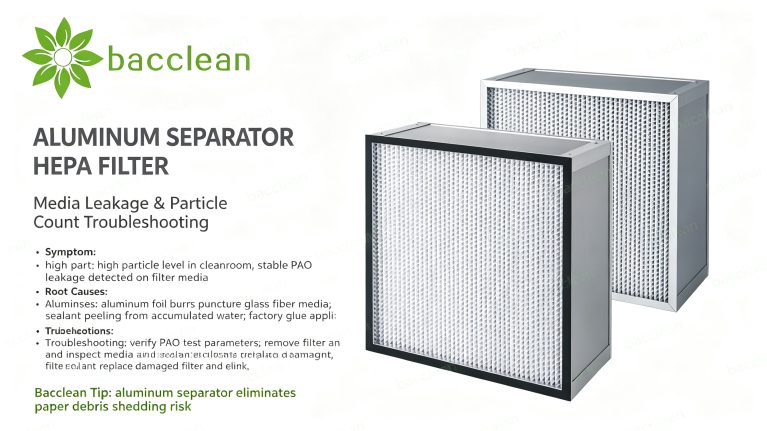
Fault 1: Persistently high particle count in clean room, PAO test detects leakage on filter media
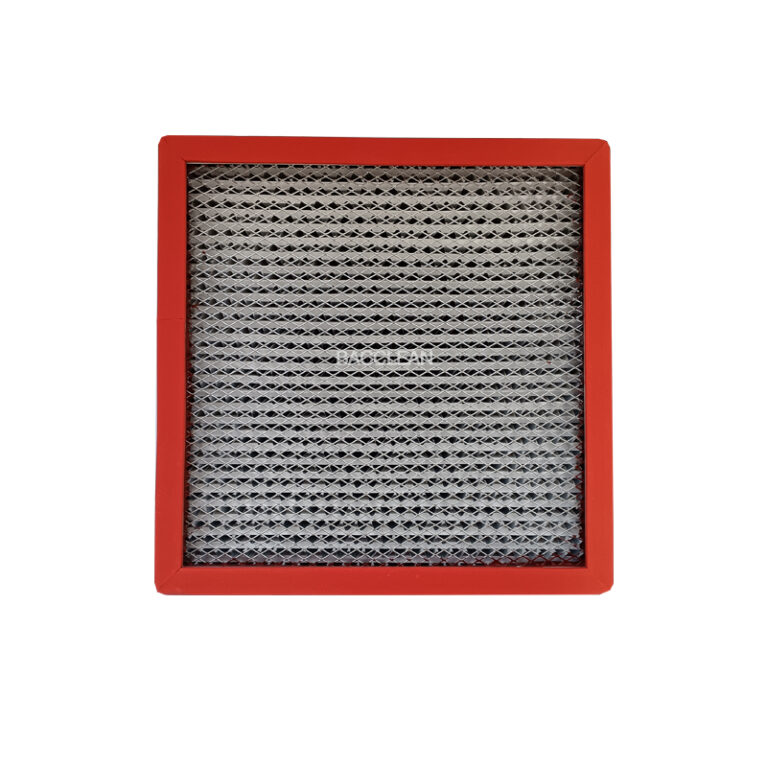
Symptom: Cleanroom particle concentration exceeds the standard; stable leakage points are found on filter media during PAO scanning. Root Causes: ① Sharp burrs generated during aluminum foil cutting pierce the glass fiber filter paper; ② Sealant delamination caused by soaking water leads to media leakage; ③ Defective glue application during factory production.
Troubleshooting Steps:
-
Recheck PAO leakage test procedure to confirm airflow rate and aerosol concentration comply with standards.
-
Lift out the filter for visual inspection: check whether filter media is punctured by aluminum foil burrs and whether sealant cracks due to water immersion.
-
Replace the whole filter unit if the media is damaged; meanwhile inspect and eliminate water accumulation risk in the plenum.
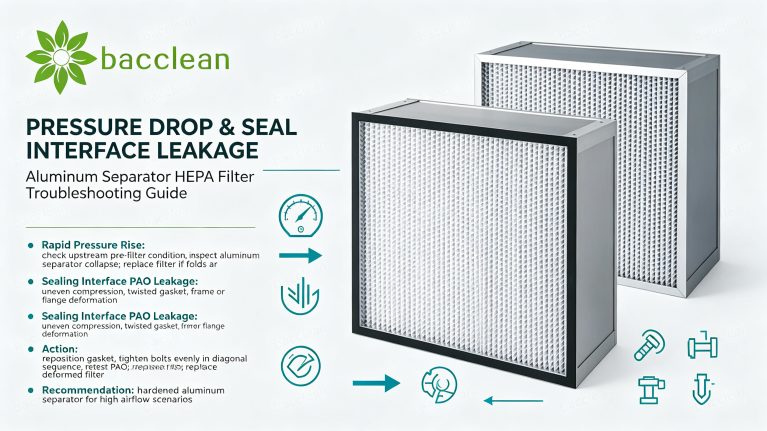
Fault 2: Rapid abnormal rise of filter pressure drop
Inducements:
-
Failure of upstream pre-filters, a large amount of dust enters HEPA and causes rapid clogging of filter media;
-
Thin aluminum separators collapse under high airflow, filter folds squeeze against each other, effective filtration area reduces and pressure keeps rising.
Troubleshooting & Handling: Check the operating condition of pre-filter and medium filter; shut down the system and open the housing to inspect if aluminum separators collapse and deform. Replace the filter immediately once collapse occurs. Specify hardened aluminum separators for future projects.
Fault 3: PAO leakage alarm at filter sealing interface
Inducements:
-
Uneven compression during installation, gasket distortion and bypass air leakage;
-
Frame deformation caused by extrusion during transportation;
-
Flange surface distortion.
Handling: Re-position the gasket, tighten bolts evenly in diagonal sequence and re-perform leakage test. If leakage persists after re-test, check frame deformation. Replace filter if frame is deformed.
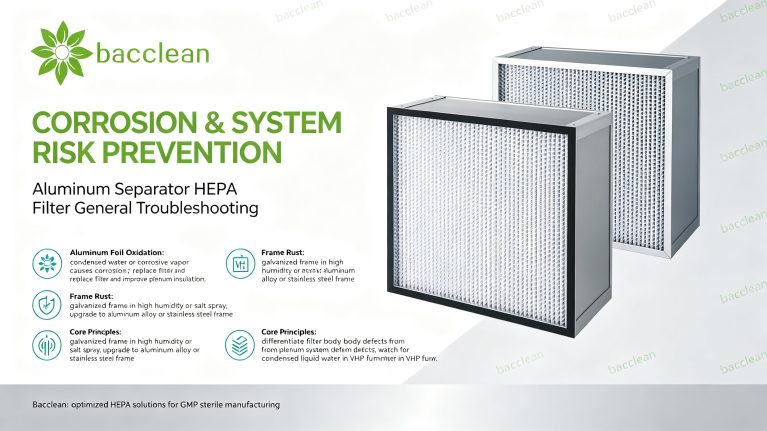
Fault 4: Oxidation blackening and corrosion spots on aluminum separators
Inducements: Filter soaked by condensed water accumulated in plenum; corrosive vapor exists in process environment.
Handling: Aluminum foil oxidation is irreversible, replace filter directly. Rectify plenum thermal insulation and drainage system. For working conditions with corrosive gas, select stainless steel frame version in subsequent projects.
Fault 5: Rust on filter outer frame
Inducements: Galvanized steel frame applied in high humidity or salt spray environment.
Handling: Minor rust can be monitored if sealing performance remains intact. Replace filter immediately once rust perforation and air leakage occur. Select aluminum alloy or stainless steel frame for high humidity conditions.
General Principles for Fault Troubleshooting
-
Aluminum separator has no risk of paper debris shedding. When particle count exceeds limit, prioritize checking filter media breakage, sealing leakage, plenum contamination and aluminum foil corrosion.
-
Distinguish filter body faults from air plenum system problems. Water immersion failures mostly originate from poor drainage and insulation design of plenum instead of filter quality defects.
-
For rooms adopting VHP fumigation, focus on checking whether large amount of condensed liquid water is generated during fumigation.
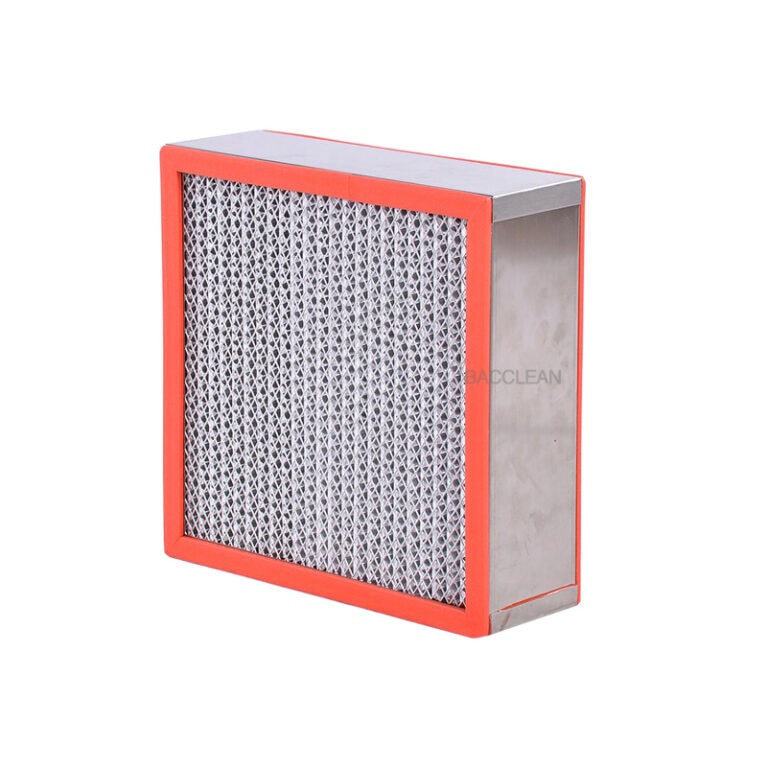
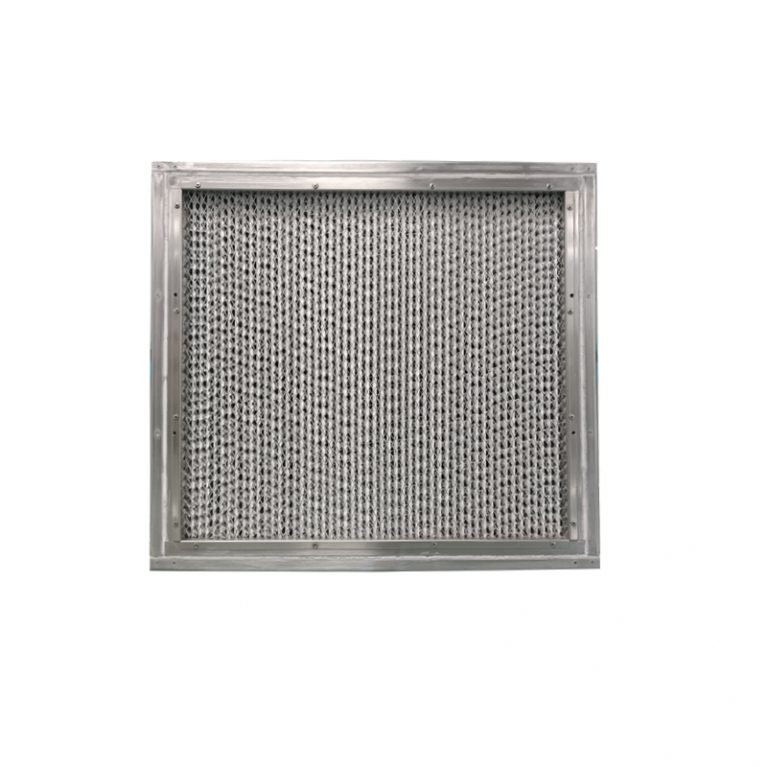
Bacclean Reminder: Aluminum separator HEPA filter is a mainstream solution for GMP sterile projects. It features high humidity resistance and VHP compatibility. However, two major risks including water immersion and thin aluminum separator collapse must be avoided. Well-designed supporting system ensures full play of filter performance.
