
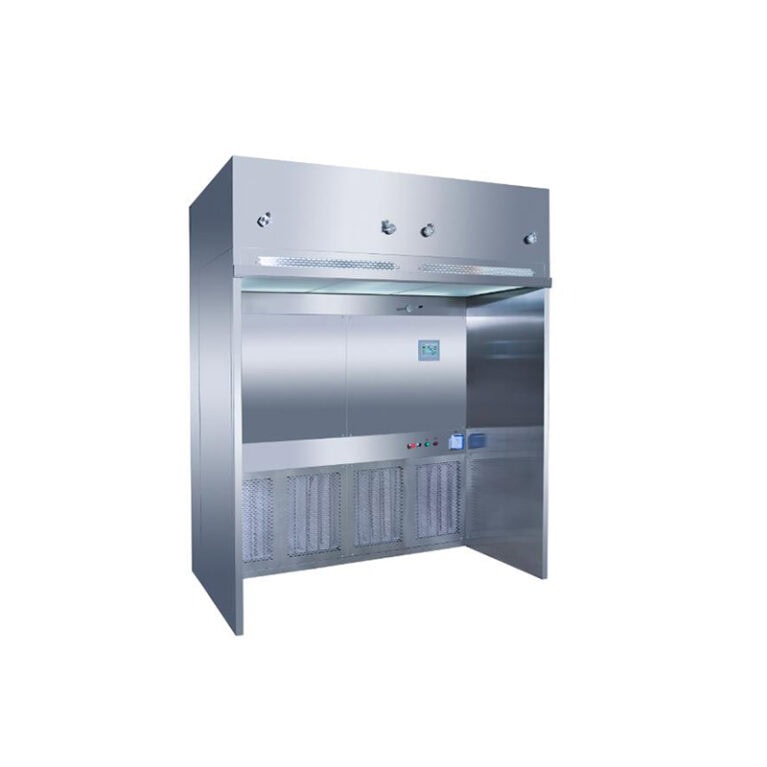
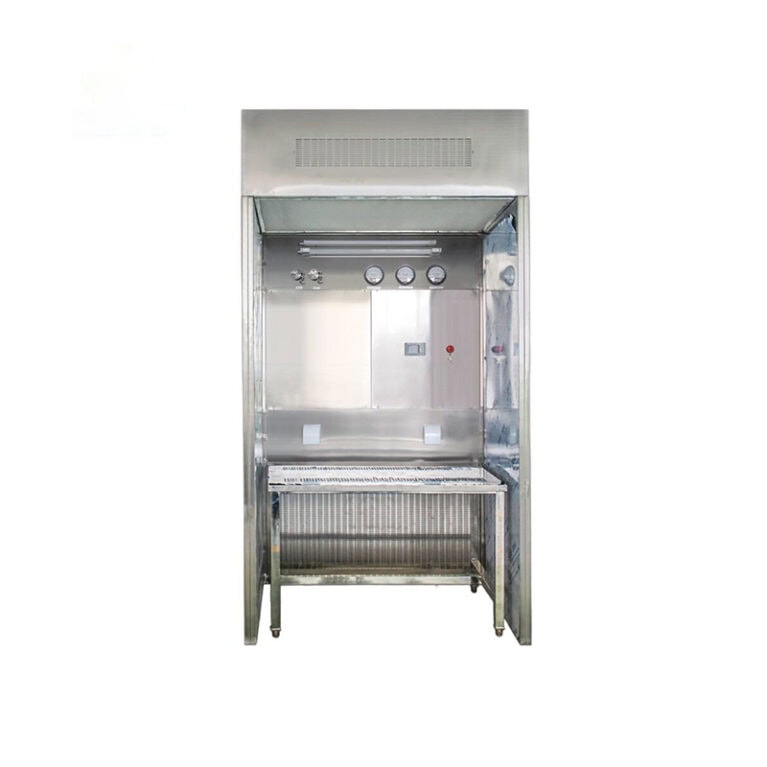
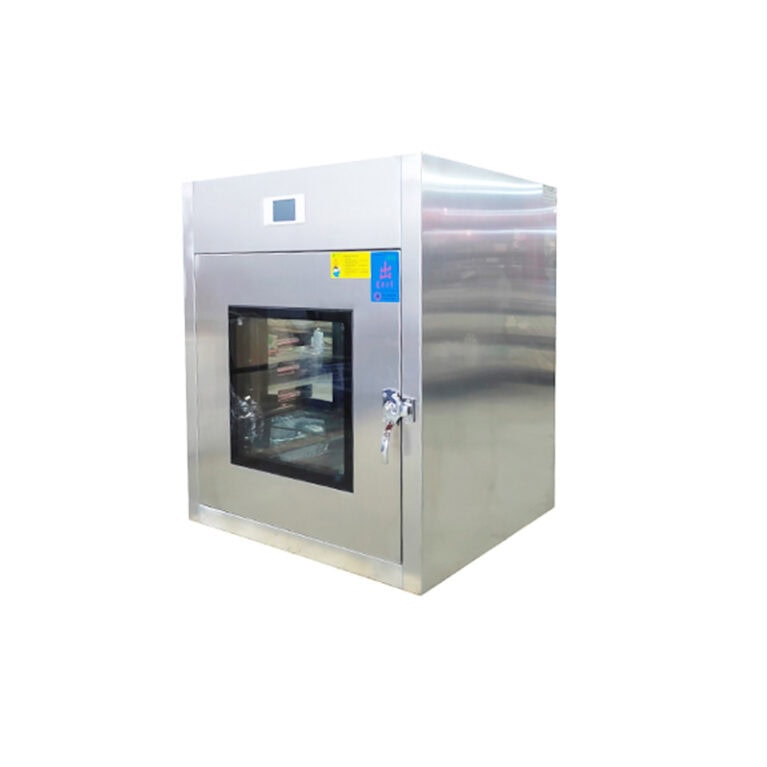
The core difference between a negative pressure weighing chamber and a laminar flow hood lies in the pressure direction, protection goals, air flow organization, and application scenarios: A negative pressure weighing chamber is a negative pressure isolation, focusing on preventing the escape of dust / harmful substances and protecting personnel and the environment; a laminar flow hood is a positive pressure laminar flow, focusing on preventing external pollution intrusion and protecting product cleanliness.
I. Core Principle and Pressure State
Negative Pressure Weighing Chamber (Negative Pressure Weighing Hood)
Pressure: The internal pressure is relatively lower than the external pressure (-10 to -30 Pa), with air flowing from the outside into the chamber and not escaping inside.
Air Flow: Vertical single-direction laminar flow, with some circulation and some filtered before being discharged externally, to prevent the diffusion of dust / aerosols.
Protection: Protecting personnel and the external environment, preventing the escape of material dust, active pharmaceuticals, and harmful reagents, and preventing cross-contamination.
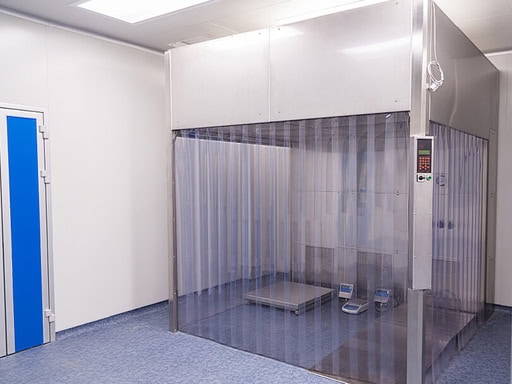
Laminar flow hood (clean laminar flow cabinet)
Pressure: Internal is slightly positive pressure relative to the outside, clean air flows “blowing out” from the inside to prevent external contamination from entering.
Air flow: Vertical / Horizontal unidirectional laminar flow (ISO 5/A grade), full supply and full return or direct discharge into the clean room, without negative pressure isolation function.
Protection: Protect products / processes, create local high-cleanliness areas (such as aseptic filling, cell culture) in ordinary clean rooms.
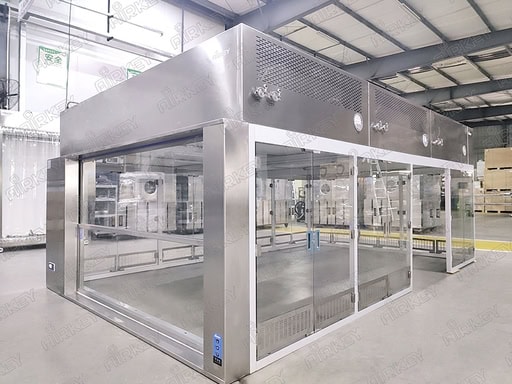
| Comparison item | Negative pressure weighing chamber | Laminar flow hood |
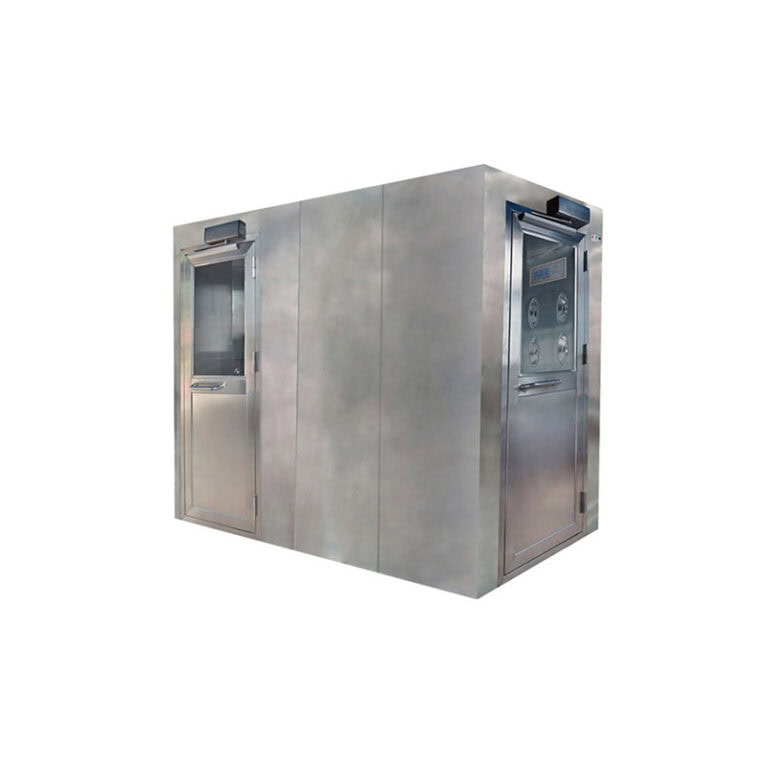
| Box body | Fully enclosed / semi-enclosed, with three-sided partition panels and soft curtains, emphasizing sealing and negative pressure maintenance. | Open type / hanging type, without strict sealing, emphasizing uniform air flow coverage |
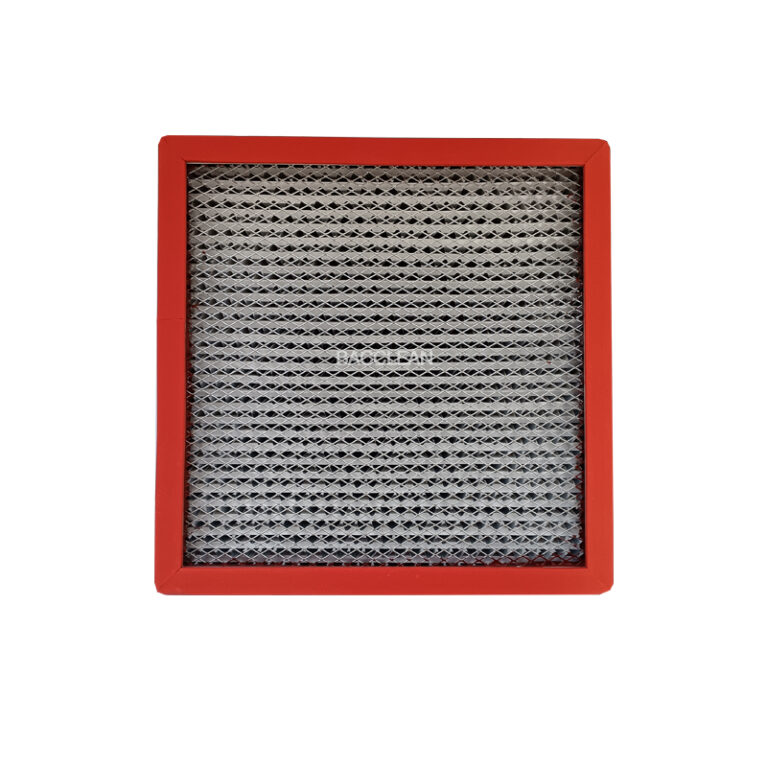
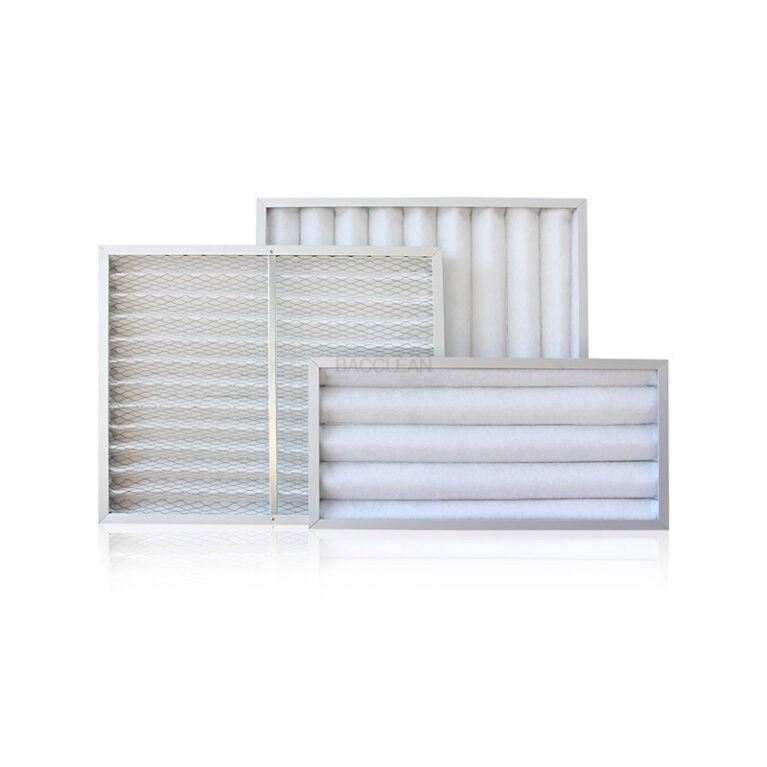
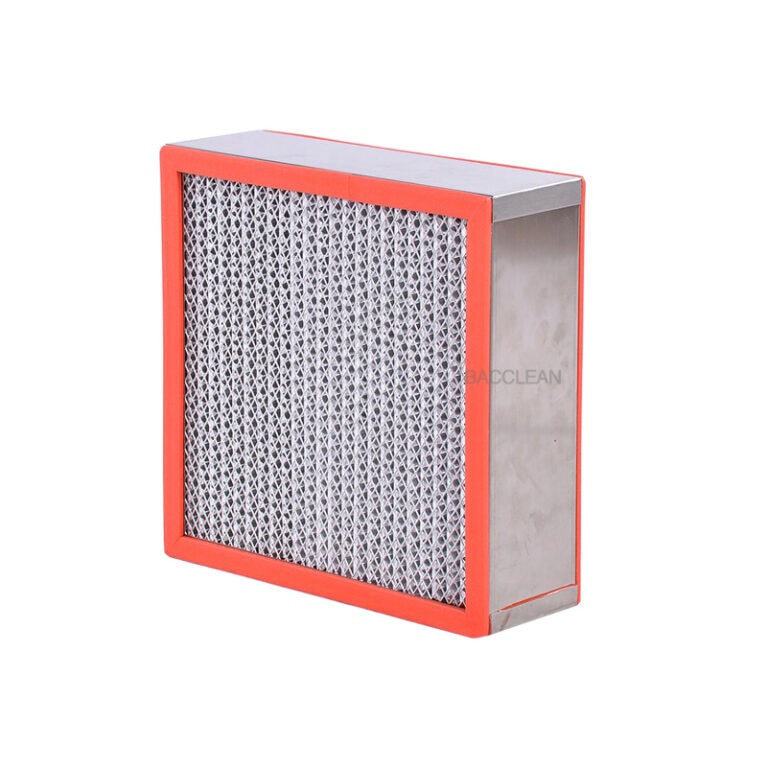
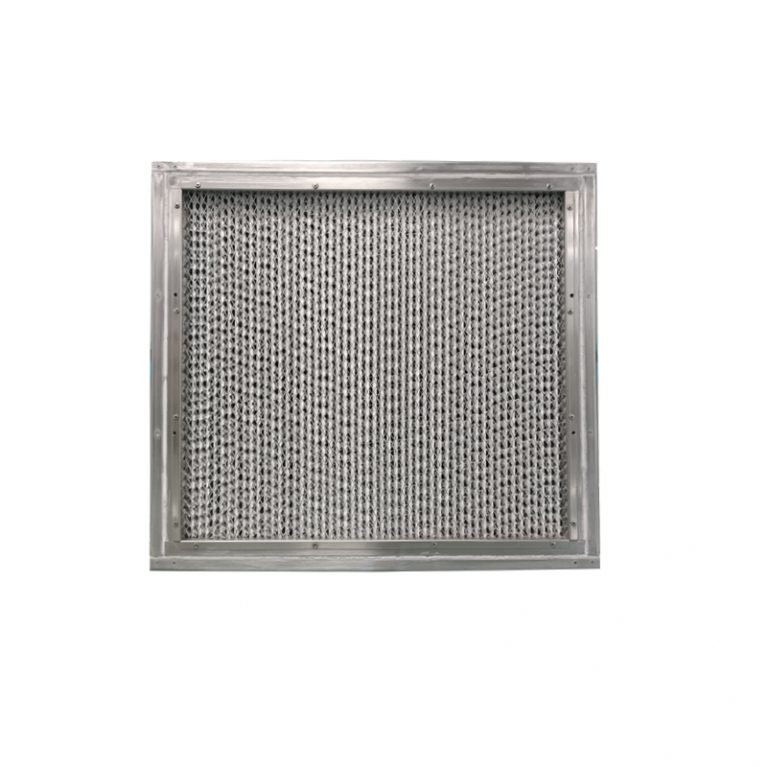
| Filter system | Three-stage filtration (primary + intermediate + high-efficiency), dual HEPA for supply and exhaust air, with strict leak prevention requirements | Secondary filtration (primary + high-efficiency), only supply air HEPA, no exhaust air filtration |
| Control system | Negative pressure / pressure difference monitoring, variable frequency fan, emergency exhaust and interlock system | Wind speed / cleanliness monitoring, ordinary speed control, no negative pressure interlock |
| Exhaust ventilation | It has independent exhaust ducts, including exhaust HEPA filters, and the filtered air is discharged. |
No dedicated exhaust system. Air flows back into the clean room or is directly discharged. |
III. Functions and Application Scenarios
Negative Pressure Weighing Chamber
Typical scenarios: Pharmaceutical weighing / repackaging, active pharmaceutical ingredients (API) processing, dust material handling, toxic / allergenic reagent weighing.
Industry requirements: GMP 2010 version A-class area, high dust / high-risk, processes requiring strict isolation. Laminar flow hood
Typical scenarios: sterile preparation filling, microbial cultivation, electronic chip assembly, medical device packaging.
Industry requirements: ISO 5/A local cleanliness, low dust, high cleanliness protection for products.
IV. Key Performance Comparison
Negative pressure weighing room
Advantages: Negative pressure isolation, dust prevention, protection of personnel and environment, three-level filtration, high safety.
Limitations: Complex structure, high cost, requires regular verification of negative pressure and leakage, cannot protect products from external contamination. Laminar flow hood
Advantages: Positive pressure cleanliness, protection of products, simple structure, flexible combination, low cost, easy maintenance.
Limitations: No isolation capability, unable to prevent internal dust from escaping, not suitable for toxic/highly reactive materials.
