
I. Working Principle
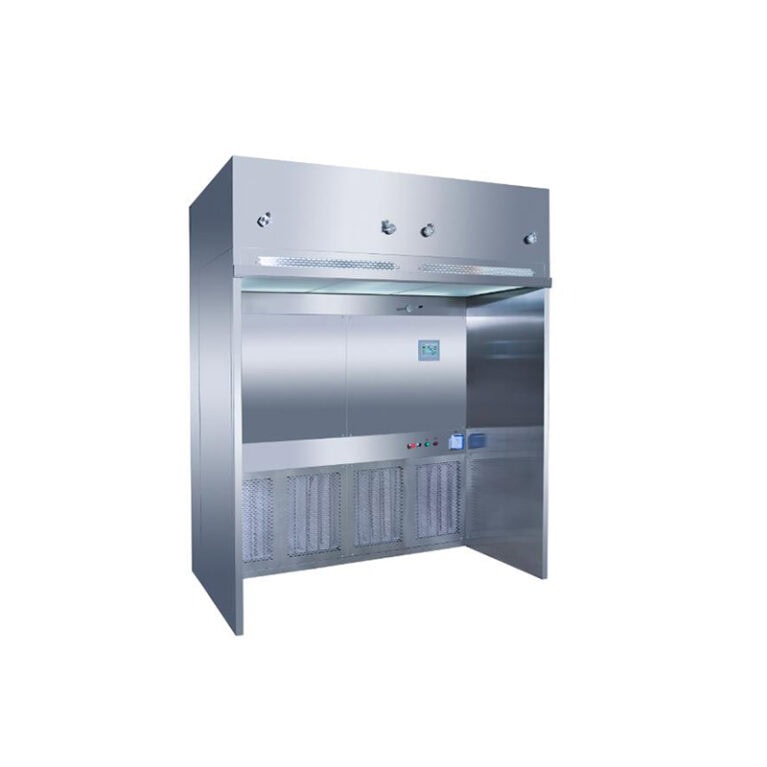
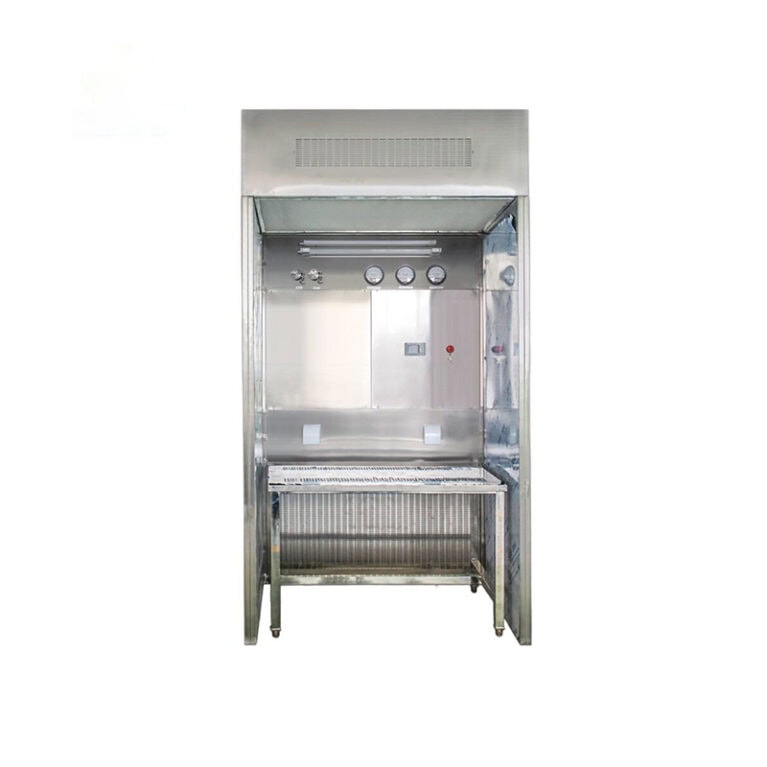
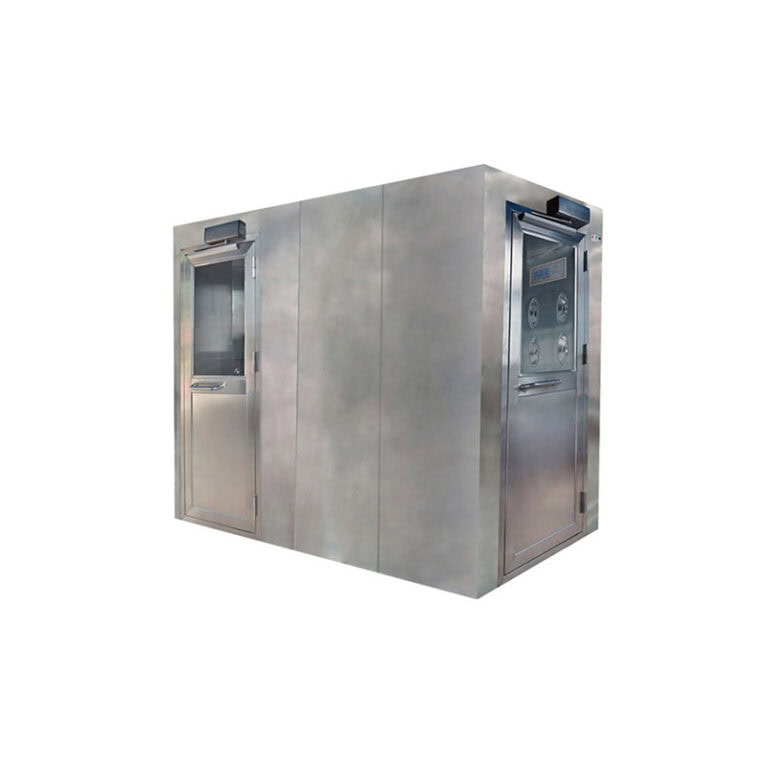
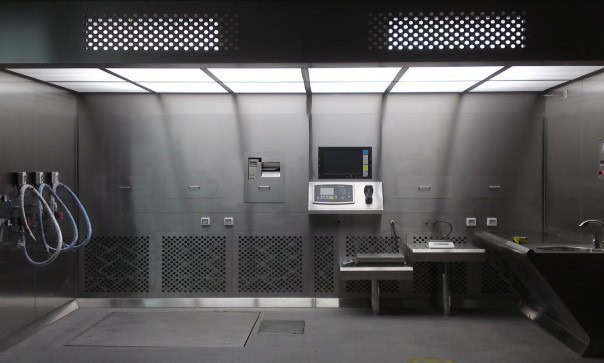
The negative pressure weighing chamber is a type of local purification and negative pressure isolation equipment. The core lies in the use of vertical unidirectional flow and stable negative pressure to prevent dust from spilling out and protect personnel and the environment, meeting the protection requirements of GMP for the weighing of highly active/toxic materials.
1. Airflow organization (vertical unidirectional flow)
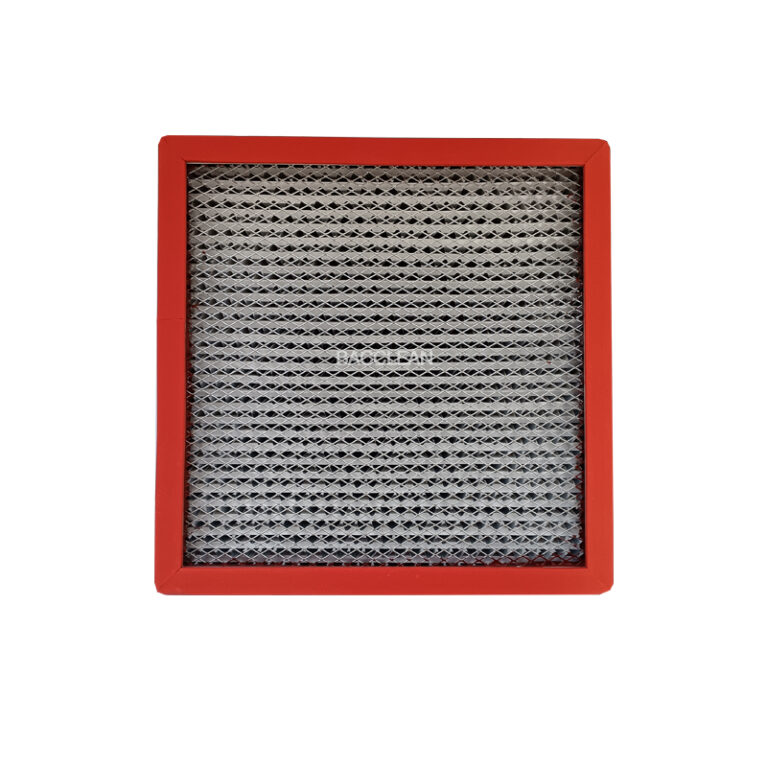
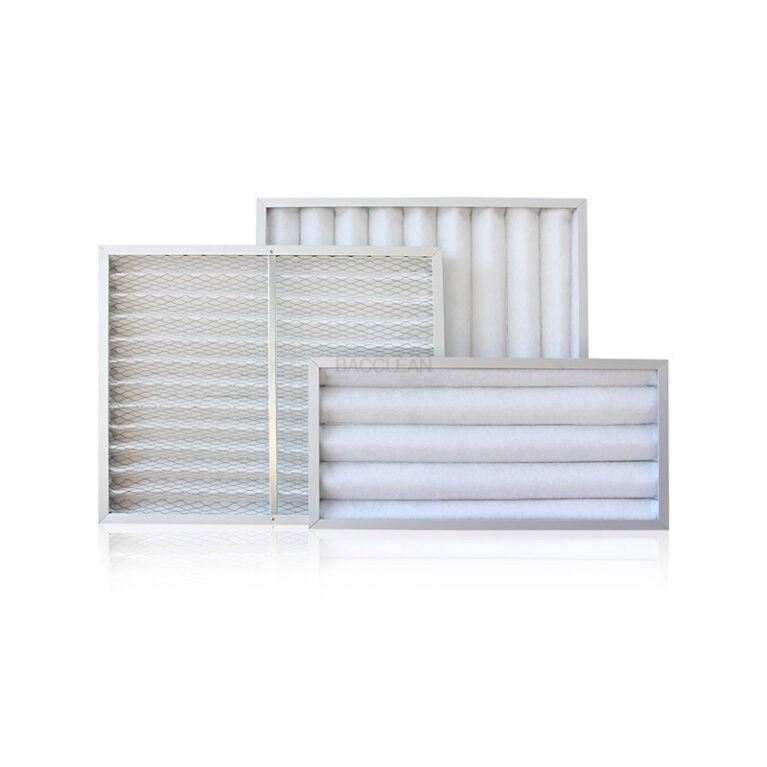
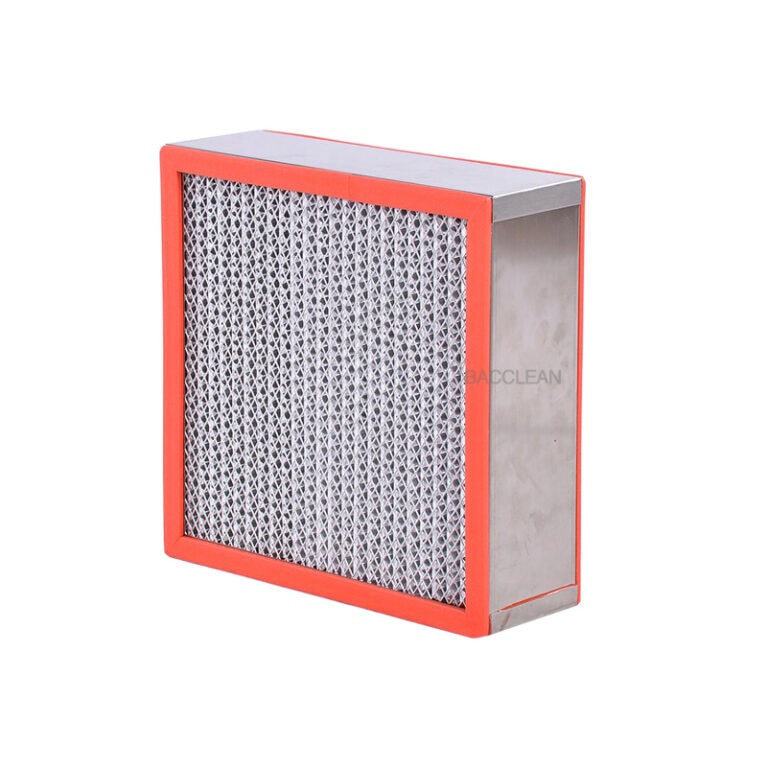
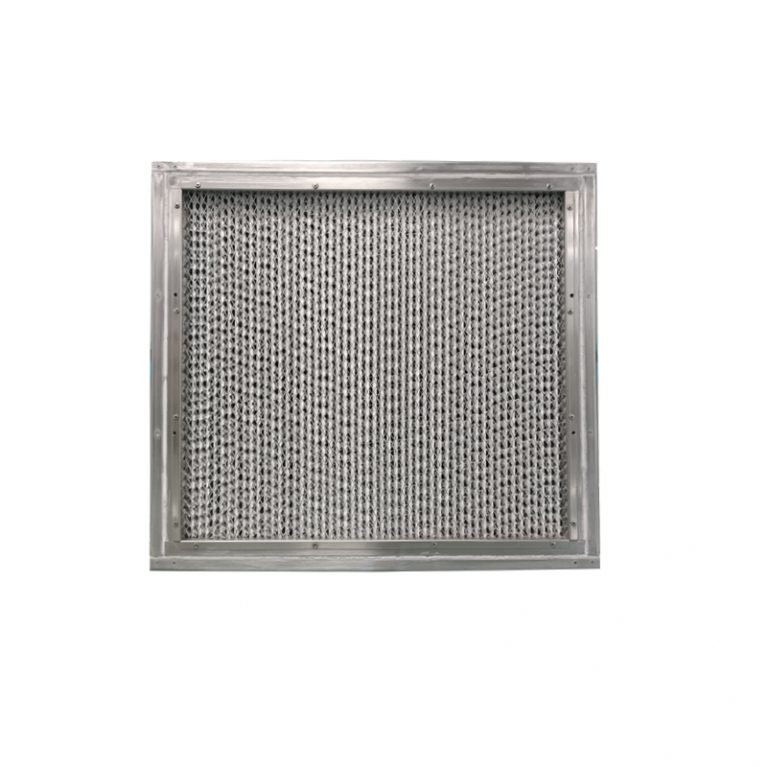
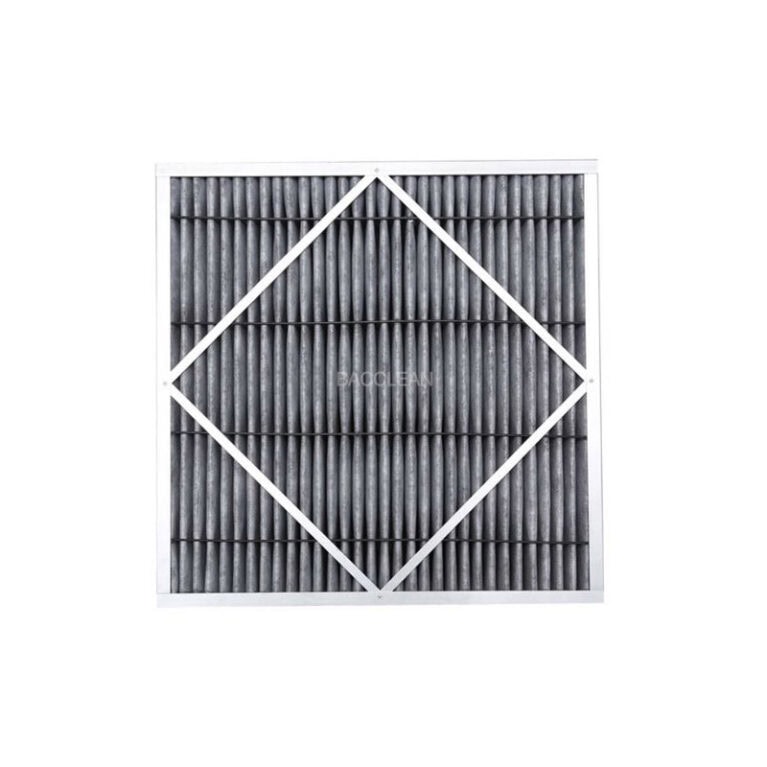
Three-stage filtration: Return air first passes through the primary filter (for large particles) → the intermediate filter (pre-filter, protecting HEPA) → the high-efficiency HEPA (with a 0.3μm retention rate ≥ 99.99%). Air flow distribution: The fan sends the clean air into the static pressure box, 90% of which is vertically downward (forming a class 100 / ISO5 clean area), 10% of which is a small amount of exhaust air, maintaining a relative negative pressure of -5 to -15 Pa in the operation area.
Negative pressure isolation: Air only enters and does not exit. Dust is filtered by the airflow and does not escape, avoiding cross-contamination and occupational exposure.
2. Core structure
Box: 304 stainless steel, seamless welding, corrosion-resistant, easy to clean.
Filter system: Primary G4, intermediate F8, high-efficiency H14/ULPA.
Fan + static pressure box: Provide stable pressure and uniform air distribution.
Control system: Differential pressure / wind speed sensors, PLC, alarm function.
II. Maintenance and servicing (GMP compliance)
1. Daily maintenance (daily / weekly)
Daily:
Cleaning: Wipe the countertop, inner wall, and uniform flow membrane with a dust-free cloth and 75% ethanol to remove residual materials.
Inspection: Start the machine for 3–5 minutes to confirm stable negative pressure (-5 to -15 Pa), wind speed 0.45 ± 0.1 m/s, no abnormal noise from the fan, and no leakage from the seal.
Weekly:
Calibrate wind speed / negative pressure, record differential pressure (primary / intermediate / high efficiency).
Check sealing strips, exhaust vents, lighting / ultraviolet lamps (if any).
Clean the return air filter and the surface of the primary filter.
2. Regular maintenance (monthly / quarterly / annually)
Monthly:
Primary filter: Clean or replace (3–6 month cycle, replace when the differential pressure exceeds the initial value by 2 times).
Intermediate filter: Check the differential pressure, replace every 6–12 months.
Box / pipeline: Conduct smoke testing for leaks to ensure no dust escapes.
Quarterly:
Calibrate wind speed sensor (error ≤ ±0.05 m/s), differential pressure gauge.
Check fan bearings, motor insulation, and tighten electrical connections.
Annually:
HEPA integrity: Leak detection with PAO/DOP, replacement if the leakage rate is > 0.1%.
High-efficiency filter: Replace every 1–2 years, or replace when the differential pressure exceeds the initial value by 50%.
Ultraviolet lamp: Replace (lifespan approximately 9000 hours, intensity ≥ 70μW/cm²).
Comprehensive verification: Cleanliness, negative pressure, air flow direction, noise (≤ 65 dB).
3. Key compliance points for filter replacement
Before replacement: Shut down, disconnect power for 10 minutes to release static electricity; clean the interior of the box.
High-efficiency replacement:
Remove the uniform flow membrane, loosen the pressure frame, remove the old HEPA (remove the sealing rubber strip together).
Install the new HEPA according to the airflow arrow direction, press the four sides evenly, and ensure there is no gap in the seal.
Leak detection: Scan the frame and filter material with PAO, and it is qualified if there is no leakage.
After replacement: Record the model, differential pressure, and replacement date, and file for future reference.
4. Common faults and handling
Insufficient negative pressure: Check for door / sealing strip leakage, blockage of primary / intermediate filters, insufficient fan speed → Clean / replace filters, tighten the seal, and inspect the fan.
Uneven wind speed: Blocked uniform flow membrane, local leakage of HEPA → Clean the uniform flow membrane, detect and replace the HEPA.
Abnormal differential pressure: Overdue filter, leakage of seal → Replace the filter, redo the seal.
III. Maintenance cycle table (quick reference)
| Project | Cycle | Standard / Action |
| Primary filter | Monthly cleaning, with replacement every 3 to 6 months | Pressure difference ≤ 2 times the initial value |
| Medium-efficiency filter | Replace every 6 to 12 months | Pressure difference ≤ 2 times the initial value |
| High-efficiency HEPA | 1 to 2 years, or a pressure difference exceeding 50% | PAO leak test passed |
| Wind speed / Negative pressure calibration | Each season | Wind speed: 0.45 ± 0.1 m/s, negative pressure: -5 to -15 Pa |
| Box cleaning | Daily | Dust-free cloth + 75% ethanol |
| Smoke leak detection | Monthly | No dust leakage |
| Ultraviolet lamp replacement | Every 3 years | Intensity ≥ 70 μW/cm² |
IV. Key Compliance Points
Continuous Negative Pressure: During operation, it is strictly prohibited to open the door or break the seal to prevent environmental contamination.
Traceable Records: Pressure difference, air velocity, leak detection, and replacement records must be kept for at least 5 years, in accordance with GMP audit requirements.
Special Tools: Use dust-free tools for cleaning and maintenance to avoid secondary contamination.
