
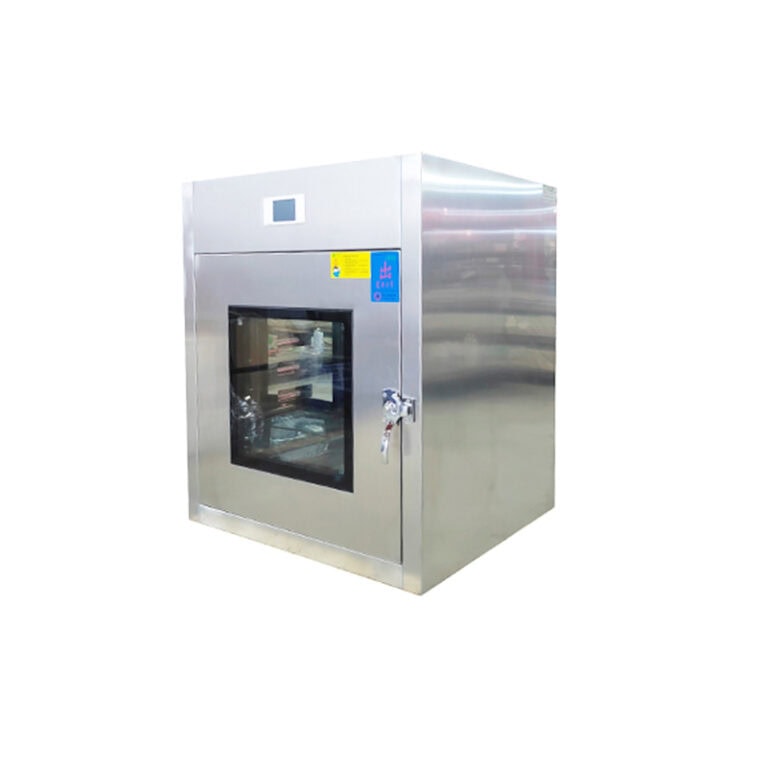
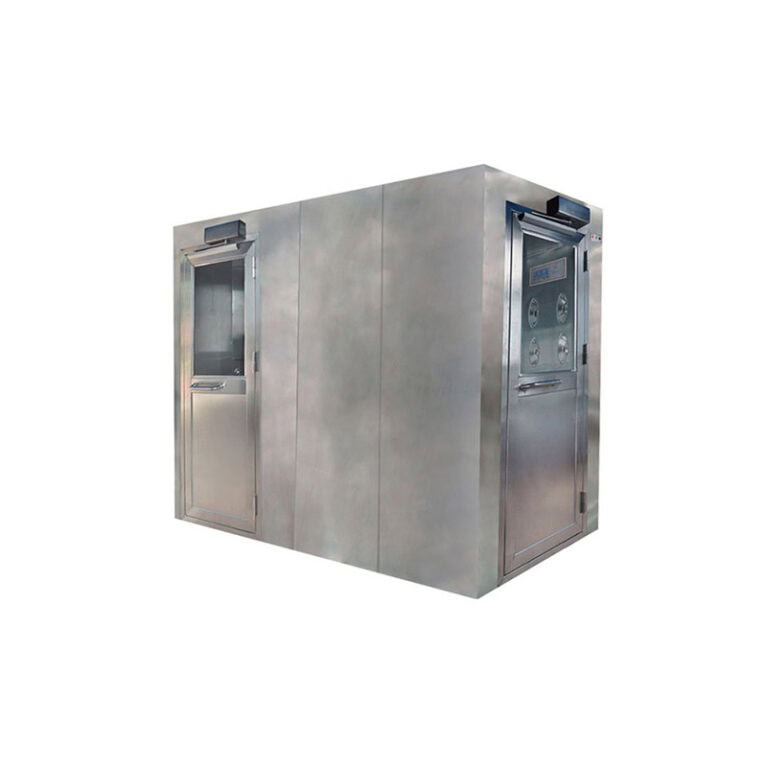
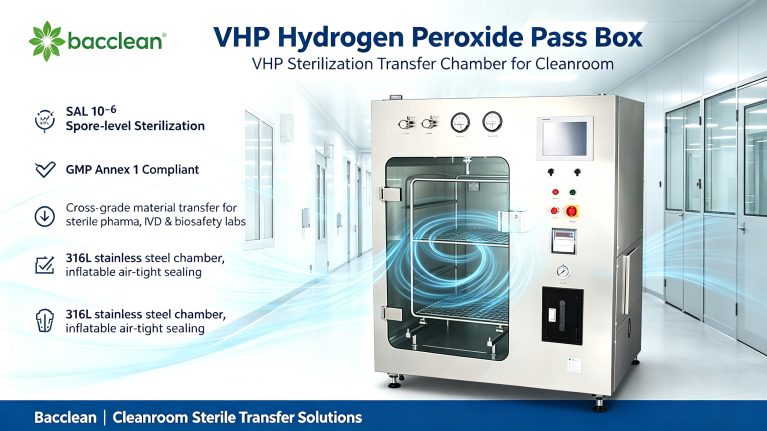
Different from ordinary UV pass boxes and air shower pass boxes, it relies on vaporized hydrogen peroxide (VHP) gas for penetration sterilization to achieve spore-level inactivation on the outer surface of materials inside the sealed chamber. The whole sterilization process is verifiable and traceable. It is an essential material isolation and transfer solution for sterile workshops complying with EU GMP Annex 1.
Many customers tend to confuse it with common pass boxes: ordinary pass boxes only provide isolation, dust removal or simple UV disinfection; the core function of the VHP pass box is spore killing, achieving a sterilization assurance level of 6-log (SAL 10⁻⁶), which is suitable for scenarios with strict sterile requirements.
1. Core Working Principle
The VHP pass box adopts normal-temperature dry flash evaporation technology, which quickly vaporizes 30%~35% liquid hydrogen peroxide into gaseous hydrogen peroxide molecules. Gaseous VHP features strong permeability and can spread into gaps of materials, packaging folds and dead corners of utensils. It destroys microbial proteins, cell membranes and nucleic acids through strong oxidation to inactivate spores, fungi and bacteria.
The whole process runs in a closed loop inside the sealed chamber. After sterilization, the catalytic decomposition system is activated to decompose residual hydrogen peroxide into water and oxygen. The inner door interlock will not unlock until the residual concentration drops below the safe threshold, preventing high-concentration gas from entering the sterile zone and protecting products and operators.
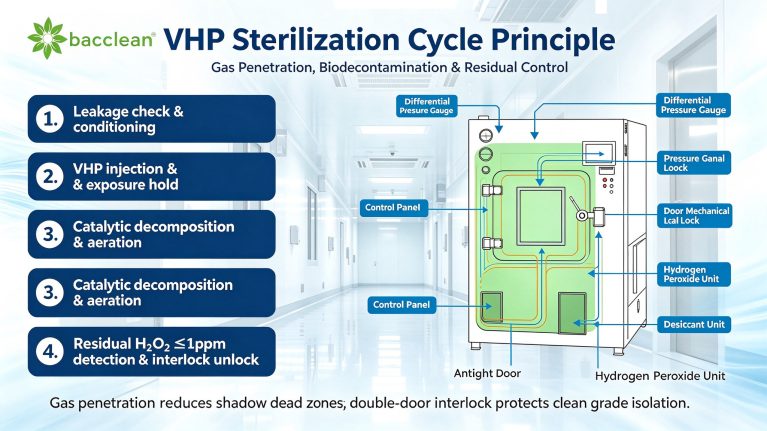
A complete sterilization cycle includes five stages:
- Loading and air tightness test: Materials are put into the chamber from the low-grade side, the outer door is closed, and the dual-door electronic interlock is activated to prevent both doors from opening at the same time. Some models perform automatic pressure leak detection to confirm no chamber leakage and avoid VHP overflow during sterilization.
- Conditioning (dehumidification and pressure stabilization): Dry clean air is introduced to adjust the temperature and humidity inside the chamber and prevent VHP from condensing into liquid water. Condensation will not only reduce sterilization effect but also corrode materials and the chamber, which is a key control point of VHP process.
- VHP injection and exposure holding: The generator continuously delivers vaporized hydrogen peroxide. The circulating fan inside the chamber pushes the gas to spread evenly to maintain the set concentration and exposure duration. Chemical indicators and biological indicators are inactivated during this phase.
- Aeration and residual gas decomposition: Stop VHP supply, activate the catalytic decomposition filter and HEPA circulating filtration, and purge continuously to decompose hydrogen peroxide into H₂O and O₂. Monitor the residual concentration inside the chamber in real time.
- Unloading after unlocking: After the sensor confirms that hydrogen peroxide residue meets the standard (usually ≤1ppm), the inner door on the high-grade side is unlocked, and operators can take out materials into the sterile zone.
2. Main Structure Components
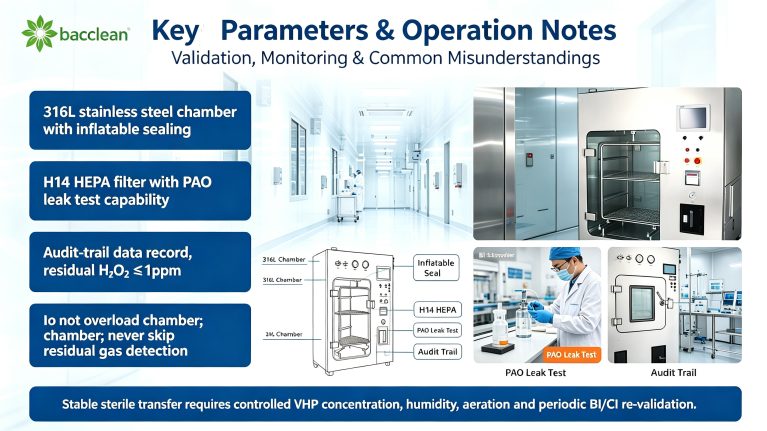
- Sealed sterilization chamber: 316L stainless steel is preferred for the inner wall, with mirror polishing, seamless arc welding and no sanitary dead corners, suitable for frequent wiping and disinfection. The outer cabinet is mostly made of 304 stainless steel. High-end models are equipped with inflatable sealing gaskets, which expand during sterilization for airtight isolation, performing much better than ordinary rubber sealing strips.
- VHP generation and circulation unit: Built-in flash generator, circulating fan and uniform gas distribution nozzles to ensure even gas distribution inside the chamber and avoid local insufficient concentration. Some projects adopt external VHP host connection.
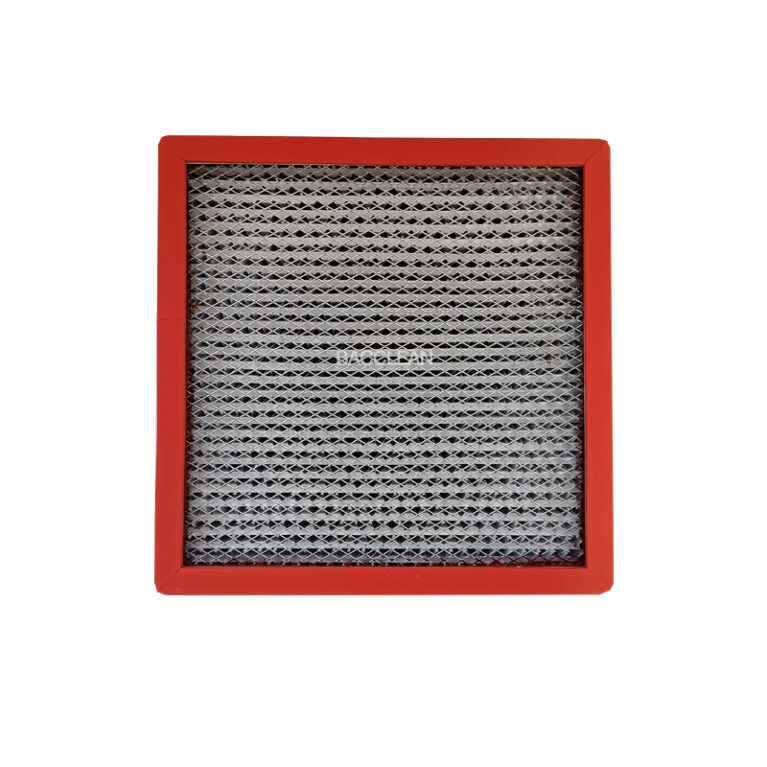
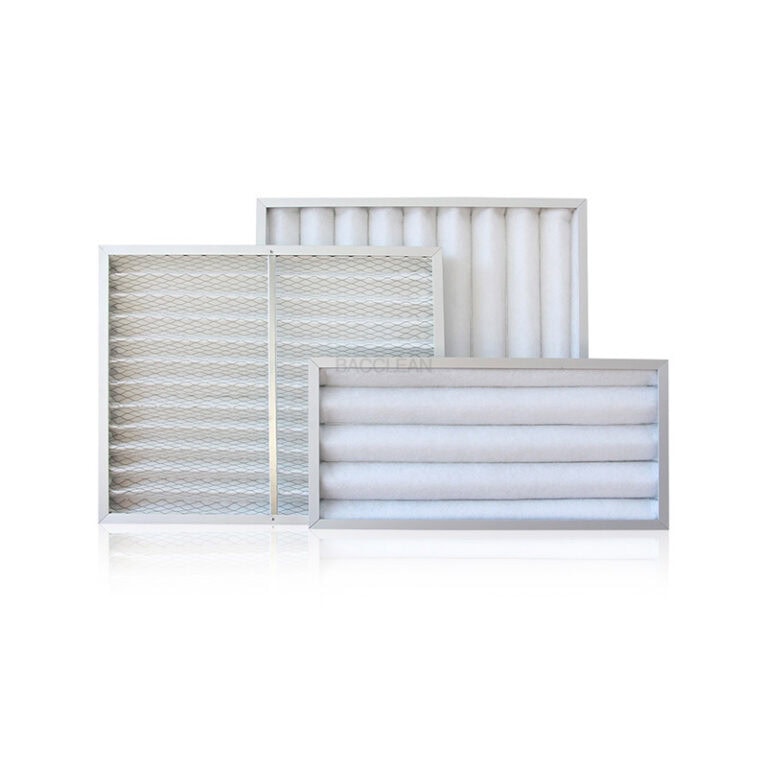
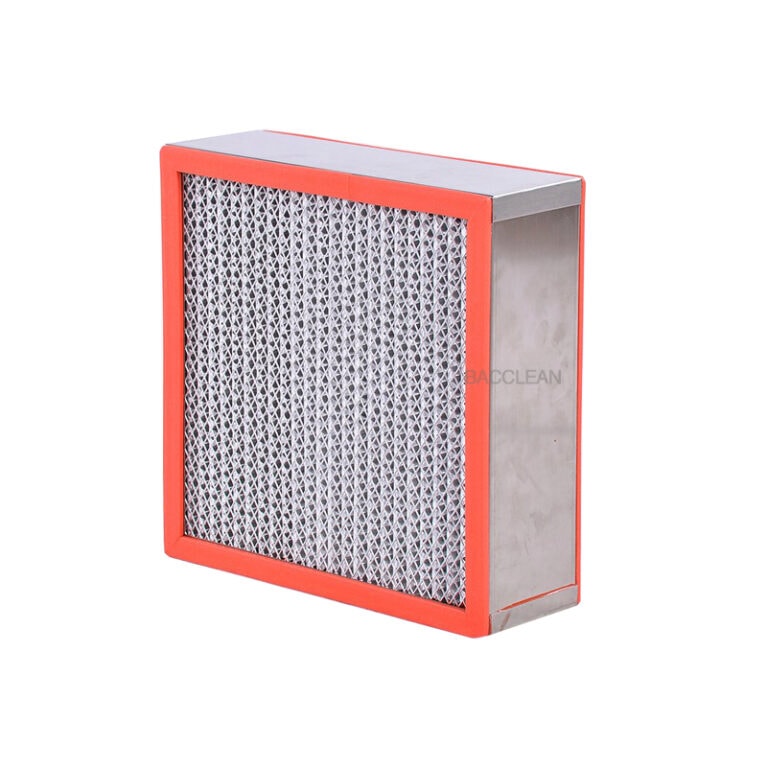
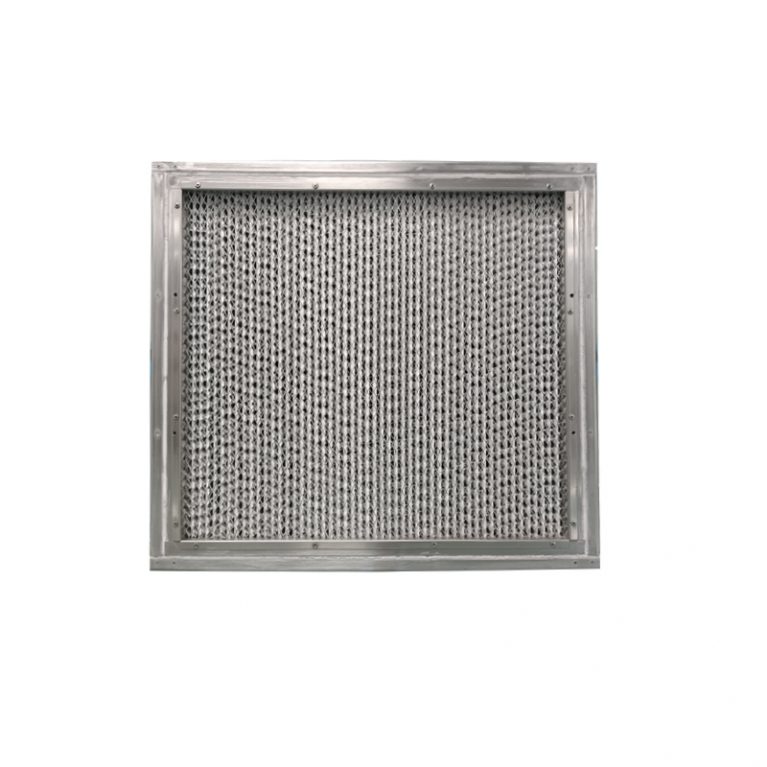
- Filtration and residual gas treatment unit: Both air inlet and exhaust are equipped with H14 HEPA filters to prevent particle contamination. The catalytic decomposition module is the core component to decompose hydrogen peroxide vapor and avoid risks brought by tail gas emission.
- Monitoring and sensing system: VHP concentration sensor, temperature & humidity sensor, pressure sensor and residual gas detector upload data in real time, serving as core measuring points for validation.
- PLC automatic control and interlock system: HMI touch screen for parameter setting. The whole process automatically records curves and alarms. Dual-door interlock is a mandatory safety logic: the inner door cannot be opened before the sterilization cycle is completed or residual gas exceeds the standard, physically blocking direct connection between clean areas of different grades.
- Supporting indicator positions: Reserved positions for biological indicators and chemical indicators for IQ/OQ validation and regular routine confirmation.
3. Application Scenarios and Boundary Distinction
The sterile pharmaceutical workshop is the mainstream application: for Grade A filling, subpackaging and capping processes under Grade B background, culture media, consumables, tools and samples are sent into the sterile core area after sterilization via VHP pass box from Grade C/D zones. It solves the drawbacks of UV pass boxes such as light shadow dead zones and non-verifiable sterilization.
IVD in vitro diagnosis, cell laboratories and biosafety laboratories: transfer of petri dishes, reagent kits and lab consumables, with both biological isolation and sterile control. Medical device sterile workshops: transfer of sterile packaging tools and gauges to meet sterile release validation requirements.
Meanwhile, the application boundary must be clarified: VHP only sterilizes the outer surface of materials and cannot penetrate the inside of sealed packages. Materials susceptible to oxidation and hydrogen peroxide corrosion (some rubber parts, copper components) cannot be placed directly into the chamber. Precision electronic materials are suitable for dry VHP treatment with condensation control to avoid water damage.
Comparison with ordinary UV pass boxes: UV can only irradiate facing surfaces and fails in shadow areas, only suitable for auxiliary rooms of Grade C/D. VHP gas penetrates without dead corners and can kill spores to meet GMP sterile audit requirements. However, its cycle lasts longer, usually dozens of minutes, so it is not suitable for high-frequency rapid turnover of materials.
4. Core Parameters for Selection
- Sterility Assurance Level (SAL): GMP sterile projects require SAL 10⁻⁶ (6-log reduction), using Geobacillus stearothermophilus biological indicators for validation.
- Chamber material and sealing form: 316L stainless steel + inflatable sealing is preferred for Grade A/B sterile zones; 304 stainless steel with static sealing is available for ordinary auxiliary transfer.
- VHP control mode: Built-in generator or external VHP host, select according to demand. Closed-loop concentration control is required instead of simple timing spraying.
- Residual gas control index: Hydrogen peroxide residue ≤1ppm after aeration, with matched filtration and decomposition on the exhaust side to protect the workshop environment.
- Filter grade: H14 HEPA for air inlet and outlet, supporting PAO leak test.
- Data traceability: Automatically store temperature, humidity, VHP concentration, pressure and alarm records, exportable audit trail data to meet GMP data integrity requirements.
- Chamber size and load capacity: Select the size according to the maximum outline dimension of transferred materials, reserve gaps for gas circulation. Overloading materials will hinder gas diffusion and lead to sterilization failure.
5. Common Misunderstandings in Design, Operation and Maintenance
- Overloading materials: Stacked materials block VHP gas circulation and form internal dead corners, resulting in positive biological indicators and sterilization failure.
- Ignoring condensation risk: Failed humidity control liquefies hydrogen peroxide, corroding chambers and packages and dampening materials.
- Replacing ordinary pass boxes with VHP pass boxes for high-frequency transfer of small parts: VHP cycle is long with low efficiency. UV pass boxes are more suitable for high-frequency non-spore disinfection scenarios.
- Skipping residual gas detection before opening doors: Residual hydrogen peroxide entering sterile zones will contaminate products, irritate operators and corrode rubber seals.
- Only completing initial validation without periodic revalidation: Aging seals, blocked nozzles and failed catalytic modules will cause sterilization performance drift. Regular recheck with BI and CI is required.
Daily operation and maintenance points: Check curves and alarm records after each cycle; calibrate VHP, temperature and humidity sensors regularly; inspect inflatable sealing strips for aging and damage; replace HEPA filters and catalytic modules on schedule; carry out biological indicator challenge tests according to validation cycles; clean the chamber to avoid organic residues consuming VHP and reducing sterilization efficiency.
Conclusion
Essentially, the VHP hydrogen peroxide pass box is a sealed, verifiable gaseous surface sterilization and isolation system. It adopts vaporized hydrogen peroxide as the sterilization medium, realizes dead-corner-free spore inactivation via sealed chamber and gas penetration, eliminates residues through catalytic decomposition, and isolates clean areas of different grades with reliable interlock.
It solves the pain points of traditional UV pass boxes: incomplete sterilization, dead corners and inability to pass GMP sterile validation. It is core equipment for material transfer across grades in sterile pharmaceutical and biological laboratories. Select models according to material characteristics, clean grade and transfer frequency, strictly control temperature, humidity, VHP concentration and residual gas indicators, and maintain continuous validation and regular maintenance to steadily achieve pollution control goals for material transfer in sterile zones.
