
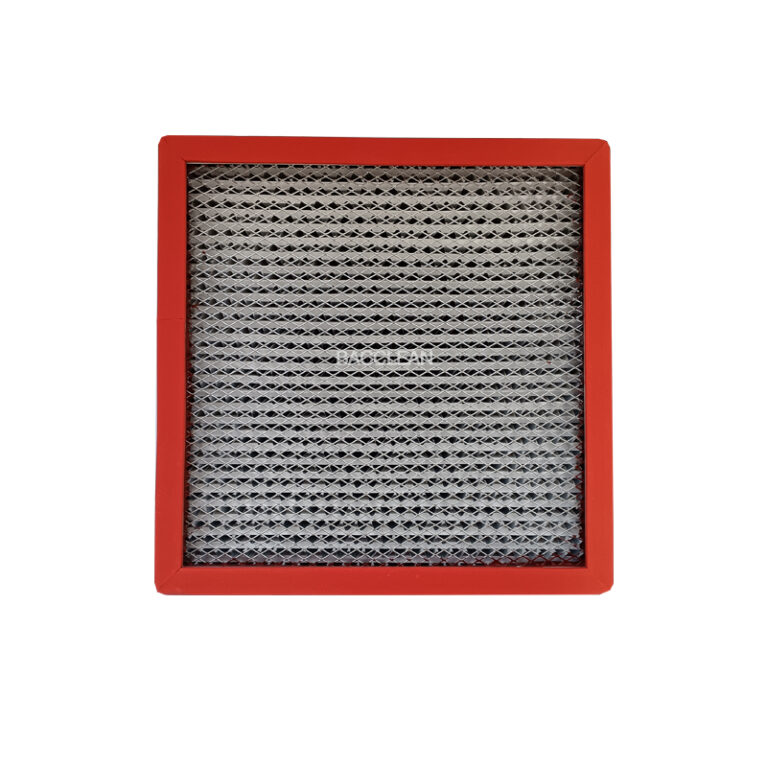
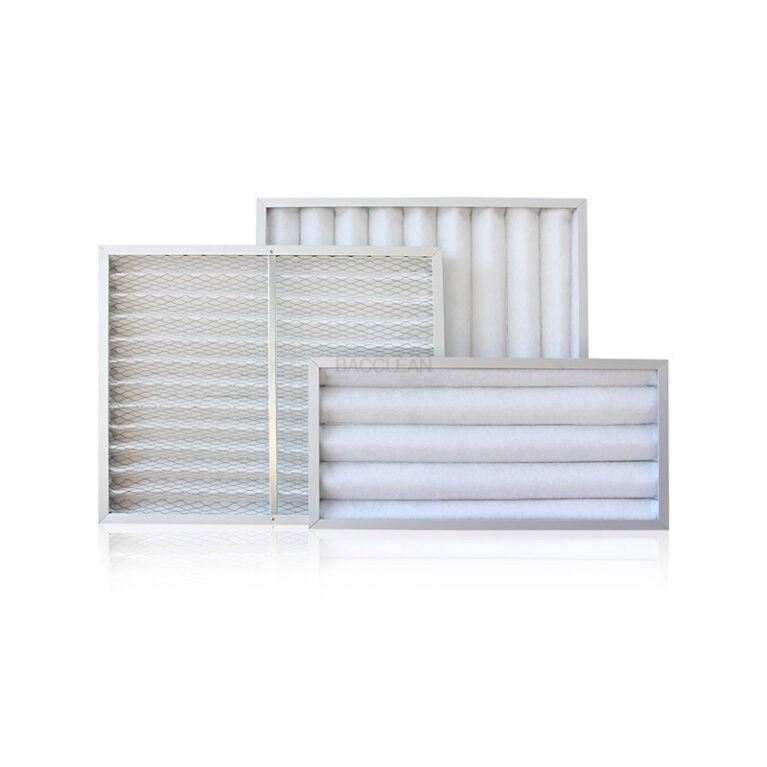
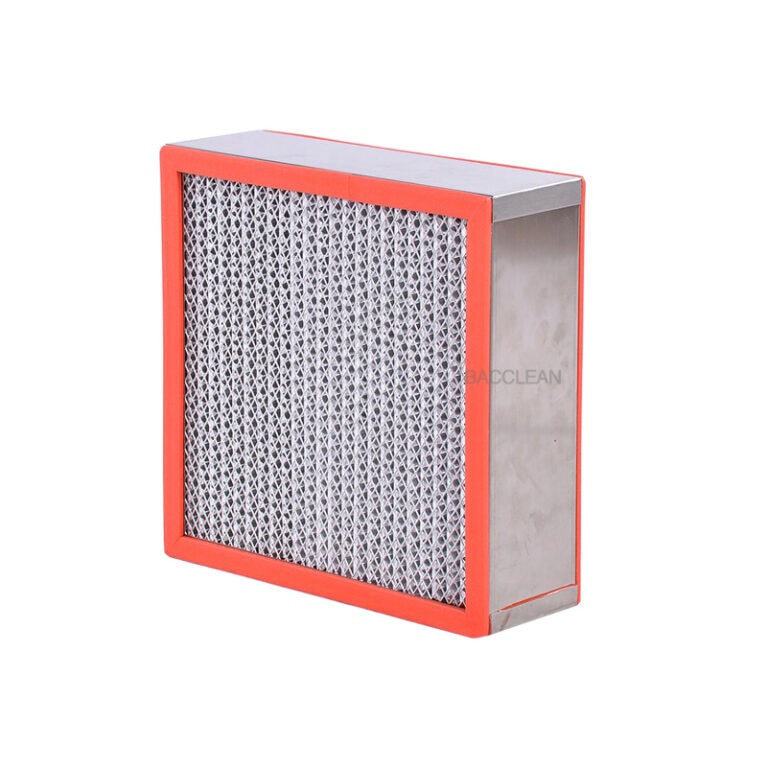
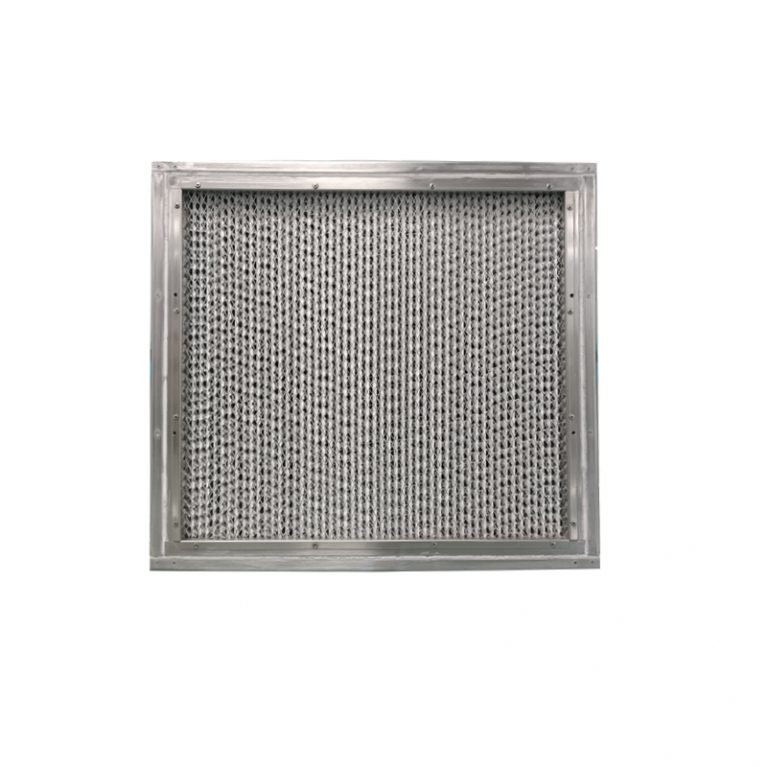

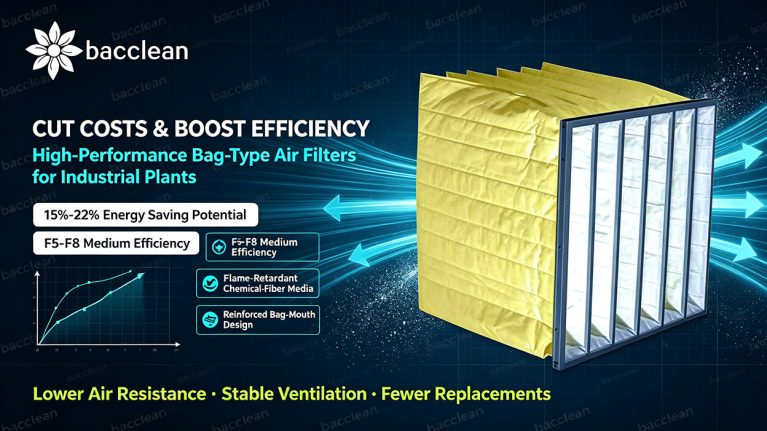
According to purification‑industry survey data, energy consumption from medium‑efficiency filtration accounts for 15%‑22% of the total energy consumption of ventilation systems in domestic industrial plants. Frequent replacement of traditional low‑efficiency filters and high fan load triggered by excessive air resistance constitute one of the major contributors to high enterprise operation‑and‑maintenance costs. The upgraded bag‑type air filters adopt brand‑new flame‑retardant chemical‑fiber filter media and three‑dimensional bag‑structure design. Optimized spacing between filter bags effectively expands the available filtration area. While maintaining F5‑F8 filtration grades, operating air resistance is reduced by over 18%, yielding substantial fan‑energy‑saving effects. Meanwhile, high‑strength sewing processes and reinforced bag‑mouth design completely eliminate filter‑bag detachment and cracking under long‑term high‑air‑volume operation. Service life is extended by 30 % compared with conventional counterparts.
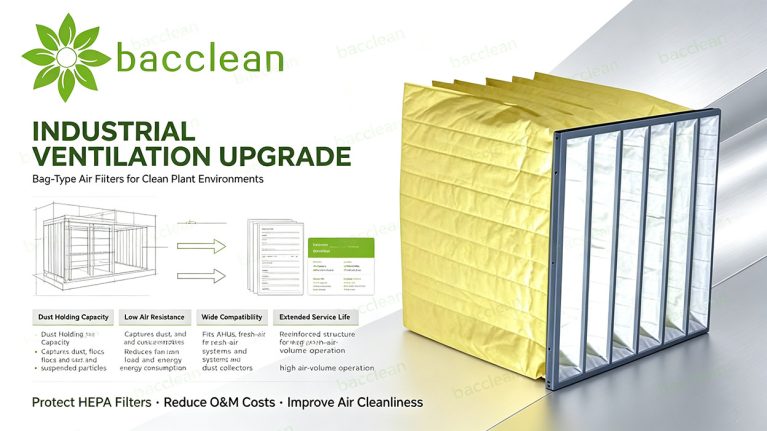
For real‑world application scenarios, this new‑generation bag‑type air filter is compatible with various air‑handling units, fresh‑air systems and industrial ventilation & dust‑removal equipment. It accurately intercepts airborne contaminants such as dust, flocs and suspended particulate matter. It protects downstream HEPA filters, extends the service life of the whole purification system, stabilizes workshop air cleanliness and improves working conditions. At present, the product has been deployed in purification‑retrofit projects for multiple large‑scale food factories and electronic‑component manufacturing plants in the Yangtze River Delta and Pearl River Delta, with positive field feedback. Multiple enterprise operation‑and‑maintenance supervisors report that after switching to the new bag filters, workshop ventilation stability is greatly improved, filter‑replacement frequency drops, and annual purification O&M costs are reduced by approximately 20%.
Industry experts point out that industrial purification equipment will keep evolving toward lower energy consumption, longer service life, easier maintenance and environmental friendliness. As the mid‑stream core component of ventilation‑purification systems, bag‑type air filters perform a critical transitional filtration function. Their performance upgrade is essential for the efficient and stable operation of complete purification systems. As clean‑production standards for manufacturing keep rising, market demand for cost‑effective, energy‑saving bag‑type air filters will keep growing, turning them into must‑have products within the industrial‑purification sector, and supporting industrial enterprises to achieve both environmental compliance and cost‑efficiency improvement.
