
Audit Control Plan for Accuracy and Completeness of Negative Pressure Weighing Room Inspection Records (Applicable to GMP Audit)
This plan is implemented from six dimensions: personnel management, filling norms, on-site control, rechecking and verification, traceability closure, and training assessment, to completely eliminate the problems of omitted filling, false filling, data distortion, and missing records.
I. Pre-control: Ensure the authenticity and completeness of records from the source
1. Define job responsibilities and assign them to individuals
Operator’s primary responsibility: Pre-checking before startup, observing parameters during operation, confirming cleaning at the end of the shift, filling in immediately during the shift, prohibiting filling after the shift or making up entries the next day.
Team leader’s review responsibility: Before each shift ends, check each record item one by one, verify abnormalities and blank items on the spot.
QA inspection supervision: Conduct on-site random checks daily, compare real-time equipment parameters with paper records.
Equipment administrator’s archiving review: Recycle ledgers weekly, uniformly check for completeness, and hold accountable for missing records.
2. Standardize record forms to prevent omissions
Fixed mandatory items in the template: Negative pressure and wind speed must have a numerical filling column, not just a checkmark for normal/abnormal;
Each inspection item is listed separately in a row, without merging large blank columns to prevent deliberate skipping;
Set mandatory columns: Date, shift, start/stop time, operator, reviewer, abnormal description area. Blank indicates incomplete record;
Support on-site signboards: Post inspection standards and record filling requirements beside the weighing room to facilitate employees’ reference.
3. Provide on-site hardware support to facilitate real-time data collection (ensuring data accuracy)
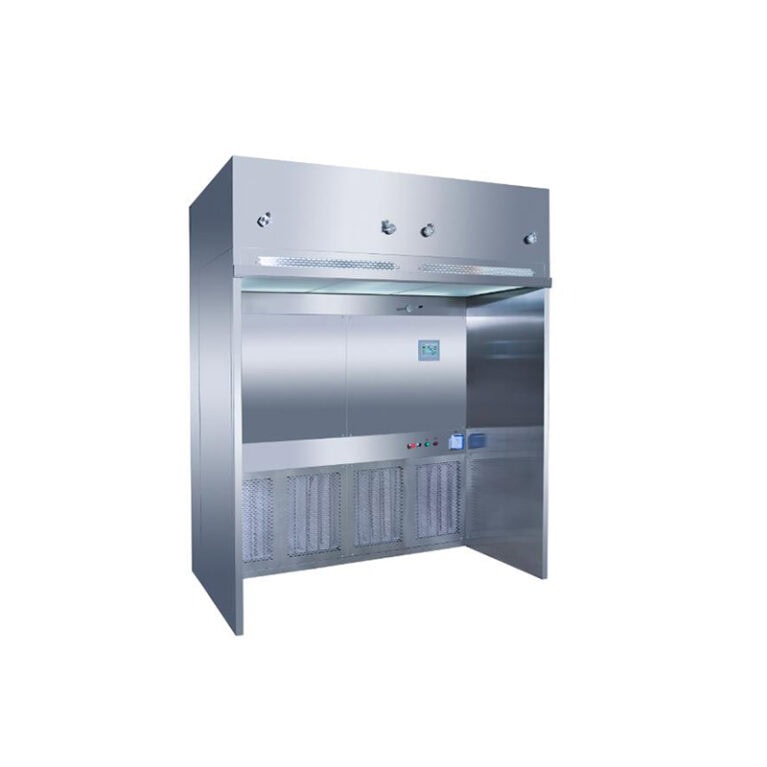
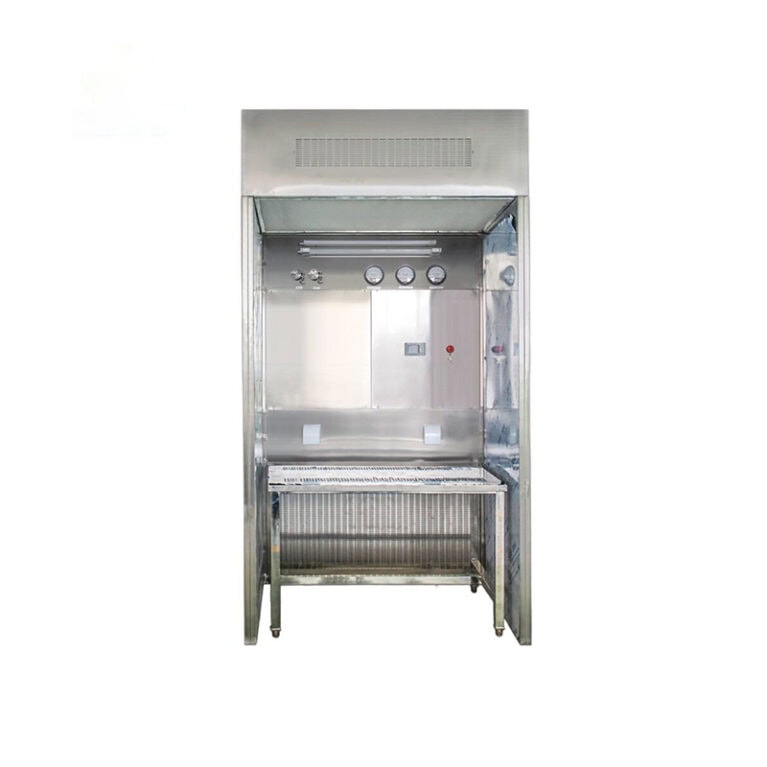
Pressure differential meters and wind speed indicators are installed in positions visible to the operators, no need for estimation while moving;
Equip fixed wind speed meters for fixed storage, measure the operating port wind speed for each shift, prohibit estimating based on experience;
Regularly calibrate instruments (monthly calibration of pressure differential sensors, annual calibration of wind speed meters), avoid data distortion of the instruments leading to record errors;
Attach calibration labels to the instruments, indicating the validity period, and prohibit using expired instruments or recording data.
II. Filling Norms System to Ensure Accurate and Compliant Records
1. Real-time filling, prohibit post-event supplementation or pre-filling
Strict regulations: Fill one item for each inspection, record parameters immediately after the startup is completed, do not fill the entire shift at once;
Prohibit pre-filling blank record sheets or proxy filling others’ records; QA inspection finds pre-filling or proxy filling, directly issue a deviation.
2. Unified data filling standards
Quantitative parameters (negative pressure, wind speed): Must fill in the measured numbers, such as negative pressure – 22Pa, wind speed 0.38m/s, only writing “normal” is considered incomplete record;
Qualitative inspection items (gasket, fan, gloves, filter screen): Check “normal” or “abnormal”, abnormal must be specified in a dedicated column (e.g., slight cracking of door gasket, excessive dust on return air filter), only checking abnormal without description is considered unqualified;
Clear handwriting, use black signature pens, no pencils or correction fluids for correction;
Data error modification rules: Cross out the incorrect value with two lines, write the correct value above, sign the name + modification time at the modification place, prohibit blackening and covering.
3. Prohibit blank item management
No data, no inspection, no measurement columns must not be left blank;
Unused equipment on the current day should be marked: “This shift has no production, equipment is idle, not running” and signed;
Equipment failure shutdown: Specify the reason for shutdown and the shutdown time, do not skip inspection items with blank entries;
Shift handover remarks, abnormal description column, no abnormalities should be uniformly filled in “No abnormalities”, no blank spaces allowed.
III. Process Rechecking and On-site Comparison to Verify Data Authenticity
1. Three-level rechecking mechanism
First-level self-check (operator): Read and review the entire form, check for any omissions or significant deviations from the standard (such as negative pressure – 5Pa, wind speed 0.6m/s without marking abnormal), and sign again if no errors are found;
Second-level in-shift recheck (team leader): Conduct two-point on-site rechecks before each shift ends: ① Compare the current reading of the pressure difference gauge with the recorded values in the table to ensure consistency;
② Check item by item whether all the inspection items have been filled in and whether there are any descriptions of abnormalities;
Third-level regular inspection (QA / Equipment Operator)
Randomly inspect 1 to 2 weighing rooms daily: Measure the negative pressure and wind speed on-site and compare them with the records of the current shift;
Extract historical records for 3 days and trace the equipment maintenance and filter replacement records during the same period to cross-verify whether the logic is consistent.
2. Closed-loop verification of abnormal data (to prevent concealment and distortion)
When an abnormal parameter appears in the record sheet (negative pressure < -15 Pa, wind speed exceeds 0.35 – 0.45 m/s, abnormal noise from the fan, air leakage, etc.), the following three things must be completed simultaneously:
In the “Abnormal Explanation Column”, describe the phenomenon completely;
Record the on-site handling measures (stop the machine / clean the filter / adjust the door seal / report for maintenance);
After maintenance / handling, re-measure the data and fill it in the remarks column;
Only record the abnormalities, without handling or re-measurement results, and determine that the record is incomplete, and initiate a minor deviation.
Four. Ledger archiving management to avoid loss and missing pages
The record sheet is bound in chronological order by equipment number and date, one book corresponding to one weighing room, and divided by month;
At the end of each day, the team leader collects them uniformly, and it is prohibited to leave the record sheets on the site for a long time and cause loss or damage;
Establish a ledger borrowing registration: Record the issuance of the record sheet number, keep the invalidated records completely, and do not tear them up;
Store in a dry and light-protected environment to prevent blurred handwriting and page damage, resulting in information loss;
The retention period is strictly implemented: At least 1 year after the product expiration date, and the audit can fully retrieve records for any date.
Five. Personnel training and assessment to reduce human errors
Special training for new employees before onboarding: Record sheet filling requirements, parameter standards, modification norms, key points of abnormal filling, etc., and only allow independent operation after passing the assessment;
Conduct a review training once a month: Summarize the common problems in the records of the current month (omission of wind speed, no description of abnormalities, proxy filling, pre-filling), and correct on-site examples;
Integrate record completeness and accuracy into job performance assessment:
If there are multiple omissions, false records, proxy filling, etc., conduct re-training for the position;
Repeat violations trigger training, assessment, or performance penalties.
Six. Common problem prevention checklist (down-to-earth self-inspection)
| Common Questions | Control Measures |
| Only select “Normal”, do not fill in the negative pressure and wind speed values. | During the team leader’s review, any blank spaces without numbers must be carefully checked. If there are no numbers, the form should be returned for re-filling. |
| Failing to record or conceal the discovery of equipment abnormalities | The QA team compares the equipment status on-site. Once any deviation is detected, an issue report will be issued. |
| Fill in the entire day’s records all at once after work. | Unscheduled on-site surprise inspections, verification of real-time instrument readings |
| Modification record has no signature and is severely altered. | Standardize the revision process and training requirements for signatures |
| The record sheet is lost or has missing pages. | Daily recycling, numbering and binding, and registration of borrowing and usage |
| The malfunction of the instrument led to incorrect data recording. | The instruments are calibrated on schedule, labeled with calibration tags, and are deactivated when the labels expire. |
VII. Audit-level Supporting Evidence (Enhancing Record Credibility)
Integration of inspection records with supporting ledgers: Filter replacement records, monthly maintenance records, PAO leak detection reports, and equipment repair records are mutually consistent;
Forming a complete chain of evidence for critical abnormal events: Inspection anomaly records → Maintenance work orders → Post-repair re-measurement records → QA confirmation records, all traceable throughout;
Retaining instrument calibration certificates as supporting documents for data accuracy.
