
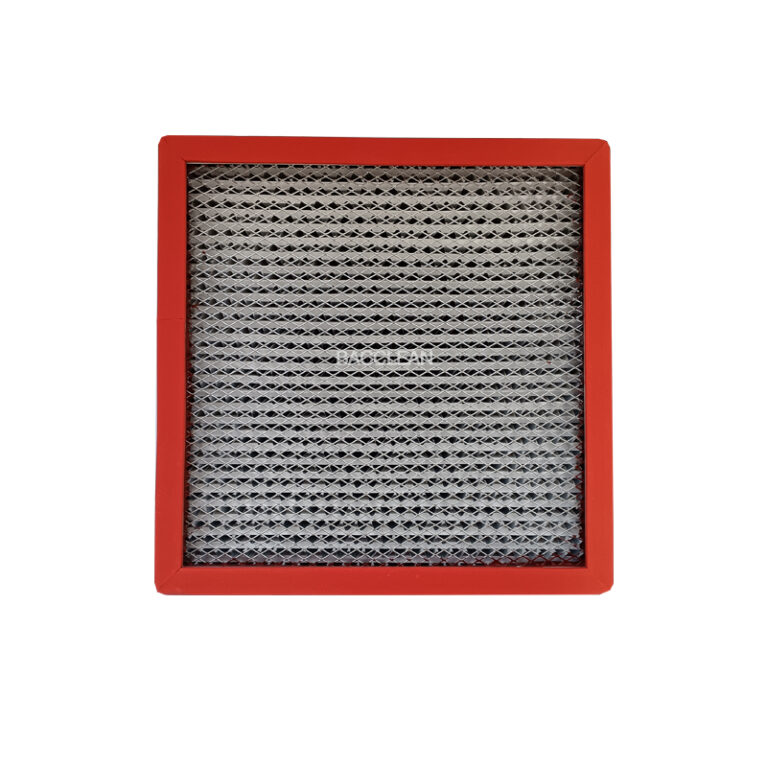
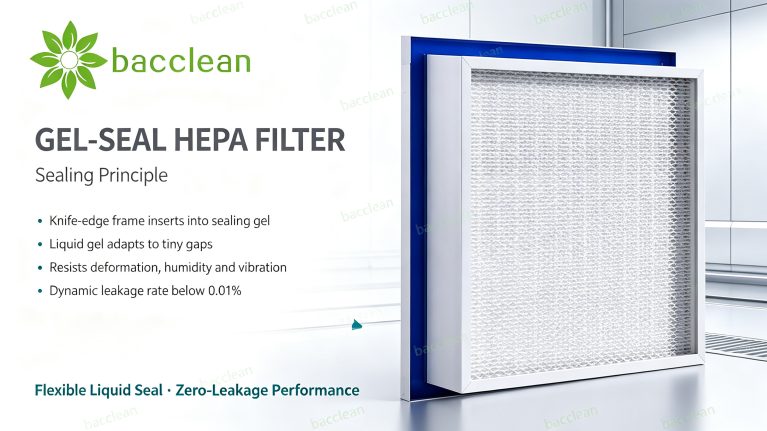
The core sealing principle relies on adaptive liquid sealing mechanism, which is the most prominent technical highlight of this equipment. Traditional filters adopt rigid sealing by mechanically compressing solid rubber gaskets. Such sealing is highly susceptible to temperature & humidity variation, equipment deformation and air pressure vibration, and tends to develop gaps and air leakage after prolonged operation. In contrast, gel-seal HEPA filters adopt a flexible sealing structure consisting of a knife-edge frame and liquid sealing gel. An annular sealing trough is built on the filter frame and filled with special inert sealing silicone gel. The knife-edge rim of the filter inserts precisely into the sealing liquid and remains fully submerged in the liquid medium. Leveraging the thixotropic property of non-Newtonian fluid, the liquid sealing layer can adaptively fill all tiny gaps. It maintains seamless contact even when minor equipment deformation, temperature/humidity fluctuation or air pressure vibration occurs, achieving dynamic zero-leakage sealing with the air leakage rate stably kept below 0.01%.
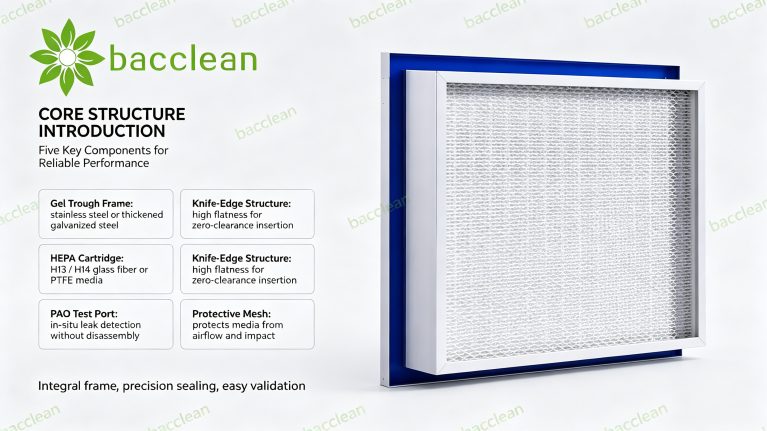
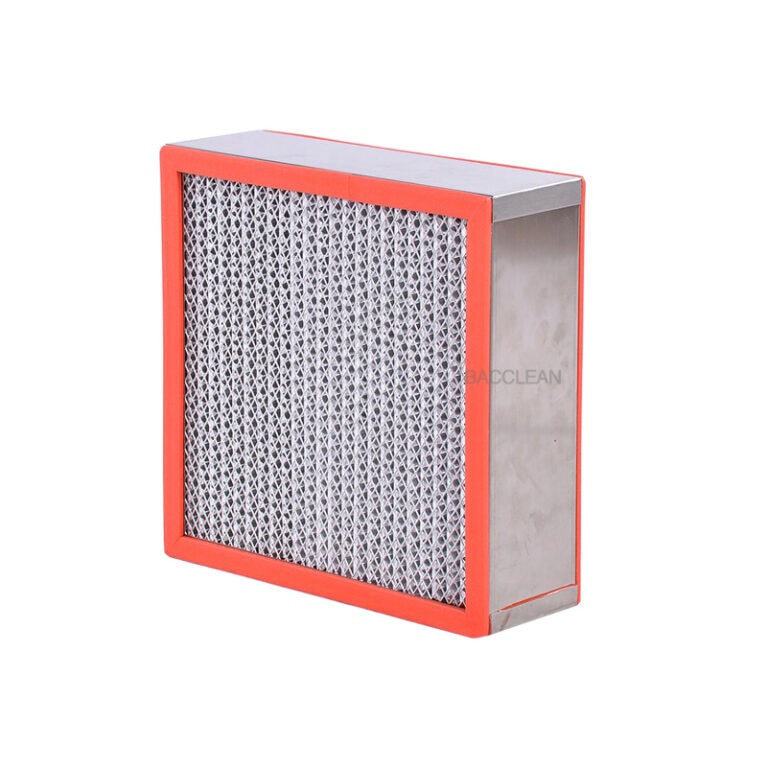
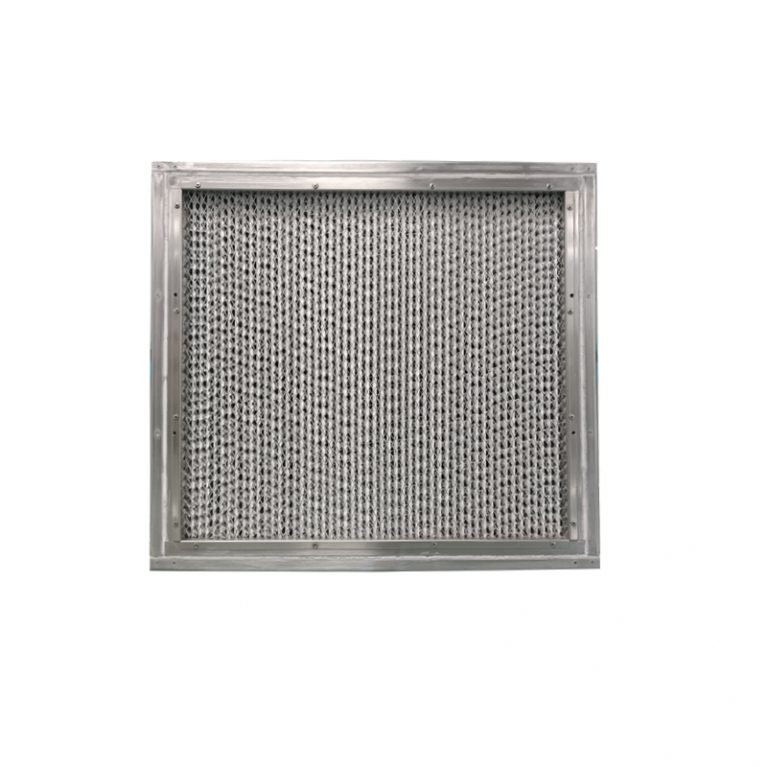
The core equipment structure is composed of five components: gel trough frame, HEPA filter cartridge, knife-edge sealing structure, PAO test port and protective mesh. The gel trough frame is integrally formed from stainless steel or thickened galvanized steel sheet, featuring flat surface, high precision and anti-deformation performance to guarantee reliable sealing. The filter cartridge uses H13 / H14 grade ultra-fine glass fiber filter paper or PTFE membrane filter media with high filtration precision, low air resistance and large dust holding capacity. The precisely polished knife-edge structure ensures zero clearance after insertion into the sealing gel. A dedicated PAO test port comes as standard, enabling on-site non-destructive leak testing without filter disassembly. Front and rear protective meshes shield the filter media from airflow erosion and external mechanical damage.
Core performance parameters are strictly aligned with international high-end cleanroom standards. Filtration grades cover H13 and H14. H13 achieves ≥99.97% efficiency for 0.3μm particles, while H14 reaches ≥99.995%, meeting the requirements of Class 10, Class 100 and Class 1000 ultra-high cleanliness levels. The initial resistance ≤230 Pa, final resistance ≤450 Pa, delivering excellent resistance stability and minimal airflow attenuation during long-term operation. Applicable operating temperature ranges from -20℃ to 80℃, relative humidity ≤98% without condensation, compatible with complex cleanroom conditions such as high temperature and high humidity. Standard dimensions include 610×610×220mm, 1220×610×220mm, and full-size non-standard customization is supported.
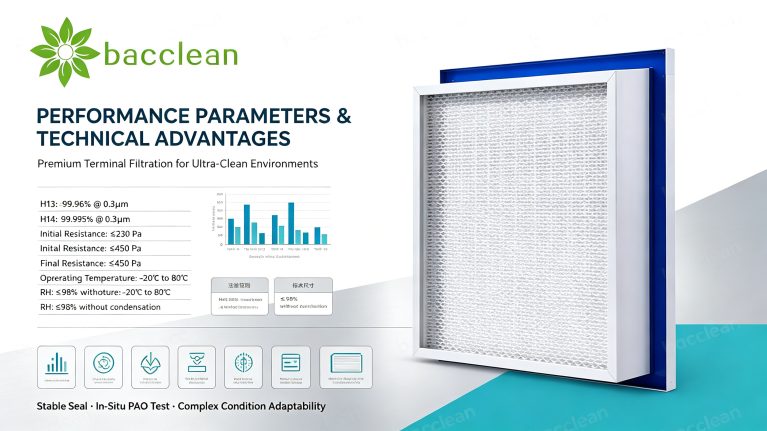
Compared with conventional HEPA filters, gel-seal HEPA filters have three major technical advantages:
- Non-degrading sealing: Liquid sealing will not age or crack, preventing air leakage over long service cycles.
- Convenient inspection: Built-in test ports support in-situ leak detection.
- Superior working condition adaptability: Flexible sealing performs far better than rigid gasket sealing under various complex environments.
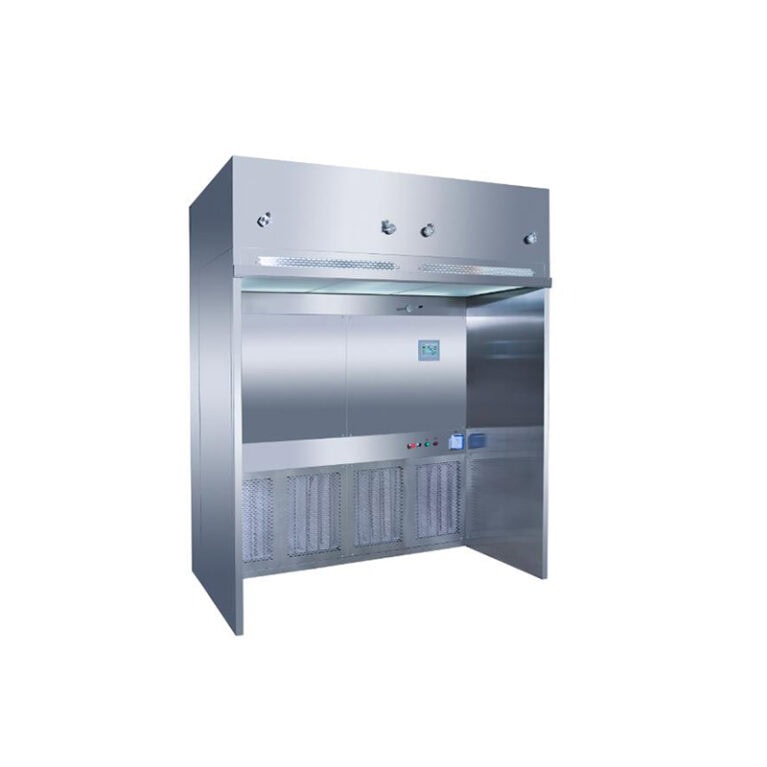
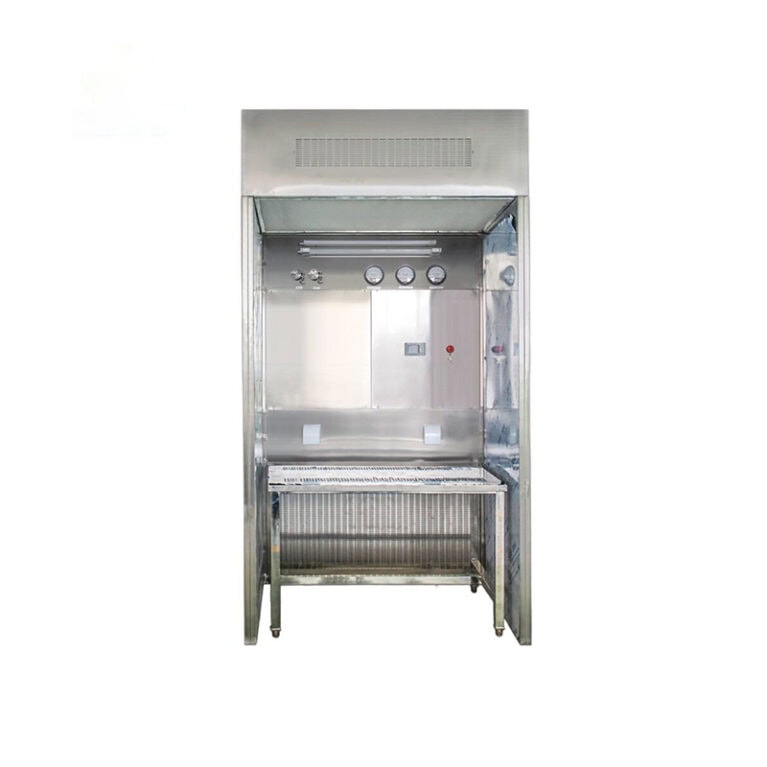
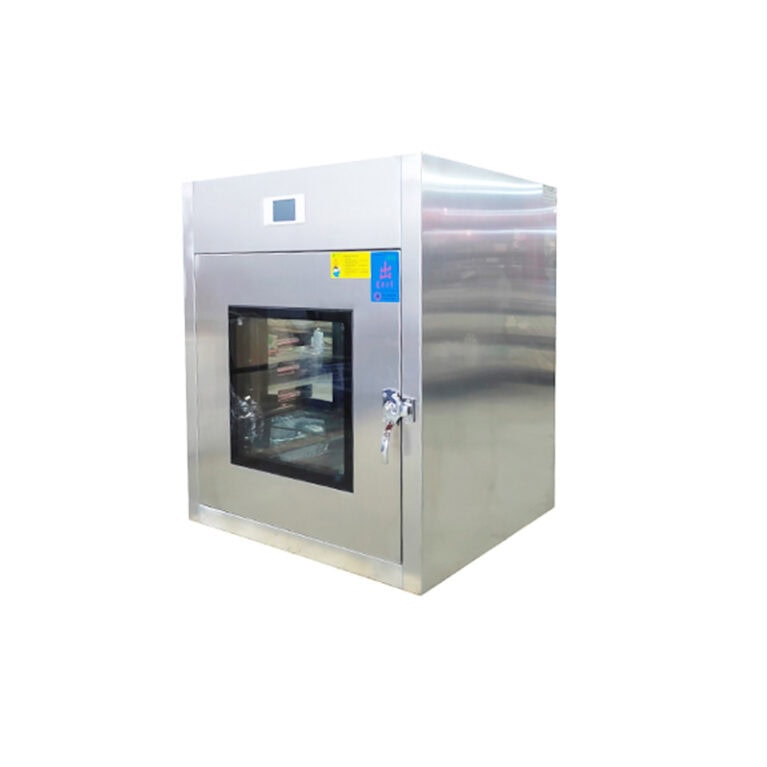
Benefiting from these core technical merits, gel-seal HEPA filters occupy a core position in the high-end clean filtration market and act as critical guarantee equipment for ultra-high-grade clean environments.
