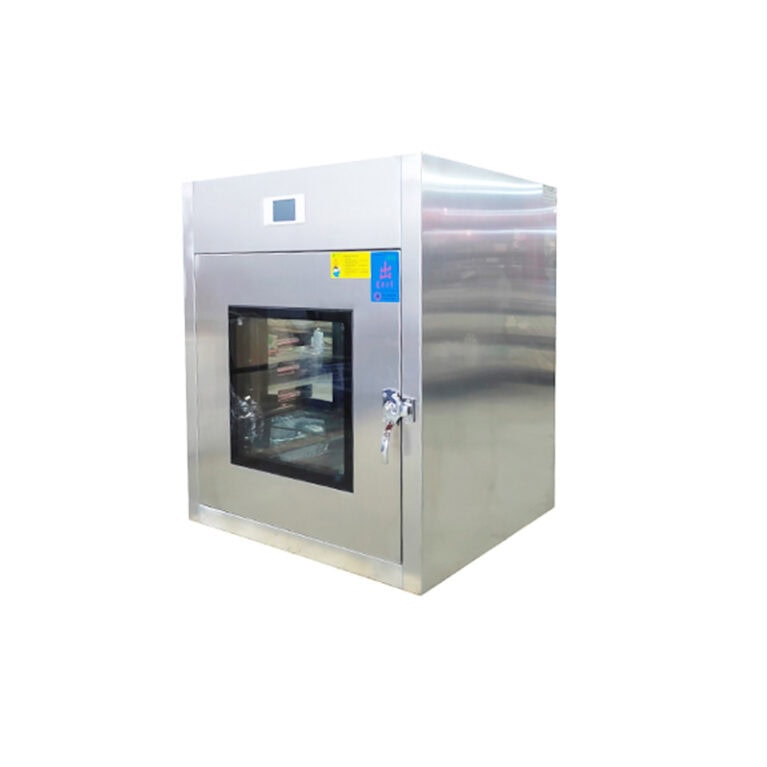
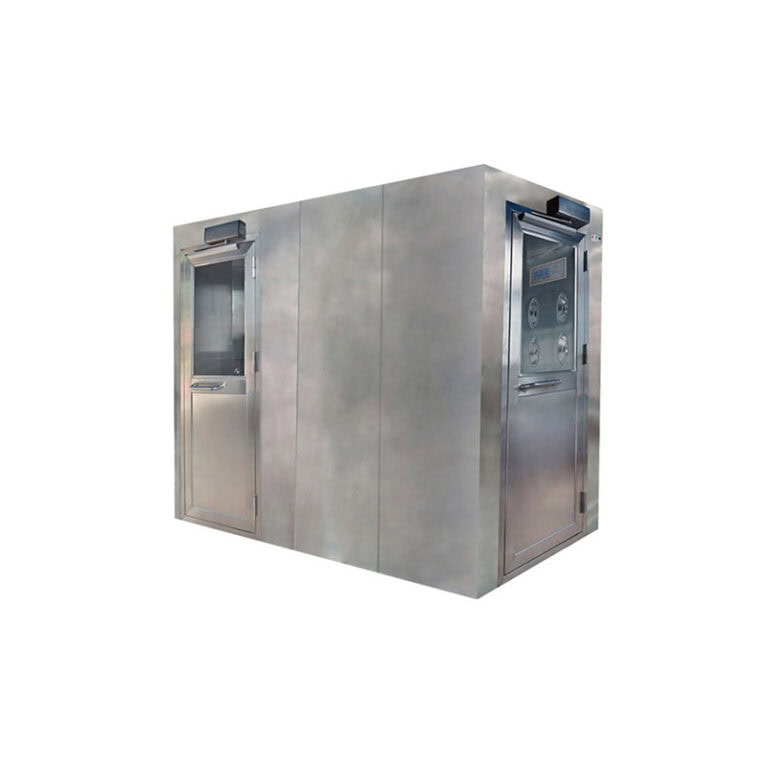
Passage Window Complete Usage Prohibitions (General for Cleanrooms, divided into four categories: operation, materials, equipment, and safety)
I. Door Interlock Operation Prohibitions (The most critical, directly disrupting the clean air pressure difference)
It is strictly prohibited to open both the inner and outer doors simultaneously.
The interlock device is designed to prevent both doors from opening at the same time. Once both doors are opened simultaneously, the positive pressure in the clean area will be lost, and dust and microorganisms from the outside will directly flow in, causing the entire clean room to be contaminated; if the interlock fails, it must be immediately stopped and repaired. It is forbidden to forcibly pry the door open or dismantle the interlock switch.
It is prohibited to open one door while the other is not fully closed.
If the door is not tightly fastened or there is a gap in the sealing strip, the pressure difference will continue to leak, equivalent to a partially open door causing contamination.
Do not lean against, collide with, or forcefully drop or smash the passage window door.
This may cause the door frame to deform, the sealing strip to not be tightly pressed, and the electromagnetic lock to be damaged, resulting in permanent air leakage.
Prohibit blocking or jamming the door body (using materials, cardboard boxes to block the door)
Long-term jamming will cause the sealing strip to permanently deform and lose its sealing effect.
II. Material Transfer Prohibitions
Prohibit transferring personnel, large workpieces, equipment, carts, etc., with oversized items
Only allow the transfer of small materials, tools, samples, etc. It is strictly prohibited for people to pass through the passage window.
Materials must not fill the box, be close to the ultraviolet lamp tube, or block the air duct (for laminar flow models)
The ultraviolet rays cannot fully cover, and the airflow short circuits, resulting in the failure of disinfection and self-purification.
Materials with uncleaned and disinfected outer packaging must not be sent into the clean area
Cardboard, foam, woven bags have a lot of dust, and should be removed from the outer area, wiped and disinfected before being placed back.
Leaking liquids, unsealed waste liquids, powder materials should be directly placed
Leaking liquids will corrode the stainless steel box and contaminate the sealing strip; powder materials will adhere to the high-efficiency filter, contaminating the clean area.
Hot objects, open flames, hot workpieces should not be placed directly
High temperatures will accelerate the aging and cracking of the rubber sealing strip, shortening its service life.
Prohibit transferring flammable, explosive, strongly corrosive, highly volatile toxic reagents
Ultraviolet irradiation, in a sealed space, volatile gases are prone to accumulate, posing risks of fire, corrosion of the box, and poisoning of personnel.
Polluted, contaminated waste materials must not be directly opened the door after reverse transfer
Cleaned-out contaminants from the clean area must be immediately closed the door, and it is not allowed to keep the door open for a long time.
III. Ultraviolet Disinfection Usage Prohibitions
When the ultraviolet lamp is working, it is strictly prohibited to directly look at the lamp tube or extend hands/skins into the box
Ultraviolet rays can damage the cornea and burn the skin.
It is not allowed to open the door to take materials before the prescribed disinfection time is completed
The standard disinfection time for a sterile workshop is ≥ 15 minutes. Opening the door directly before completing the sterilization will bring in microorganisms.
Do not stack shielding materials on the ultraviolet lamp
The shaded areas cannot be disinfected, resulting in contamination dead zones.
IV. Equipment Storage and Environmental Prohibitions
Do not stack materials or leave equipment idle for a long time in the passage window
The box should remain empty, only temporarily placed during transfer, and long-term stacking will lead to dust growth and bacterial breeding.
Do not directly rinse the inside of the box, electrical control switches, electromagnetic locks with water
Water ingress into the circuit will short-circuit and burn out the interlock, ultraviolet lamp controller, and cause leakage hazards; cleaning should only be done by using a dust-free cloth dipped in disinfectant.
Prohibit drilling, cutting, or私自 modifying the passage window box or door frame
This will damage the overall airtightness and structure, resulting in permanent air leakage.
Do not stack heavy objects on the top of the passage window or the door frame
The box will deform, and the door gap will fail to seal.
V. Management and Operation Prohibitions
Continue to use the passage window when the interlock, ultraviolet lamp, or fan is faulty
The faulty state cannot guarantee the isolation of cleanliness, and it is necessary to hang a sign to stop and repair.
Mixing materials from different cleanliness levels without strong disinfection
Transfer materials from a high-cleanliness level to a low-cleanliness level is acceptable, but transfer materials from a low-cleanliness level to a high-cleanliness level must be completely disinfected, and the omission of disinfection steps is prohibited.
Use strong acid and strong alkali disinfectants for cleaning
They will corrode the inner wall of the stainless steel box and accelerate the aging of the rubber sealing strip, and prefer 75% ethanol and diluted peracetic acid. Untrained personnel operate the transfer window at will and fail to transfer materials in accordance with the SOP procedures.