
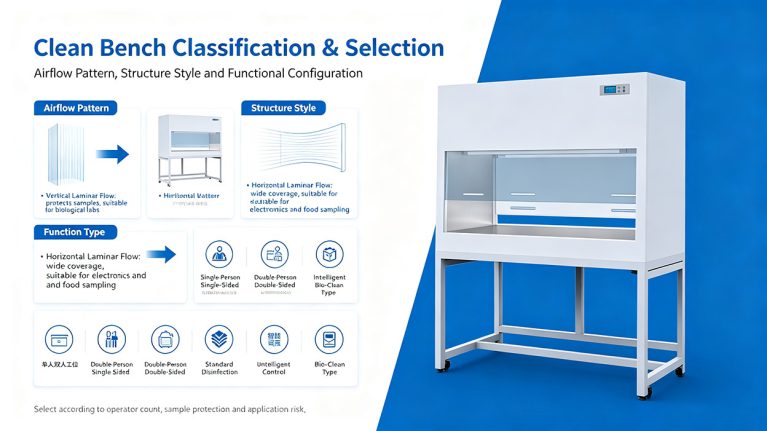
Classified by airflow pattern, vertical laminar flow and horizontal laminar flow represent the two mainstream models. Selection is mainly based on operated objects and pollution‑protection requirements. For vertical laminar flow clean benches, airflow flows downward to cover the work surface, which effectively avoids contamination generated by operators’ limbs and respiration. Prioritizing sample and material protection, they are the preferred option for biological laboratories, microbial testing, cell culture, aseptic pharmaceutical manufacturing and other scenarios. With no airflow dead zones inside the operating area, pollutants sink and are exhausted without secondary diffusion, making them suitable for fine operations requiring extremely high sample cleanliness.
Horizontal laminar flow clean benches deliver uniform horizontal airflow with wide coverage and low airflow resistance, bringing lower operation and maintenance costs. They are mainly applied in assembly of precision electronic components, optical instrument commissioning, aseptic sampling for food industry, chemical reagent preparation and other scenarios. Featuring an open operating space free of impact and interference exerted by vertical airflow on materials, they fit large‑scale open‑style material handling. Nevertheless, they provide limited protection for operators and shall not be adopted for experiments with pathogenic microorganisms.

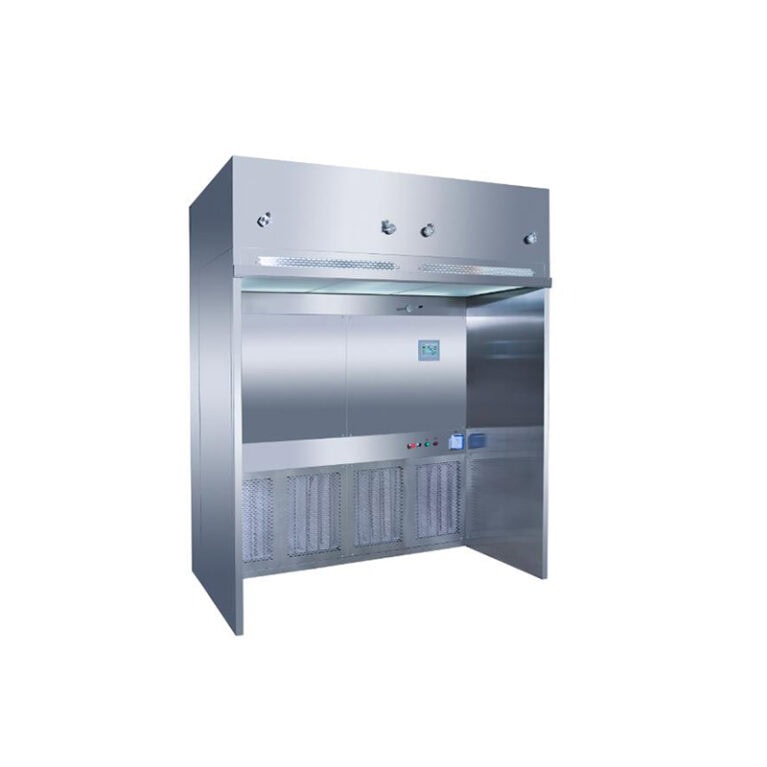
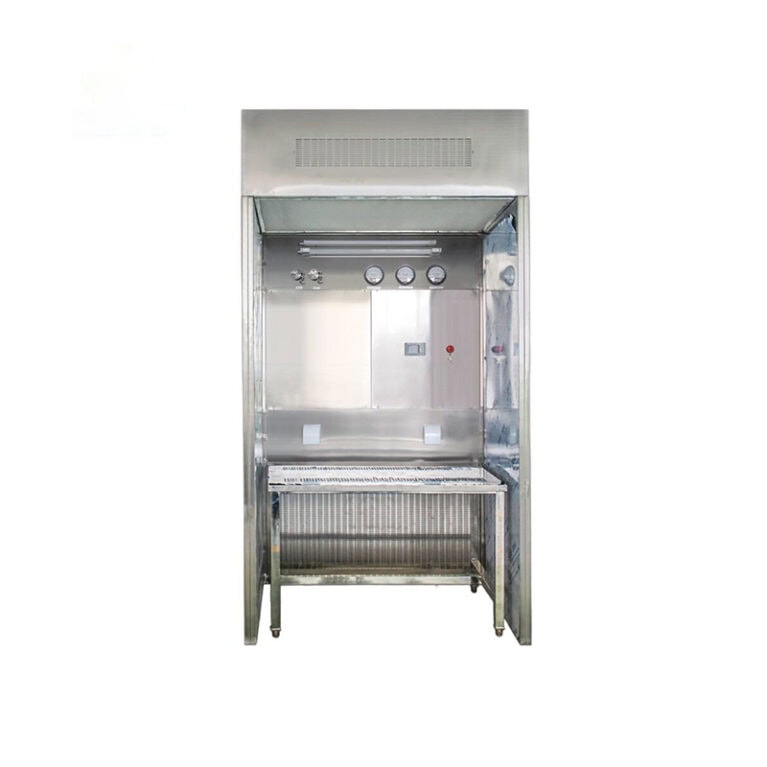
In terms of structural styles, there are single‑person single‑sided, double‑person single‑sided and double‑person double‑sided models. Equipment selection should correspond to operator quantity, workstation space and working efficiency. Compact single‑person single‑sided models occupy little floor space, ideal for small‑sized laboratories and independent single‑operator workstations. Double‑person single‑sided models feature an extended work surface to support simultaneous dual‑operator work, suitable for batch sample testing and auxiliary assembly‑line operations. Double‑person double‑sided models allow bidirectional access and dual‑side operation, which are adopted in shared laboratories and large‑scale production lines to greatly improve equipment utilization. Sufficient space for equipment heat dissipation and operator movement shall be reserved during selection to prevent airflow turbulence caused by crowded layout.
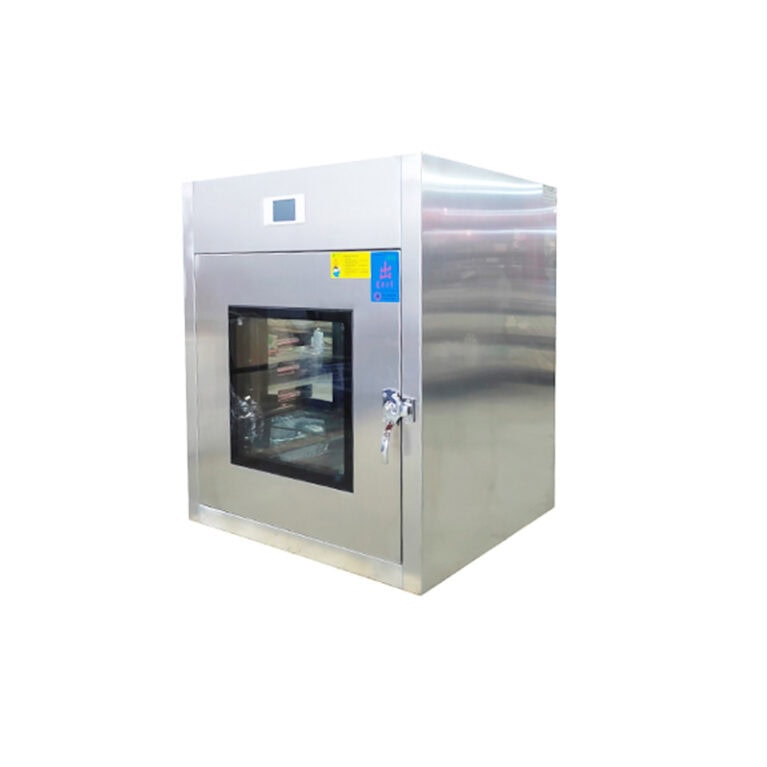
According to functional configurations, clean benches fall into standard type, UV‑disinfection type, intelligent automatic‑control type and special‑purpose biological‑clean type. Cost‑effective standard models meet basic aseptic‑operation demands for routine testing and simple processing scenarios. UV‑disinfection models are equipped with full‑range UV germicidal lamps to realize thorough disinfection for work surfaces and inner chambers before and after operation so as to eliminate residual contamination. Intelligent automatic‑control models support adaptive wind speed, scheduled start‑stop, filter resistance early warning and data logging, which target high‑standard laboratories and scientific‑research institutes. Specially optimized for biological cleanliness, dedicated models enhance airflow sealing structures to prevent aerosol diffusion of samples, applicable for high‑risk scenarios such as pathogenic‑microorganism detection and strain cultivation.
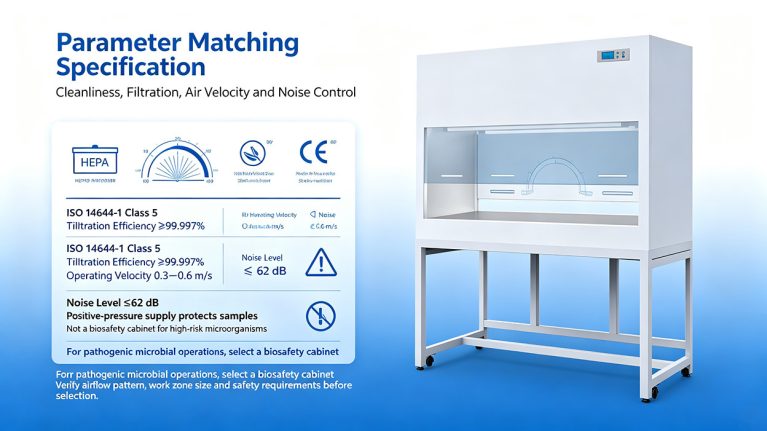
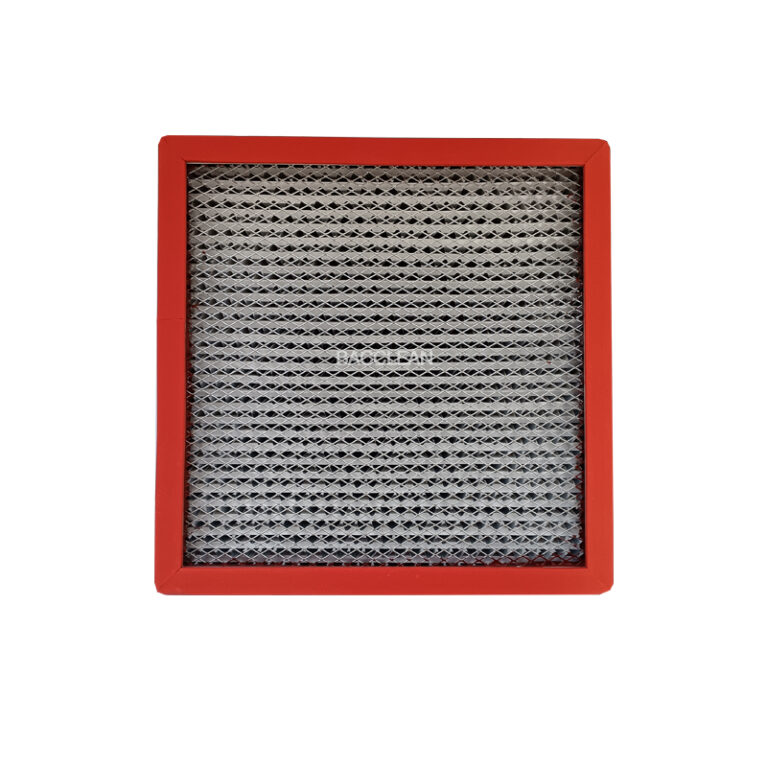
Core parameter matching is critical for proper selection. Key indicators include filtration efficiency, supply‑air velocity, cleanliness class and noise level. Standard clean benches shall stably achieve ISO14644‑1 Class 5 (Class 100) cleanliness within the operating zone, with filtration efficiency ≥99.997%, operating airflow velocity ranging 0.3‑0.6 m/s and running noise ≤62 dB. Moreover, essential distinctions between clean benches and biosafety cabinets must be clarified: clean benches adopt positive‑pressure air supply to protect samples only rather than operators. Biosafety cabinets are mandatory for operations involving high‑risk microorganisms to eliminate potential safety hazards. Matching model specifications and parameters properly maximizes equipment performance and ensures safe and contamination‑free operations.
