
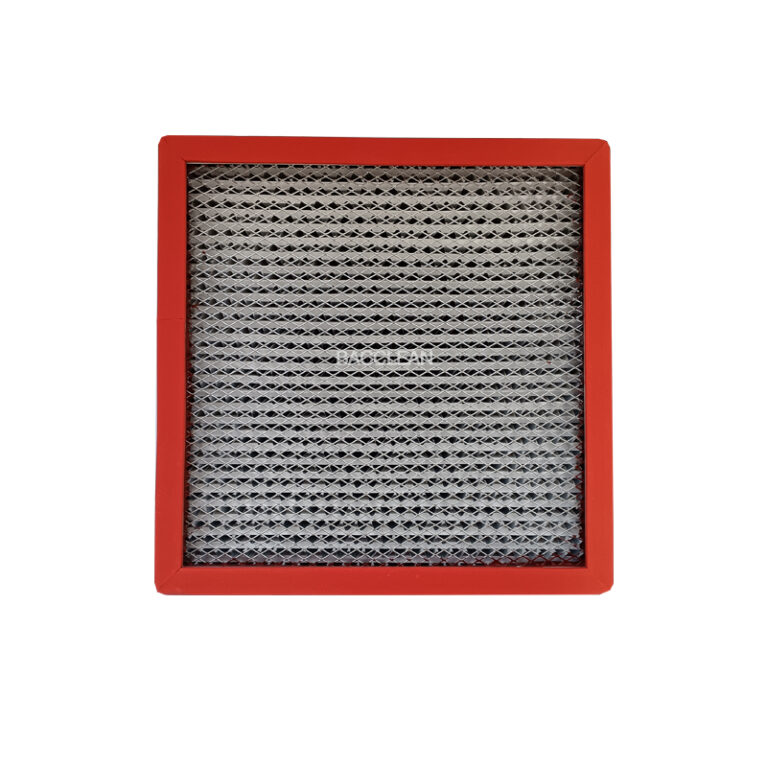
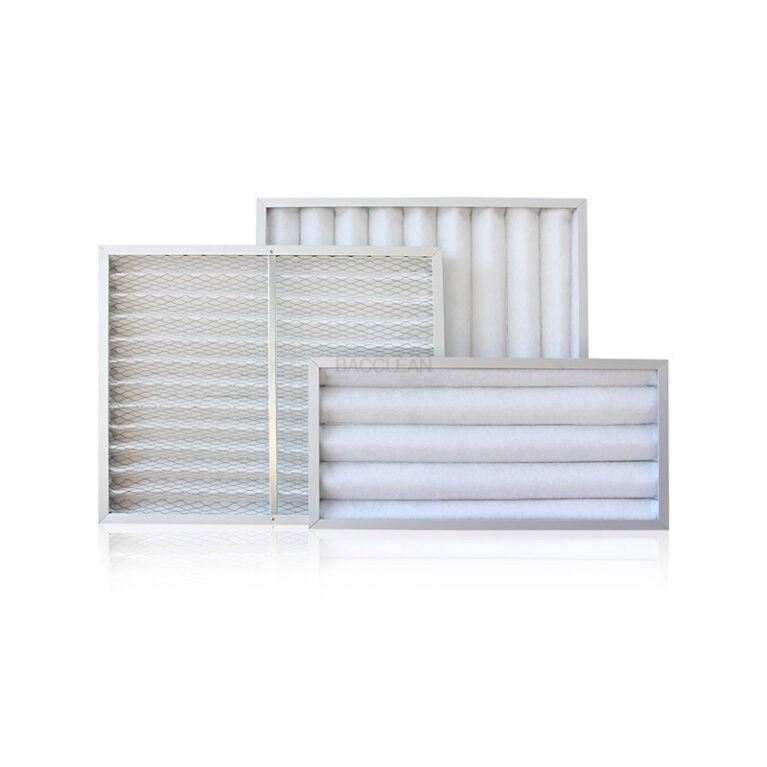
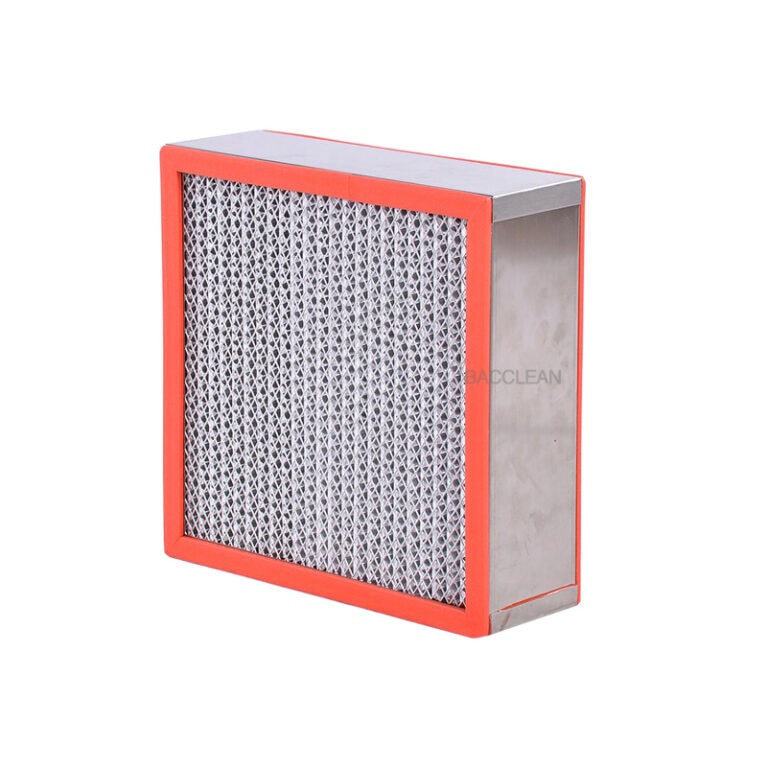
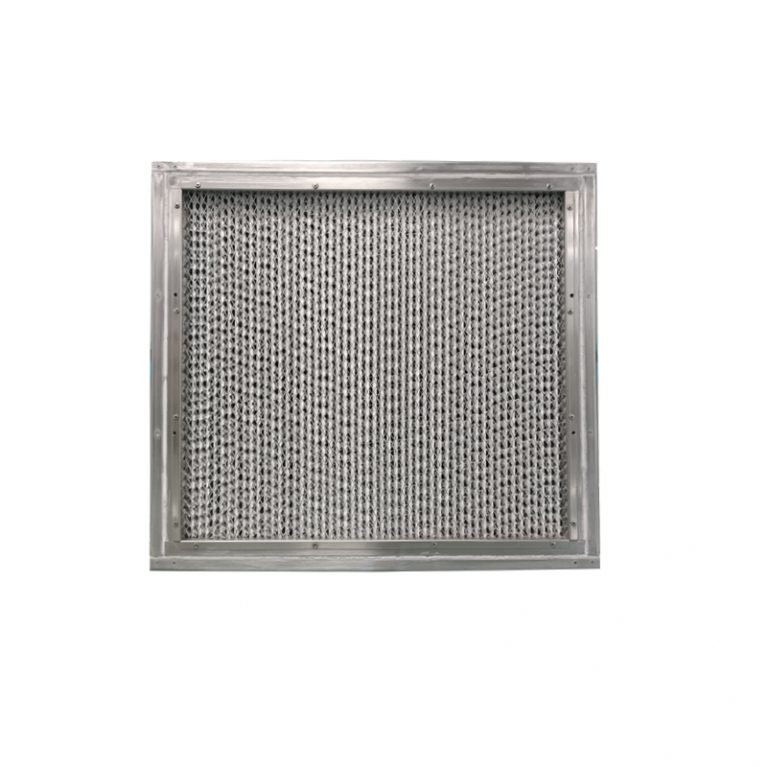
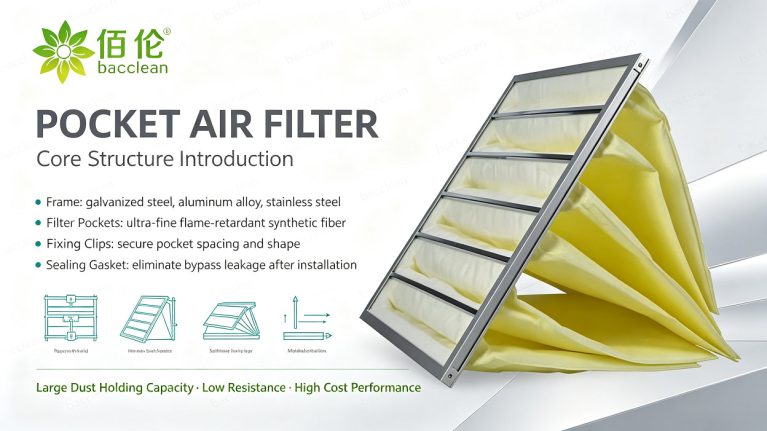
In terms of core structure, a pocket air filter mainly consists of four parts: frame, filter pockets, fixing clips and sealing gasket. The mainstream frame materials include galvanized steel sheet, aluminum alloy and stainless steel. Among them, galvanized steel frames deliver the best cost performance and are suitable for ordinary dry working conditions; aluminum alloy frames are lightweight with strong oxidation resistance, ideal for frequent disassembly and assembly scenarios; stainless steel frames are corrosion-resistant and high-temperature resistant, applicable to humid industrial environments with mild corrosive substances. Filter pockets serve as the core filtration component, normally made of ultra-fine flame-retardant synthetic fiber media and formed by precision sewing. The number of pockets varies by specification, including 4-pocket, 6-pocket, 8-pocket and 12-pocket types. The loose design of pockets maximizes the filtration contact area and prevents rapid clogging. The sealing gasket is made of natural rubber for excellent fitting performance, which can effectively eliminate air leakage after installation and guarantee filtration efficiency.
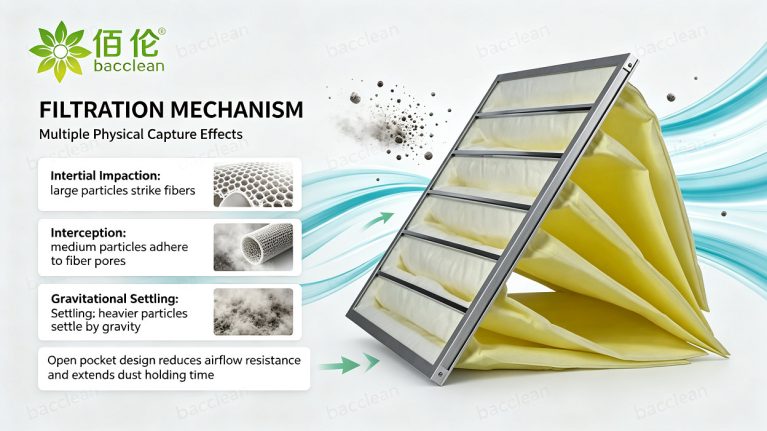
In terms of filtration principle, pocket air filters achieve air purification relying on multiple physical filtration mechanisms, mainly including inertial impaction, interception and gravitational settling. When dust-laden air enters the filter through the air duct, large dust particles strike the fibers of filter pockets and get trapped due to inertia; medium-sized particles follow the airflow close to fiber surfaces and are captured by fiber pores; some heavy impurity particles settle naturally under gravity during airflow movement, so as to realize effective removal of airborne contaminants. Compared with traditional filtration equipment, the open air channel design of pocket structure can effectively reduce airflow resistance, slow down dust accumulation, and greatly improve dust holding capacity and continuous operation stability.
For filtration grades and parameters, products comply with the international standard EN1822 and Chinese standard GB/T14295. Pocket air filters are classified into four main grades: F5, F6, F7 and F8. Each grade has distinct filtration efficiency, applicable scenarios and operating parameters.
- F5: ≥40% efficiency for particles above 1μm, initial resistance ≤80Pa, for general fresh air pre-treatment
- F6: ≥60% efficiency for particles above 1μm, initial resistance ≤90Pa, for commercial building ventilation
- F7: ≥80% efficiency for particles above 1μm, initial resistance ≤100Pa, for primary purification in industrial workshops
- F8: ≥90% efficiency for particles above 1μm, initial resistance ≤110Pa, as core medium-stage filtration for precision manufacturing workshops
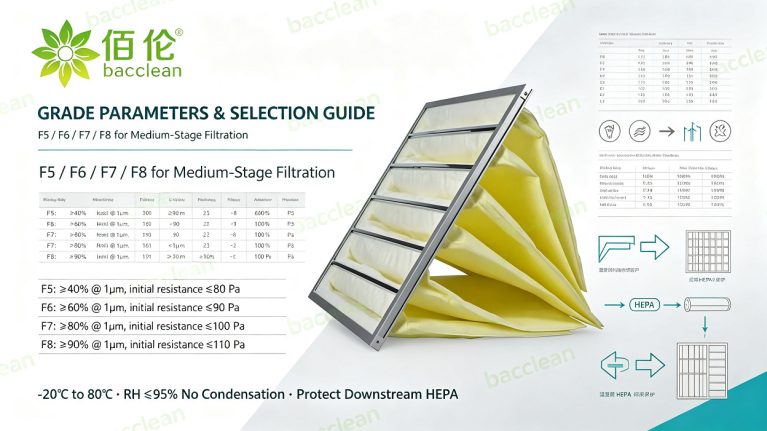
The normal operating temperature ranges from -20℃ to 80℃, with relative humidity ≤95% (no condensation), meeting the operation requirements of most industrial and civil scenarios.
Overall, the core technical advantages of pocket air filters focus on large dust holding capacity, low operating energy consumption and wide adaptability. In practical engineering applications, the filtration grade and equipment specification shall be accurately selected according to purification requirements, air volume parameters and working conditions. Leveraging its structural advantages for long-term stable operation, pocket filters provide fundamental support for the efficient operation of the whole ventilation and purification system.
