
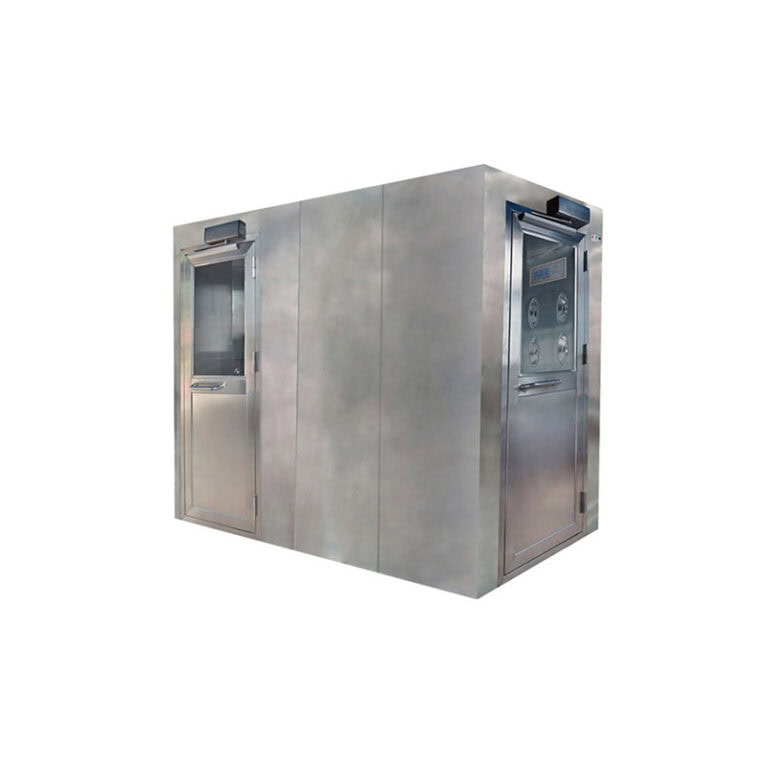
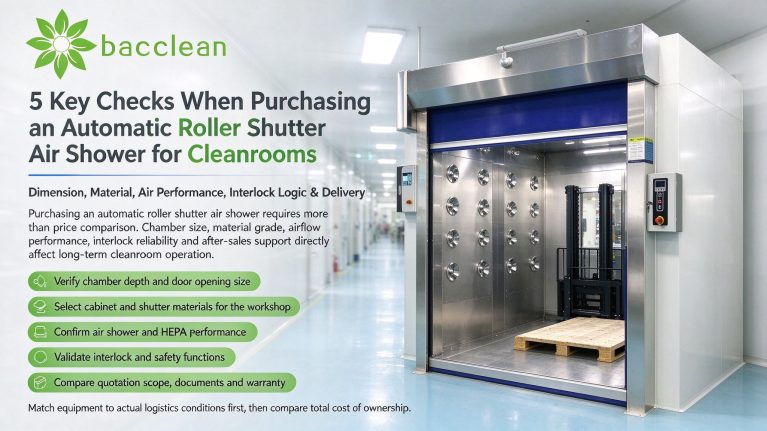
Many projects focus only on price comparison during procurement while ignoring key configurations. This often leads to problems later, such as insufficient wind speed, frequent roller shutter failures, or air leakage from the chamber. Below are 5 key verification points for procurement, suitable for clean projects in lithium battery, photovoltaic, pharmaceutical, medical device, and food industries.
1. Verify Chamber and Door Opening Dimensions, and Reserve Sufficient Blowing Space
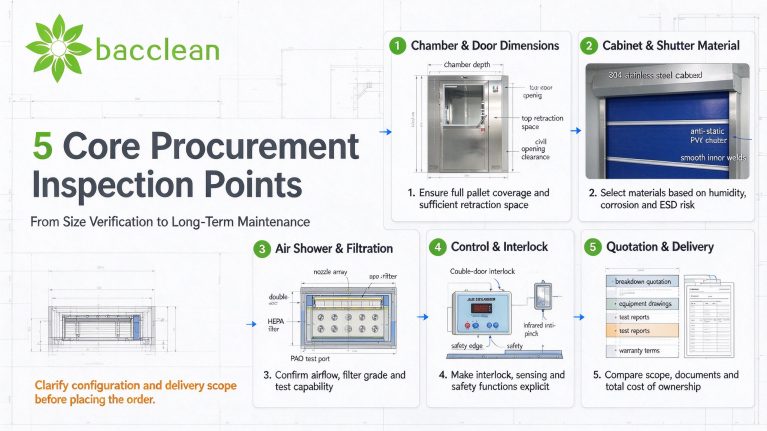
Before procurement, determine the door opening width/height and chamber depth based on the maximum overall outline of goods plus forklift. Do not consider only the goods dimensions.
- The chamber depth must reserve enough blowing distance to ensure the goods fully enter the chamber and are completely covered by nozzle airflow. Avoid situations where the forklift head or part of the goods remains outside the door, which creates blowing blind zones.
- Confirm the top reserved space for roller shutter retraction. Many projects overlook the required retraction height in the early stage, resulting in installation problems after delivery.
- Review the civil opening dimensions. The gap between the opening and the equipment frame should not be too large; otherwise, air leakage may occur and disrupt cleanroom pressure difference.
Tip: Provide the forklift model and pallet specifications to the manufacturer so they can help calculate the appropriate chamber size.
2. Match Cabinet and Roller Shutter Materials to Workshop Conditions
Material selection directly affects service life and cleanability. Do not blindly choose low-cost materials.
- Cabinet material options include cold-rolled steel with powder coating, 201 stainless steel, and 304 stainless steel. For high-corrosion or GMP projects, 316 stainless steel is optional. Wet, acidic/alkaline, food, and pharmaceutical environments should prefer 304 stainless steel.
- Select the roller shutter according to operating conditions: ordinary PVC roller shutters for standard conditions; anti-static roller shutters for lithium battery, semiconductor, and other static-sensitive cleanrooms; reinforced fabric and heavy-duty door motors for high-frequency passages.
- Check the inner-wall workmanship: welds should be smoothly finished, dead zones minimized, and surfaces easy to wipe clean.
3. Focus on Air Shower System Performance and Filter Configuration
The air shower is the core function of the equipment. Low-cost solutions often cut corners here, resulting in substandard dust removal performance.
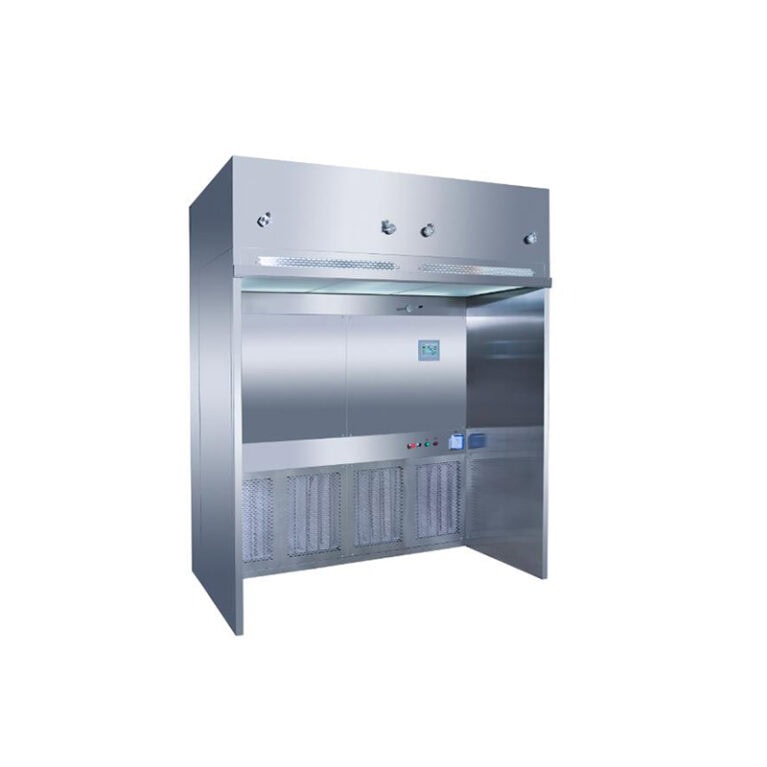
- Confirm fan power, number of nozzles, and nozzle layout. Prefer double-side or three-side blowing solutions for multi-angle coverage of goods and pallet surfaces.
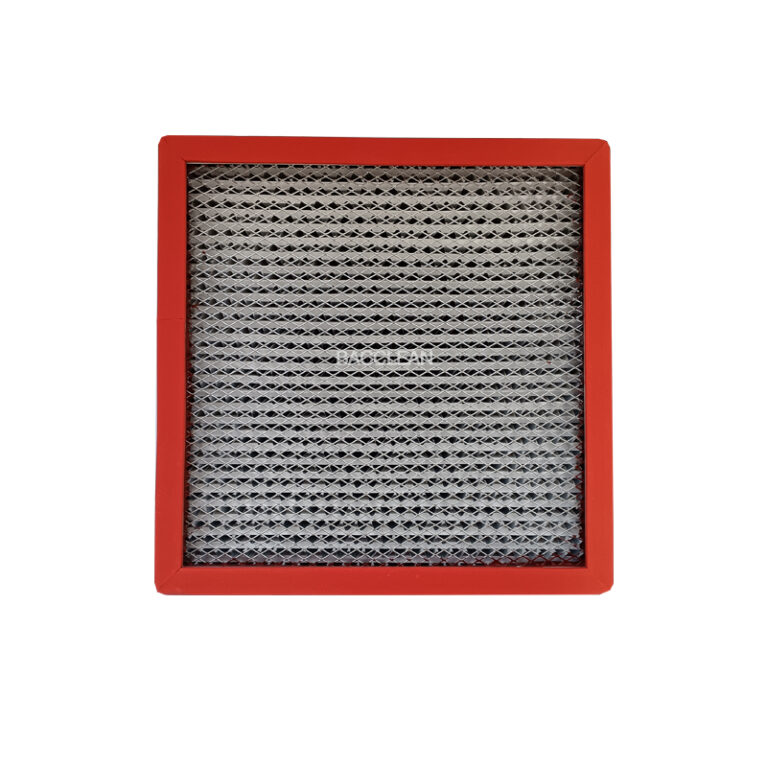
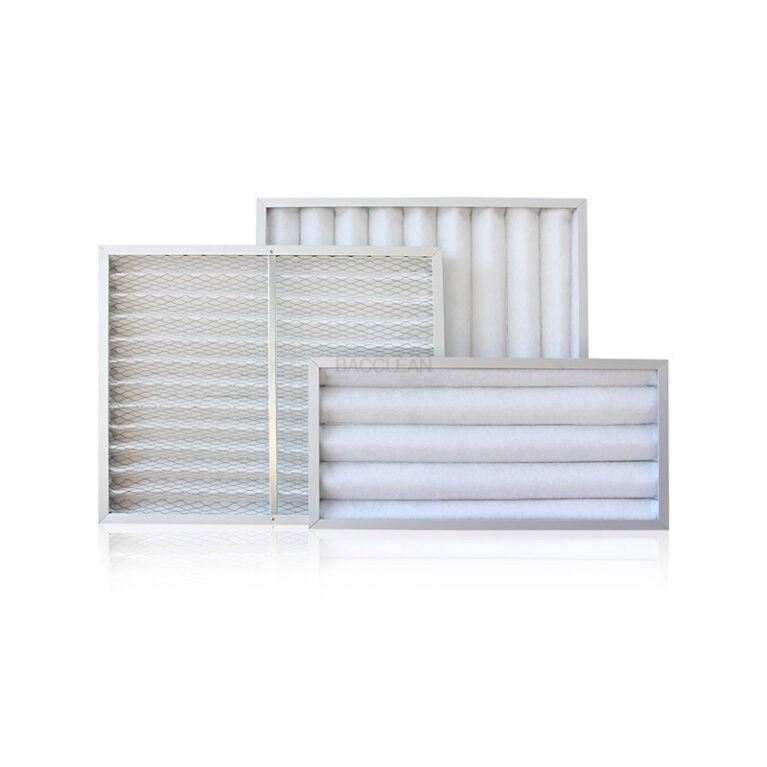
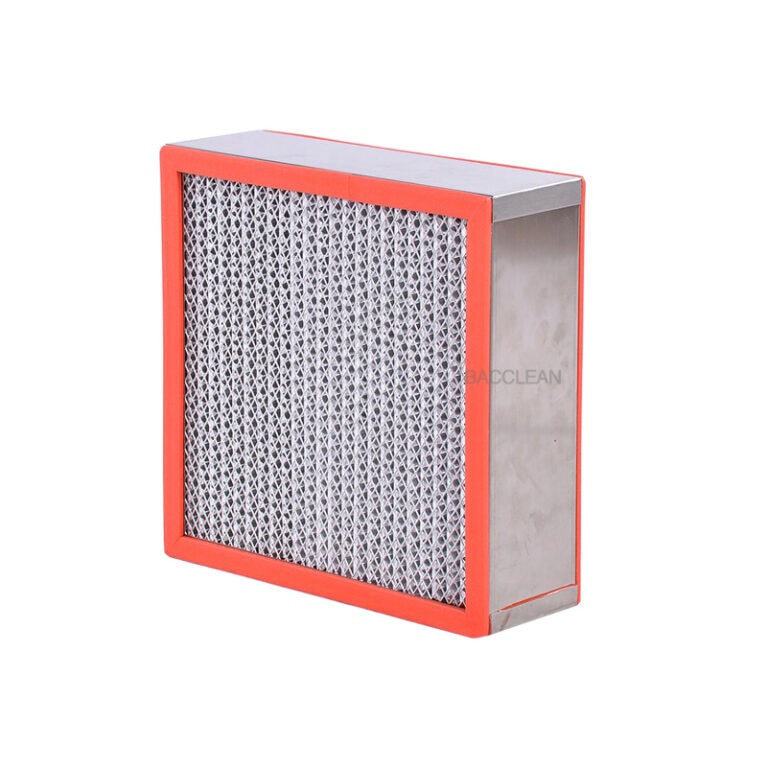
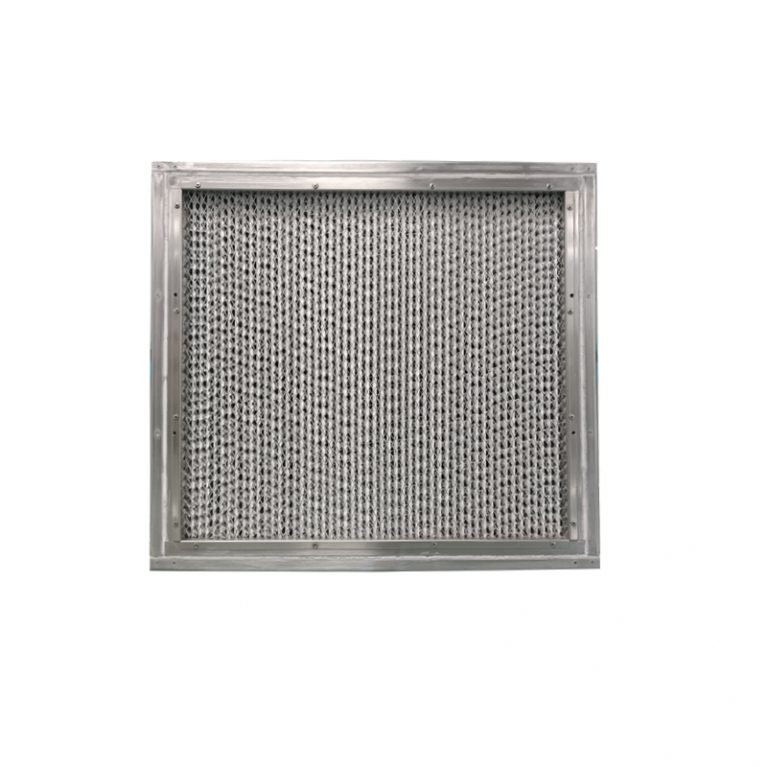
- Filtration configuration should include pre-filter + HEPA. For GMP projects, confirm that the HEPA filter supports PAO leak testing and that test ports are reserved.
- Request fan parameters and filter test reports from the manufacturer, and evaluate the empty-chamber wind speed to ensure airflow meets dust removal requirements.
Reminder: The air shower only removes loosely attached particles and cannot achieve sterilization. If microbial control is required, a separate chamber disinfection module must be added.
4. Control System and Interlock Logic Ensure Isolation Safety
Double-door interlock is essential for cross-contamination control. The control logic must be clearly defined during procurement.
- Confirm that the two roller shutters have reliable electrical interlock. Both doors must not open at the same time, to prevent direct connection between the clean and non-clean zones.
- Select the sensing method according to site conditions: geomagnetic coil or infrared radar. Avoid steel-rebar interference that may cause false sensing. Roller shutters should be equipped with safety bottom edges and infrared anti-pinch protection; the curtain should automatically rebound if hit by a forklift.
- Confirm functions: adjustable air shower duration, audible and visual alarms, fault alarms. For GMP projects, optional modules such as operation logging and pressure difference monitoring are recommended for verification records.
5. Quotation Breakdown, Installation Delivery, and After-Sales Terms
Do not compare quotations only by total price. Clarify the scope of the base unit, transportation, installation, and warranty.
- Request a detailed quotation breakdown: equipment body, roller shutter, fan/filter, control system, transportation, and on-site installation commissioning should be listed separately to avoid unexpected extra charges.
- Define required delivery documents: certificate of conformity, filter test reports, electrical schematic diagrams, and equipment drawings. GMP projects also need verification-related documentation.
- Agree on the warranty period and on-site response time. Confirm the replacement cost and lead time for wearing parts such as roller shutter fabric, sealing strips, and filters. In high-frequency scenarios, long-term maintenance costs cannot be ignored.
Procurement Pitfall Summary
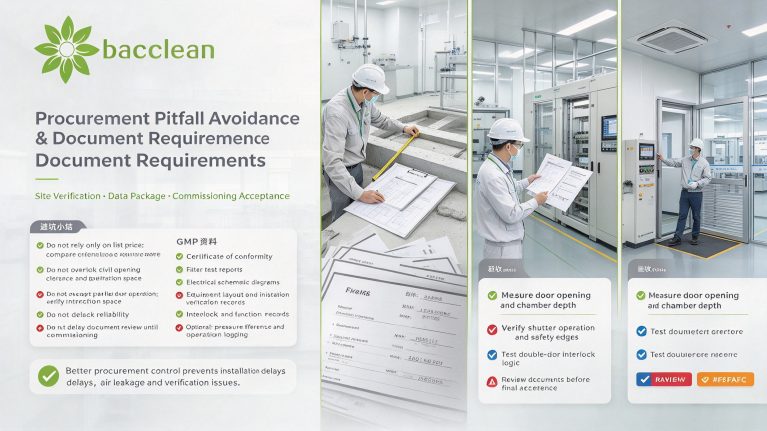
When purchasing an automatic roller shutter air shower, do not focus only on price.
First, match the door opening and chamber size to actual logistics requirements; second, select materials suitable for the workshop environment; third, confirm air shower performance and interlock logic; finally, lock in installation, commissioning, and after-sales terms.
This approach helps avoid common problems such as undersized chambers, air leakage, frequent roller shutter damage, and verification failures, and supports long-term stable operation of the cleanroom logistics passage.
