
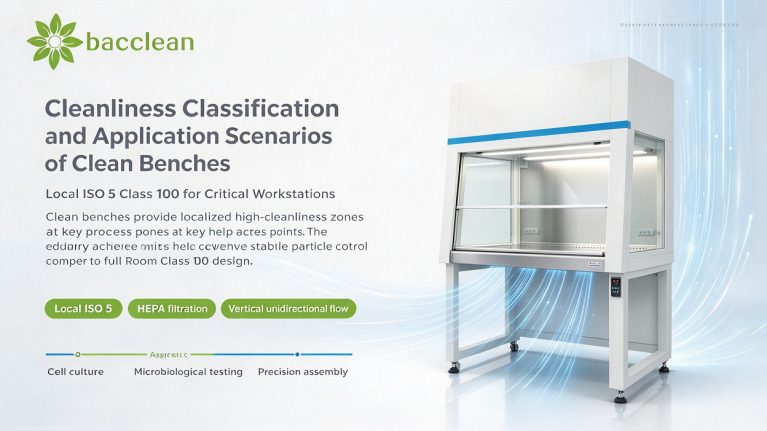
Why are clean benches mainly designed for Class 100?
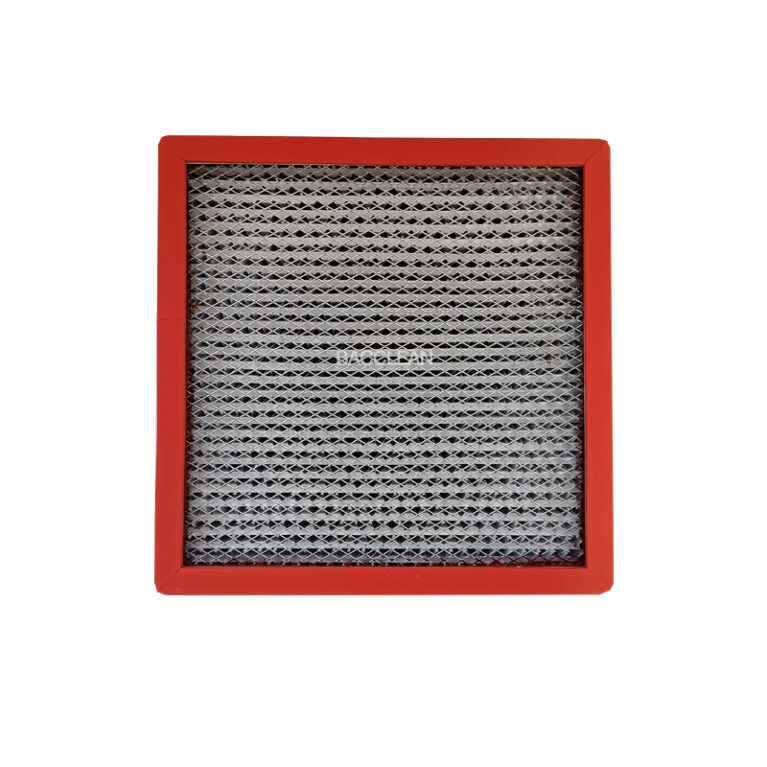
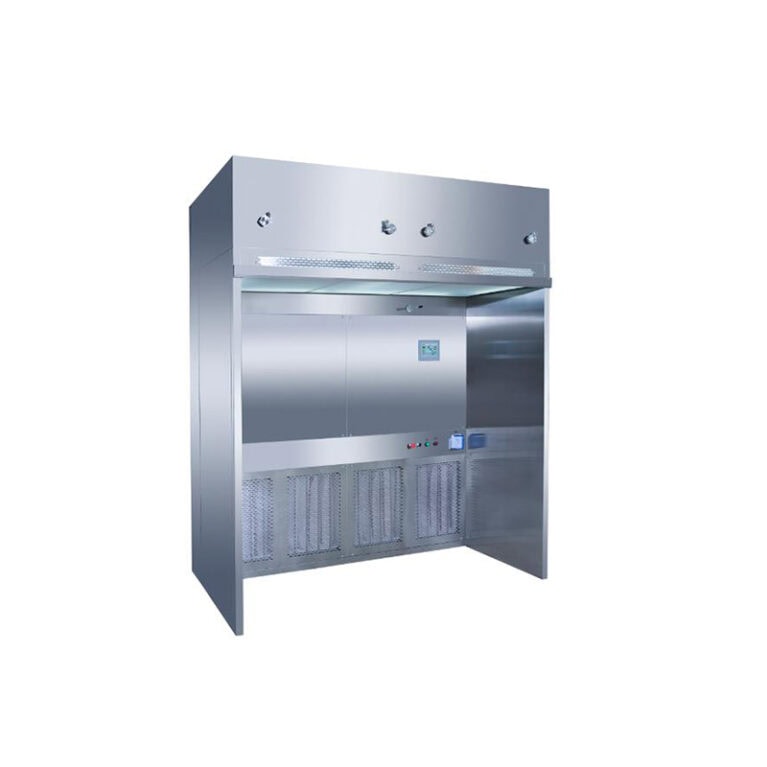
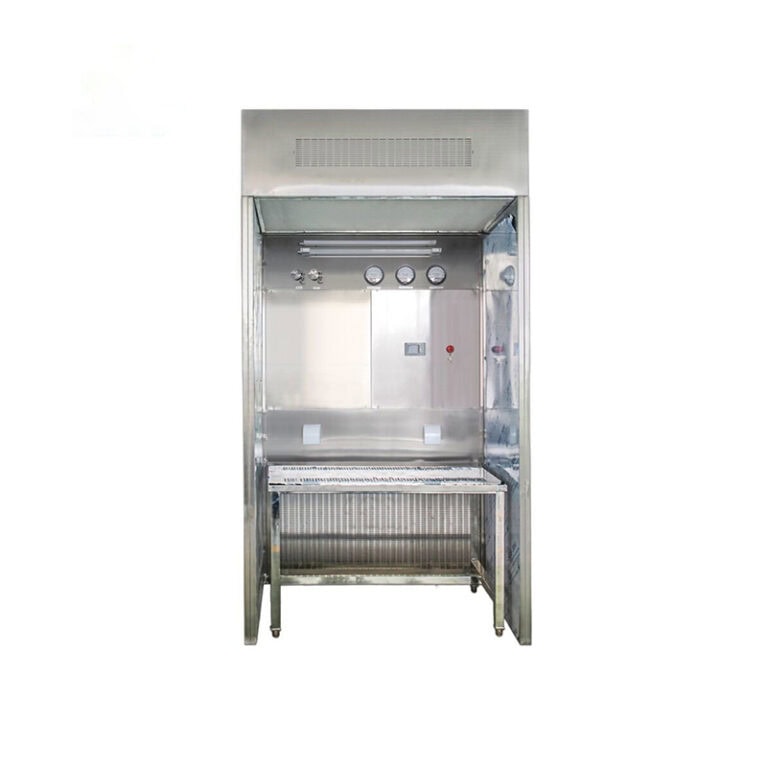
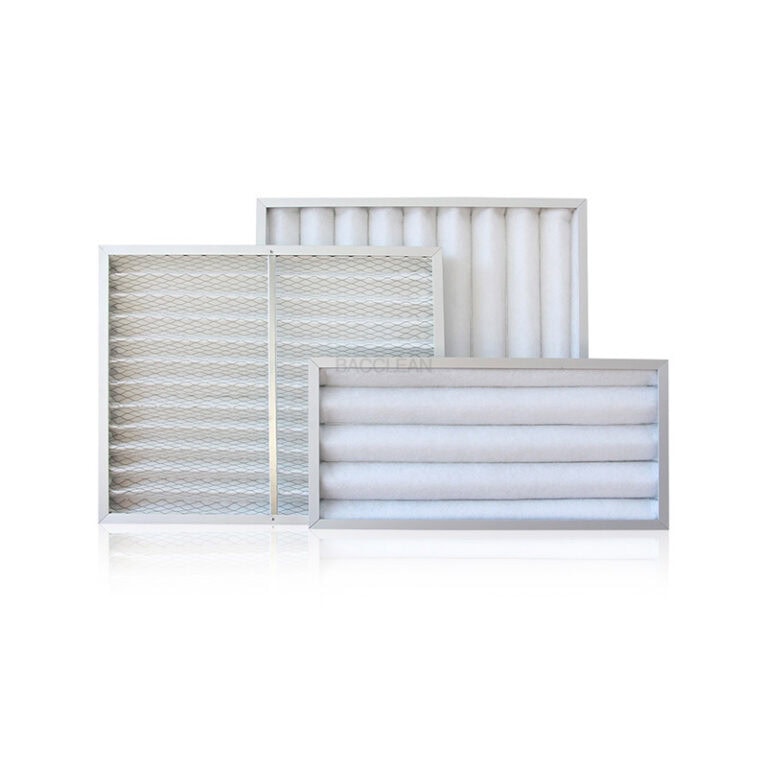
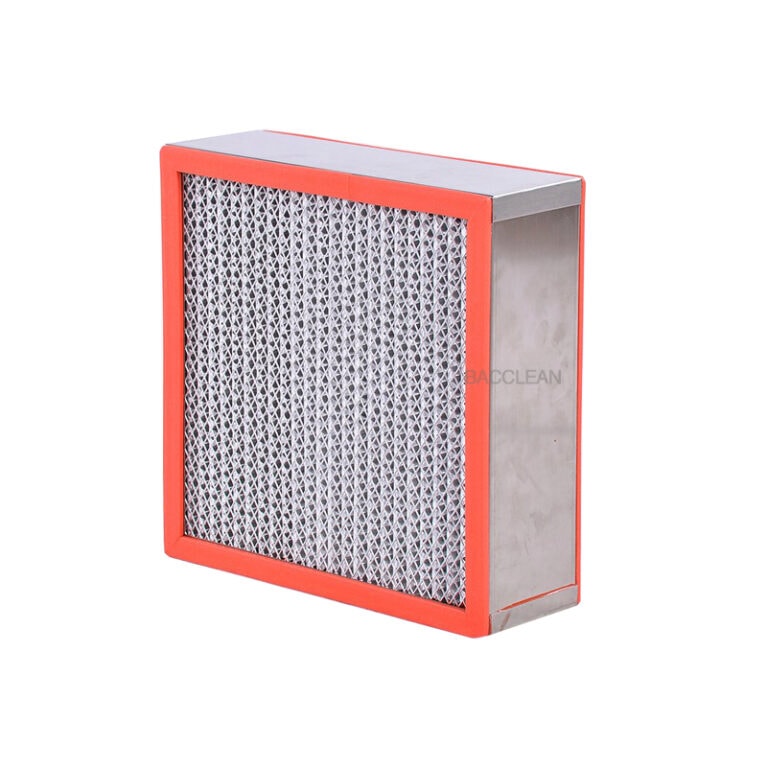
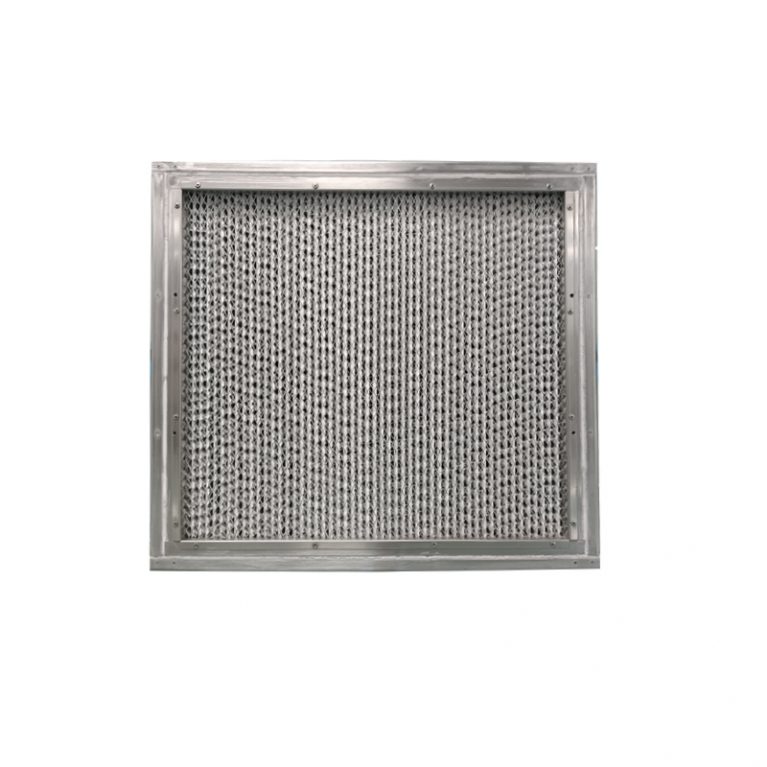
A clean bench is designed to provide a local high-cleanliness zone in a general environment, rather than constructing a full Class 100 cleanroom for the entire room. Equipped with a filtration system consisting of a pre-filter and HEPA high-efficiency filter, it delivers clean air in a unidirectional flow into the working area to achieve Class 100 level on the work surface.
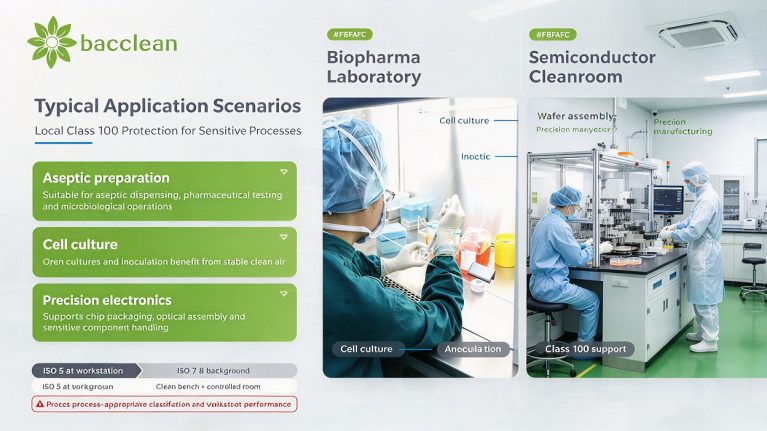
Class 100 cleanliness can meet most process requirements sensitive to particulate and microbial contamination, such as cell culture, aseptic dispensing, microbial inoculation and precision electronic assembly. Constructing the whole workshop to Class 100 standard will incur extremely high investment and operating costs. In contrast, the clean bench only protects key operation points, which is economical and flexible.
Application scenarios for Class 100, Class 1,000, Class 10,000 and Class 100,000
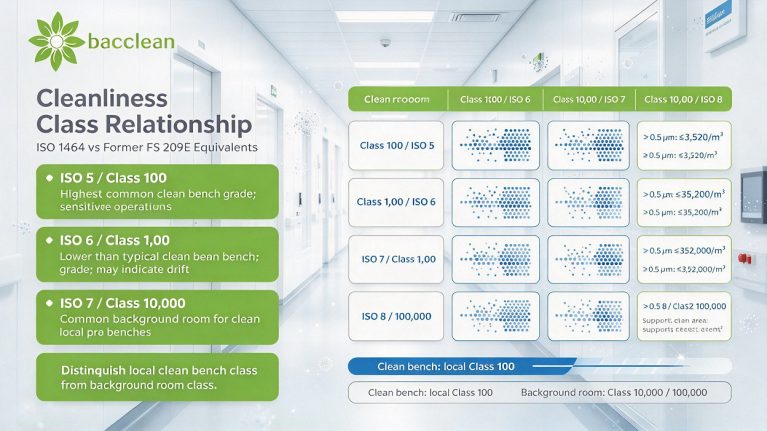
- Class 100 (ISO Class 5) It is the most common cleanliness grade for clean benches, suitable for operations highly sensitive to particulate contamination. Typical scenarios include aseptic preparation, cell passaging, microbial inoculation, pharmaceutical testing, chip packaging and precision optical assembly.
- Class 1,000 (ISO Class 6) Slightly lower than Class 100 in cleanliness, it is commonly used for optical lens manufacturing, high-precision microelectronic assembly and precision instrument assembly. Clean benches are generally not calibrated directly to Class 1,000. However, in actual use, the cleanliness of the working zone may deviate from Class 100 due to wind speed, filter condition or non-standard operation.
- Class 10,000 (ISO Class 7) Widely applied in medical device manufacturing, pharmaceutical aseptic packaging, food clean filling and SMT electronic assembly. Such environments usually serve as the background cleanroom grade where clean benches are placed. In other words, the whole workshop can be Class 10,000 or Class 100,000, while key workstations rely on clean benches to achieve local Class 100 protection.
- Class 100,000 (ISO Class 8) Suitable for auxiliary clean areas such as ordinary food processing, oral solid preparations, electronic assembly, reagent preparation rooms and sample temporary storage rooms. The Class 100,000 environment itself cannot directly meet high-cleanliness operation requirements. When paired with a clean bench, it can still provide reliable local clean protection for key processes.
Matching cleanliness grade during model selection
When selecting equipment, do not only focus on the name “Class 100”. It is necessary to confirm whether the equipment can stably reach ISO Class 5 under actual working conditions. Key inspection items include working zone wind speed, HEPA filter efficiency, airflow uniformity and leak test reports. Both horizontal flow and vertical flow clean benches can reach Class 100, but they differ in airflow direction and applicable scenarios.
Prioritize vertical flow if there are many open samples and high cross-contamination risks. Horizontal flow can be considered if tall equipment needs to be placed on the workbench and a wide operation view is required. For compliance scenarios such as pharmaceutical and medical device industries, confirm whether the cleanliness meets process requirements in accordance with GMP, ISO 14644 and enterprise validation requirements.
Key points to maintain cleanliness grade in use
A Class 100 clean bench does not mean “sterile”. Class 100 only indicates that the quantity of airborne particles is controlled. Microbial risks need to be managed through UV disinfection, standardized operation, regular cleaning and settle plate testing.
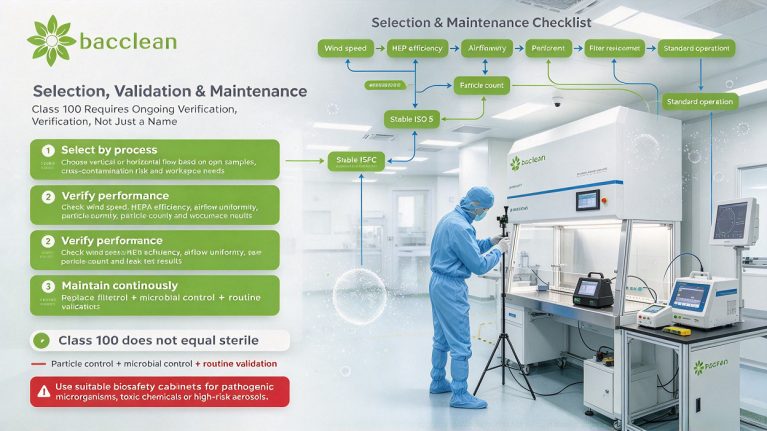
The equipment shall be placed in a clean, dry, low-vibration position away from doors, windows and direct air supply from air conditioners. Turn on the fan for a period of time before use to stabilize the airflow in the working zone. Avoid over-stacking items during operation to prevent laminar flow damage. If wind speed drops, filter resistance rises or abnormal cleanliness detection occurs, maintain or replace the HEPA filter in a timely manner.
