
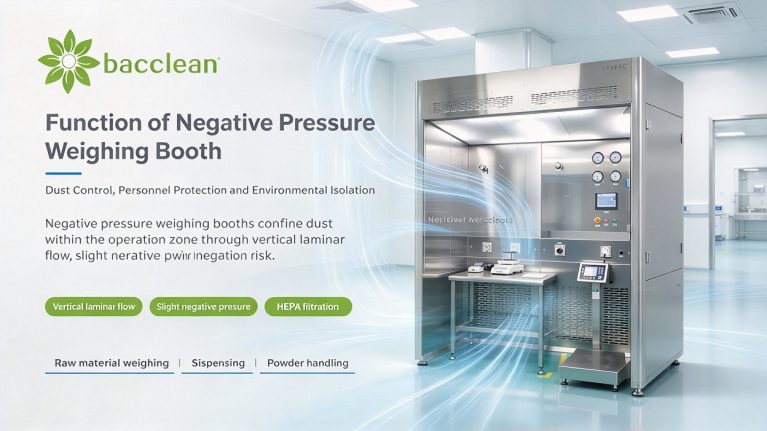
How does the negative pressure weighing booth achieve dust control?
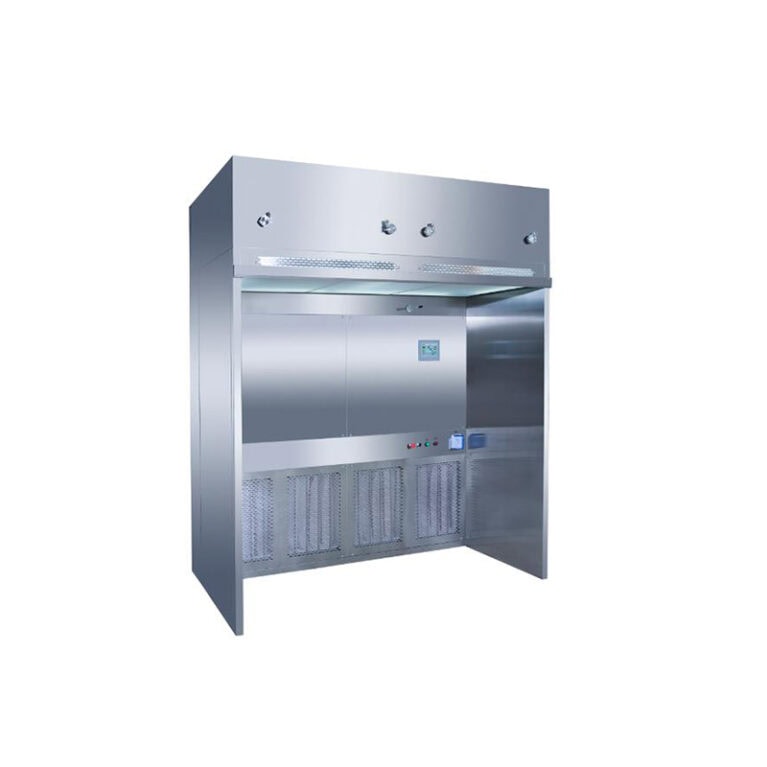
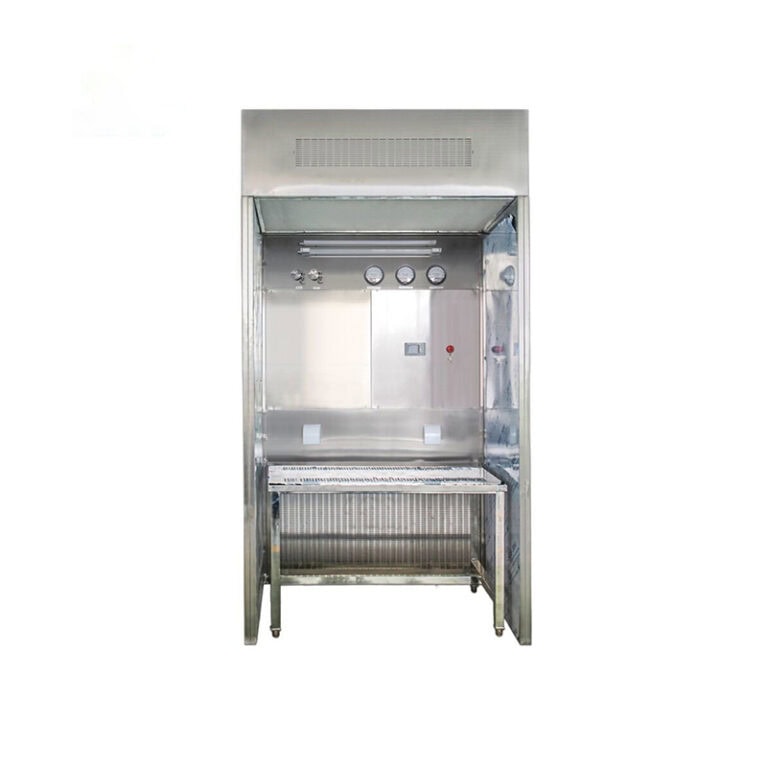
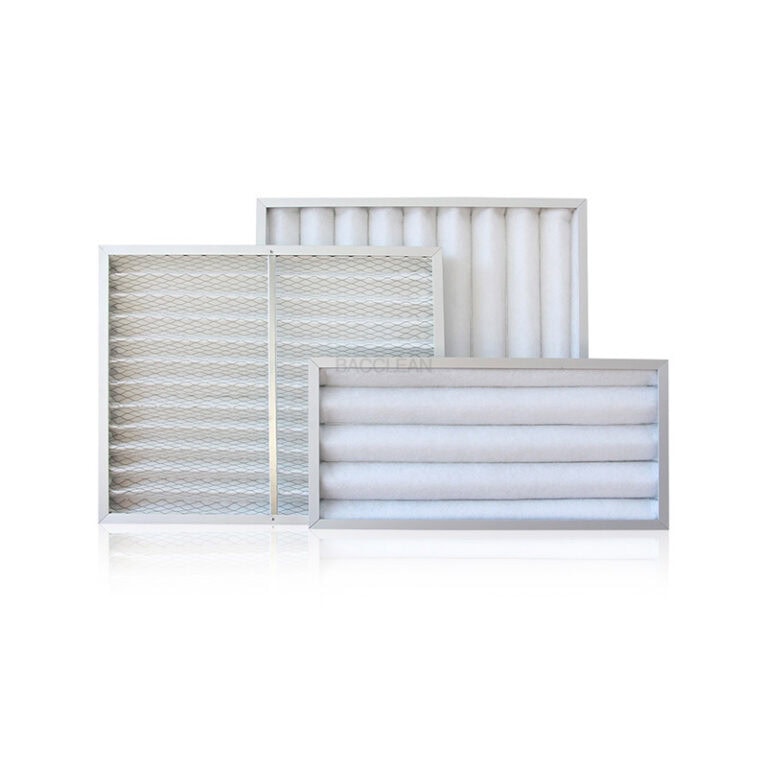
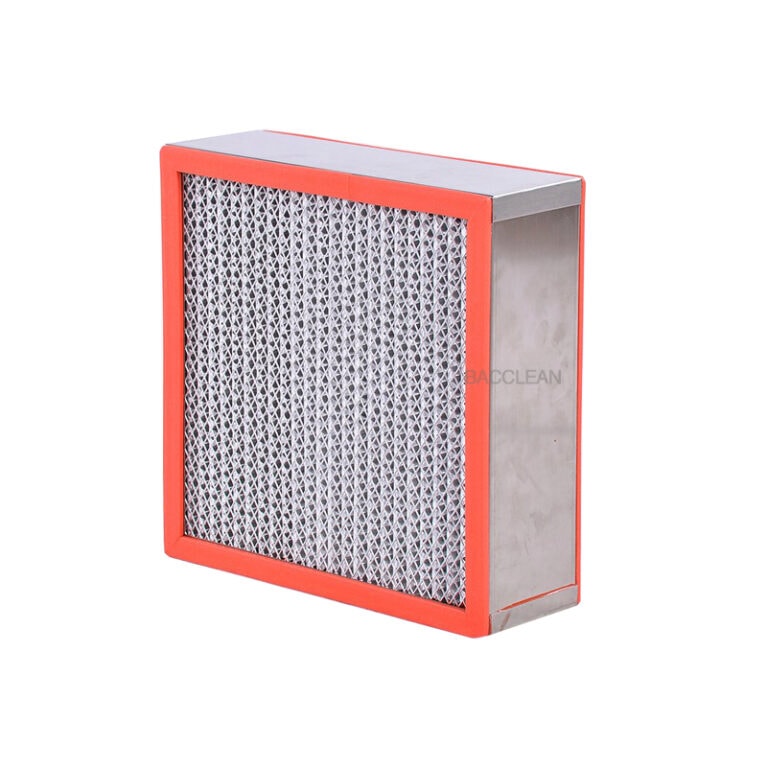
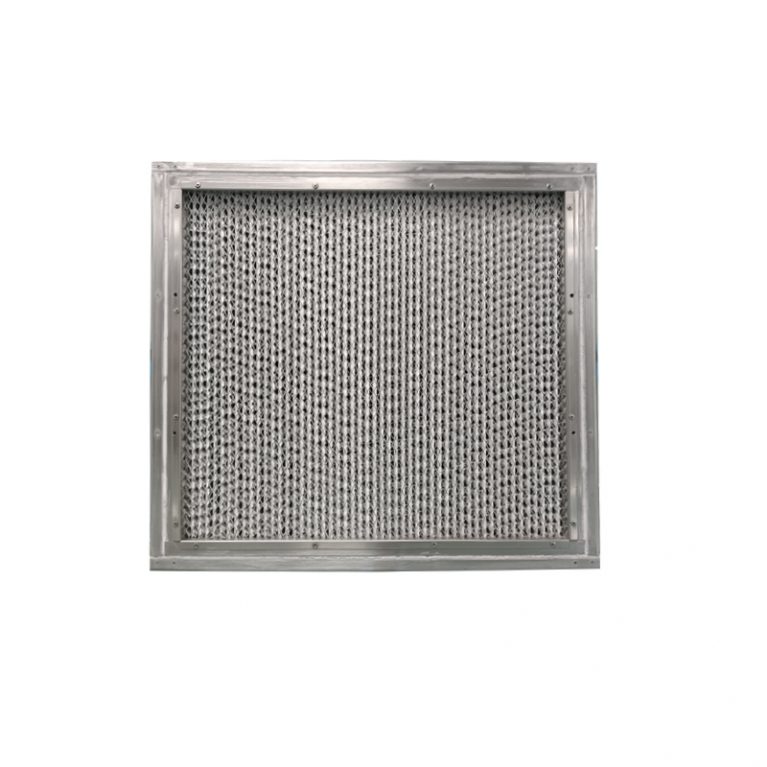
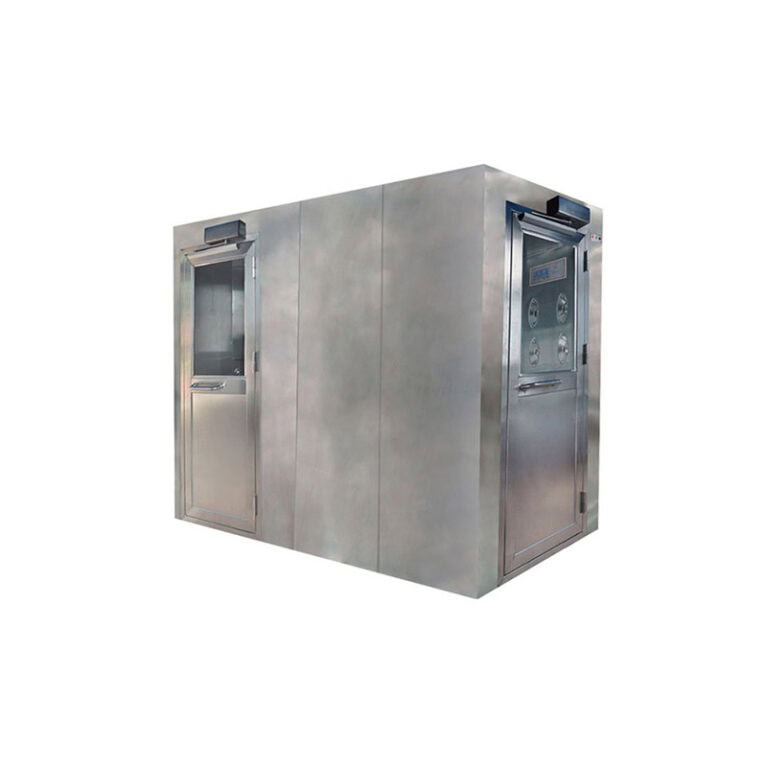
Negative pressure weighing booths generally adopt a vertical unidirectional flow design. Indoor air is pre-purified through primary and medium filters, then passes through the HEPA filter and enters the working zone from top to bottom at a uniform cross-sectional wind speed to form stable vertical laminar flow.
When operators pour, weigh or dispense powder on the work surface, the generated dust will be quickly pushed down to the bottom of the working zone by the downward airflow, and flow into the filtration system together with return air. This prevents dust from rising into the operator’s breathing zone and reduces dust diffusion to adjacent clean areas.
How does the negative pressure weighing booth achieve personnel protection?
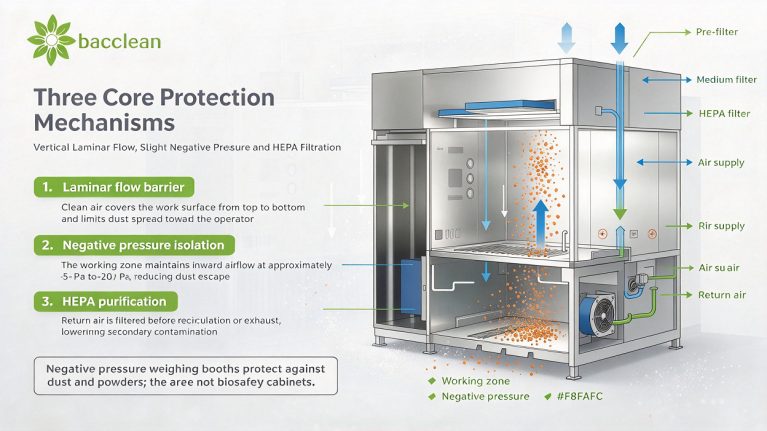
Personnel protection mainly relies on three mechanisms.
- Vertical laminar flow barrier. Clean air covers the operation surface from top to bottom, cutting off the path for dust to spread to the operator’s face.
- Slight negative pressure isolation. By adjusting air supply and exhaust volume, the working zone maintains negative pressure of approximately -5Pa ~ -20Pa relative to the background cleanroom, ensuring air flows inward and dust cannot easily escape outwards.
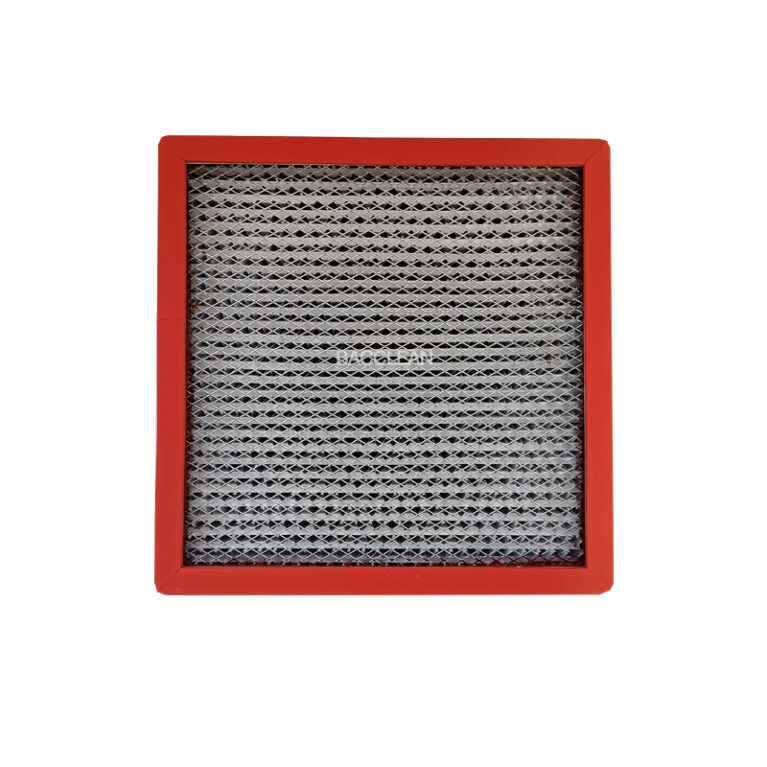
- High-efficiency filtration purification. After the return air is treated by the HEPA filter, most clean air is recycled and a small part is exhausted to avoid secondary dust diffusion.
It should be noted that negative pressure weighing booths are mainly used for powder weighing protection scenarios. They cannot be simply equated with biosafety cabinets. For pathogenic microorganisms, viruses or high-risk biological aerosols, biosafety cabinets of corresponding grades shall be selected.
How does the negative pressure weighing booth prevent cross-contamination?
In pharmaceutical, food, chemical and other industries, if different raw materials share the same weighing station, escaped dust will bring significant cross-contamination risks. With local negative pressure and high-efficiency filtration, the negative pressure weighing booth confines dust inside the weighing area, avoiding contamination of balances, walls, floors, HVAC systems and other materials.
For highly active, allergenic or cytotoxic materials, independent dedicated weighing stations shall be equipped, together with strict cleaning validation and residue control. Conventional wiping cleaning alone is not sufficient.
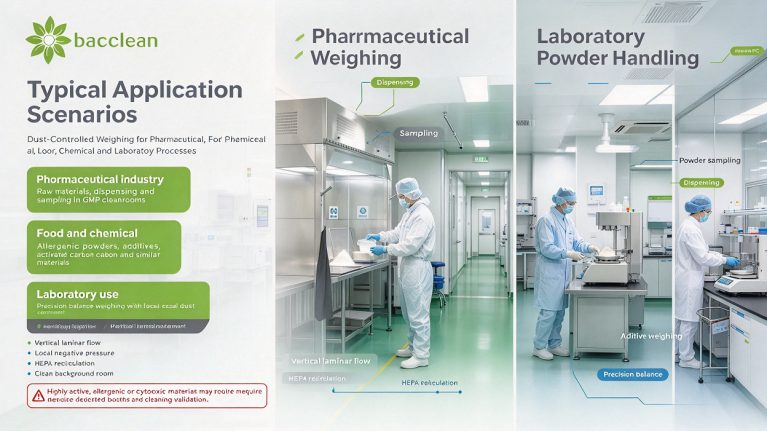
Typical Application Scenarios
- Weighing, dispensing and sampling of pharmaceutical raw materials
- Raw material weighing for biopharmaceuticals and health food
- Weighing of chemical powder, activated carbon and additives
- Handling of allergen powder in food industry
- Environmental control for precision balance weighing in laboratories
Selection and Operation Key Points
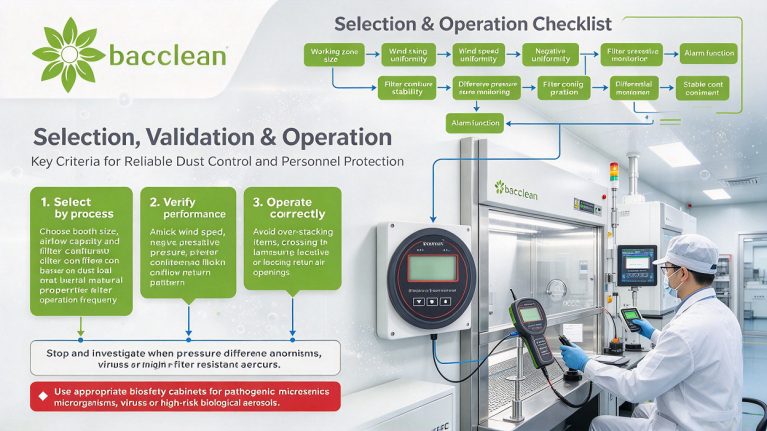
During model selection, attention shall be paid to working zone size, wind speed uniformity, negative pressure stability, filter configuration, differential pressure monitoring and alarm function. In on-site operation, avoid over-stacking items, frequently crossing the laminar flow zone with arms or blocking return air outlets, which will damage the airflow pattern. Stop equipment for troubleshooting when differential pressure abnormality, wind speed alarm or excessive filter resistance occurs.
