
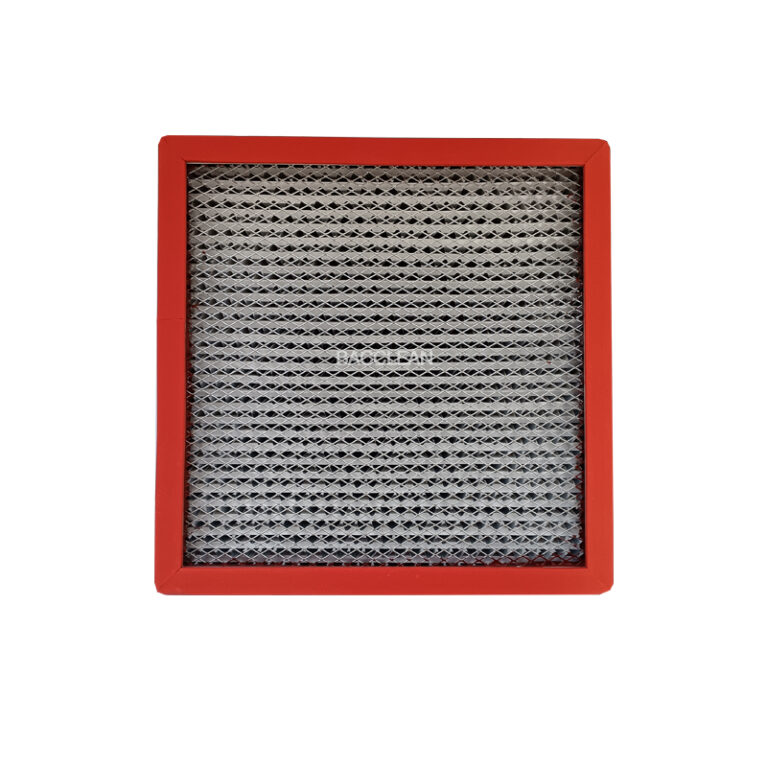
Explosion-proof FFU Filter Complete Selection Scheme (divided into 6 major dimensions, applicable to lithium battery / pharmaceutical / chemical industries)
Selection logic sequence: First determine the explosion-proof working condition → Cleanliness level → Filter material → Structural form → Matching pre-filter → Dimension sealing, while taking into account explosion-proof safety and service life.
I. Step 1: Select filter materials based on the flammable and explosive media in the workshop (core of explosion-proof, priority judgment)
1. Lithium battery workshop (electrolyte, NMP, lithium powder, organic solvents)
Media characteristics: prone to crystallization, oily, combustible dust, high humidity
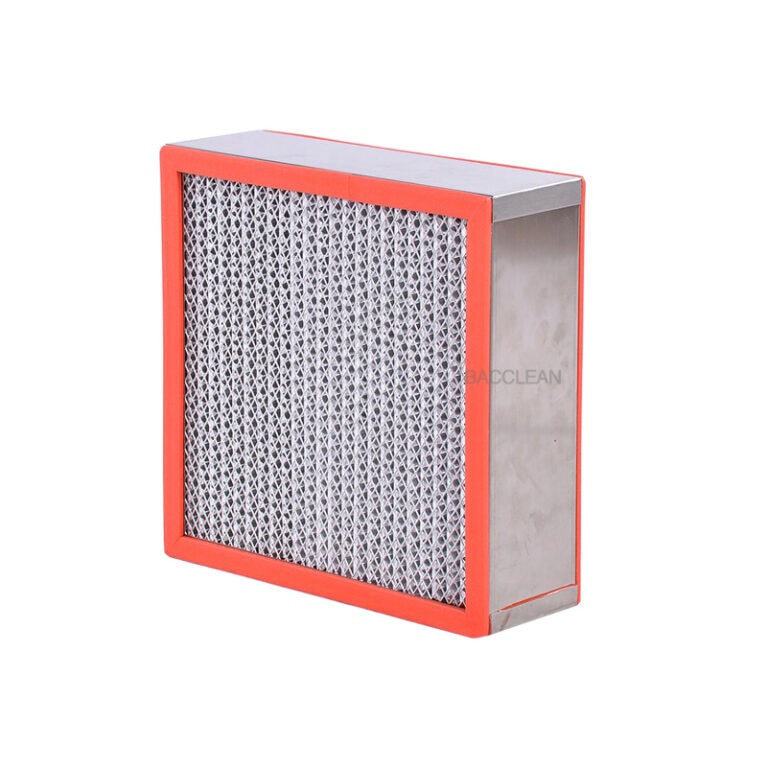
Recommendation: PTFE-coated H13/H14 high-efficiency filter
Advantage: Surface filtration, dust does not penetrate the filter paper; resistant to electrolyte and organic solvents; hydrophobic and moisture-proof; dust accumulation can be blown away, life is more than 50% longer than glass fiber
Not recommended: Ordinary glass fiber, easily soaked by electrolyte and clogged, resistance rapidly rises.
2. Pharmaceutical / medical device explosion-proof area (alcohol, small amount of solvents, low dust)
Media characteristics: Small amount of alcohol solvents, dry and clean, low dust
Recommendation: Ultra-fine glass fiber without partition H14
Advantage: Stable filtration accuracy, initial wind pressure low, low cost, meets GMP cleanliness requirements; clean working condition, sufficient service life.
3. Fine chemical, daily chemical filling (large amounts of alcohol, isopropanol, oil mist)
Recommendation: PTFE-coated high-efficiency; can be combined with pre-filter for oil removal for severe oil contamination
Prohibition: PP melt-blown filter material, organic solvents will destroy static electricity, filtration efficiency quickly fails.
4. Low-dust explosion-proof laboratory, optical assembly (almost no solvents or dust)
Recommendation: Ordinary glass fiber without partition H13, the most cost-effective.
II. Step 2: Determine filtration efficiency grade according to cleanliness requirements
Class 100 / ISO5 cleanroom: H14 ULPA / high-efficiency filter
Class 1,000, 10,000 ISO6~7 clean explosion-proof area: H13 HEPA
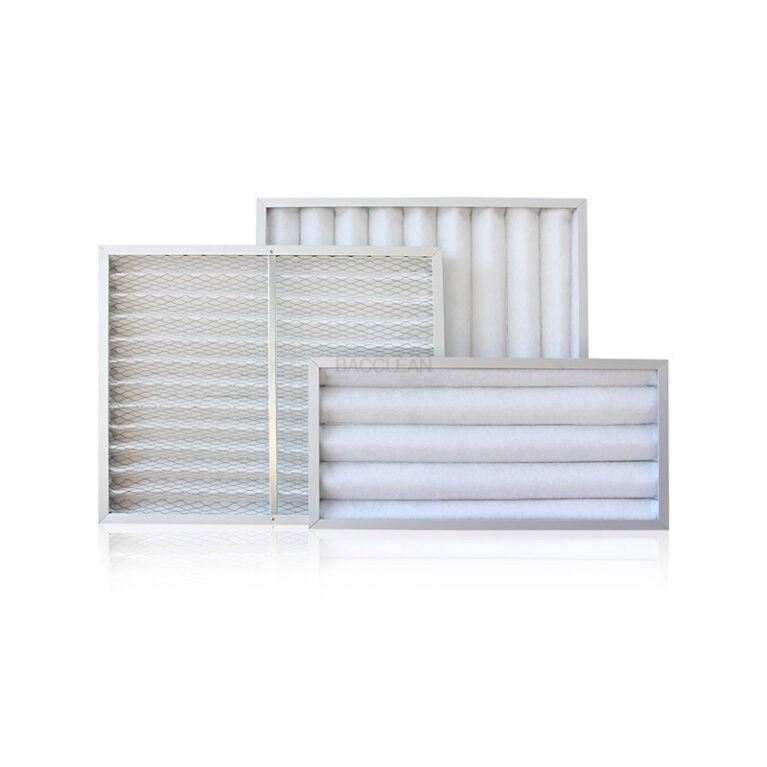
FFU top pre-filter (protecting the high-efficiency): G3/G4 initial dust-proof net, must be equipped, significantly extends the life of the high-efficiency filter
Hard explosion-proof requirements: Do not reduce the filtration grade, dust accumulation inside the equipment will form a combustible dust hazard.
III. Step 3: Select structural form (no partition vs. flat with partition)
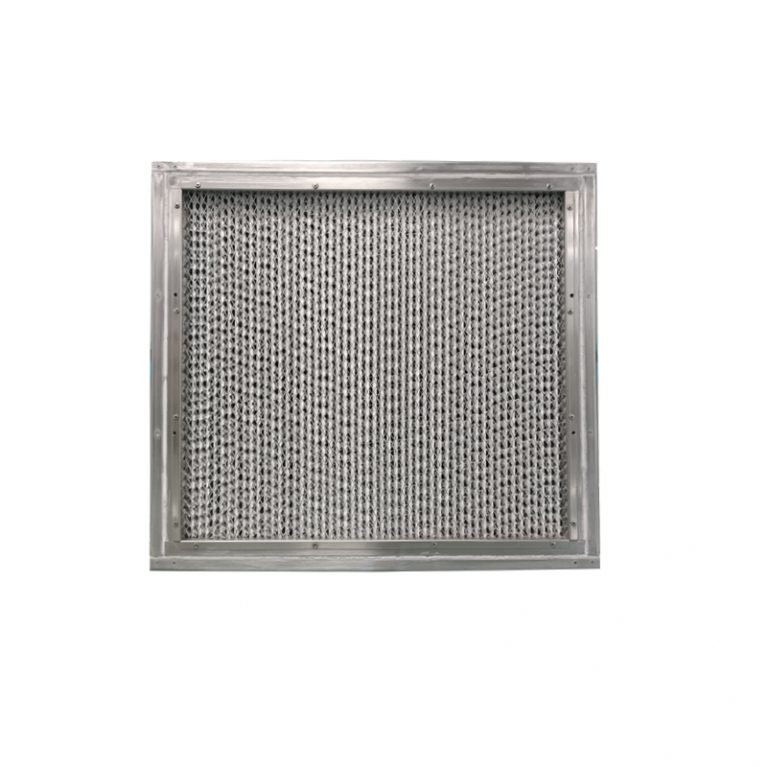
1. Select no partition high-efficiency (most standard ceiling explosion-proof FFU)
Applicable scenarios:
Ceiling height is limited, original standard explosion-proof FFU does not need to change the box
Pharmaceutical, low-dust electronics, intermittent operation workshop
Advantage: Thin, initial pressure difference low, explosion-proof motor load small, temperature rise low, higher safety coefficient; cheaper consumables, installation simple.
Shortcomings: Small dust capacity, high-dust lithium battery workshop requires frequent replacement.
2. Select flat with partition high-efficiency (customized deep-box explosion-proof FFU)
Applicable scenarios:
Lithium battery coating, injection, chemical, etc. high-pollution 24-hour continuous production line
Large air volume, high static pressure working conditions, want to reduce filter core replacement downtime
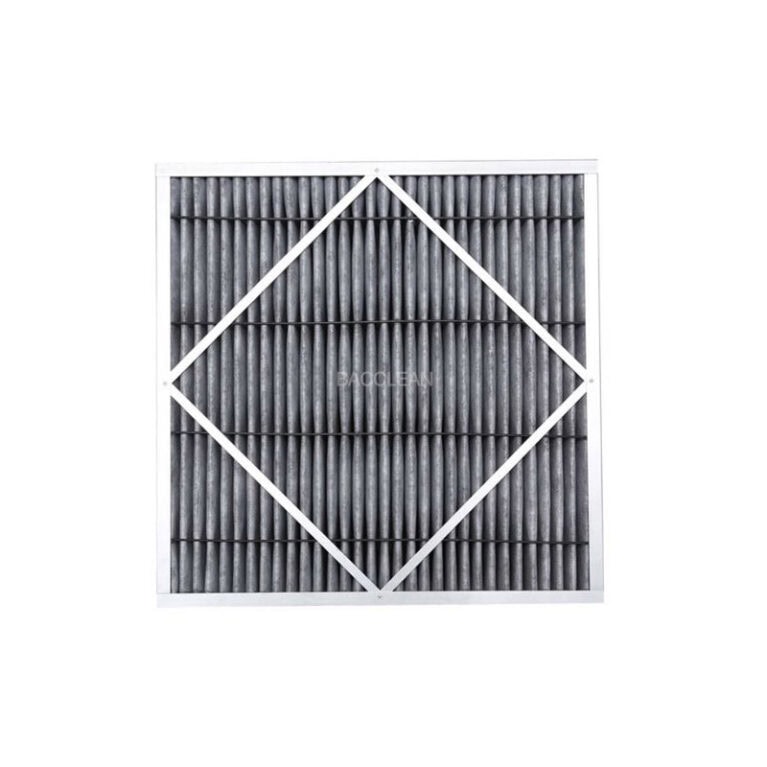
Advantage: Large filtration area, high dust capacity, life extends by 20%~30%; aluminum foil support not prone to deformation, large gap for cleaning crystalline dust.
Shortcomings: Thick requires customized FFU box, initial resistance is high, increases the load on the fan.
IV. Step 4: Pressure difference and fan matching (key to explosion-proof safety)
Explosion-proof motor does not allow long-term overload, high temperature, priority select initial resistance low filter core
Glass fiber without partition: initial 120–160Pa, compatible with conventional explosion-proof FFU motor;
Flat with partition: initial 160–200Pa, need to confirm sufficient static pressure reserve of the fan;
Lithium battery high-pollution working conditions: termination replacement pressure difference is recommended to set at 280Pa, do not wait until 350Pa, to prevent motor overheating and generating ignition sources.
V. Step 5: Special environmental adaptation selection High humidity and condensation environment: Prefer PTFE film covering, non-creaking and non-aging; glass fiber is prone to moisture absorption and failure.
Corrosive acid and alkali vapors: PTFE is superior to ordinary glass fiber in chemical corrosion resistance.
High flammable dust content: Increase the dust holding structure (with partitions / V-shaped deep pleats) to avoid short-term blockage.
24-hour continuous operation: Avoid thin models without partitions, prefer models with partitions or PTFE film covering.
Sixth step: Dimension, sealing, and matching accessories selection
Dimension: Strictly match the length, width, and thickness of the internal card slots of the explosion-proof FFU. Non-standard dimensions require customization to avoid air leakage;
Sealing: Select an integrated foam PU edge frame with good elasticity, preventing side leakage in the explosion-proof clean area; prohibit hard non-sealed edge frames;
Pre-filtering combination: All explosion-proof FFU must be equipped with G4 primary dust filter screens to intercept large dust and reduce the load on the high-efficiency filter;
Explosion-proof matching requirements: Filter elements do not contain flammable sponge or plastic accessories, all made of flame-retardant materials.
Quick selection comparison table
| Workshop conditions | Recommended filter material | Recommended structure |
| Lithium battery coating / Electrolyte injection | PTFE coated H13 | Plate with partition |
| Pharmaceutical aseptic explosion-proof workshop | Fiberglass H14 | No partition board |
| Cosmetics and alcohol filling workshop | PTFE coated H13 | Without partition (moderately contaminated) |
| Explosion-proof Optical Laboratory | Glass fiber H13 | No partition board |
| High dust content chemical production line with 24-hour operation | PTFE coated H14 | V-shaped deep pleat efficiency |
VIII. Model Selection and Risk Avoidance (Explosion-proof Red Line)
It is not advisable to use PP melt-blown high-efficiency material to replace glass fiber/PTFE for cost-saving purposes. The efficiency of the solvent environment will rapidly deteriorate.
For high-solvent environments, ordinary glass fiber should not be selected. After the filter screen adsorbs organic solvents, there is a risk of spontaneous combustion.
The original standard thin-type explosion-proof FFU should not be forcibly upgraded to a thicker model with partitions. The seal is not tight, resulting in air leakage and damaging the cleanliness and explosion-proof environment.
Do not cancel the pre-filtering. This will directly halve the lifespan of the high-efficiency filter element and cause frequent shutdowns for replacement.
