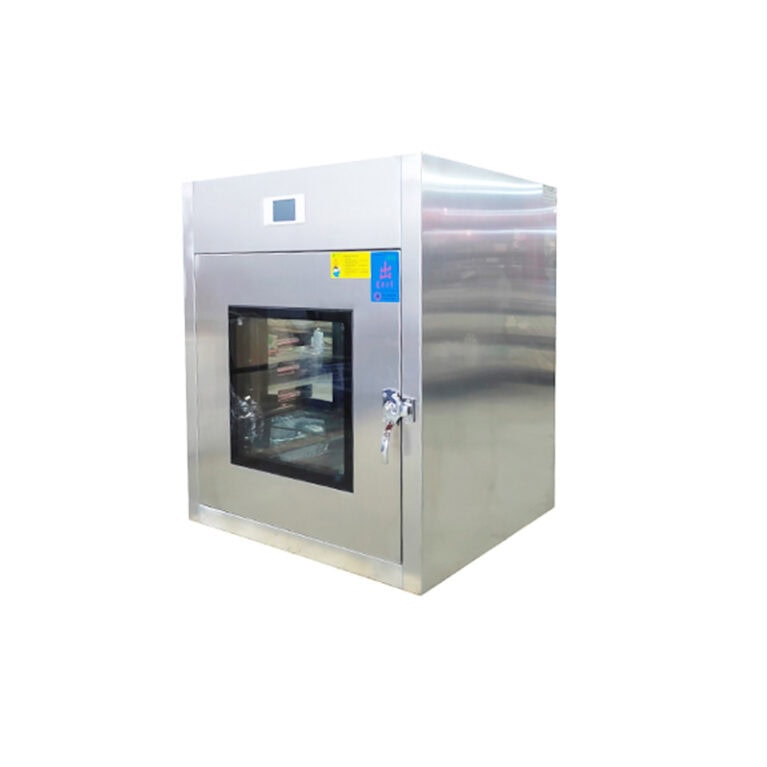
Daily physical disinfection methods for transfer windows (routine in workshops, without chemical agents)
1. UV-C ultraviolet light irradiation (standard equipment, most commonly used)
All ordinary interlocking transfer windows come with this feature and are considered a daily standard physical disinfection method.
Principle: Short-wave ultraviolet light damages the DNA of bacteria and molds, killing surface microorganisms;
Operation: Place the materials in, close the double doors, and irradiate for 15 to 30 minutes;
Applicable: Electronic workshops, food, medical devices, laboratories, hospitals for daily material transfer.
2. FFU laminar flow self-cleaning blow-off (specific for laminar transfer windows)
Relying on efficient single-directional airflow, it physically removes dust and floating bacteria.
Principle: The FFU in the box continuously blows out a clean laminar flow to disperse and filter floating pollutants;
Operation: Close the door and turn on the fan for self-cleaning for 10 to 20 minutes, often combined with UV irradiation;
Applicable: Hundreds / thousands of grade high-cleanliness electronic, cell rooms, sterile raw material drug workshops.
3. Dry physical dust removal (preliminary pre-treatment cleaning)
It is an auxiliary physical disinfection method and helps reduce the microbial base:
Dust-free dry cloth wiping
Each shift should dry wipe the box body, glass and sealing strips with a lint-free cloth to remove accumulated dust and eliminate dead corners that are blocked by ultraviolet rays.
Clean and dry compressed air blowing
After removing the outer packaging of the materials in the external area, blow away the surface dust and debris before entering the transfer window;
Applicable: Pre-treatment of hardware, injection molding, high-dust production lines materials, full workshop daily cleaning.
4. Ozone disinfection (periodic deep physical disinfection, not used daily)
Through an ozone generator to ionize the air to produce ozone, strong oxidation for sterilization;
Usage frequency: Weekly / emergency deep disinfection after contamination;
Limitation: Long-term use will corrode rubber sealing strips, not recommended for regular use in aseptic GMP workshops.
5. Dry heat high-temperature disinfection (rarely used as a specialty, rarely used in daily operations)
Only used for all stainless steel high-temperature workpieces, glass utensils dedicated transfer windows;
High temperature will accelerate the aging of sealing strips and lamp tubes, and ordinary transfer windows are not allowed for daily use.
Daily general combination (mostly applicable to workshops)
Dry dust removal wiping + UV irradiation
In high-clean areas, add: Clean air blowing + FFU laminar flow self-cleaning