
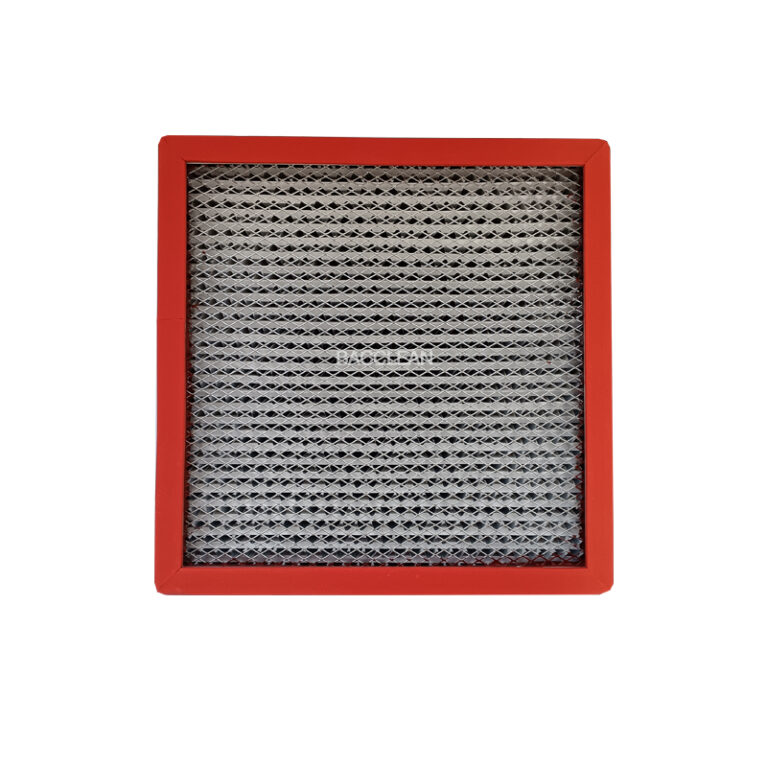
As the “core power source” of the cleanroom air purification system, the FFU (Fan Filter Unit) directly determines the stability of the clean environment, the service life of the equipment, and the energy consumption during operation by the degree of refinement in its daily operation and maintenance. Based on Bailun Purification’s practical experience in the new energy, medical, food, and other industries, this paper sorts out the key details of the daily operation and maintenance of FFUs from four dimensions: inspection and monitoring, cleaning and maintenance, safety control, and industry adaptation, to help enterprises achieve long-term and efficient operation of equipment.
I. Inspection and Monitoring: Precise Control of Operating Status (Core of Data-driven Management)
Check the details every day.
Visual monitoring of operation status: Observe whether the indicator lights on the control panel (power, operation, and fault lights) are normal. The sound of the fan should be stable without any abnormal noise (normal noise ≤65dB (A)). If abnormal noise or excessive vibration (amplitude > 0.1mm) occurs, stop the machine immediately for inspection (focus on checking dust accumulation on the impeller and wear of the motor bearings).
Key parameter record: Accurately record the pressure difference before and after the filter (the initial normal range is ≤50Pa for the primary filter and ≤200Pa for the high-efficiency filter). If the pressure difference of the high-efficiency filter reaches 1.5 times the initial value (such as 300Pa), the replacement process needs to be initiated. Synchronously record the running time and environmental temperature and humidity (adapted to industry requirements: medical 20-24℃/45%-65% RH, food 18-26℃/40%-60% RH).
Cleanliness correlation verification: Randomly check the particle concentration in the clean room every day (for example, the medical Class 7 requirement is that particles ≥0.5μm ≤ 352,000 particles /m³). If the concentration abnormally increases, prioritize checking whether the FFU high-efficiency filter is leaking and whether the fan wind speed meets the standard (it is recommended to be 0.3-0.5m/s).
Key points of weekly inspection
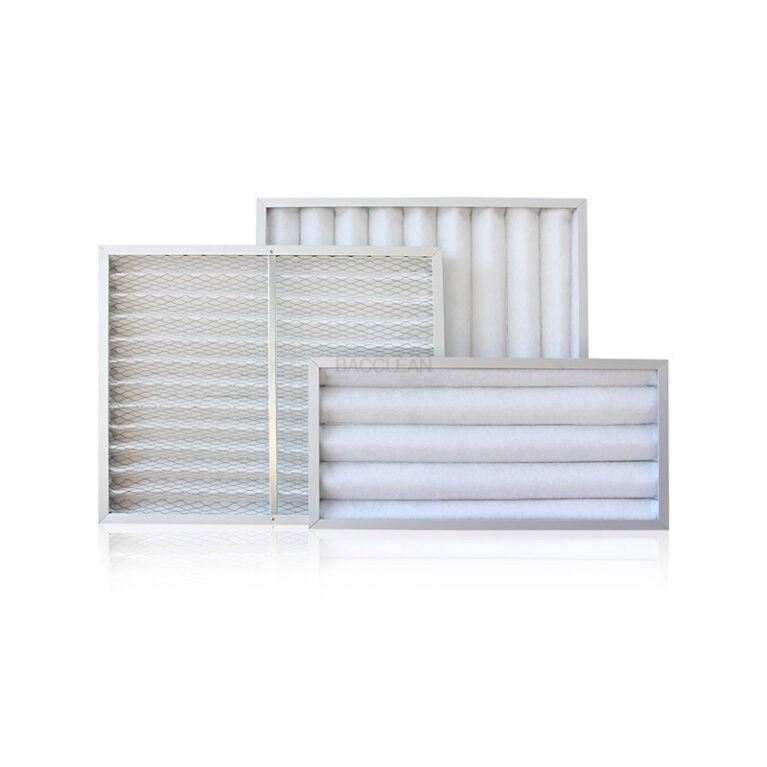
Maintenance of the primary filter: Disassemble and clean the primary filter (for water-washed types, rinse with clean water and dry. For disposable types, it is recommended to replace them every 1-2 months) to prevent dust accumulation and blockage, which may lead to insufficient air intake and fan overload.
Electrical system fastening: Check whether the power cord and grounding wire are firmly connected (grounding resistance ≤4Ω), and ensure that the control panel buttons and terminal blocks are not loose to eliminate the risk of leakage and short circuit.
Air flow uniformity check: Observe whether the air flow at the FFU outlet is uniform. If there is no air or turbulence in some areas, adjust the installation position or check whether the sealing rubber strip of the filter has shifted.
Monthly in-depth verification
Motor performance monitoring: Use an infrared thermometer to measure the temperature of the motor housing (normal ≤70℃), and use a multimeter to measure the operating current and voltage (deviation ≤±5% of the rated value). If the current abnormally increases, it may be due to a clogged filter or the aging of the motor bearings.
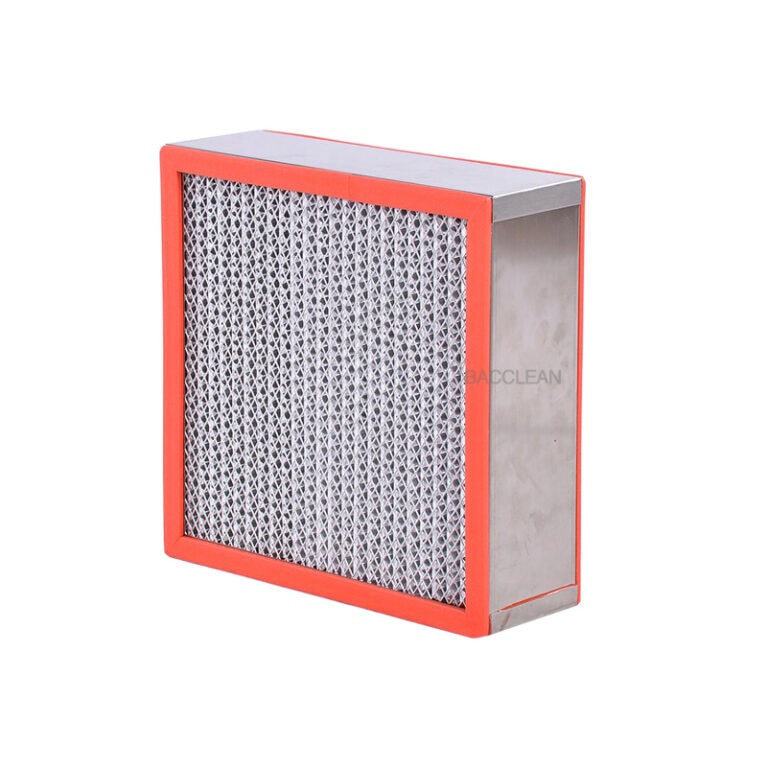
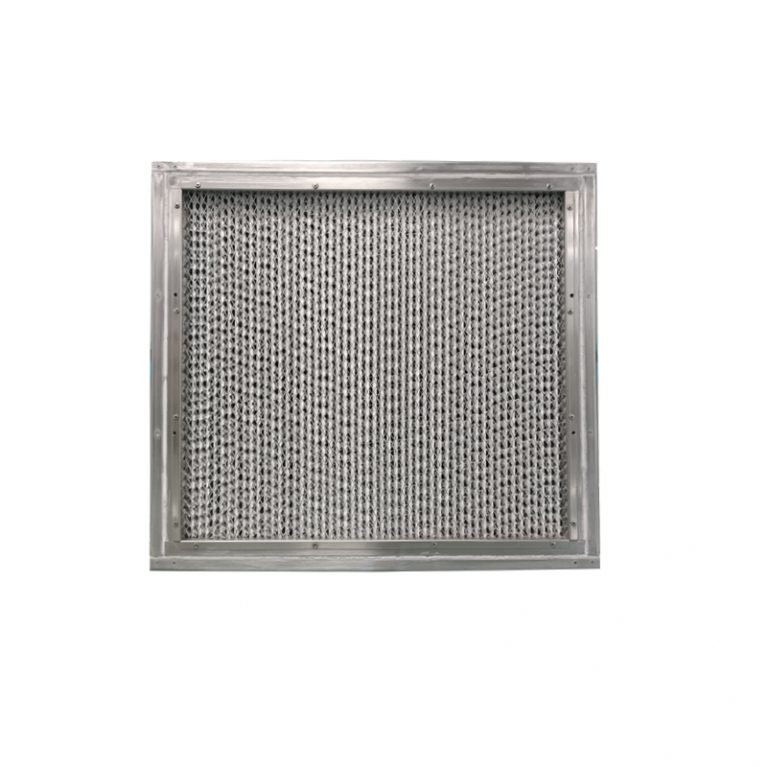
Filter integrity inspection: The PAO leak detection method is used to randomly check the sealing performance of high-efficiency filters, with a focus on the sealing areas between the filter material and the frame, as well as between the frame and the box body. If leakage occurs, the filter should be immediately repaired or replaced with sealant.
Ledger update: Record in detail the equipment model, installation location, maintenance content, and component replacement information (such as motor and filter batches), forming a traceable operation and maintenance file.
Ii. Cleaning and Maintenance: Avoid secondary pollution and equipment wear and tear
Cleaning Operation Specifications
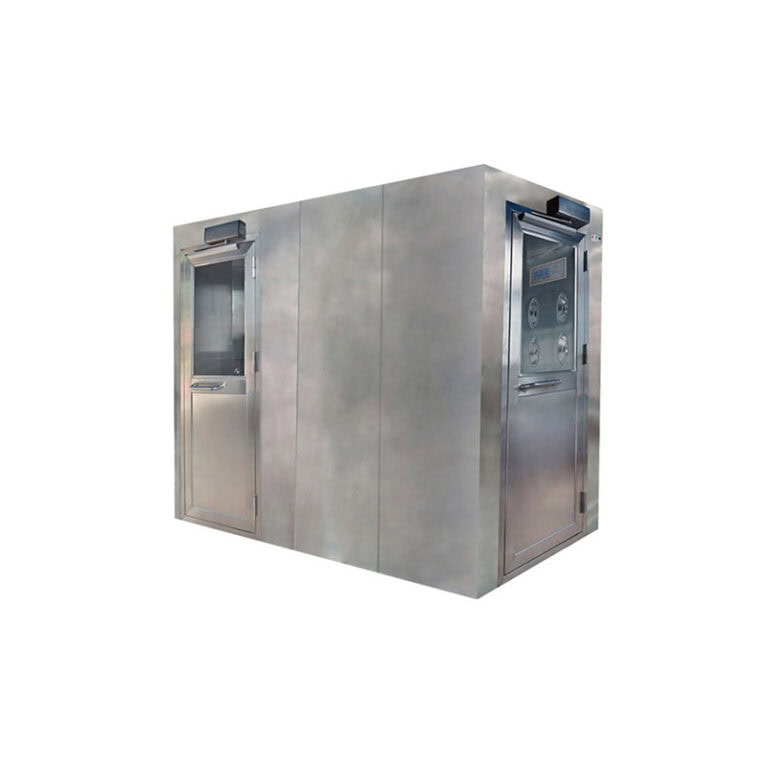
Prerequisite requirements: Before cleaning, the machine must be shut down and the power cut off. A “Do not Close” warning sign should be hung. Operators must wear dust-free suits and gloves. Tools must be cleaned in an air shower room.
Cleaning method: Use a lint-free cloth dipped in a dedicated neutral cleaner (corrosive reagents are strictly prohibited) to gently wipe the equipment casing and the air inlet grid. It is strictly forbidden to directly rinse the motor, control panel, and other electrical components with water. For dust accumulation on the impeller, it is necessary to disassemble it and then blow it from the inside out with compressed air (pressure ≤0.3MPa) to prevent dust from entering the motor.
Post-cleaning inspection: After cleaning is completed, reset the equipment, start the machine, and run it for 15 minutes to confirm that there is no unpleasant smell in the airflow and no rebound in particle concentration.
Core details of filter replacement
Replacement timing: The primary filter is recommended to be replaced every 1 to 3 months (for high-pollution conditions such as new energy battery workshops, it can be shortened to 1 month), and the high-efficiency filter is recommended to be replaced every 1 to 2 years (for GMP workshops in the medical industry, annual mandatory replacement is required), or flexibly adjusted based on the pressure difference data.
Operation process: Remove the new filter packaging outside the clean room (keep the inner sealed bag), and enter the clean area through the air shower. When disassembling the old filter, wrap it in a sealed bag to prevent dust from scattering and contaminating the clean room. When installing a new filter, make sure the arrow points in the direction of the airflow and the sealing rubber strip fits the box completely without any wrinkles or gaps.
Post-replacement verification: After the replacement is completed, leak detection tests and cleanliness tests must be conducted. Only after passing the tests can it be put into use.
Maintenance of vulnerable parts
Motor bearings: Check the lubrication status of the bearings every six months. If abnormal noise or excessive temperature rise occurs, add special grease in time (high-temperature anti-wear type is recommended). Aged bearings need to be replaced with original factory parts (bacclean FFU motor bearings adopt imported brands, with a service life of ≥ 50,000 hours).
Sealing rubber strips: Inspect the sealing rubber strips at the filter frame and the connection points of the box body every month. If they show signs of aging or damage, replace them immediately (to prevent air leakage and failure to meet the cleanliness standards).
Iii. Safety Control: Maintaining the Bottom Line of Operations and Maintenance (Key to Avoiding Risks)
Electrical safety details
Unlicensed personnel are strictly prohibited from operating or maintaining equipment. Electrical faults must be handled by professional electricians. During maintenance, the main power supply must be disconnected, and a voltage tester must be used to confirm that there is no electricity before commencing work.
Regularly check the insulation layer of the power cord (to avoid aging and damage). It is strictly forbidden to privately connect wires. The grounding of the equipment must be reliable (to prevent static electricity accumulation and cause safety accidents).
Equipment safety taboos
Do not stack any miscellaneous items at the FFU air inlet (reserve at least 30cm of ventilation space) to avoid blocking the air flow channel and causing the fan to overload and burn out. It is strictly prohibited to adjust the fan speed beyond the rated range without authorization (bacclean FFU supports stepless speed regulation, and it is recommended to control it within the range of 30% to 100%).
Do not disassemble or modify equipment components (such as fans and control panels) without authorization. When replacing parts, only genuine Bacclean products from the original factory must be selected (to ensure compatibility and filtration efficiency; non-original parts may result in non-compliance with cleanliness standards).
Environmental and personnel safety
During the operation and maintenance process, strictly abide by the cleanroom management regulations and avoid bringing in contaminants (such as jewelry and non-clean tools). If working in special scenarios such as biosafety laboratories, additional protective face masks and protective clothing must be worn.
Be equipped with emergency devices (such as dry powder fire extinguishers and insulating gloves). In case of emergency situations such as motor overheating or leakage, immediately stop the machine and cut off the power, activate the emergency response plan, and contact professional technicians.
I. Inspection and Monitoring: Precise Control of Operating Status (Core of Data-driven Management)
Check the details every day.
Visual monitoring of operation status: Observe whether the indicator lights on the control panel (power, operation, and fault lights) are normal. The sound of the fan should be stable without any abnormal noise (normal noise ≤65dB (A)). If abnormal noise or excessive vibration (amplitude > 0.1mm) occurs, stop the machine immediately for inspection (focus on checking dust accumulation on the impeller and wear of the motor bearings).
Key parameter record: Accurately record the pressure difference before and after the filter (the initial normal range is ≤50Pa for the primary filter and ≤200Pa for the high-efficiency filter). If the pressure difference of the high-efficiency filter reaches 1.5 times the initial value (such as 300Pa), the replacement process needs to be initiated. Synchronously record the running time and environmental temperature and humidity (adapted to industry requirements: medical 20-24℃/45%-65% RH, food 18-26℃/40%-60% RH).
Cleanliness correlation verification: Randomly check the particle concentration in the clean room every day (for example, the medical Class 7 requirement is that particles ≥0.5μm ≤ 352,000 particles /m³). If the concentration abnormally increases, prioritize checking whether the FFU high-efficiency filter is leaking and whether the fan wind speed meets the standard (it is recommended to be 0.3-0.5m/s).
Key points of weekly inspection
Maintenance of the primary filter: Disassemble and clean the primary filter (for water-washed types, rinse with clean water and dry. For disposable types, it is recommended to replace them every 1-2 months) to prevent dust accumulation and blockage, which may lead to insufficient air intake and fan overload.
Electrical system fastening: Check whether the power cord and grounding wire are firmly connected (grounding resistance ≤4Ω), and ensure that the control panel buttons and terminal blocks are not loose to eliminate the risk of leakage and short circuit.
Air flow uniformity check: Observe whether the air flow at the FFU outlet is uniform. If there is no air or turbulence in some areas, adjust the installation position or check whether the sealing rubber strip of the filter has shifted.
Monthly in-depth verification
Motor performance monitoring: Use an infrared thermometer to measure the temperature of the motor housing (normal ≤70℃), and use a multimeter to measure the operating current and voltage (deviation ≤±5% of the rated value). If the current abnormally increases, it may be due to a clogged filter or the aging of the motor bearings.
Filter integrity inspection: The PAO leak detection method is used to randomly check the sealing performance of high-efficiency filters, with a focus on the sealing areas between the filter material and the frame, as well as between the frame and the box body. If leakage occurs, the filter should be immediately repaired or replaced with sealant.
Ledger update: Record in detail the equipment model, installation location, maintenance content, and component replacement information (such as motor and filter batches), forming a traceable operation and maintenance file.
Ii. Cleaning and Maintenance: Avoid secondary pollution and equipment wear and tear
Cleaning Operation Specifications
Prerequisite requirements: Before cleaning, the machine must be shut down and the power cut off. A “Do not Close” warning sign should be hung. Operators must wear dust-free suits and gloves. Tools must be cleaned in an air shower room.
Cleaning method: Use a lint-free cloth dipped in a dedicated neutral cleaner (corrosive reagents are strictly prohibited) to gently wipe the equipment casing and the air inlet grid. It is strictly forbidden to directly rinse the motor, control panel, and other electrical components with water. For dust accumulation on the impeller, it is necessary to disassemble it and then blow it from the inside out with compressed air (pressure ≤0.3MPa) to prevent dust from entering the motor.
Post-cleaning inspection: After cleaning is completed, reset the equipment, start the machine, and run it for 15 minutes to confirm that there is no unpleasant smell in the airflow and no rebound in particle concentration.
Core details of filter replacement
Replacement timing: The primary filter is recommended to be replaced every 1 to 3 months (for high-pollution conditions such as new energy battery workshops, it can be shortened to 1 month), and the high-efficiency filter is recommended to be replaced every 1 to 2 years (for GMP workshops in the medical industry, annual mandatory replacement is required), or flexibly adjusted based on the pressure difference data.
Operation process: Remove the new filter packaging outside the clean room (keep the inner sealed bag), and enter the clean area through the air shower. When disassembling the old filter, wrap it in a sealed bag to prevent dust from scattering and contaminating the clean room. When installing a new filter, make sure the arrow points in the direction of the airflow and the sealing rubber strip fits the box completely without any wrinkles or gaps.
Post-replacement verification: After the replacement is completed, leak detection tests and cleanliness tests must be conducted. Only after passing the tests can it be put into use.
Maintenance of vulnerable parts
Motor bearings: Check the lubrication status of the bearings every six months. If abnormal noise or excessive temperature rise occurs, add special grease in time (high-temperature anti-wear type is recommended). Aged bearings need to be replaced with original factory parts (bacclean FFU motor bearings adopt imported brands, with a service life of ≥ 50,000 hours).
Sealing rubber strips: Inspect the sealing rubber strips at the filter frame and the connection points of the box body every month. If they show signs of aging or damage, replace them immediately (to prevent air leakage and failure to meet the cleanliness standards).
Iii. Safety Control: Maintaining the Bottom Line of Operations and Maintenance (Key to Avoiding Risks)
Electrical safety details
Unlicensed personnel are strictly prohibited from operating or maintaining equipment. Electrical faults must be handled by professional electricians. During maintenance, the main power supply must be disconnected, and a voltage tester must be used to confirm that there is no electricity before commencing work.
Regularly check the insulation layer of the power cord (to avoid aging and damage). It is strictly forbidden to privately connect wires. The grounding of the equipment must be reliable (to prevent static electricity accumulation and cause safety accidents).
Equipment safety taboos
Do not stack any miscellaneous items at the FFU air inlet (reserve at least 30cm of ventilation space) to avoid blocking the air flow channel and causing the fan to overload and burn out. It is strictly prohibited to adjust the fan speed beyond the rated range without authorization (bacclean FFU supports stepless speed regulation, and it is recommended to control it within the range of 30% to 100%).
Do not disassemble or modify equipment components (such as fans and control panels) without authorization. When replacing parts, only genuine Bacclean products from the original factory must be selected (to ensure compatibility and filtration efficiency; non-original parts may result in non-compliance with cleanliness standards).
Environmental and personnel safety
During the operation and maintenance process, strictly abide by the cleanroom management regulations and avoid bringing in contaminants (such as jewelry and non-clean tools). If working in special scenarios such as biosafety laboratories, additional protective face masks and protective clothing must be worn.
Be equipped with emergency devices (such as dry powder fire extinguishers and insulating gloves). In case of emergency situations such as motor overheating or leakage, immediately stop the machine and cut off the power, activate the emergency response plan, and contact professional technicians.
