
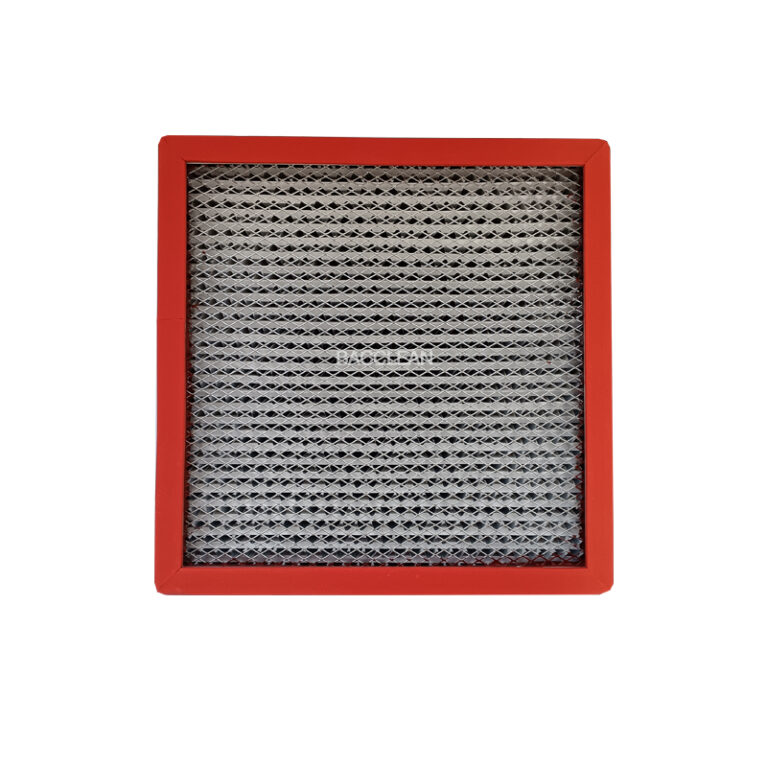
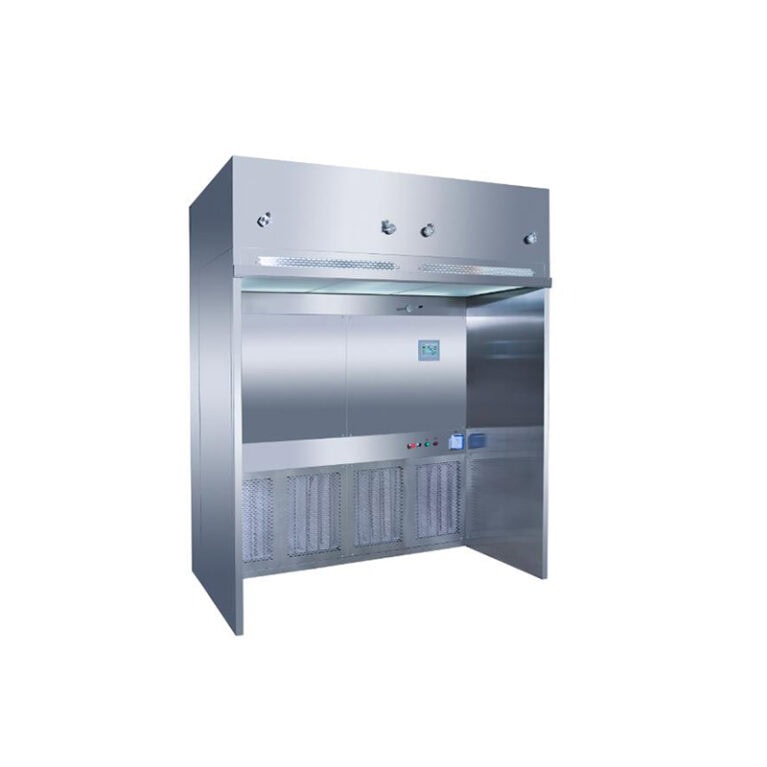
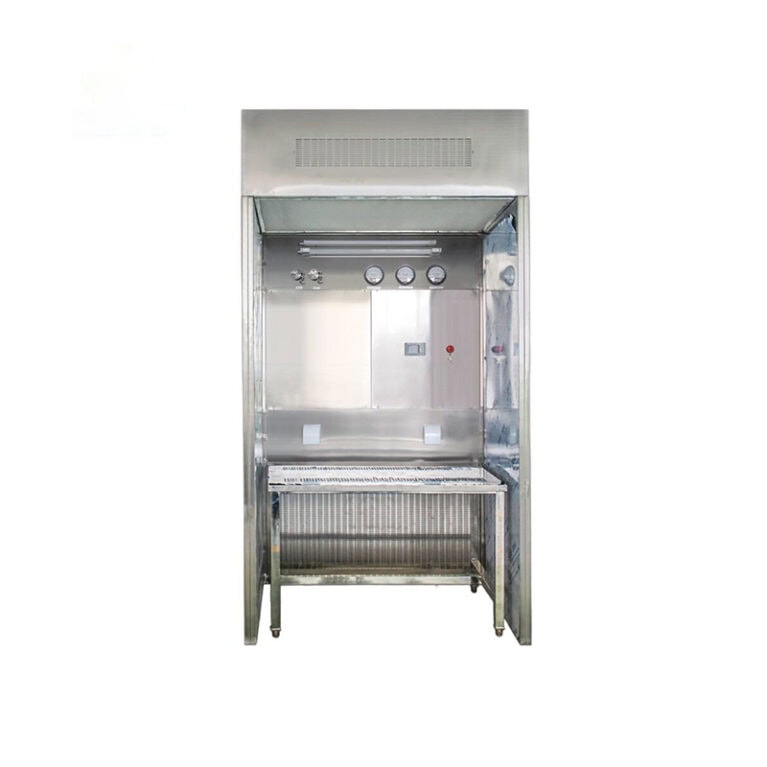
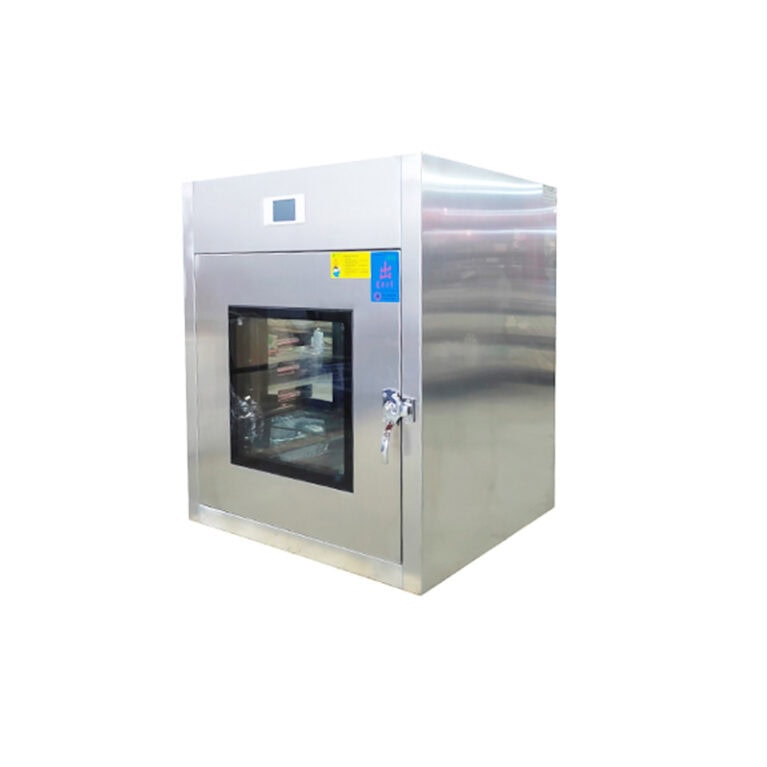
Analysis of Bacclean DOP Laminar Flow Transfer Window core advantages.
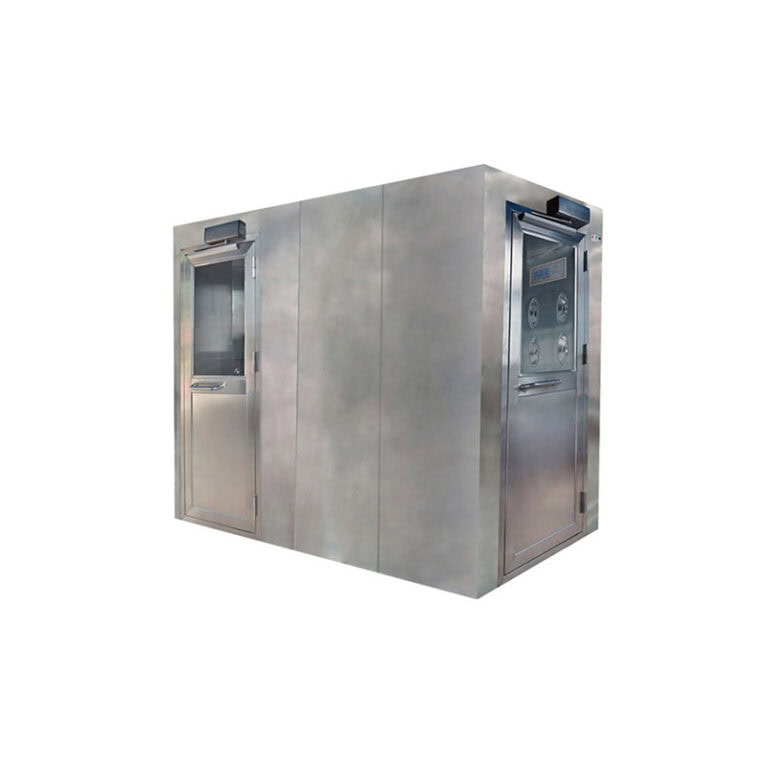
As a key equipment for material transfer in high-cleanliness fields, the DOP laminar flow transfer window of Bailun Purification takes “compliance guarantee + efficient anti-pollution + stable operation and maintenance” as its core, integrating multiple industry-leading technologies. Its advantages are mainly reflected in five dimensions: filtration performance, detection and verification, anti-cross-contamination, compatibility and operation and maintenance costs. Fully meet the strict standards such as GMP and ISO 14644
1. Ultimate filtration performance, clean delivery with zero dead corners
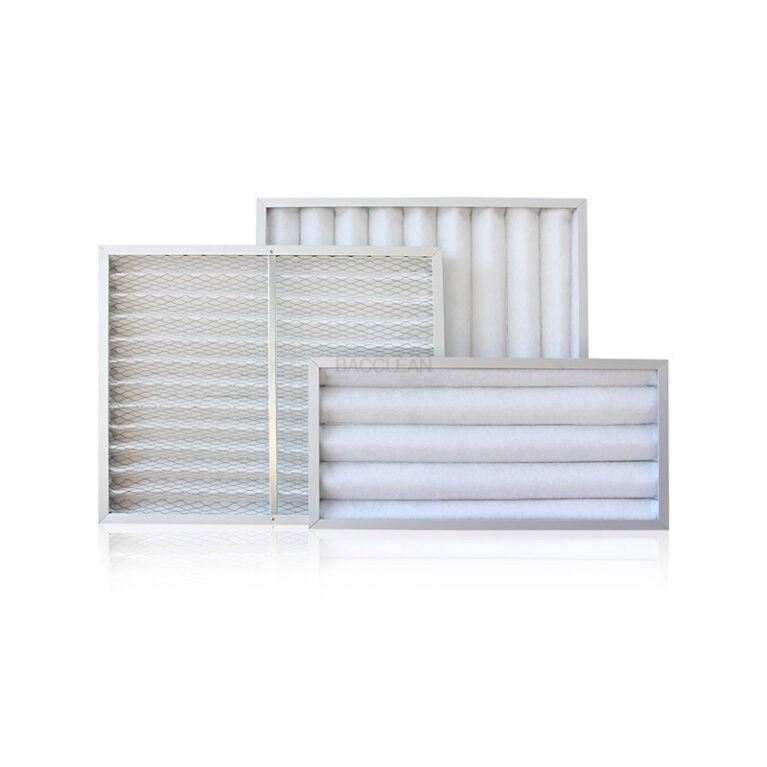
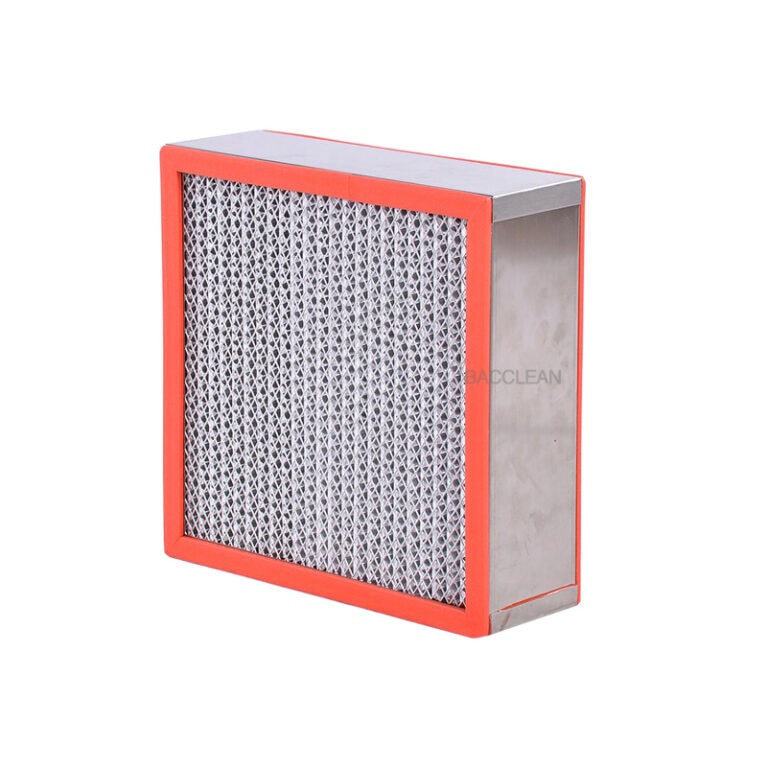
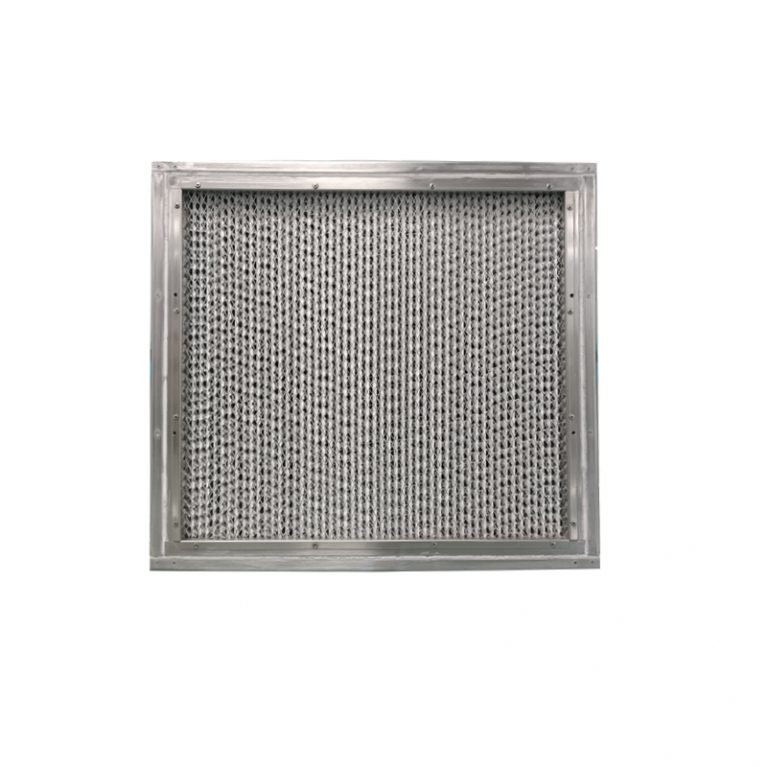
High-efficiency filtration system Equipped with Bacclean custom-grade HEPA/ULPA high-efficiency filters, the filtration efficiency reaches ≥99.97%@0.3μm (HEPA) or ≥99.999%@0.12μm (ULPA), effectively intercepts dust, microorganisms, ultrafine particles and other contaminants. Ensure that the cleanliness of the transmitted air flow reaches Class 100 (ISO 5) or above, and block the pollution path from the source.
Stable laminar flow design: It adopts a top uniform flow membrane + double-sided return air structure, forming a vertical/horizontal unidirectional flow field. The air flow velocity is stable at 0.3-0.5m/s (meeting GMP requirements), with no vortices or dead corners. It can form a clean air flow barrier on the material surface to prevent the adhesion or diffusion of contaminants.
Ultra-low leakage rate: The filter and the box body are fixed by sealing rubber strips and frame pressing, with an overall leakage rate of ≤0.01%, far exceeding the industry average. This prevents unfiltered air from seeping into the clean transfer area and ensures the cleanliness and consistency of the transfer process.
Second, DOP testing empowers compliance audits without pressure.
Full-process verification function: Supports DOP offline/online detection (optional configuration). By injecting DOP aerosol upstream of the filter, it can monitor the filtration efficiency and leakage in real time. The detection data can be automatically recorded and exported, meeting the GMP’s mandatory requirements for “filtration system effectiveness verification”, and easily dealing with industry audits and quality traceability.
Precise detection technology: A laser particle counter is used to accurately capture DOP particles (0.3μm/0.12μm), with a detection error of ≤±5%. The data display is intuitive (LCD touch screen), allowing operators to quickly determine the performance status of the filter and avoid the risk of contamination caused by filter failure.
Compliant design: The equipment structure complies with GMP requirements for clean equipment, with no dust accumulation in dead corners and is easy to clean. The detection interface is standardised and compatible with third-party testing equipment, ensuring the authority and compliance of the verification process.
Third, prevent cross-contamination and provide more reliable two-way protection.
Interlock safety mechanism: Equipped with a dual interlock device of mechanical and electronic, it ensures that the doors on both sides cannot be opened simultaneously, completely blocking the air flow connection between the clean area and the non-clean area (or areas of different cleanliness levels), and structurally avoiding cross-contamination.
Multiple disinfection configuration: Optional ultraviolet disinfection lamps (sterilisation rate ≥99%) and ozone disinfection modules are available to disinfect the inner cavity of the box before and after material transfer, effectively killing microorganisms and further reducing the risk of contamination. The disinfection time can be precisely set to meet the disinfection requirements of different materials.
Negative pressure isolation design: Some models support negative pressure operation mode, maintaining a slight negative pressure state inside the box to prevent internal contaminants from escaping outward. It is particularly suitable for scenarios with extremely high isolation requirements, such as biosafety laboratories and aseptic production workshops.
Fourth, it has wide adaptability and can be customised to meet diverse needs.
Multi-scenario compatibility The box size (conventional 300-1200mm), airflow direction (vertical/horizontal), and material (304/316L stainless steel) can be customized according to the cleanliness level (Class 1-10000) and material characteristics (sterile, precision, volatile, heavy materials) of different industries (pharmaceuticals, electronics, medical care, food, etc.) Compatible with various cleanroom layouts.
Special working condition adaptation: For high-temperature, low-temperature, high-humidity, and corrosive environments, customised components such as high-temperature resistant filters, anti-corrosion coatings, and explosion-proof electrical appliances can be configured to meet the usage requirements of special industries such as aerospace, nuclear industry, and fine chemicals.
Integrated function expansion: Supports linkage with the central control system of the clean room to upload real-time equipment operation data (wind speed, temperature, humidity, disinfection status, DOP test results). It can be optionally equipped with a PLC control system and a human-machine interaction touch screen, which is easy to operate and can achieve automated operation and fault alarm.
Five. Low operation and maintenance costs ensure stable operation.
Long-lasting and durable design: The box body is made of 304/316L stainless steel, which is corrosion-resistant, easy to clean, wear-resistant and pressure-resistant, with a service life of 8-10 years. The filter is made of high-quality glass fibre filter paper, featuring a large dust-holding capacity and low resistance. The replacement cycle is 30% longer than that of similar products in the industry, reducing the cost of consumables.
Convenient maintenance structure: The filter adopts a quick-release design, allowing for quick replacement without the need for professional tools. The equipment is equipped with access ports, and the layout of internal electrical components is regular, which is convenient for daily inspection and fault detection, and reduces the downtime for maintenance.
Energy-saving and consumption-reducing advantages: Low-power consumption fans (power ≤150W) are adopted, combined with intelligent frequency conversion control, which can adjust the wind speed according to the actual working conditions, saving 20%-30% energy compared with traditional transfer Windows. The box body is made of high-density thermal insulation and soundproof materials, with an operating noise of no more than 55dB, balancing energy conservation and a comfortable working environment.
Summary of Core Advantages
The core competitiveness of Bacclean DOP laminar flow transfer Windows lies in “taking compliance as the foundation, efficient anti-pollution as the core, and customisation and low operation and maintenance costs as the support”. Through the technical combination of “high-efficiency filtration + precise DOP verification + multiple protections + customised design”, it not only resolves the pain point of cross-contamination in material transfer in high-cleanliness fields, but also meets the demands of industry compliance audits and cost reduction and efficiency improvement. It is the preferred equipment for ensuring product quality and enhancing production efficiency in high-end manufacturing and research fields such as pharmaceuticals, electronics, medical care, and food.
As a key equipment for material transfer in high-cleanliness fields, the DOP laminar flow transfer window of Bailun Purification takes “compliance guarantee + efficient anti-pollution + stable operation and maintenance” as its core, integrating multiple industry-leading technologies. Its advantages are mainly reflected in five dimensions: filtration performance, detection and verification, anti-cross-contamination, compatibility and operation and maintenance costs. Fully meet the strict standards such as GMP and ISO 14644
1. Ultimate filtration performance, clean delivery with zero dead corners
High-efficiency filtration system Equipped with Bacclean custom-grade HEPA/ULPA high-efficiency filters, the filtration efficiency reaches ≥99.97%@0.3μm (HEPA) or ≥99.999%@0.12μm (ULPA), effectively intercepts dust, microorganisms, ultrafine particles and other contaminants. Ensure that the cleanliness of the transmitted air flow reaches Class 100 (ISO 5) or above, and block the pollution path from the source.
Stable laminar flow design: It adopts a top uniform flow membrane + double-sided return air structure, forming a vertical/horizontal unidirectional flow field. The air flow velocity is stable at 0.3-0.5m/s (meeting GMP requirements), with no vortices or dead corners. It can form a clean air flow barrier on the material surface to prevent the adhesion or diffusion of contaminants.
Ultra-low leakage rate: The filter and the box body are fixed by sealing rubber strips and frame pressing, with an overall leakage rate of ≤0.01%, far exceeding the industry average. This prevents unfiltered air from seeping into the clean transfer area and ensures the cleanliness and consistency of the transfer process.
Second, DOP testing empowers compliance audits without pressure.
Full-process verification function: Supports DOP offline/online detection (optional configuration). By injecting DOP aerosol upstream of the filter, it can monitor the filtration efficiency and leakage in real time. The detection data can be automatically recorded and exported, meeting the GMP’s mandatory requirements for “filtration system effectiveness verification”, and easily dealing with industry audits and quality traceability.
Precise detection technology: A laser particle counter is used to accurately capture DOP particles (0.3μm/0.12μm), with a detection error of ≤±5%. The data display is intuitive (LCD touch screen), allowing operators to quickly determine the performance status of the filter and avoid the risk of contamination caused by filter failure.
Compliant design: The equipment structure complies with GMP requirements for clean equipment, with no dust accumulation in dead corners and is easy to clean. The detection interface is standardised and compatible with third-party testing equipment, ensuring the authority and compliance of the verification process.
Third, prevent cross-contamination and provide more reliable two-way protection.
Interlock safety mechanism: Equipped with a dual interlock device of mechanical and electronic, it ensures that the doors on both sides cannot be opened simultaneously, completely blocking the air flow connection between the clean area and the non-clean area (or areas of different cleanliness levels), and structurally avoiding cross-contamination.
Multiple disinfection configuration: Optional ultraviolet disinfection lamps (sterilisation rate ≥99%) and ozone disinfection modules are available to disinfect the inner cavity of the box before and after material transfer, effectively killing microorganisms and further reducing the risk of contamination. The disinfection time can be precisely set to meet the disinfection requirements of different materials.
Negative pressure isolation design: Some models support negative pressure operation mode, maintaining a slight negative pressure state inside the box to prevent internal contaminants from escaping outward. It is particularly suitable for scenarios with extremely high isolation requirements, such as biosafety laboratories and aseptic production workshops.
Fourth, it has wide adaptability and can be customised to meet diverse needs.
Multi-scenario compatibility The box size (conventional 300-1200mm), airflow direction (vertical/horizontal), and material (304/316L stainless steel) can be customized according to the cleanliness level (Class 1-10000) and material characteristics (sterile, precision, volatile, heavy materials) of different industries (pharmaceuticals, electronics, medical care, food, etc.) Compatible with various cleanroom layouts.
Special working condition adaptation: For high-temperature, low-temperature, high-humidity, and corrosive environments, customised components such as high-temperature resistant filters, anti-corrosion coatings, and explosion-proof electrical appliances can be configured to meet the usage requirements of special industries such as aerospace, nuclear industry, and fine chemicals.
Integrated function expansion: Supports linkage with the central control system of the clean room to upload real-time equipment operation data (wind speed, temperature, humidity, disinfection status, DOP test results). It can be optionally equipped with a PLC control system and a human-machine interaction touch screen, which is easy to operate and can achieve automated operation and fault alarm.
Five. Low operation and maintenance costs ensure stable operation.
Long-lasting and durable design: The box body is made of 304/316L stainless steel, which is corrosion-resistant, easy to clean, wear-resistant and pressure-resistant, with a service life of 8-10 years. The filter is made of high-quality glass fibre filter paper, featuring a large dust-holding capacity and low resistance. The replacement cycle is 30% longer than that of similar products in the industry, reducing the cost of consumables.
Convenient maintenance structure: The filter adopts a quick-release design, allowing for quick replacement without the need for professional tools. The equipment is equipped with access ports, and the layout of internal electrical components is regular, which is convenient for daily inspection and fault detection, and reduces the downtime for maintenance.
Energy-saving and consumption-reducing advantages: Low-power consumption fans (power ≤150W) are adopted, combined with intelligent frequency conversion control, which can adjust the wind speed according to the actual working conditions, saving 20%-30% energy compared with traditional transfer Windows. The box body is made of high-density thermal insulation and soundproof materials, with an operating noise of no more than 55dB, balancing energy conservation and a comfortable working environment.
Summary of Core Advantages
The core competitiveness of Bacclean DOP laminar flow transfer Windows lies in “taking compliance as the foundation, efficient anti-pollution as the core, and customisation and low operation and maintenance costs as the support”. Through the technical combination of “high-efficiency filtration + precise DOP verification + multiple protections + customised design”, it not only resolves the pain point of cross-contamination in material transfer in high-cleanliness fields, but also meets the demands of industry compliance audits and cost reduction and efficiency improvement. It is the preferred equipment for ensuring product quality and enhancing production efficiency in high-end manufacturing and research fields such as pharmaceuticals, electronics, medical care, and food.
