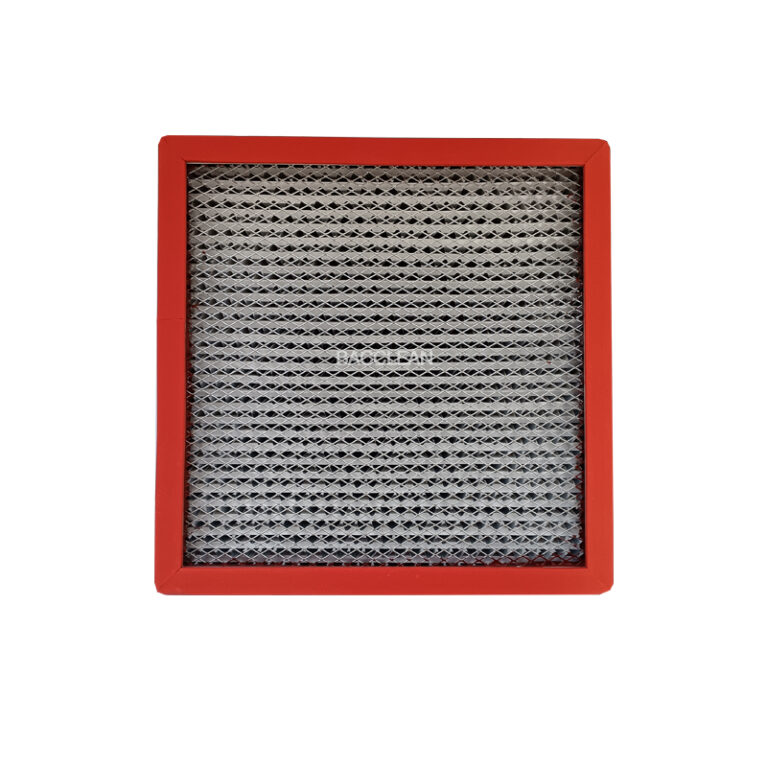
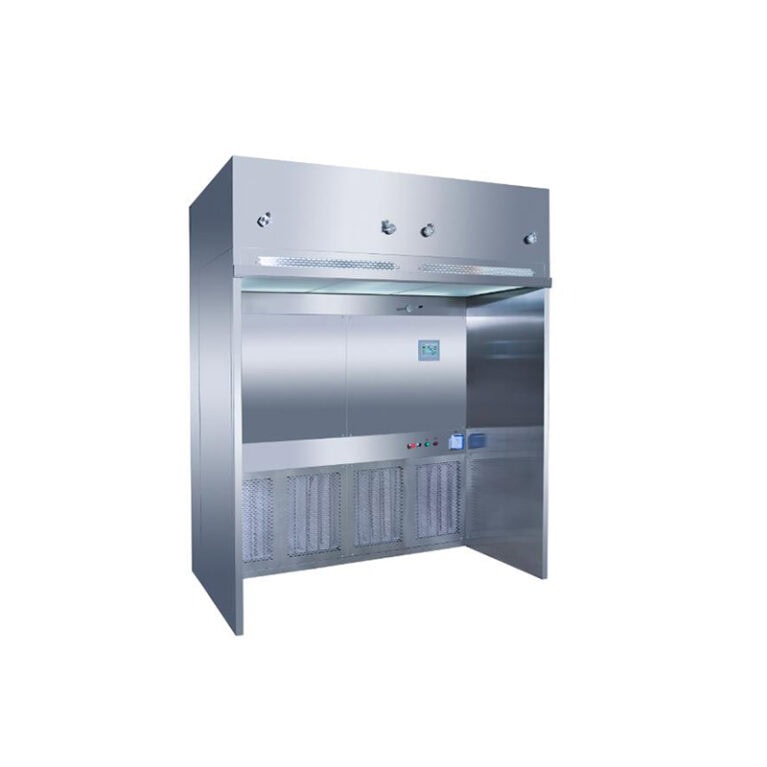
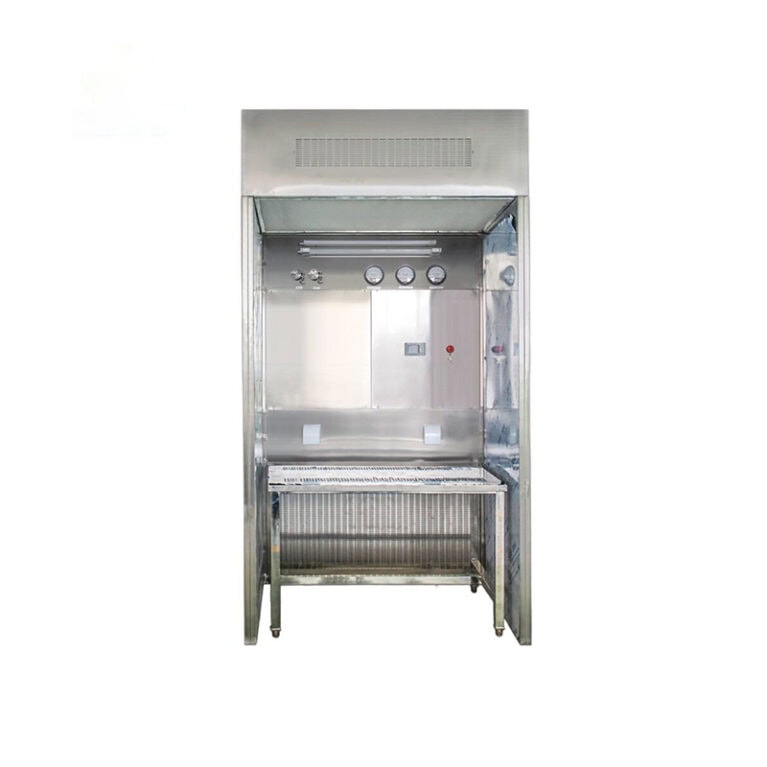
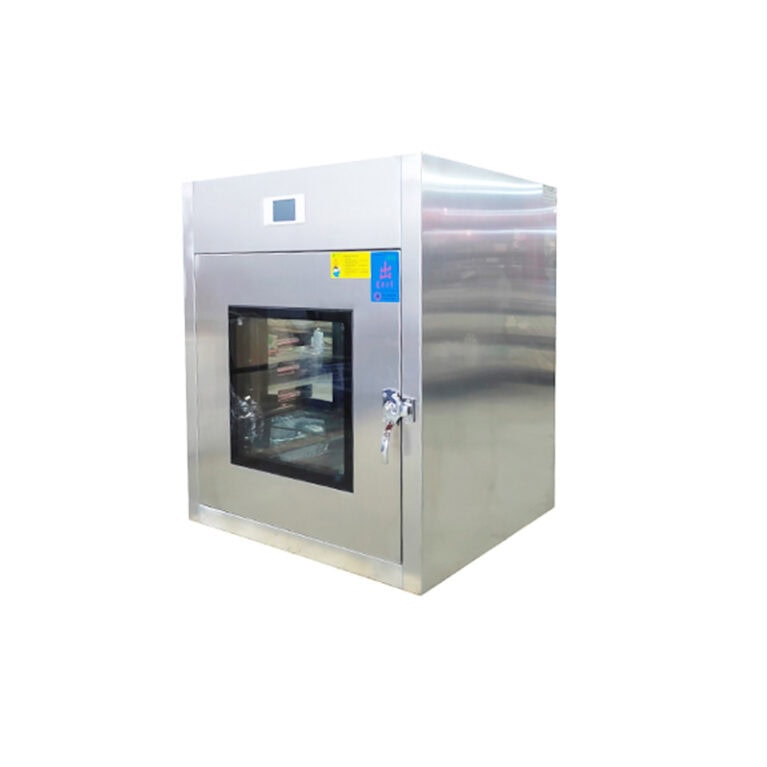
Laminar flow sampling carts (also known as clean sampling carts) are mobile local clean environment equipment. Their core is to generate unidirectional clean air flow through a high-efficiency filtration system, creating a sterile and dust-free clean space in the sampling operation area. This prevents samples from being contaminated by environmental microorganisms and particles, while also protecting the safety of operators and the environment. Its application fields are highly focused on scenarios with extremely high requirements for sample purity, experimental accuracy, and production compliance. The core application fields and detailed scenarios are as follows:
I. Pharmaceutical and Biopharmaceutical Industry (Core Application Areas)
As a key piece of equipment for GMP compliance requirements in the pharmaceutical industry, laminar flow sampling vehicles are an “essential tool” in the production and inspection processes of drugs, mainly used to prevent deviations in inspection results or batch nonconformity of products caused by sample contamination.
Pharmaceutical production process: Sampling of raw materials, intermediates and finished products (such as raw material powder, oral liquid preparations, tablets/capsules, sterile injections, etc.) to ensure that the sampling process complies with GMP (Good Manufacturing Practice) requirements and prevent environmental impurities from mixing into the samples.
Biopharmaceutical process: Sampling of biological reagents, vaccines, antibody drugs, and cell culture media to prevent microbial (bacteria, fungi, mycoplasma) contamination and ensure the safety and effectiveness of biological products.
Pharmaceutical inspection process: Re-inspection sampling of drugs by hospital pharmacies and third-party drug inspection institutions, as well as sample extraction and processing in drug stability tests.
Ii. Food and Health Products Industry
Focusing on food hygiene and safety testing and high-end food production control, we prevent samples from being contaminated by dust and microorganisms in the environment, ensuring the authenticity of test data and compliance with food safety standards.
Food production sampling: Sampling of raw materials, semi-finished products and finished products such as dairy products (milk, yogurt), meat products (fresh meat, cooked food), baked goods, beverages, condiments (soy sauce, vinegar), etc., for the detection of total bacterial count, pathogenic bacteria, heavy metals and other indicators.
Health supplements/functional foods: Aseptic sampling of probiotics, protein powder, dietary supplements and other products to ensure product purity and comply with Good Manufacturing Practice (GMP) for health supplements.
Food additives: Sampling of food additives such as preservatives, pigments, and flavors to prevent impurities from mixing in and affecting the accuracy of testing, and to ensure the compliant use of additives.
Iii. Cosmetics and Daily Chemical Industry
For the production inspection of cosmetics (especially high value-added and sterile products), it is necessary to prevent microbial contamination during the sampling process and ensure product quality and user safety.
Sterile cosmetics: Sampling of raw materials (such as hyaluronic acid, polypeptides) and finished products for products like essence, eye cream, facial masks, and medical cold compresses to prevent product deterioration caused by mold and bacterial contamination.
Sampling of high-end daily chemical products: infant and toddler skin care products, products specifically for sensitive skin, cosmetics (foundation, lipstick), etc., for microbial testing and component analysis, in compliance with cosmetic safety technical specifications.
Iv. Industria electrónica y de semiconductores
Focusing on the clean sampling of high-precision electronic components, it avoids damage to the components caused by dust and static electricity, ensuring the stable performance of the products.
Semiconductor components: Sampling, testing and transportation of chips, wafers, integrated circuits (ics), etc., to prevent the adhesion of micron-sized particles from causing short circuits and performance failures of the components.
Sampling of electronic components: PCB boards, sensors, connectors, micro motors, etc., for appearance inspection and performance testing, suitable for sampling requirements in clean workshops (Class 100 – Class 1000).
Sampling of optoelectronic products: LED chips, optical lenses, optical fiber components, etc., to prevent dust from affecting optical performance and ensure product accuracy.
V. Laboratories and Research Fields
It is suitable for sample processing in various high-precision laboratories, especially for scenarios such as microbiological experiments, aseptic experiments, and environmental testing, providing a local clean environment.
Microbiology laboratory: Isolation, culture and sampling of microbial samples such as bacteria, fungi and viruses to prevent cross-contamination and ensure the accuracy of experimental data.
Environmental testing laboratory: Pretreatment and sampling of air, water and soil samples to prevent impurities in the laboratory environment from interfering with the test results (such as heavy metal and particulate matter detection).
Universities/research institutions: Sampling and experimental operations in fields such as materials science (nanomaterials, polymer materials), life sciences (cell experiments, genetic testing), and chemistry and chemical engineering (fine chemical samples).
Vi. Medical Device Industry
Compliant with Good Manufacturing Practice (GMP) for medical devices, it is used for sampling sterile medical devices to ensure the safety of clinical use of the products.
Sampling of raw materials (such as medical plastics, stainless steel) and finished products of sterile medical devices: syringes, infusion sets, catheters, surgical instruments, etc., to test their sterility and biocompatibility.
Sampling and testing of high-end medical devices such as artificial joints, heart stents, and medical sensors to prevent contamination from affecting product accuracy and biological safety.
Vii. Other Special Fields
Aerospace: Sampling and testing of aerospace components (such as satellite parts and spacecraft instruments) to meet the extremely high cleanliness requirements of components in high-altitude environments.
Nuclear industry: Sampling of radioactive samples, isolating radioactive dust through laminar flow to protect operators from the environment (special protective devices are required).
New energy: Sampling of cathode/anode materials for lithium batteries, silicon wafers for photovoltaic modules, etc., to prevent dust pollution from affecting battery performance and photovoltaic conversion efficiency.
Resumen de la lógica central de la aplicación
The core value of laminar flow sampling vehicles lies in the “mobile clean space” – they do not rely on fixed clean workshops and can be flexibly moved to production and inspection sites, providing a local high-cleanliness environment for sampling operations (typically reaching Class 100 to Class 1000). That is, the number of particles ≥0.5μm per cubic foot is ≤100 to 1000. At the same time, the pollutants are discharged through unidirectional airflow, achieving dual protection of “sample contamination prevention and personnel exposure prevention”, ultimately ensuring the accuracy of sample detection and the compliance of product quality. It is a “mobile clean solution” for high-end manufacturing and precise detection fields.