
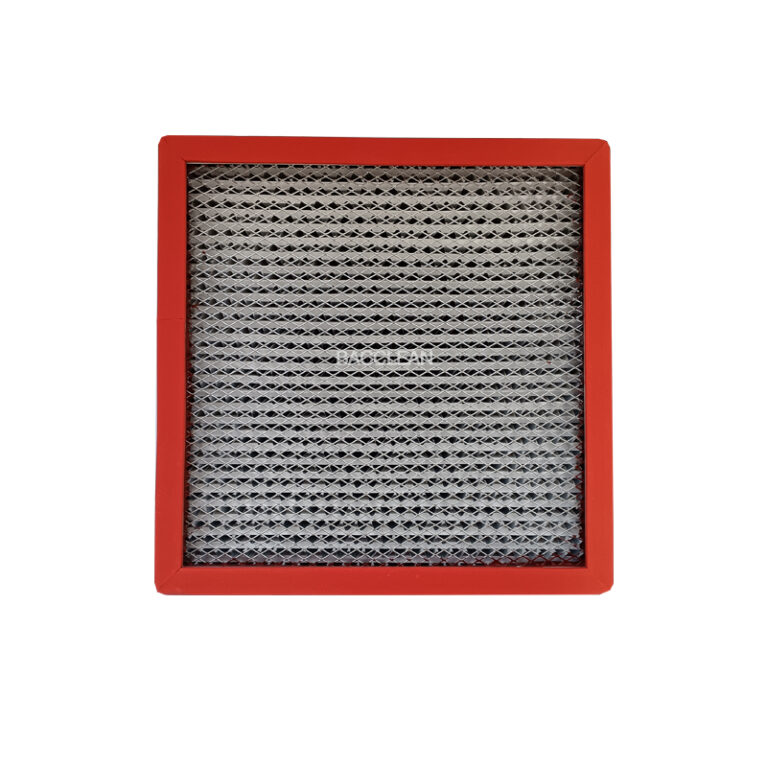
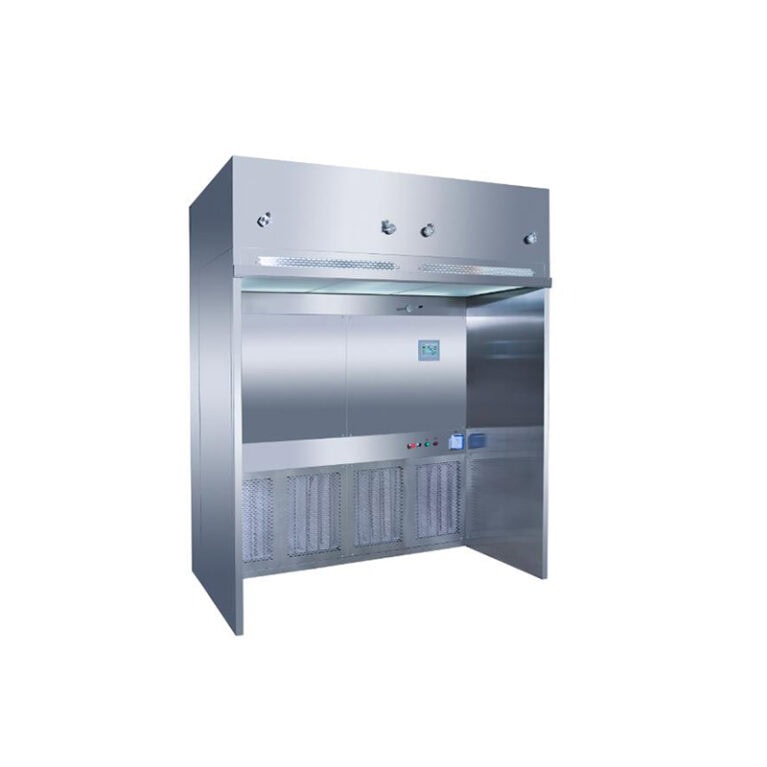
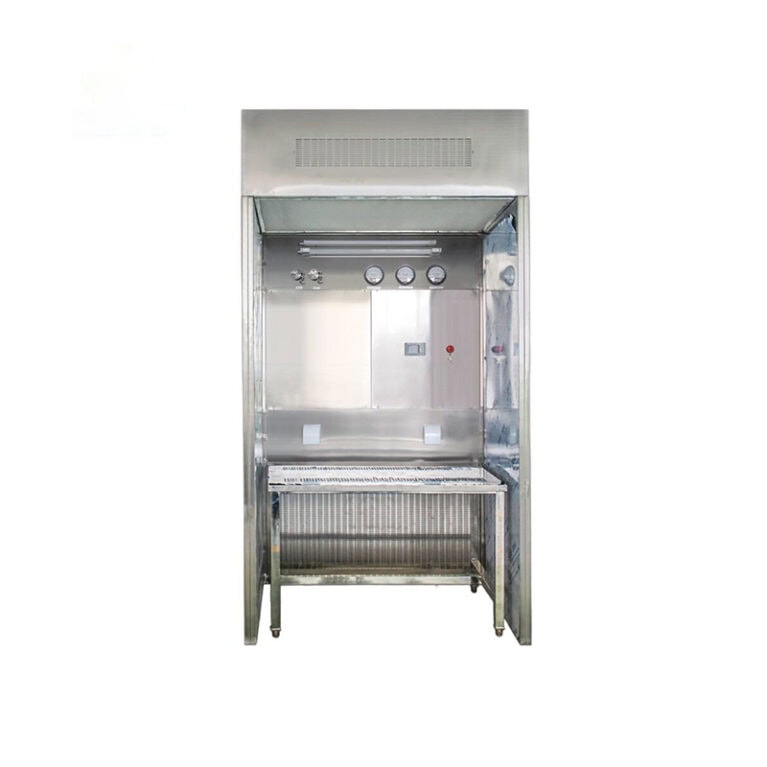
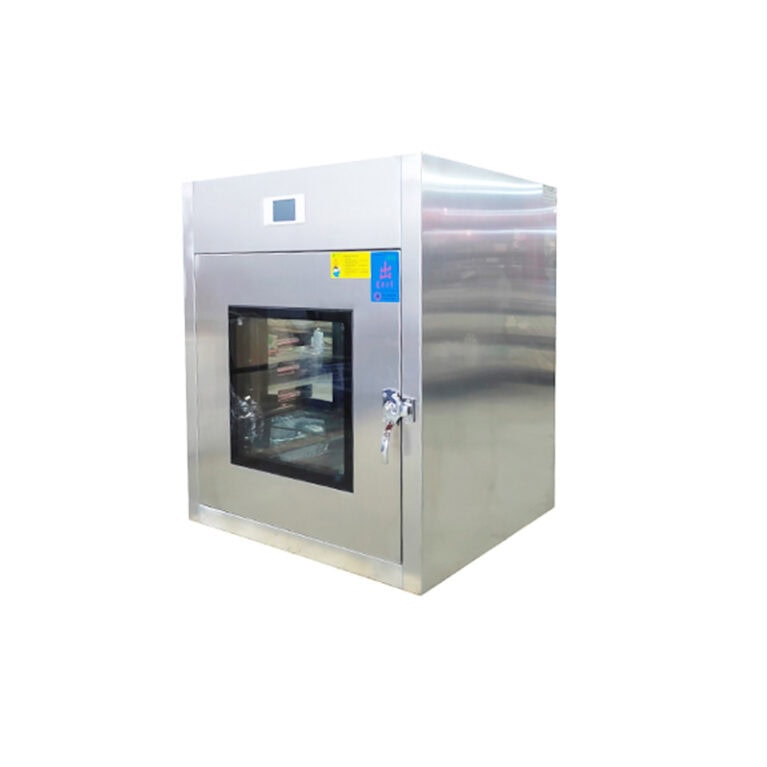
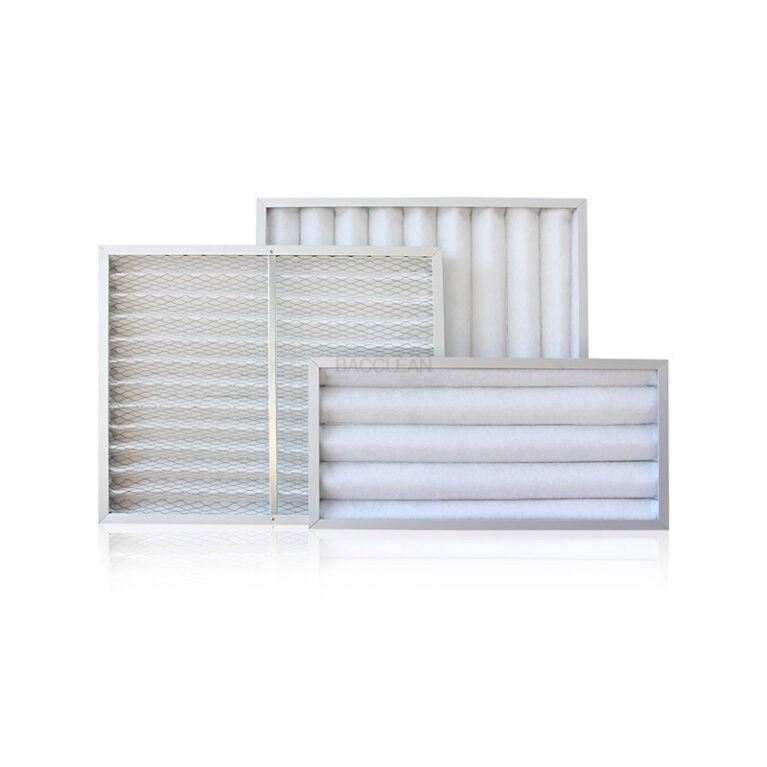
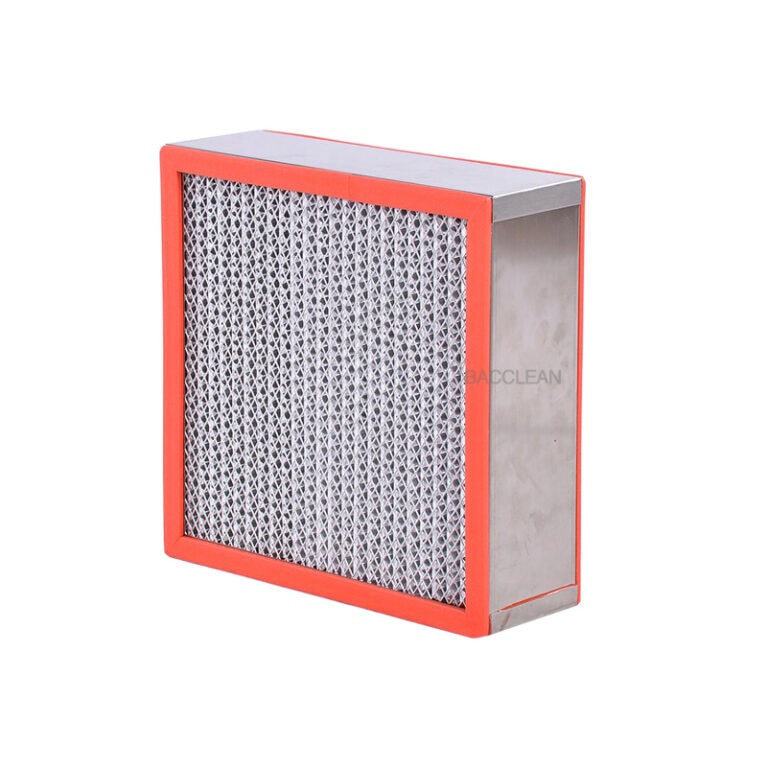
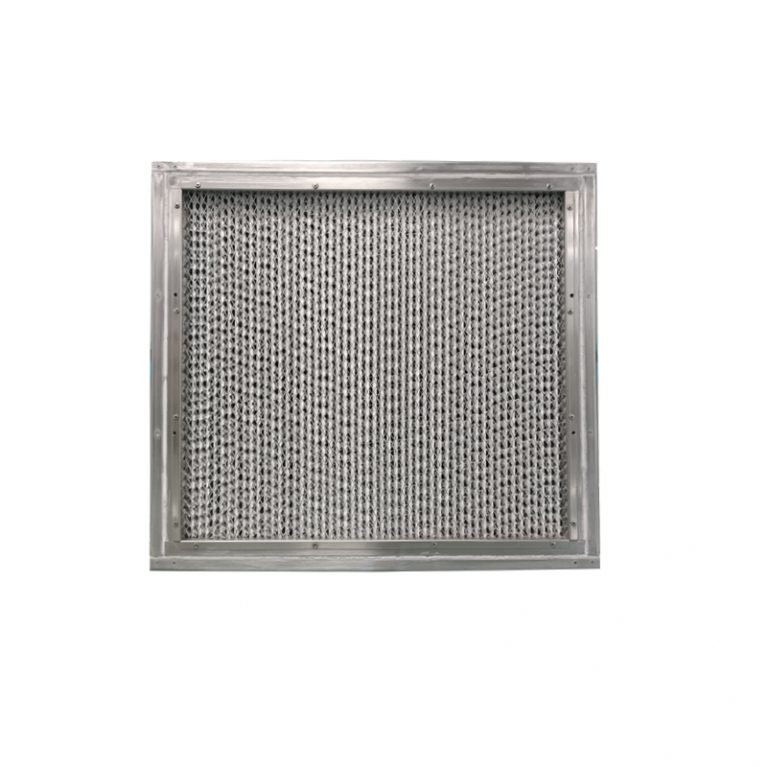
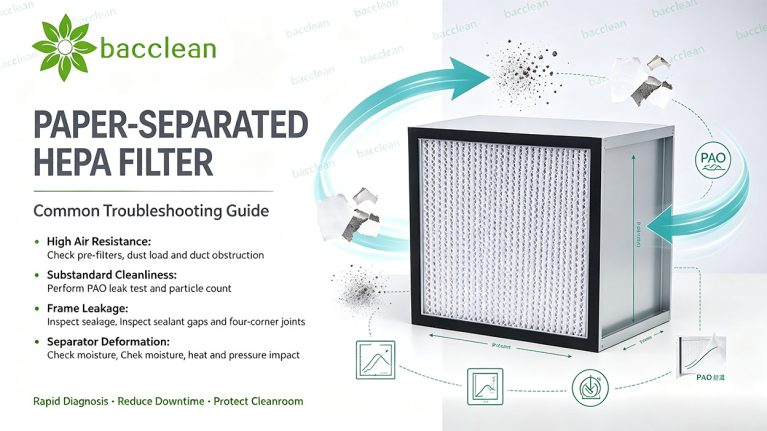
First, four major failures and corresponding troubleshooting solutions are outlined.
- Abnormally sharp rise in operating air resistance. Main causes: Failure of pre‑filtration stages, allowing massive dust to clog filter‑paper pores rapidly; sudden spike in workshop dust concentration exceeding dust‑holding capacity; blocked air ducts and poor airflow at installation positions. Troubleshooting: Inspect the operating status of upstream pre‑filters and medium‑efficiency filters; clear obstructions inside supply‑air ducts; compare readings against initial air‑resistance values to assess clogging severity.
- Substandard cleanliness and filtration failure. Root causes: Filter‑paper rupture and local bypass leakage; frame sealing leakage where unfiltered air infiltrates clean zones directly; insufficient filter grade mismatching workshop cleanliness requirements. Troubleshooting: Perform PAO aerosol leak testing and particle‑count measurement to pinpoint leakage and rupture locations; verify whether filter grade matches application scenarios.
- Frame air leakage and sealant joint cracking. Primary triggers: Aging and curing cracking of sealing adhesive; adhesive delamination caused by thermal expansion and contraction under frequent temperature‑humidity swings; incomplete adhesive application and voids during installation. Troubleshooting: Inspect peripheral gaps and four‑corner joints, check the integrity of adhesive layers.
- Separator deformation and structural damage. Paper separators may soften under moisture or deform under high temperature; excessive compression force during installation; structural impact from abrupt system air‑pressure variation. Troubleshooting: Check overall flatness and separator creasing to evaluate structural damage.
Standardized maintenance cycles are formulated according to equipment operating characteristics. For ordinary ambient‑temperature dry cleanrooms (Class 100 000 / Class 10 000): Expected service life ranges from 8‑12 months. Conduct air‑resistance and cleanliness inspection every month; carry out full‑scope leak detection every 3 months. Replace filters immediately once final rated resistance is reached.
For high‑temperature & high‑humidity workshops: Accelerated component aging shortens maintenance intervals. Perform bi‑weekly inspections; typical service life drops to 6‑8 months. Prepare replacement plans in advance.
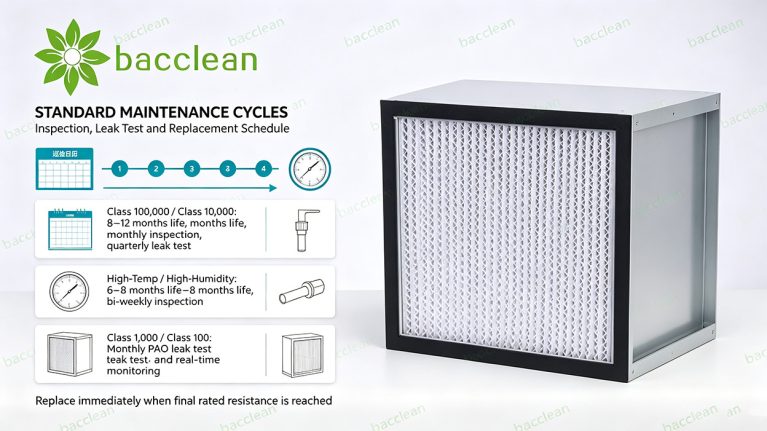
For high‑grade Class 1 000 / Class 100 cleanrooms: Run PAO leak tests monthly to monitor filtration performance in real time and sustain qualified indoor conditions.
Four core techniques for service‑life optimization:
- Build a staged filtration system. Maintain regular replacement for pre‑filters and medium‑efficiency filters. Multi‑stage dust interception reduces loading on HEPA units and significantly prolongs service life.
- Select models matched to working conditions. Deploy high‑temperature‑resistant variants for thermal environments and water‑proof types for humid conditions, preventing premature aging induced by mismatched operating environments.
- Strictly control installation quality and standardize sealing procedures to eliminate hidden defects and reduce subsequent failures.
- Stabilize system operating conditions. Avoid frequent fluctuations in airflow volume and air pressure to mitigate structural wear caused by airflow shock.
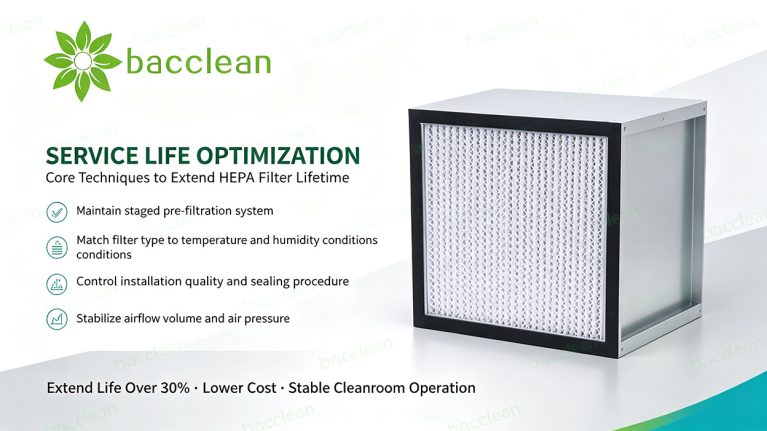
Scientific troubleshooting, standardized maintenance and targeted service‑life optimization can improve operational stability of paper‑separated HEPA filters, extend usable lifetime by over 30 %, substantially reduce cleanroom maintenance expenditure and shutdown‑rectification risks, and ensure long‑term stable operation of purification systems.
