
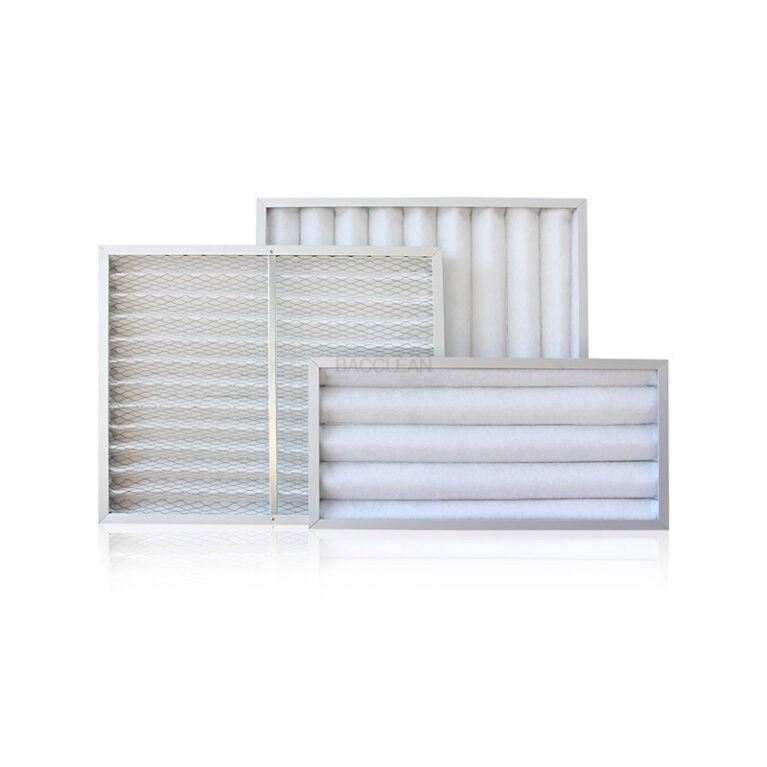
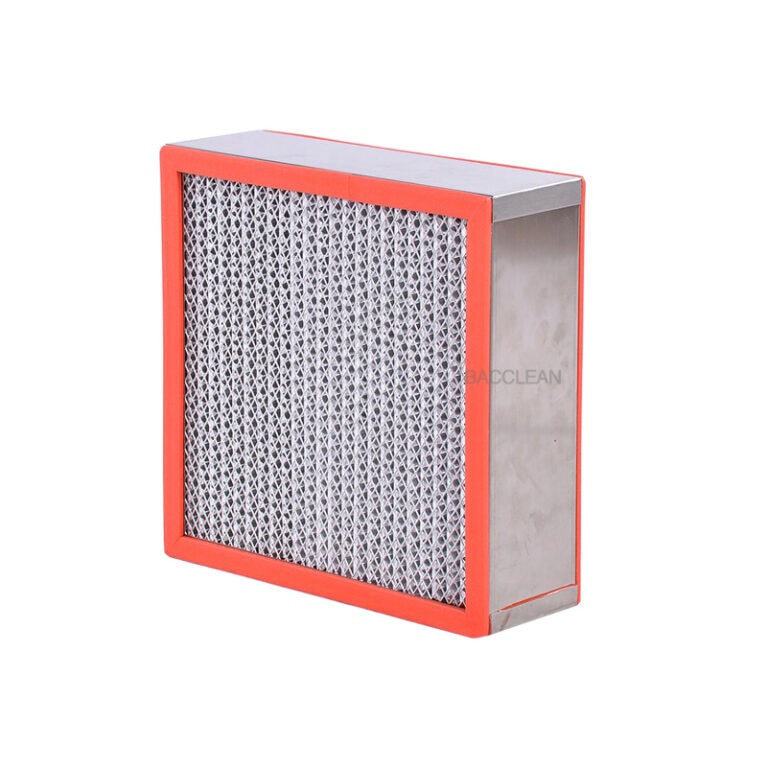
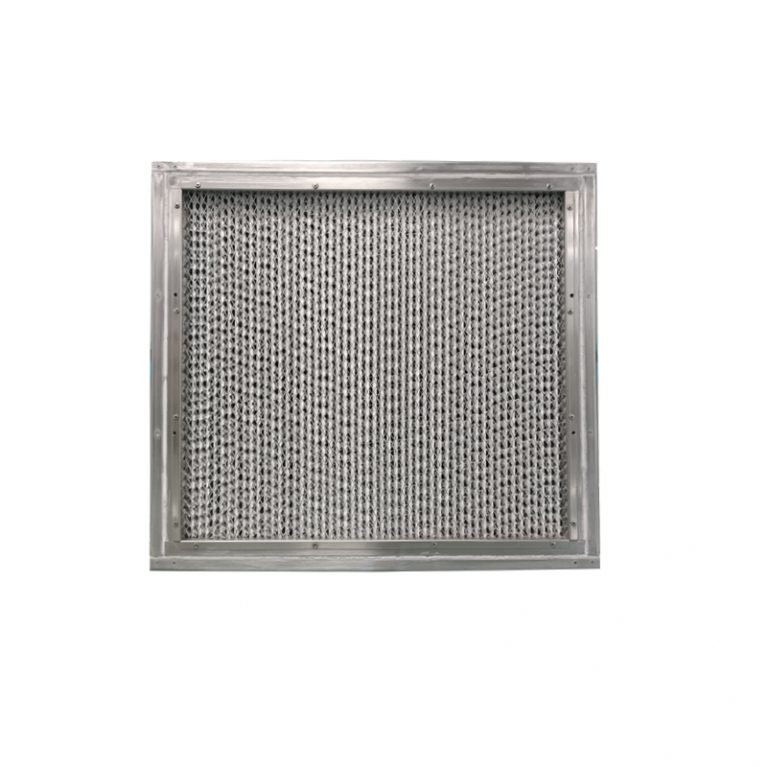
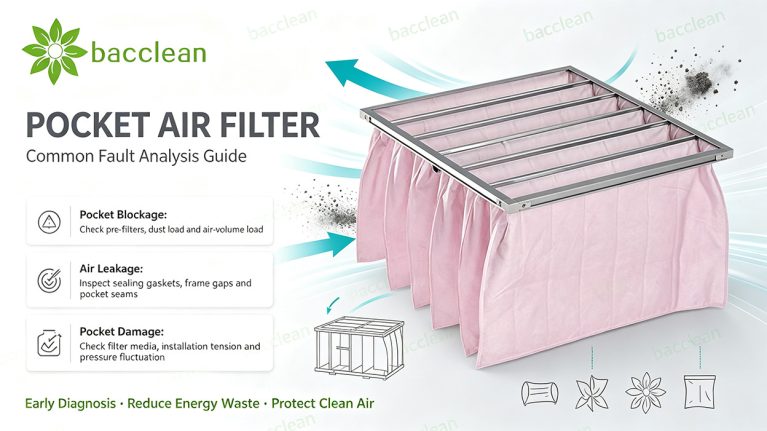
First, common equipment faults and their root causes are summarized. The most frequent fault is pocket blockage and sharp rise of air resistance. Its main contributing factors are: failure of upstream pre‑filters, which allows massive coarse dust particles to directly enter pocket filters and rapidly block filter‑media pores; undersized equipment selection and long‑term operation under excessive air‑volume load that accelerates dust accumulation; excessively high dust concentration in working conditions exceeding the rated dust‑holding capacity of equipment; and long‑term lack of pocket cleaning or replacement resulting in solidified dust deposits. Such faults directly give rise to reduced air volume of ventilation systems, increased fan load and higher energy consumption. In severe cases, they trigger poor workshop ventilation and out‑of‑spec cleanliness.
The second typical fault is air leakage and insufficient filtration efficiency. Core causes include poor frame fitting during installation, as well as aging, peeling or deformation of sealing gaskets; deformed equipment frames creating gaps against air‑handling unit slots; cracked pocket seams and pocket‑mouth detachment that allow unfiltered airflow to pass through directly. Air leakage introduces unpurified polluted air into clean airflow, lowering workshop air cleanliness and causing energy waste.
The third fault is pocket rupture and detachment, stemming from poor product quality and improper maintenance: inferior filter‑media material and rough sewing craftsmanship leading to damage under long‑term airflow erosion; pocket squeezing or tensile deformation during installation; drastic system air‑pressure fluctuation and impact from instantaneous high‑air‑volume airflow that pulls off pocket mouths; mildew and aging of filter media in humid environments with reduced toughness and higher breakage risk.
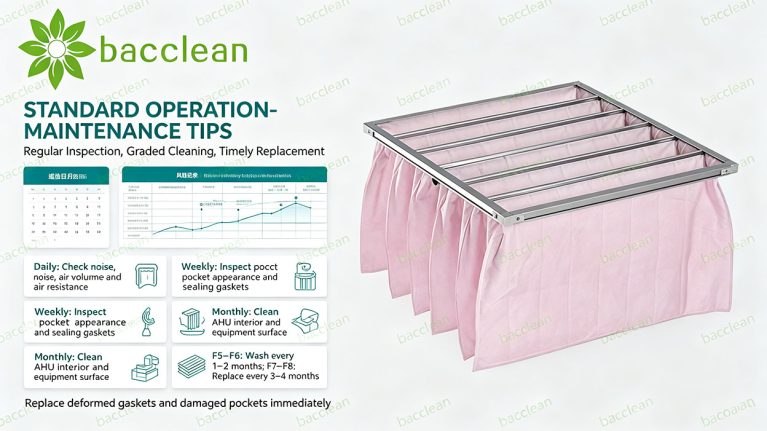
Targeting these faults and considering equipment operating characteristics, standardized operation‑maintenance tips are formulated. Daily management follows the principle of “regular inspection, graded cleaning and timely replacement”. Daily inspections shall be performed to detect abnormal operating noise and air‑volume variation, and record air‑resistance parameters. Weekly checks cover pocket appearance and integrity of sealing gaskets. Monthly dust removal shall be carried out inside air‑handling units and on equipment surfaces. For graded pocket cleaning: washable F5‑F6 pockets shall be cleaned every 1‑2 months with low‑pressure fresh water and air‑dried naturally; direct sunlight exposure and high‑temperature baking are prohibited. High‑precision F7‑F8 pockets are recommended for replacement every 3‑4 months, since washing may deform filter‑media pores and degrade filtration accuracy. Sealing gaskets shall be inspected every six months and replaced promptly upon aging or deformation to eliminate air‑leakage risks.
Five major solutions help extend equipment service life:
- Optimize the three‑stage filtration system to keep upstream pre‑filters in good condition, intercept coarse contaminants and reduce the load on pocket filters.
- Strictly avoid operation beyond rated air volume and air pressure; deploy equipment within its designed working range.
- Control ambient temperature and humidity to prevent accelerated filter‑media aging caused by high humidity and corrosive conditions.
- Standardize installation procedures to avoid pocket squeezing and stretching and preserve structural integrity.
- Establish equipment operation‑maintenance ledgers to log operating parameters, cleaning and replacement timelines for refined management.
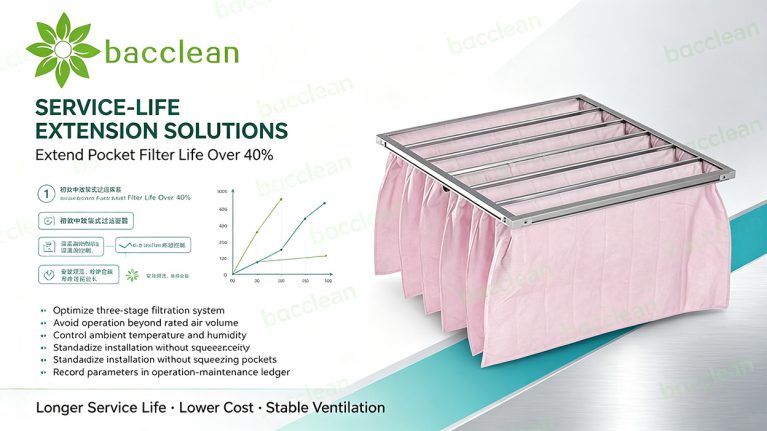
Practical cases verify that standardized maintenance can extend the service life of pocket air filters by more than 40 %, effectively lowering replacement frequency and system energy consumption. It guarantees long‑term, high‑efficiency, stable and low‑energy operation of ventilation‑purification systems and provides consistent support for stable production environments.
