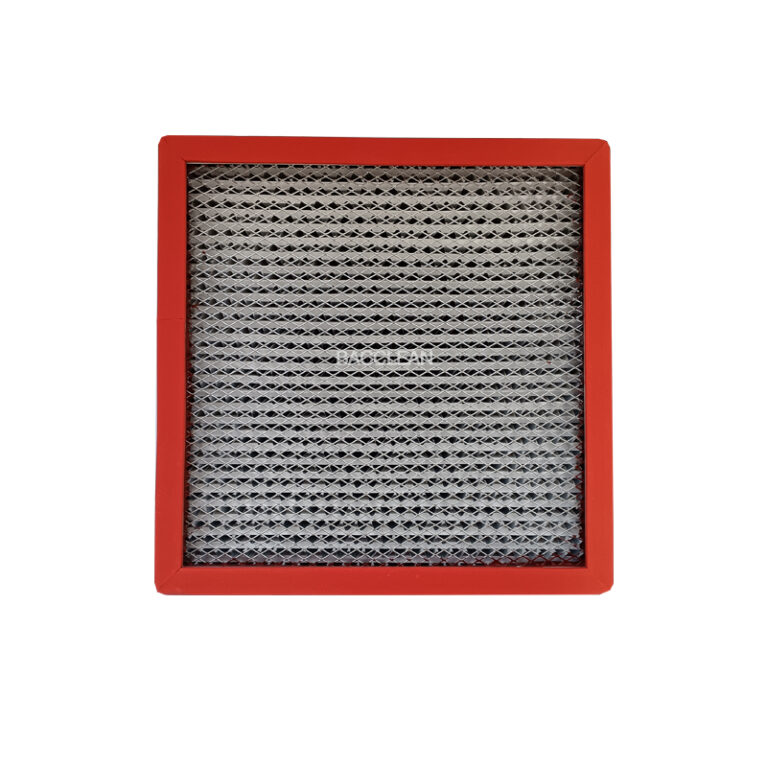
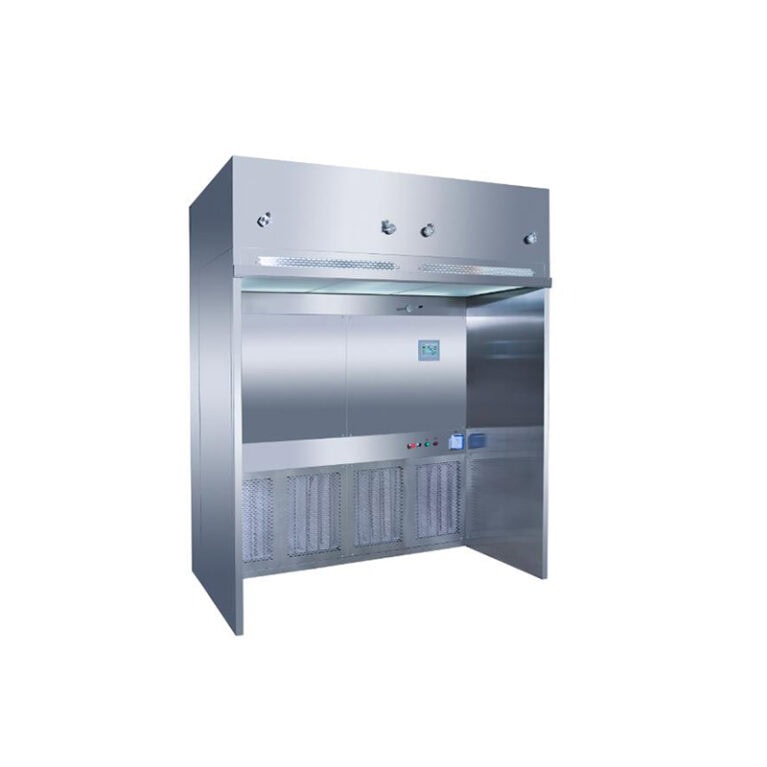
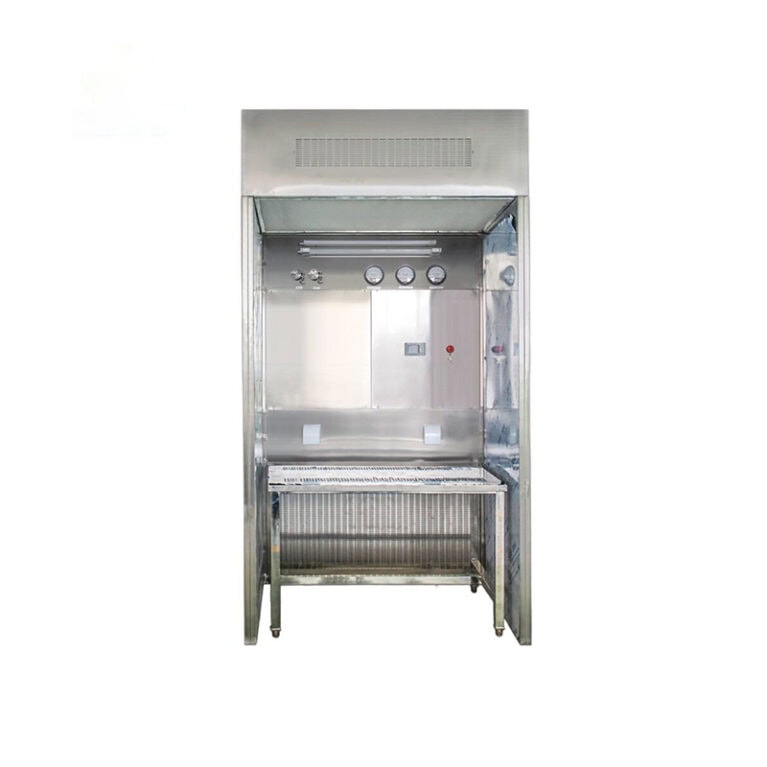
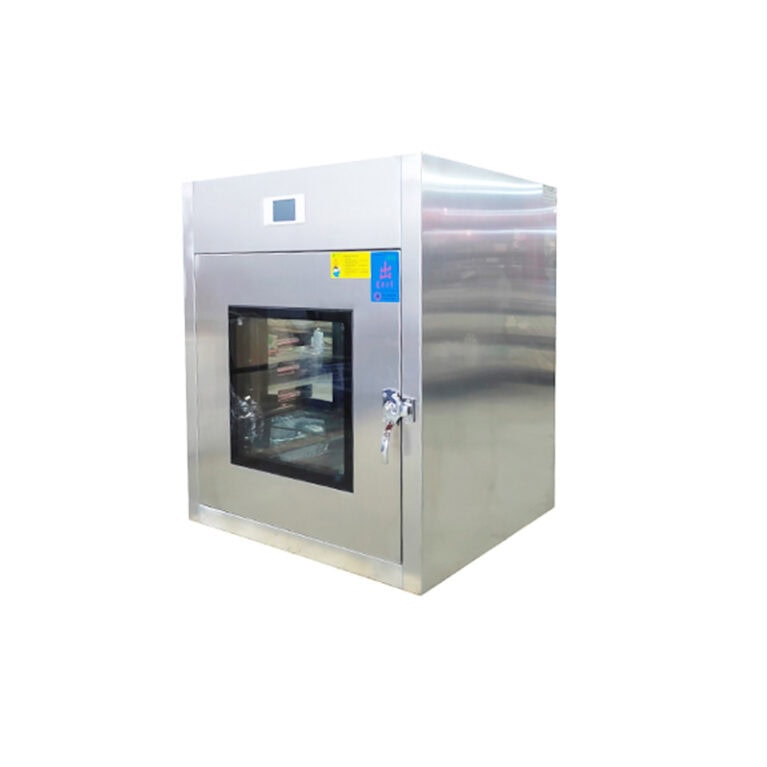
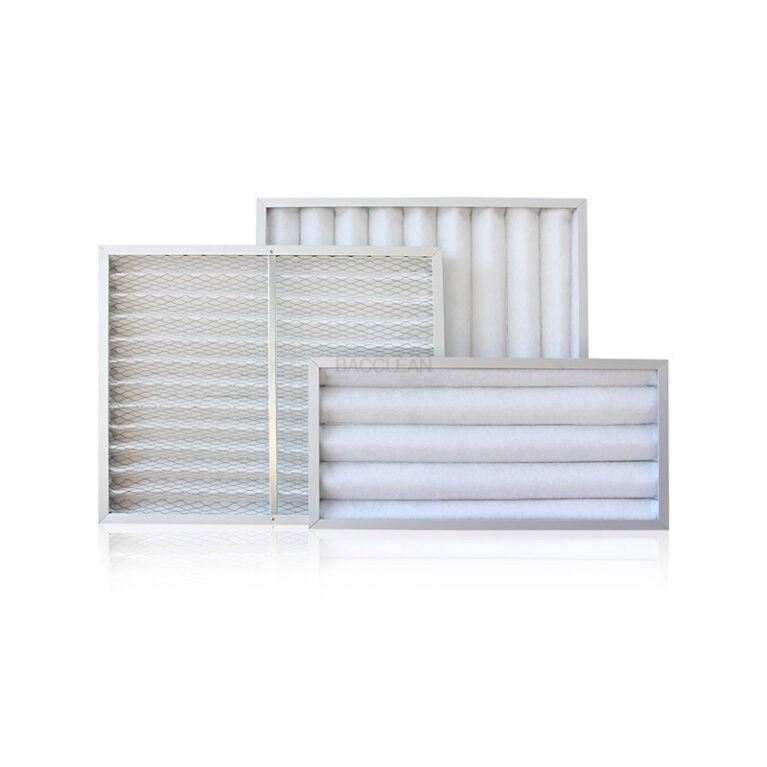
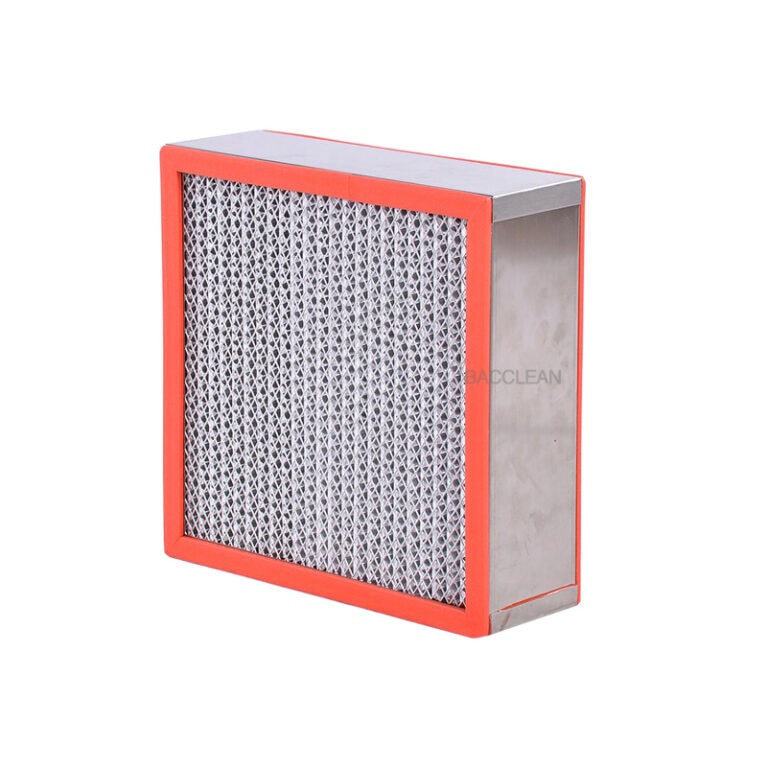
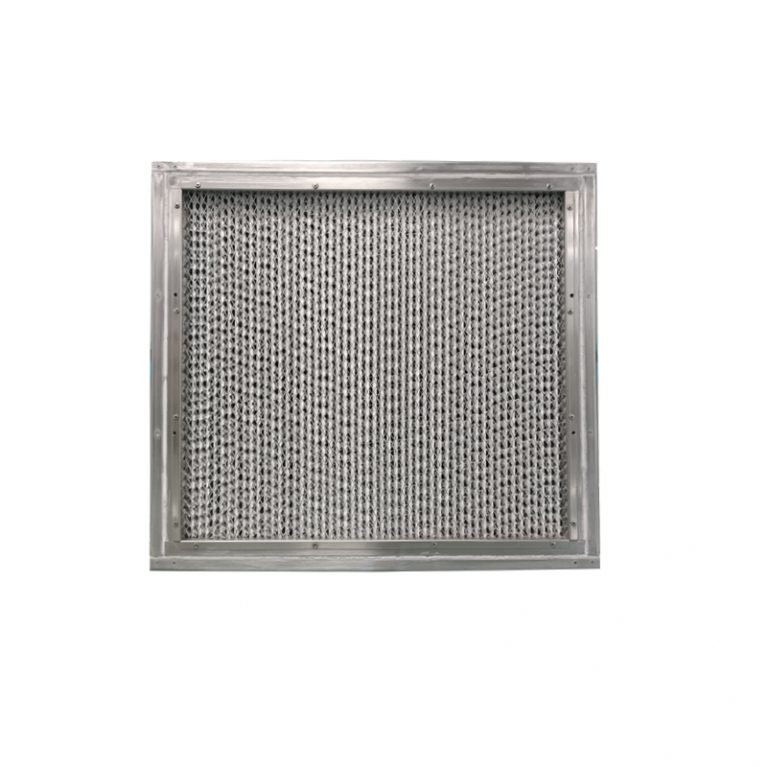
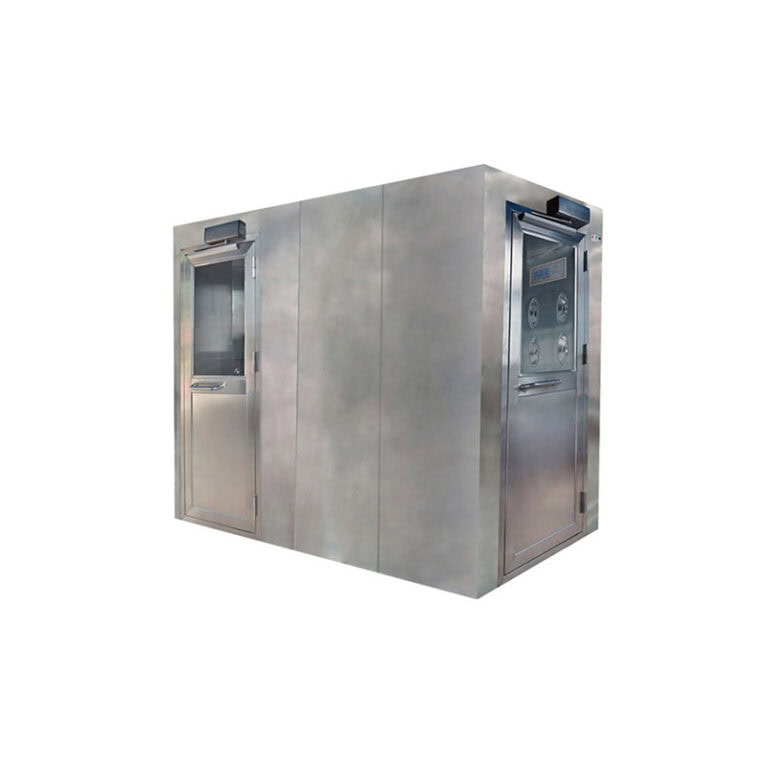
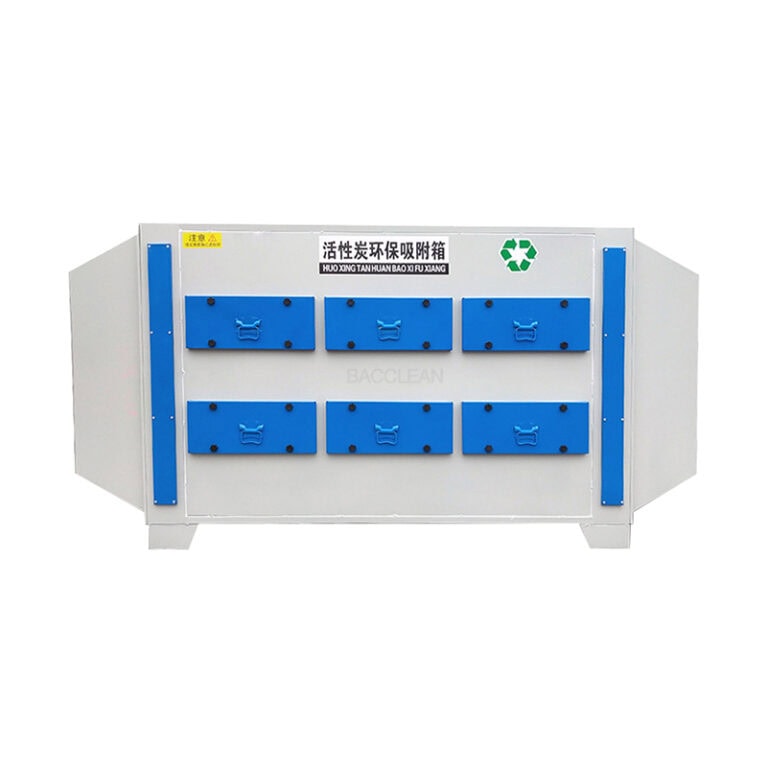
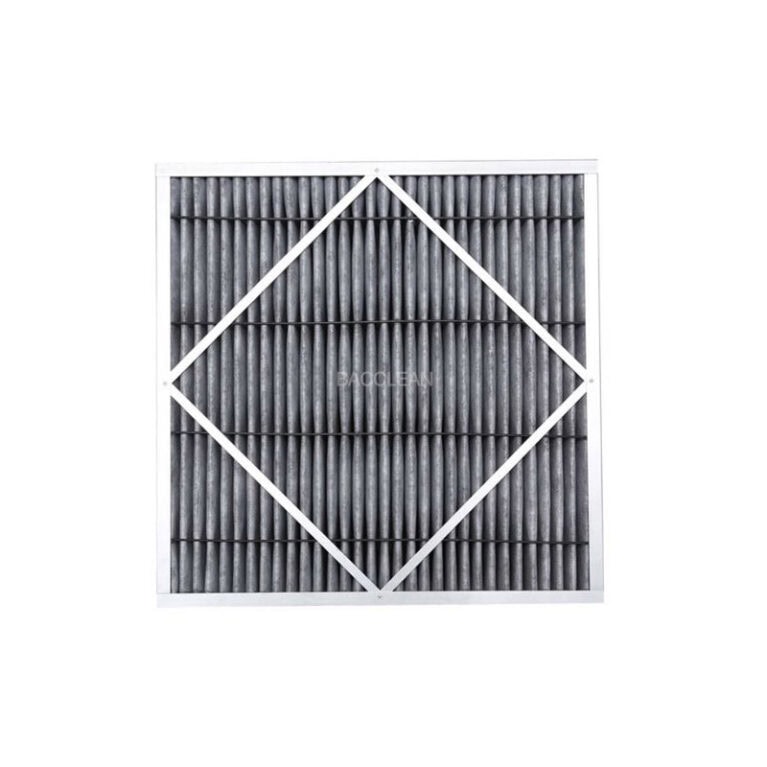
The vessel frame high-efficiency filtration unit is mainly used for air filtration in clean rooms, laminar flow areas, and at the end of purification equipment. The core maintenance focuses on seal checks, pressure difference monitoring, cleaning protection, replacement cycle, and maintenance of the vessel frame structure, to ensure filtration efficiency and stable airflow. The following are the standardized maintenance steps:
1. Daily inspection (daily / weekly)
Pressure difference monitoring
Check the pressure difference gauge of the high-efficiency unit and record the initial resistance: Generally, the initial resistance of a high-efficiency unit is 180-220 Pa. When the pressure reaches twice the initial resistance or reaches the upper limit specified by the manufacturer, the filter element must be replaced. Visual inspection
Observation of the filter element for any damage, frame leakage, blackening, dust accumulation, moisture absorption, mold formation; Check the **frame (support framework)** for deformation, loosening, rusting, and weld seam cracking.
Sealing inspection
Check if the filter element and the frame, as well as the frame edge sealing strip, have fallen off, cracked, hardened, or have any air leakage gaps. Air leakage will directly damage the cleanliness level.
Operation status
Check if the unit’s air outlet is uniform, if there are any abnormal noises or vibrations, and determine if the fan / air supply system is abnormal.
II. Regular Maintenance (Monthly / Quarterly)
1. Maintenance of the frame of the frame
Metal frame: Use a dust-free cloth to wipe the surface dust; Do not directly rinse with water; For slight rust, treat with a neutral rust remover and then apply anti-rust paint.
Tighten all fixing bolts and clasps to prevent the frame from loosening and causing the filter element to shift or leak air.
Do not knock or press the frame forcefully; Avoid frame deformation caused by pressure to prevent the filter element seal from failing.
High-efficiency filter elements should not be washed with water or blown with air in reverse, as this will damage the fiberglass filter material and reduce the filtration efficiency.
High-efficiency filter elements cannot be washed with water or blown back to the air supply direction for reverse sweeping, as this will damage the fiberglass filter material and reduce the filtration efficiency.
Only use a dust-free cloth to gently wipe the dust on the outer frame and the air outlet surface; Do not touch the air inlet surface.
In humid areas, check if condensation occurs and promptly investigate temperature and humidity; Prevent the filter element from mold growth and resistance from rising.
3. Maintenance of the sealing system
Replace the aging, hardened, or fallen sealing strips with the same specification of anti-aging silicone rubber sealing strips in time.
Ensure uniform compression during installation, without local underpressure or gaps; If necessary, perform DOP leak detection.
III. Replacement Standards (Key Points)
Pressure difference reaches twice the initial resistance;
Filter element damage, air leakage, moisture absorption, mold formation;
The microorganisms and dust particles in the clean area exceed the standard, and the leak detection is unqualified.
Regularly replace in conventional usage environments every 6 to 12 months, and in high dust / high humidity environments every 3 to 6 months.
Replacement operation points
Shut down, depressurize, and take personnel protection measures in the clean area;
Remove the old filter element, clean the accumulated dust inside the frame;
New filter elements should be handled gently, and the filter material surface must not be touched;
Uniformly compress the seal, and perform integrity leak detection (DOP/PAO leak detection) after installation;
Record the replacement time, pressure difference, and leak detection results, and establish a ledger.
IV. Prohibited Operations and Precautions
Do not wash, brush, or reverse-sweep the high-efficiency filter element;
Do not drill holes, cut, or press the filter element surface;
The frame must not be corroded by strong acids or strong alkalis; Take anti-corrosion measures in humid environments;
Disassembly and assembly must be carried out under clean conditions to avoid secondary pollution;
Waste filter elements should be disposed of in accordance with the hazardous waste/purification consumables standards and must not be discarded at will.
V. Long-term Shutdown Maintenance
Clean the surface dust before shutdown;
Wrap the air outlet surface of the filter element with a dust-proof film to prevent dust accumulation;
Maintain a dry and ventilated environment to avoid the filter element from getting damp;
Check the pressure difference, seal, and integrity before restarting, and use them before putting it back into use if they are qualified.