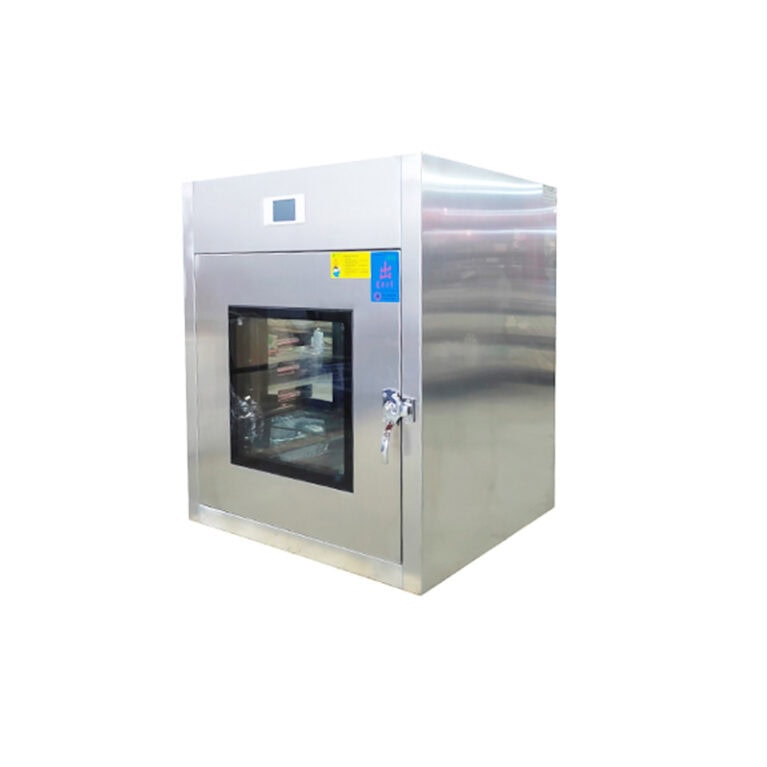
Summary: This sterilization method has a high sterilization grade, can kill spores, and achieves a sterile level, fully meeting the GMP sterile zone requirements. It is currently the most mainstream low-temperature gas sterilization method for clean rooms. The following will explain it in detail from core sterilization capabilities (actual effects), comparison, advantages and disadvantages, and compliance.
1. Core sterilization capability (actual effect)
Extremely wide sterilization spectrum
It can inactivate bacteria, fungi, viruses, mycoplasma, and the most difficult-to-kill bacterial spores.
The kill rate of Bacillus subtilis var. niger spores (ATCC9372, sterilization verification standard strain) is ≥ 6log, i.e., 99.9999%.
Low-temperature sterilization without high-temperature damage
The sterilization temperature is generally 22–28℃, capable of sterilizing plastics, electronic components, paper packaging materials, culture media, and precision equipment, without deformation or aging.
Good gas permeability
The vaporized H₂O₂ is gaseous and can penetrate gaps, threads, blind holes, and packaging interiors, more thorough than ultraviolet or alcohol wiping.
No residual risk
The decomposition products are water + oxygen, with no chemical residues after ventilation and residue removal, and no contamination of drugs or materials.
2. Comparison with other sterilization methods
Compared with ultraviolet transfer cabinets
Ultraviolet can only reach the surface, and dead corners are ineffective, unable to kill spores;
VHP full-cavity without dead corners can kill spores and achieve sterility.
Compared with alcohol wiping
Manual operation is uneven, dead corners are difficult to wipe, and it cannot sterilize items inside the packaging;
VHP is automated, uniform, and can batch sterilize.
Compared with ozone
Ozone has poor penetration, causes corrosion to rubber, and residues are difficult to remove;
VHP is more stable and is more recognized by GMP.
3. Key indicators for GMP / verification (must be done in actual projects)
VHP transfer cabinet sterilization must perform microbial verification to be qualified:
Biological indicator: Bacillus subtilis var. niger spores, all negative after sterilization
Chemical indicator: Color change meets standards
Concentration uniformity: The VHP concentration in the cavity fluctuates little, without dead corners
Residue removal: The H₂O₂ residue after sterilization is < 0.5 ppm, safe for entry and material handling
4. Key factors affecting sterilization effect (selection / usage focus)
Cavity sealing: Poor sealing of the door leads to failure in sterilization
Generator power: The larger the cavity, the higher the VHP power required
Temperature and humidity: The best effect is achieved at 40%–70% humidity; too dry or too humid will decrease the effect
Loading method: Items cannot be stacked to block the gas flow, ensuring gas circulation
5. Applicable grades
Can be used for A-class and B-class sterile zones for material transfer sterilization
Vaccines, sterile preparations, cell rooms, biosafety laboratories are the first choice