
Daily maintenance regulations for box-type filters
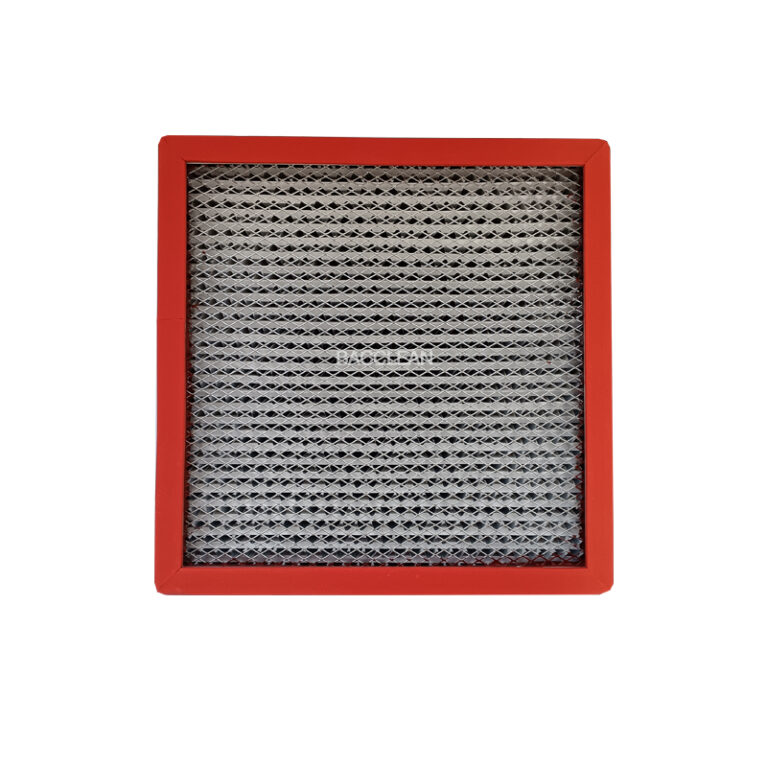
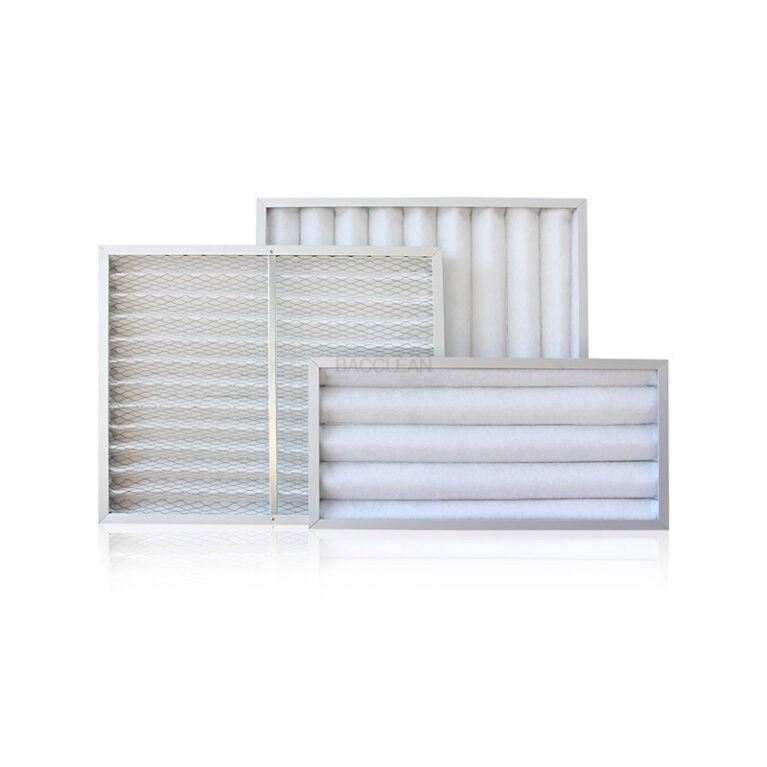
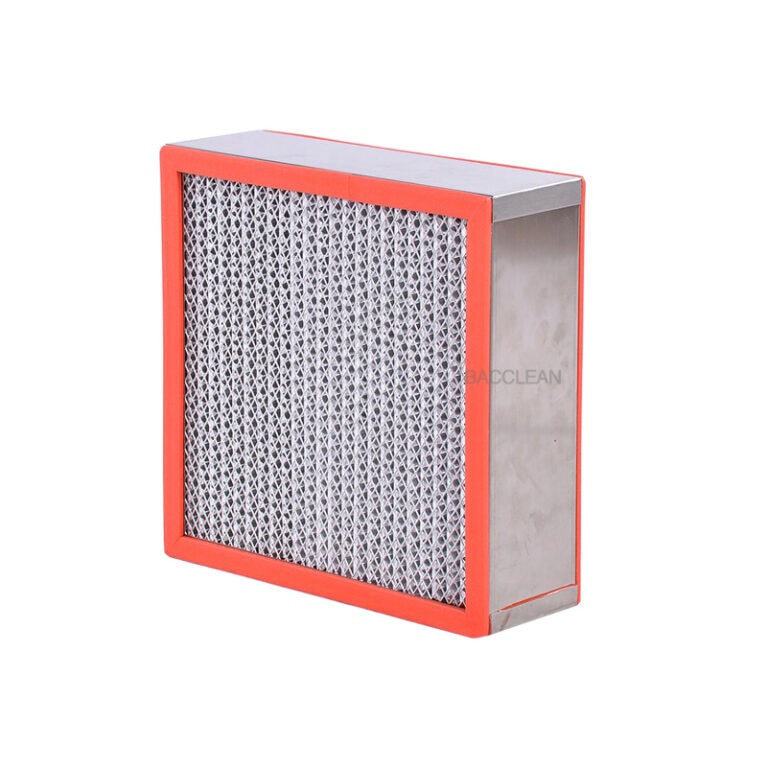
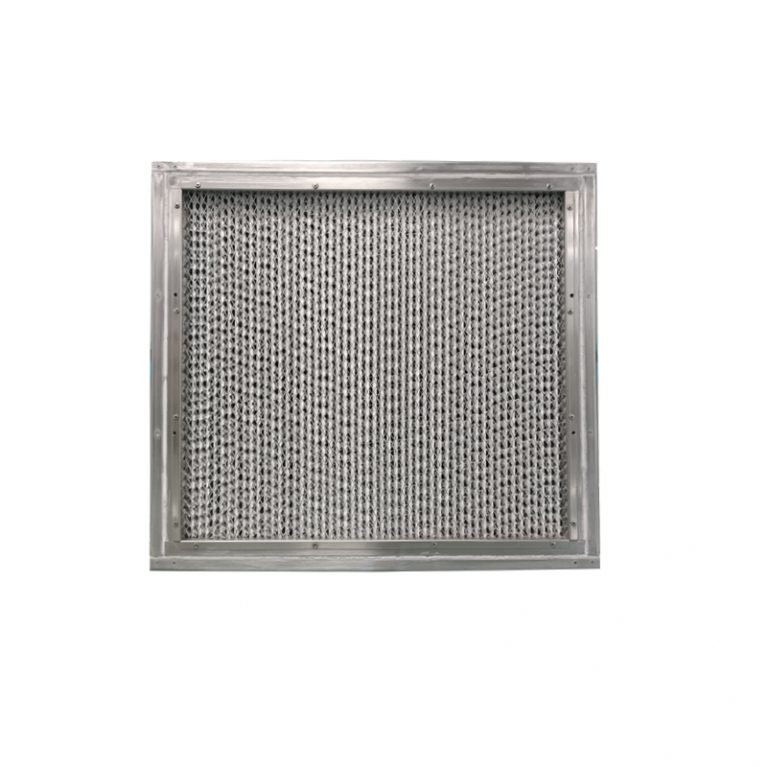
Box-type filters (also known as box-type air filters) are core filtration components in industrial clean workshops, central air conditioning systems, and commercial ventilation equipment. Their maintenance effectiveness directly affects filtration efficiency, equipment energy consumption, and service life. The following are the standardized daily maintenance procedures and precautions:
I. Daily Inspection (Daily/Shift)
Pressure difference monitoring
Record the initial and final resistance of the filter every day and compare the data with the rated parameters of the equipment. When the running resistance reaches 1.2 times the final resistance, cleaning or replacement should be arranged in a timely manner. If the resistance rises sharply, it may be due to the filter material being clogged or the seal failing. Immediate inspection is required.
Visual inspection
Check whether the filter box is deformed, damaged or leaking air, and whether the sealing strip is intact and has not fallen off.
Observe whether there is obvious dust accumulation, oil stains or foreign matter blockage on the surface of the filter material. If it is a glass fiber filter material, pay attention to whether there is fiber shedding.
Check whether the connection between the filter and the installation frame is firm to avoid misalignment and air leakage caused by vibration.
Observation of Operating status
Pay attention to the operating noise of the ventilation system fan. If there is an abnormal noise or a sudden drop in air volume, it may be related to a clogged filter. At the same time, check the condition of the filter.
Ii. Regular cleaning (Adjust the cycle according to the usage environment)
The cleaning cycle of box-type filters should be determined based on the usage scenario: for clean workshops, it is recommended to clean once every 1 to 2 months; for industrial dust environments, it is recommended to clean once every 2 to 4 weeks. The cleaning method should be matched with the type of filter material.
Preparations before cleaning
Turn off the power supply of the corresponding ventilation system and hang a warning sign reading “Equipment under Maintenance” to prevent misoperation.
Prepare dedicated cleaning tools (soft-bristled brushes, high-pressure air guns, neutral cleaners), and dust-proof measures should be taken in the cleaning area.
Cleaning methods for different filter materials
| Filter material type | Cleaning method | Precautions |
| Non-woven fabric/synthetic fiber filter material |
1. Use a low-pressure air gun (pressure ≤0.3MPa) to blow in the reverse direction from the air outlet surface of the filter material. |
2. Surface oil stains can be soaked in warm water with neutral detergent for 10 to 15 minutes, then rinsed with clean water and dried. Do not directly rinse with a high-pressure water gun to avoid deformation of the filter material fibers. Strong acid and strong alkali cleaners are strictly prohibited |
| Glass fiber filter material | Only a soft-bristled brush or a low-pressure air gun can be used for reverse blowing | Fiberglass filter materials are brittle and cannot be washed with water. It is recommended to replace them after cleaning 2 to 3 times |
| The fan is noisy and has insufficient air volume | The fan is noisy and has insufficient air volume | If the filter resistance is too high or the fan load is too heavy, clean or replace the filter to restore the air volume of the ventilation system |
Post-cleaning treatment
The cleaned filter should be naturally dried in a cool and well-ventilated place. It is strictly forbidden to expose it to direct sunlight or high-temperature drying. After drying, check whether the filter material is intact. If any damage or holes are found, replace it immediately.
Iii. Regular Replacement (Core Maintenance Link
Replacement cycle standard
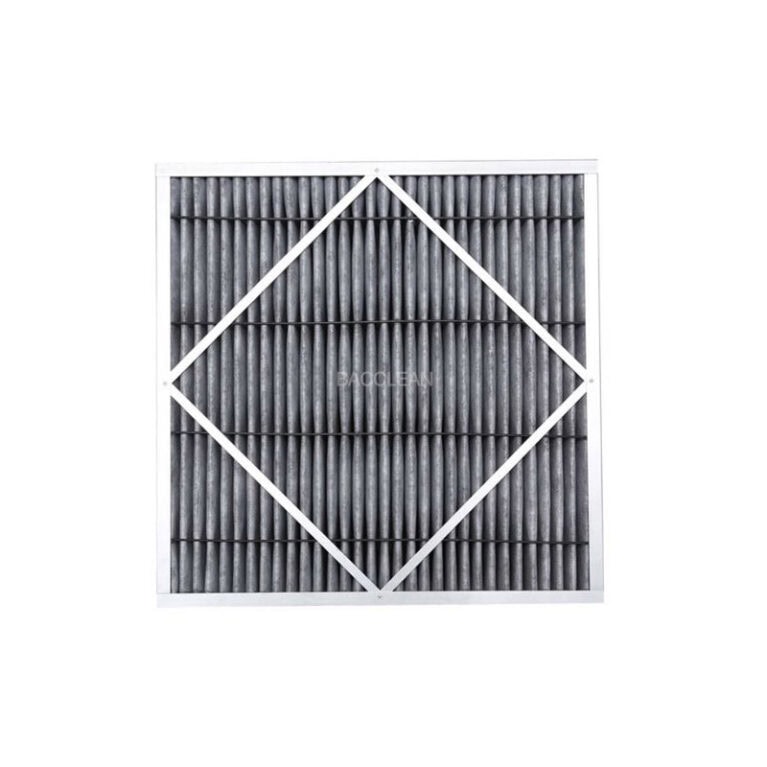
Under normal working conditions, the service life of synthetic fiber box filters is 6 to 12 months. The service life of fiberglass filter material is 3 to 6 months. The activated carbon composite filter material lasts for 3 to 6 months.
If the dust concentration in the usage environment is high or the pressure difference reaches 1.5 times the final resistance, it must be replaced immediately and should not be used beyond the expiration date.
Change the operation specification
When disassembling, follow the sequence of “remove the air surface first, then the air intake surface” to prevent dust from scattering to downstream equipment.
Before installing the new filter, the installation frame needs to be cleaned and the sealing strips should be checked to ensure they are in good condition. When installing, ensure that the filter is tightly sealed to the frame, with no lifted edges at the four corners, and is firmly fixed with pressure strips.
After replacement, record the initial resistance of the new filter as the benchmark data for subsequent operation monitoring.
Iv. Maintenance Precautions
Safety Specifications
Maintenance personnel must wear dust masks and gloves to avoid direct contact with filter material dust. When working at heights, it is necessary to fasten the safety belt and use stable climbing tools.
Record management
Establish a filter maintenance ledger, detailing the pressure difference data, cleaning time, replacement date and operator for each inspection, to facilitate the traceability of equipment operation status.
Storage requirements
Standby filters should be stored in a dry, well-ventilated warehouse free of corrosive gases, avoiding heavy pressure and moisture. The outer packaging must be intact to prevent filter material contamination.
Supporting maintenance
Regular cleaning of the pre-filter of the filter (such as plate filter) can effectively extend the service life of the box filter and reduce maintenance costs.
V. Common Fault Handling
| Fault phenomenon | Cause analysis | Handling measures |
| The running resistance rises rapidly |
1. The pre-filter was not cleaned in time; 2. Oil stains or sticky dust clog the surface of the filter material |
Clean the pre-filter; Deeply clean or replace the box-type filter |
| The filtration efficiency has declined and the cleanliness does not meet the standards |
1. Filter material damage or seal failure; 2. The filter has been used beyond its expiration date |
Inspect the filter material and sealing strips, and replace the damaged parts. Replace the expired filter immediately |
| The fan is noisy and has insufficient air volume | The filter resistance is too high and the fan load is too large | Clean or replace the filter to restore the air volume of the ventilation system |
