
I. Daily Maintenance Specifications for Supply Air Ceilings (Implemented in Phases, with Key Points of Operation)
(1) Daily maintenance (once before and once after each shift, 5-10 minutes)
Core objective: Quickly identify appearance abnormalities and airflow stability issues to prevent immediate malfunctions from affecting production/surgery.
Appearance and Cleaning
Use a lint-free cloth dipped in 75% medical alcohol or a dedicated cleanroom cleaner to wipe the supply air panel (microplate/equal-flow membrane), the frame, and the surrounding areas to remove floating dust and stains (do not use cleaning tools/reagents containing fibers or corrosive substances to avoid particle contamination).
Check whether the panel is deformed or loose, and whether the sealing rubber strip has fallen off (if the seal fails, it will cause external polluted air to seep in and reduce the cleanliness).
Airflow and pressure inspection
Observe the uniformity of air outlet from the supply air panel: no obvious vortices, no local airless areas (which can be assisted by A smoke test pen for judgment, especially in A-level clean areas such as operating rooms).
Check the pressure difference gauge of the clean area: Ensure that the pressure difference with the adjacent non-clean area is ≥10Pa (in the pharmaceutical workshop) or ≥20Pa (in the operating room). When the pressure difference is normal, promptly check whether the fan is faulty and whether the filter is clogged.
Safety hazard investigation
Check whether the power cord and control line connections are firm, without any damage or overheating. The fan operates without abnormal noise (the normal operating noise should be ≤60dB).
(2) Weekly maintenance (once, about 30 minutes)
Core objective: Deep cleaning + component function verification to prevent potential failures.
The panel and border are thoroughly cleaned.
Disassemble the air supply panel (follow the equipment manual to avoid violent disassembly), and use high-pressure clean air (≥0.3MPa) to blow the micro-holes of the panel in reverse (from the air outlet side to the air intake side) to remove the accumulated dust inside.
Clean the sealing grooves on the panel frame and reapply the special sealant. (If the sealant strip ages, replace it directly with a silicone rubber sealant strip of the same specification as the original accessory.)
Inspection of fans and motors
Observe whether the fan impeller is dusty: If the dust accumulation is severe, gently wipe it with a lint-free cloth dipped in alcohol (do not rinse with water to avoid the motor getting damp).
The temperature of the motor is measured by an infrared thermometer (normal operating temperature ≤70℃), and the vibration value of the fan is measured by a vibration meter (≤2.8mm/s). If it exceeds the standard, it may be due to an unbalanced impeller or bearing wear.
Airflow velocity calibration
Measure the wind speed 1 meter below the supply air panel using a hot bulb anemometer according to the grid method (one measurement point for every 0.5m×0.5m) to ensure that the average wind speed meets the design requirements (laminar flow ceiling in the operating room: 0.25-0.35m/s; Pharmaceutical clean area: 0.3-0.5m/s. When the deviation exceeds ±10%, the wind speed is adjusted by frequency conversion of the fan.
(3) Monthly maintenance (once, 1-2 hours)
Core objective: System performance testing + inspection of vulnerable parts to ensure long-term stable operation.
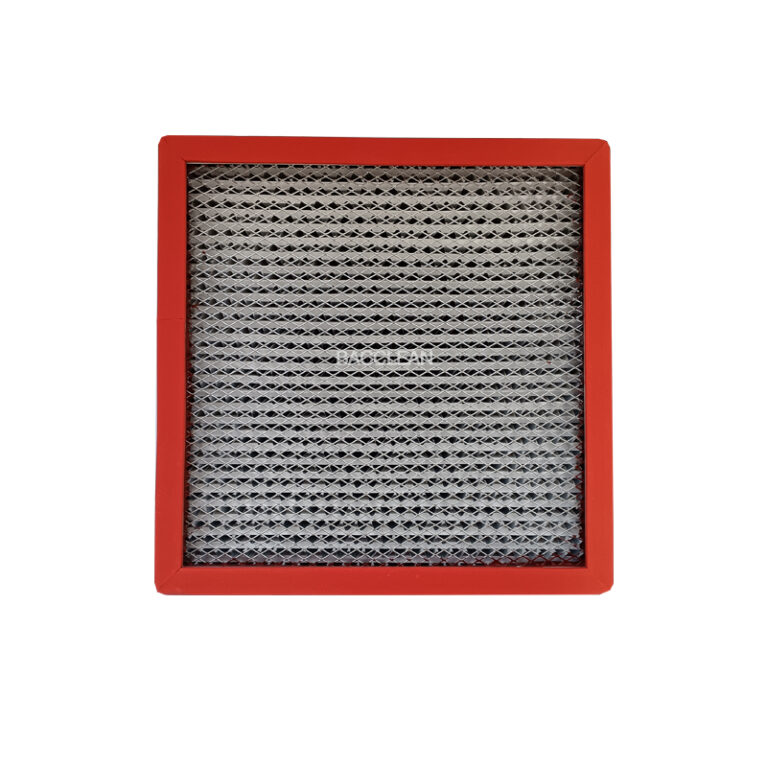
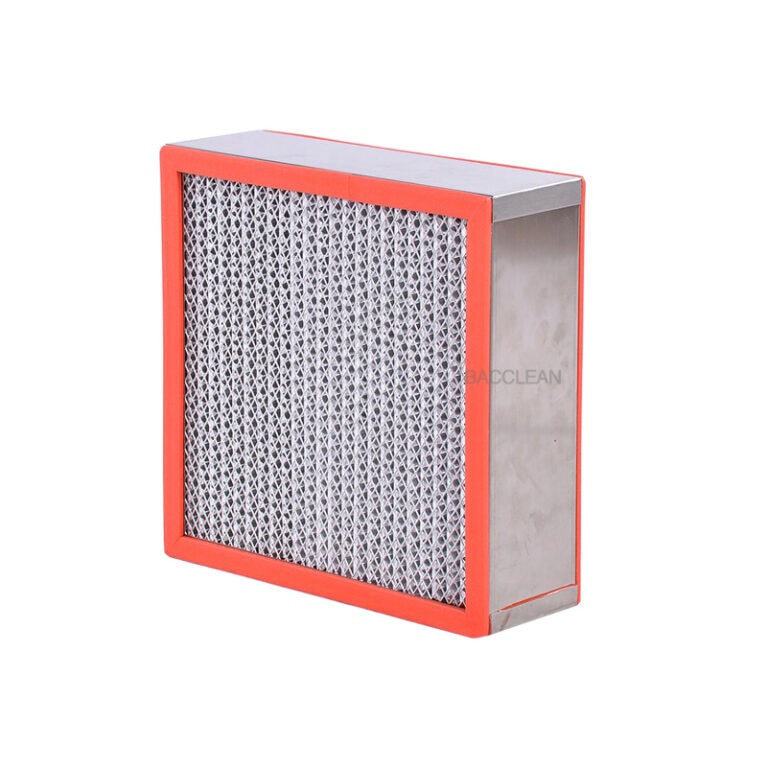
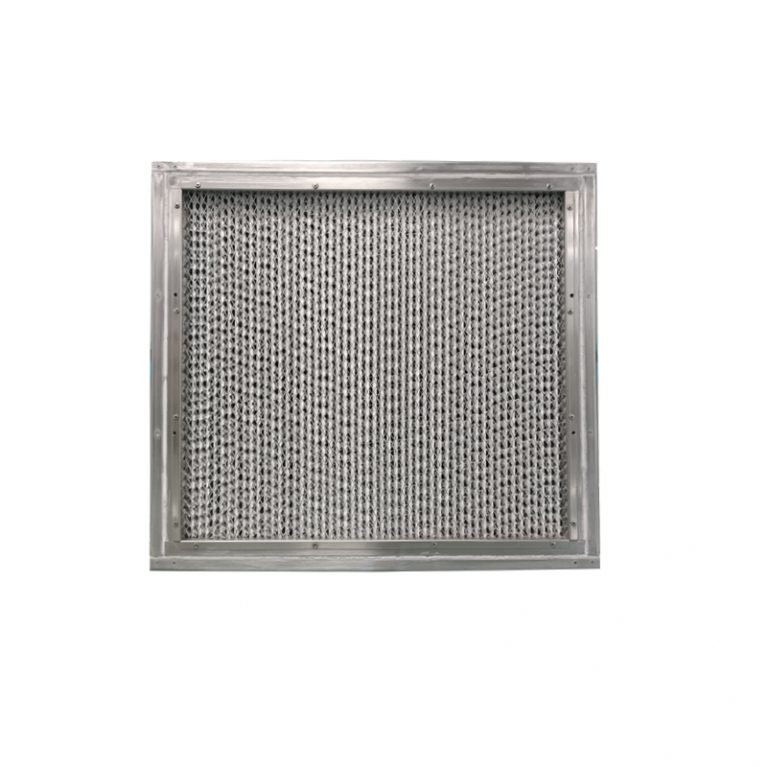
Status monitoring of high-efficiency filters (HEPA/ULPA)
Check the differential pressure gauge of the filter: If the differential pressure exceeds twice the initial differential pressure (or reaches the design upper limit, such as 250Pa for HEPA filters), it indicates that the filter is clogged and needs to be replaced promptly (replacement should be carried out in a clean environment to prevent the filter from being contaminated).
Use A particle counter to detect the particle concentration in the clean area (for example, in Class 100/A area: ≥0.5μm particles ≤3520 per m³). If the concentration exceeds the standard, check whether the filter is poorly sealed or damaged.
Maintenance of fan frequency converters (VFD)
Clean the cooling fan and filter screen of the frequency converter to remove dust (to avoid poor heat dissipation, causing the frequency converter to alarm).
Check the parameter Settings of the frequency converter: Ensure that the frequency, current, and voltage are within the rated range of the equipment, and there are no abnormal alarm codes (such as overcurrent or overload alarms). It is necessary to check whether the load of the fan is too large.
Inspection of the electrical control system
Test whether the buttons on the control panel (wind speed adjustment, start-stop switch) are sensitive and whether the indicator lights are displaying normally.
Check the function of the emergency stop button: After pressing the emergency stop button, the fan should immediately shut down. Once the button is released, it can be started normally (to avoid potential safety hazards).
(4) Annual maintenance (once, 4-6 hours, it is recommended to be operated by professionals
Core objective: Comprehensive maintenance and performance calibration to extend the service life of the equipment.
Overall disassembly, cleaning, and component inspection
Disassemble the entire supply air ceiling frame, clean the accumulated dust and oil stains inside the frame, and check whether the frame structure is deformed (if it is deformed, the frame needs to be corrected or replaced).
Check the wear of the fan bearing: If there is abnormal noise or the clearance is too large during the rotation of the bearing, replace it with a bearing of the same model (it is recommended to choose high-temperature resistant and low-noise precision bearings, such as SKF and NSK brands).
Replacement and leak detection of high-efficiency filters
Regardless of whether the pressure difference exceeds the standard or not, it is recommended that the HEPA filter be replaced once a year (in high-frequency usage scenarios such as operating rooms and biosafety laboratories, the replacement time can be shortened to 6-8 months). The ULPA filter can be extended for 1.5 to 2 years.
After replacement, conduct a filter leak test (using a PAO aerosol generator + photometer) to ensure that the filter has no leakage (leakage rate ≤0.01%).
Comprehensive calibration of system performance
Entrust a third-party testing agency (or the enterprise’s internal metrology department) to conduct a comprehensive test on the air flow uniformity, cleanliness grade, and temperature and humidity control accuracy of the supply air ceiling, issue a test report, and rectify any non-conformities in a timely manner.
Ii. Reasonable Service Life of Supply Air Ceiling (Sub-component Description)
The service life of the supply air ceiling is not a fixed value. It is greatly affected by the usage environment, maintenance frequency, and component quality. The overall designed service life is 8 to 12 years. The service life of the core components is as follows:
| Component name | Normal service life | Replacement/maintenance prompt |
| Ceiling frame (metal) | 10 to 15 years | If severe deformation or corrosion occurs (such as rusting of the stainless steel frame in a humid environment), the frame needs to be replaced. Do a good job in rust prevention on a daily basis (such as spraying anti-rust paint). |
| Fan (centrifugal/axial) | 5 to 8 years | If the fan experiences continuous abnormal noise, excessive vibration, motor burnout or other faults, the fan assembly should be replaced first (it is recommended to use original factory parts to ensure compatibility). |
| High Efficiency filter (HEPA) |
1 to 2 years |
Press the differential gauge to indicate replacement, with the longest period not exceeding 2 years (shortened to 6-12 months in high-frequency use and high-pollution environments). |
| Sealing rubber strip | 1 to 3 years | Replace immediately when aging, cracking or poor sealing occurs (it is recommended to check once every quarter, and shorten the replacement cycle in a humid environment). |
| Frequency converter | 5 to 8 years | If alarms and regulation malfunctions occur frequently, maintenance or replacement is required (regular heat dissipation maintenance should be carried out to avoid overloading operation). |
| Control panel/Sensor | 3 to 5 years | When the button malfunctions or the sensor data drifts, replace the corresponding component (regularly calibrate the sensor to ensure detection accuracy). |
Key measures for extending the service life
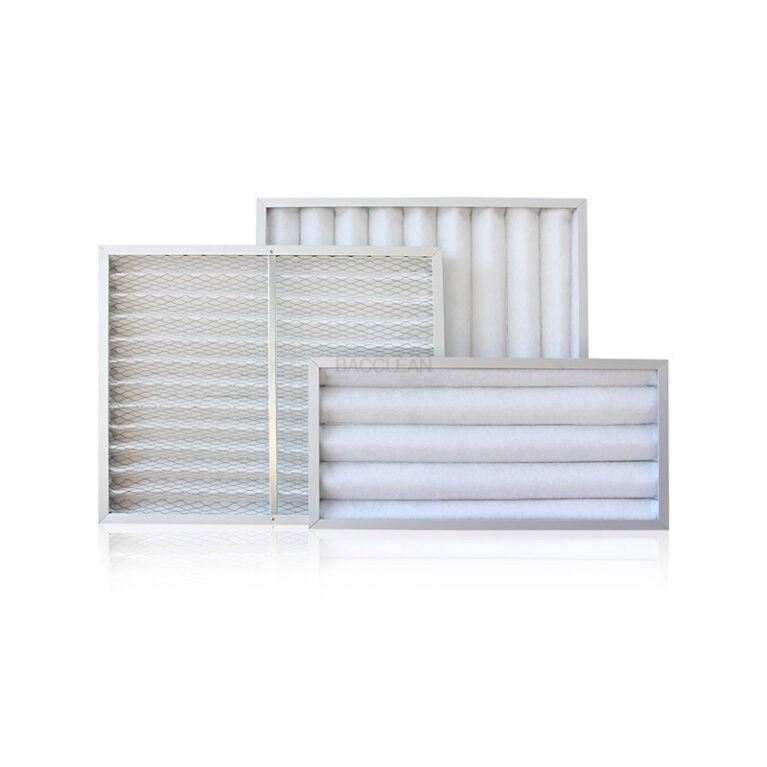
Pre-treatment: Ensure that the incoming air from the supply ceiling passes through the pre-treatment of the primary and medium-efficiency filters (the primary filter should be replaced every 1-3 months, and the medium-efficiency filter every 6-12 months), reducing the dust accumulation pressure on the HEPA filter and the fan.
Environmental control: Avoid high humidity (relative humidity ≤65%) and corrosive gases (such as acidic and alkaline environments) in the clean room to prevent corrosion of metal parts and aging of rubber strips.
Standard operation: Do not stack items above the air supply panel or block the air intake to prevent the fan from overloading. When starting or stopping the equipment, follow the principle of “start the fan first, then the load” to avoid current surges.
Spare parts reserve: Stock up on key vulnerable parts (such as sealing strips, HEPA filters, bearings) in advance to avoid prolonged downtime due to missing parts in case of failure.
Iii. Common Faults and Quick Handling (Practical Reference)
| Fault phenomenon | Possible reasons | Processing method |
| The air supply is uneven and there is no air in some areas | The micro-holes on the panel are clogged/the filter is partially clogged |
Clean the panel and reverse blow the filter; If the pressure difference of the filter is normal, check whether the fan impeller is dusty or unbalanced. |
| The cleanliness level does not meet the standard | Filter leakage/Poor sealing | Perform PAO leak detection, reinstall the filter and press the tight seal. Replace the damaged sealing gasket. |
| The fan operates with a lot of noise | Bearing wear/Dust accumulation on the impeller/loose frame | Replace the bearings and clean the impeller; Tighten the frame bolts and add shock-absorbing pads (if the frame is deformed, it needs to be corrected). |
| The wind speed cannot be adjusted. | Inverter failure/Poor contact of control lines | Check the alarm code of the inverter and clean the cooling fan. Reinsert the control lines and tighten the terminal blocks. |
| The motor is overheating seriously. |
Overload operation/Poor heat dissipation |
Reduce the load on the fan (adjust the wind speed); Clean the motor heat sink and check if the frequency of the frequency converter is too high. |
Through the above-mentioned standardized daily maintenance and scientific component management, the long-term stable operation of the supply air ceiling can be ensured, avoiding losses such as the shutdown of the clean room and the interruption of surgeries due to equipment failures. In case of complex faults (such as fan burnout or frame deformation), it is recommended to contact the technical personnel of the original equipment manufacturer for repair to avoid secondary damage caused by self-disassembly.
