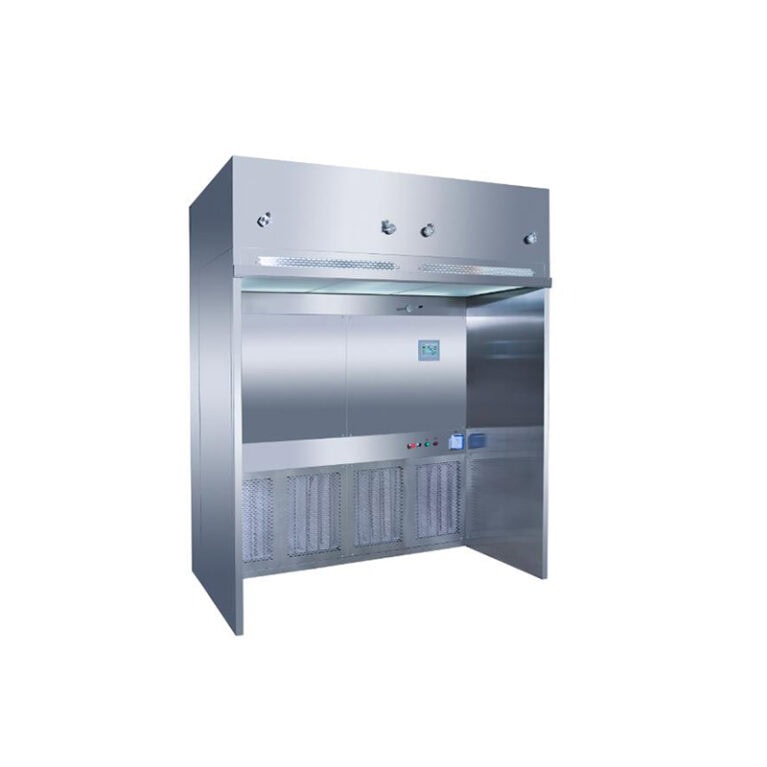
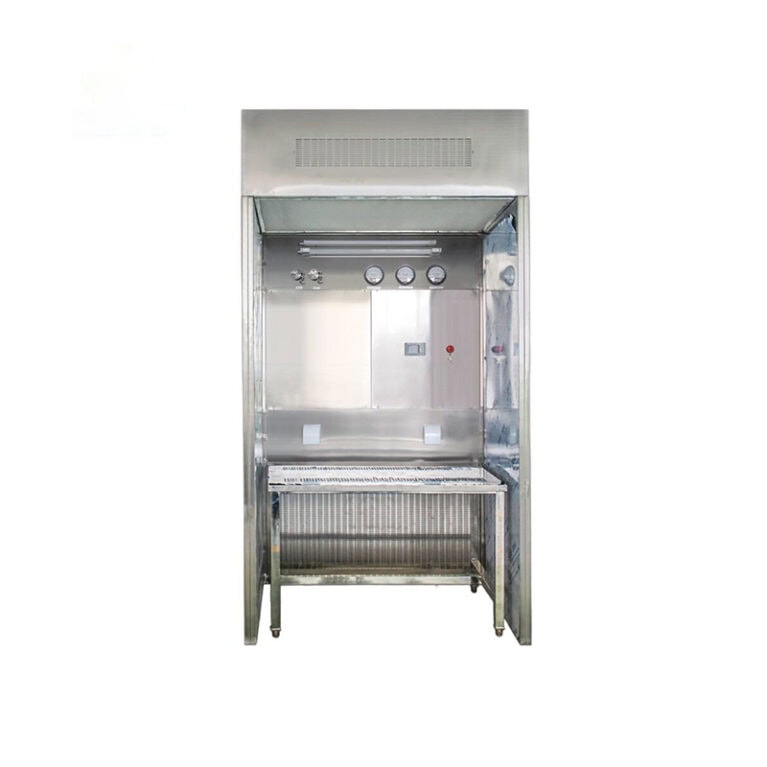
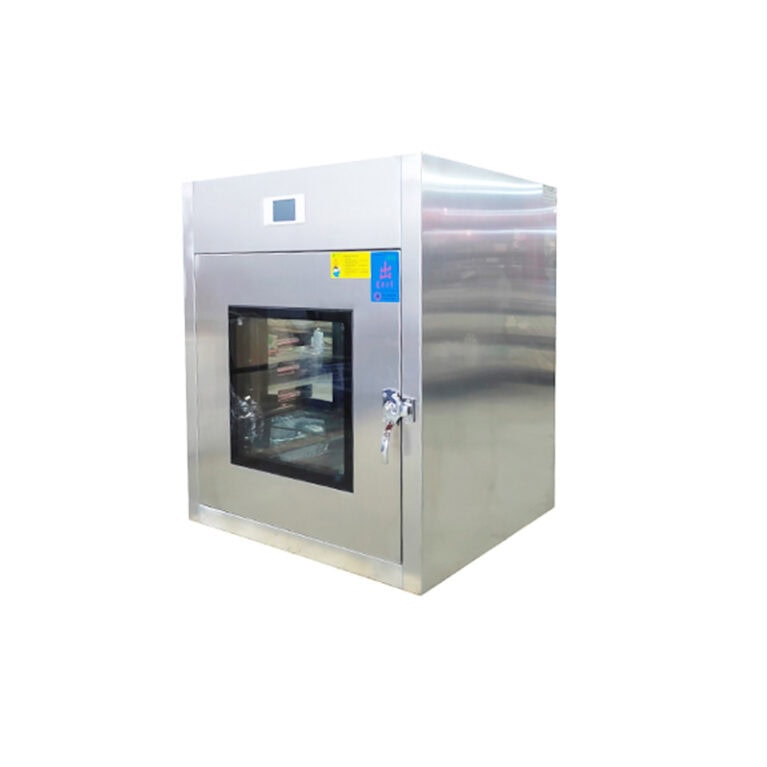
Air supply ceiling ( laminar air supply ceiling ) air supply principle
The overall design is static pressure equalization + high-efficiency filtration + unidirectional laminar air supply. The core is to transform the chaotic airflow into uniform and stable unidirectional clean airflow, achieving a local high-clean area.
1. Complete airflow process
Air enters the static pressure box
The fresh air / recirculating air from the system is sent to the static pressure box of the air supply ceiling. The large cavity slows down the high-speed airflow, stabilizes the pressure, eliminates vortex and uneven wind pressure, and forms a uniform static pressure inside the box.
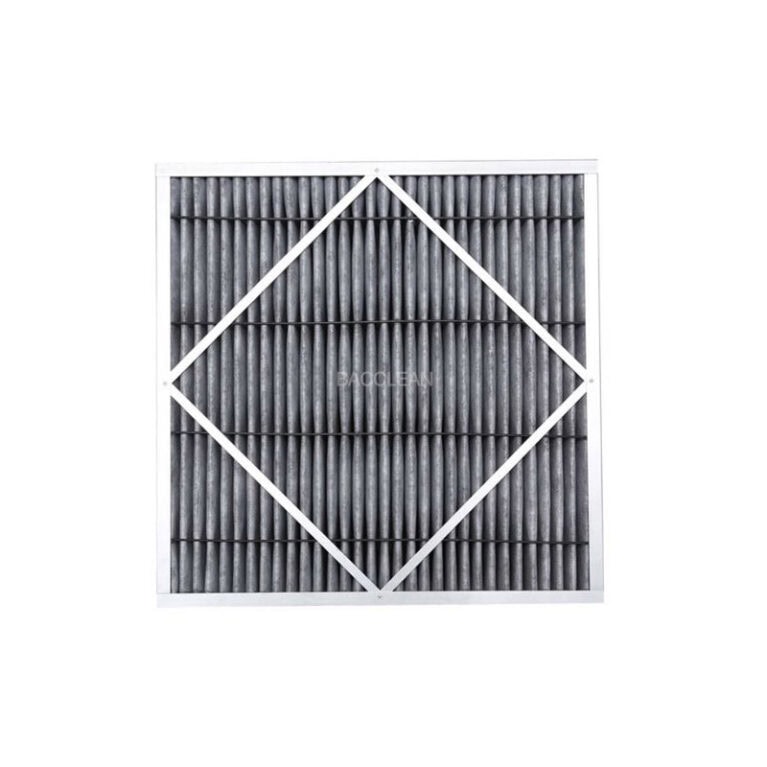
Pre-filtration + medium-efficiency filtration
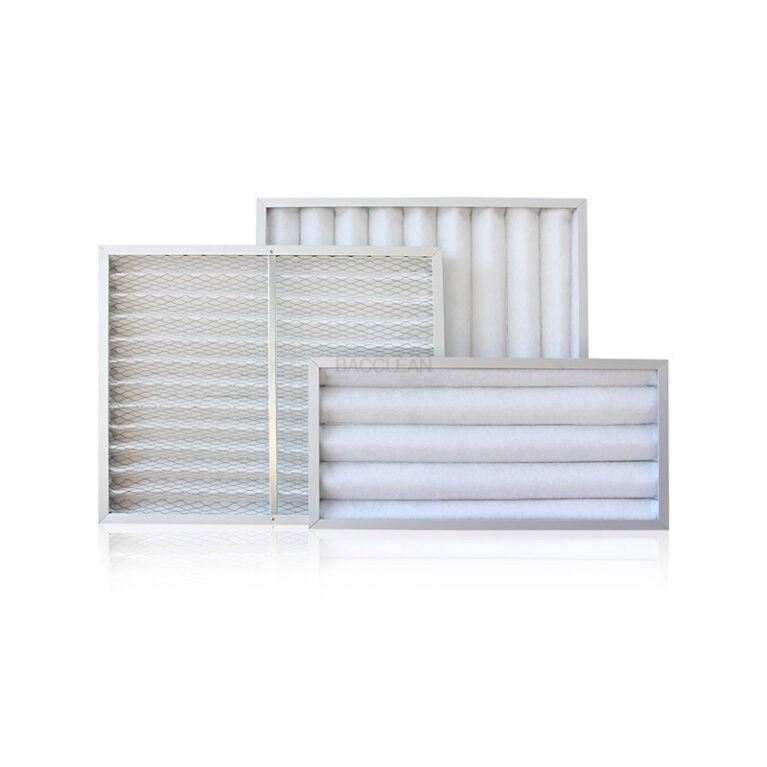
The airflow passes through the primary and medium-efficiency filters first, intercepting large particles of dust, protecting the rear-end high-efficiency filter.
ترشيح عالي الكفاءة
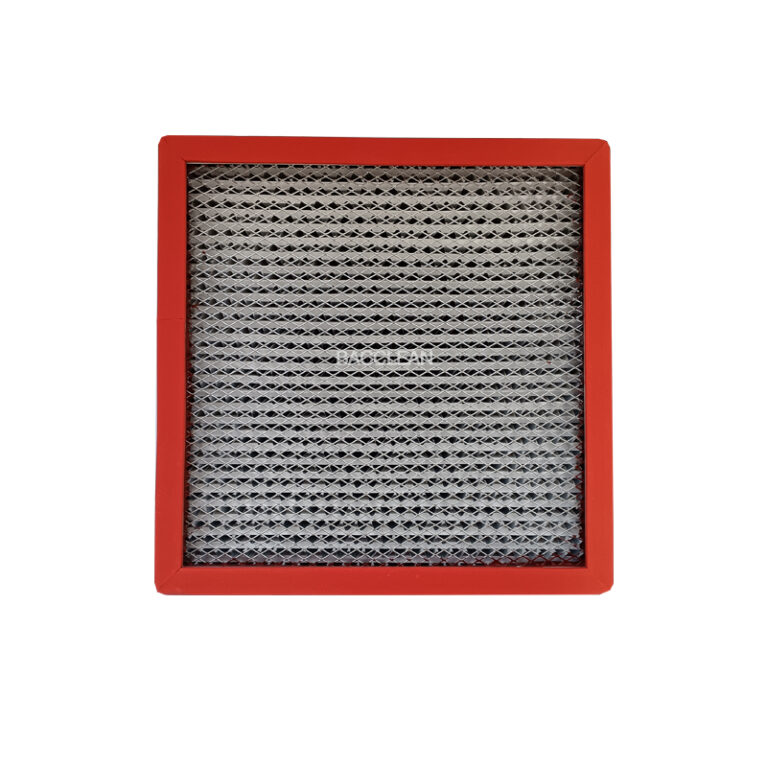
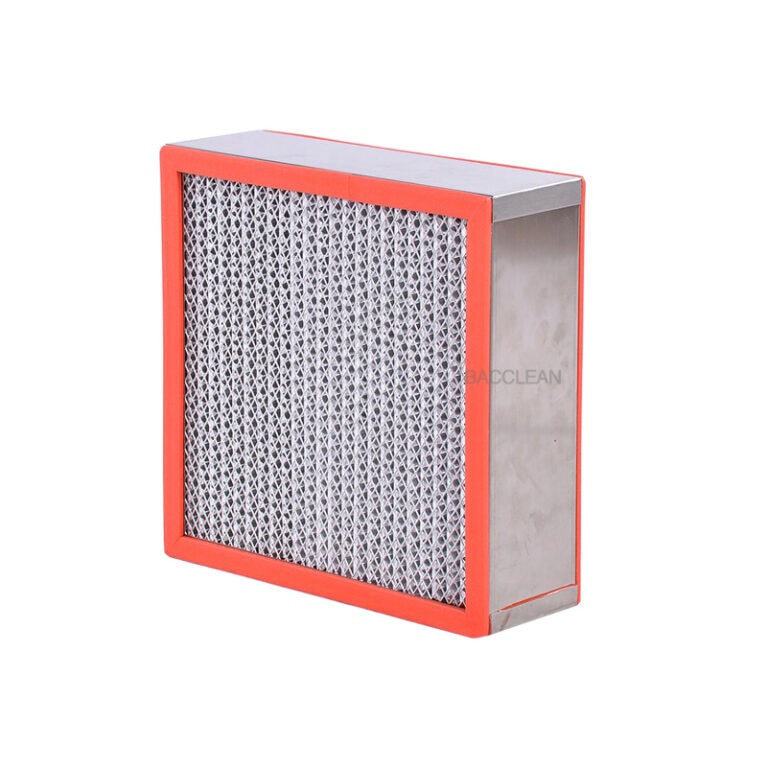
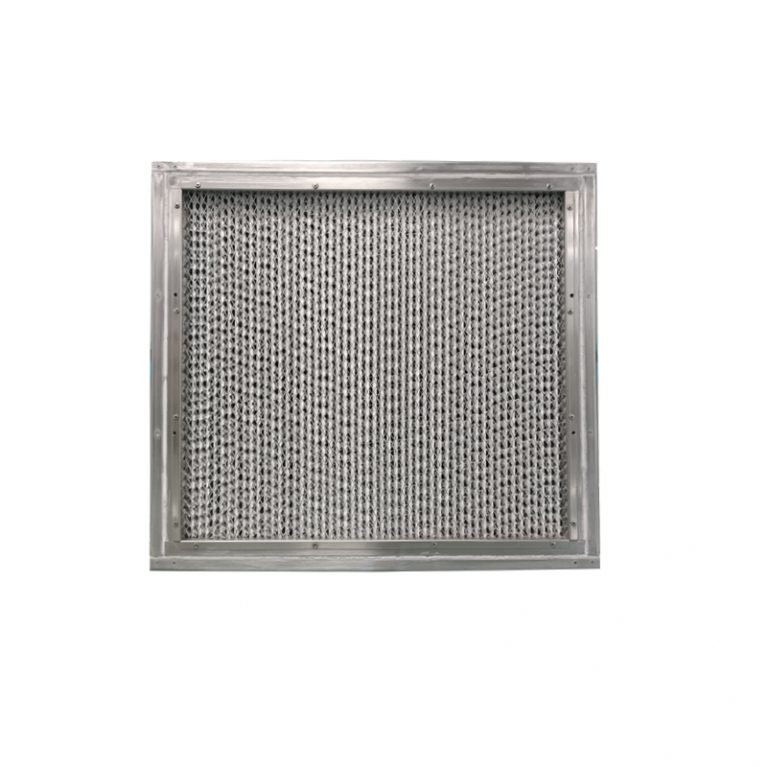
The airflow passes through the HEPA/ULPA high-efficiency filter, trapping micrometer and sub-micrometer particles, completing deep air purification.
Equalization and rectification
The airflow after high-efficiency filtration is further dispersed and homogenized through the equalization plate / orifice plate / equalization membrane, eliminating local wind speed differences and ensuring uniform wind speed across the entire air outlet surface.
Unidirectional laminar air supply
Finally, the airflow is sent downward at a constant speed in a vertical unidirectional laminar form, with parallel airflow lines, no turbulence, and no vortex, continuously suppressing indoor dust-containing air and maintaining a high level of cleanliness in the area.
2. Core key points
Static pressure effect: It is the basis for uniform air supply. The larger the cavity, the more stable the static pressure, and the better the air supply uniformity.
Laminar characteristics: The conventional air supply speed is controlled at 0.30 – 0.45 m/s, with the airflow flowing vertically downward, avoiding cross-contamination.
Purification logic: First stabilize the pressure → then filter → finally rectify, combining the three steps to achieve a high-level clean environment such as Class 100 / ISO 5.
3. Simple distinction
Ordinary air outlet: High-speed turbulent air supply;
Air supply ceiling: Low-speed, uniform pressure, laminar, uniform air supply throughout the area, specially designed for high-level clean areas.